


Overview
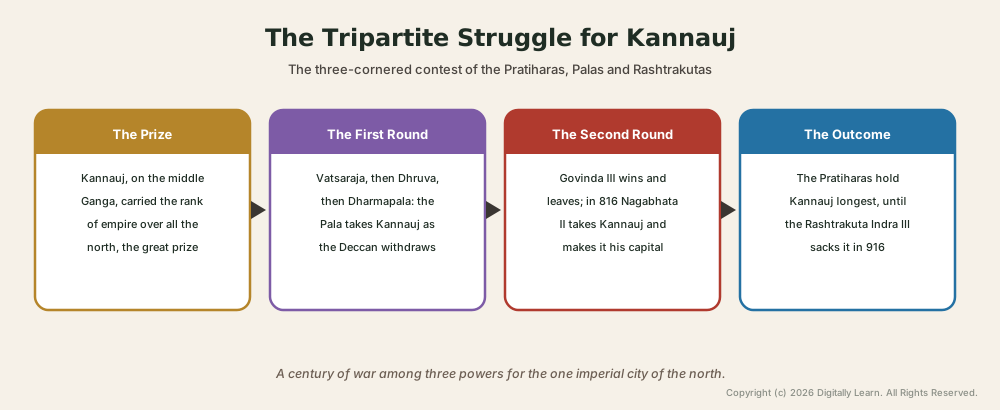
The tripartite struggle was the century-long, three-cornered war for the city of Kannauj, the imperial prize of early-medieval north India. From about 785 to 916, three great powers, the Gurjara-Pratiharas of the west, the Palas of the east and the Rashtrakutas of the Deccan, fought round after round for its throne. The Rashtrakutas won the battles but always withdrew south, while the Pala Dharmapala and then the Pratihara Nagabhata II held the city; in the end the Pratiharas held Kannauj longest. This part covers the prize, the first and second rounds, the outcome and the exam focus.
The Prize and the Contestants
Why Kannauj Was the Prize of the North
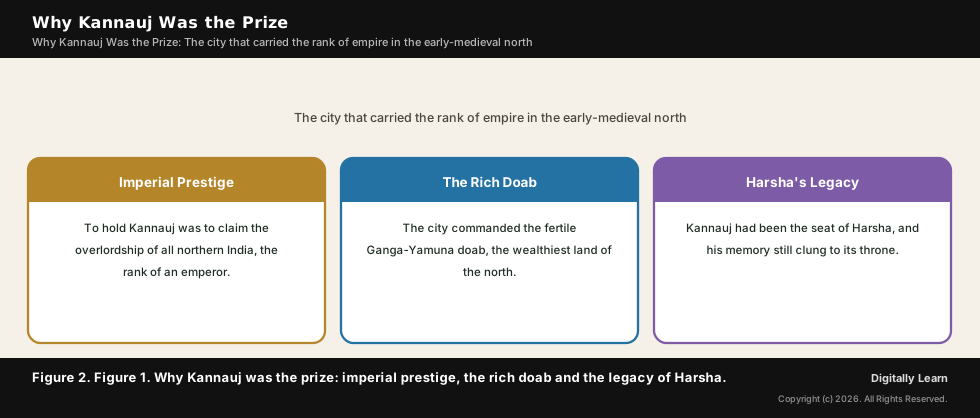
What is the significance of Kannauj: it was the one city whose throne carried the rank of an emperor over all of northern India, and so the goal of every great power of the age.
Kannauj stood on the middle Ganga, commanding the rich Ganga-Yamuna doab and the memory of Harsha, whose imperial seat it had been. In the words of the sources, to hold its throne was 'equivalent to having imperial status over all of northern India', and so it drew the ambition of three rising powers.
That prestige, not mere land, was the real prize. A king who ruled from Kannauj could claim to be the paramount sovereign of the north, and it was this claim, as much as the wealth of the doab, that three dynasties would spend a century fighting for.
The Three Contestants and the Field of Battle
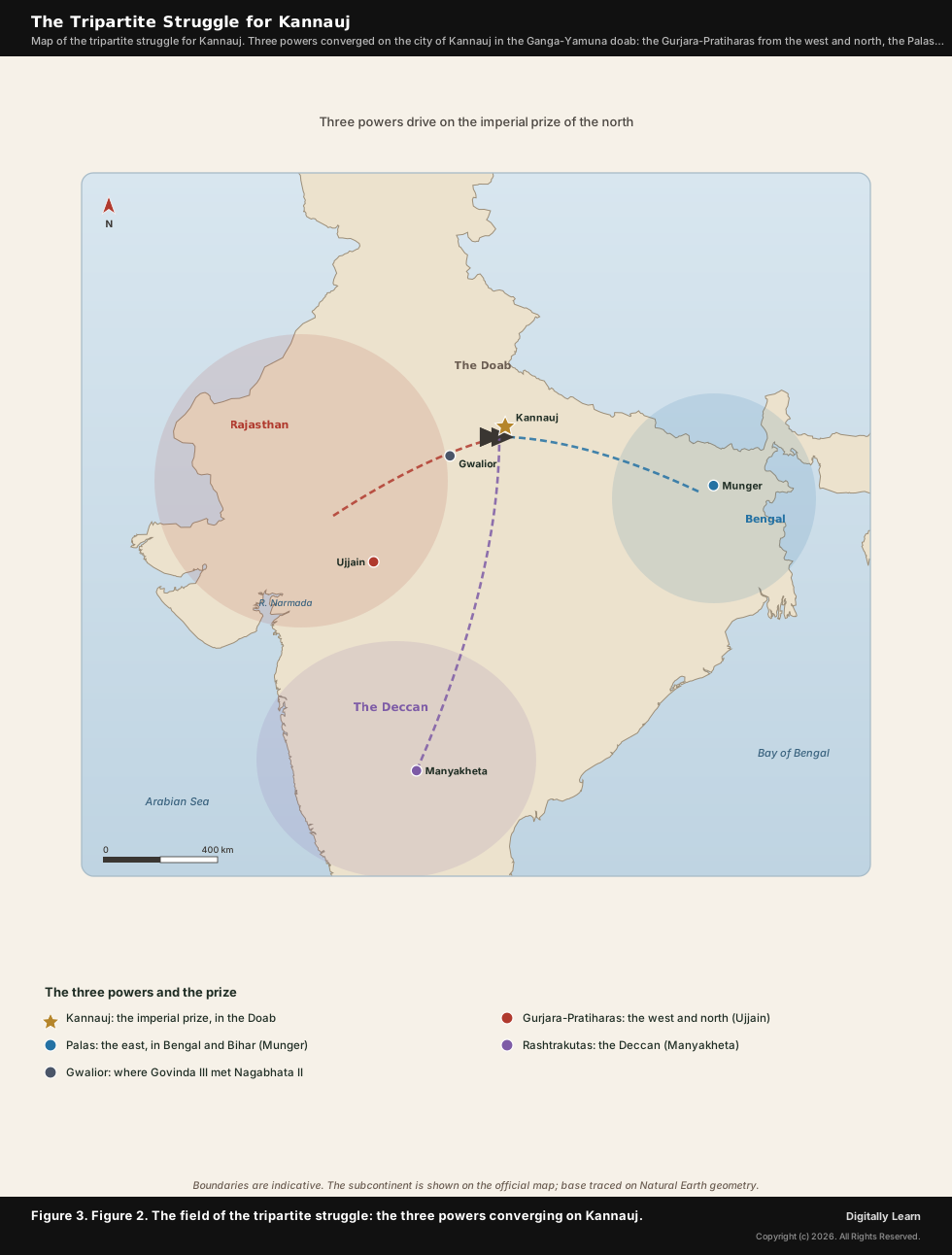
Distinguishing the three powers: each came at Kannauj from a different quarter of India, and the map sets out the field on which they met.
The Gurjara-Pratiharas pressed in from the west and north, out of Rajasthan and Malwa; the Palas came from the east, from Bengal and Bihar, where their line had been founded by Gopala and raised by Dharmapala; and the Rashtrakutas drove up from the Deccan, from their capital at Manyakheta, crossing the Narmada again and again.
The map shows the three converging on Kannauj, in the doab at the heart of the north. It is worth marking that the Rashtrakutas, though the strongest in battle, were a southern power whose home lay far across the Narmada, a fact that shaped the whole course of the war.
The First Round of the Struggle
Vatsaraja, Dhruva and Dharmapala
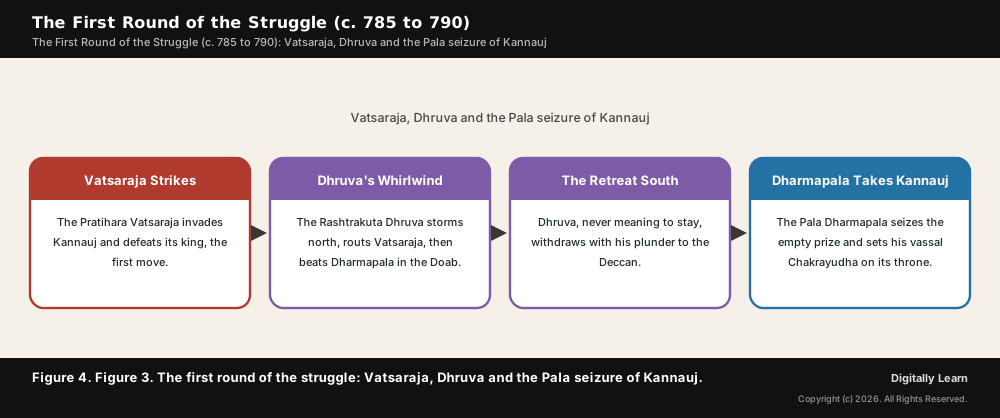
What is the significance of the first round: it set the pattern of the whole war, a Rashtrakuta storm out of the Deccan that won the field but left the prize to another.
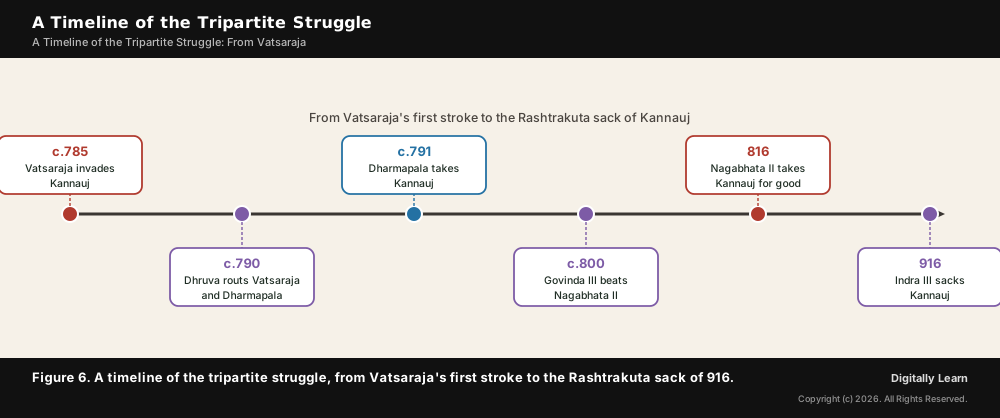
The first move was the Pratihara Vatsaraja's: he invaded Kannauj and defeated its king. But the Rashtrakuta Dhruva then swept north about 790, routed Vatsaraja, and went on to defeat the Pala Dharmapala in the doab itself, beating both his rivals in turn.
Dhruva, however, had never meant to stay. He withdrew with his plunder to the Deccan, and into the empty space stepped Dharmapala, who took Kannauj about 791, defeated its ruler Indrayudha, and set his own nominee Chakrayudha on the throne as a vassal. The Pala thus held the prize at the close of the first round.
The Second Round and the Pratihara Triumph
Govinda III and the Rise of Nagabhata II
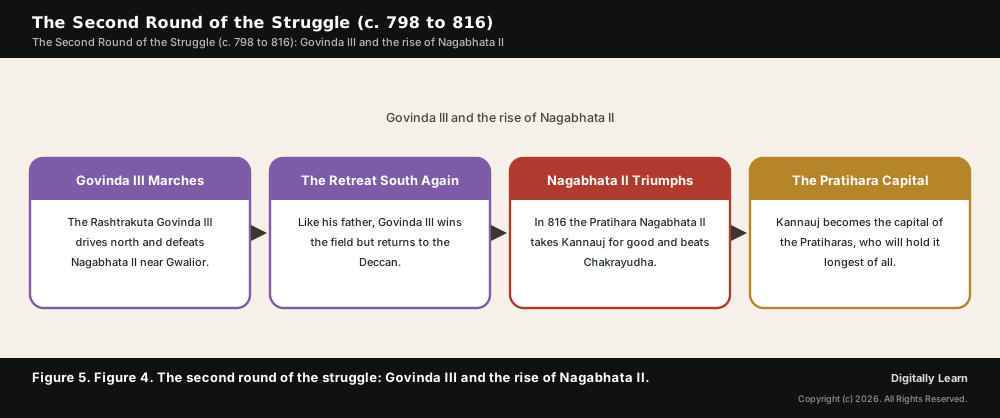
What is the significance of the second round: it repeated the pattern once more, but this time the Pratiharas turned a Rashtrakuta withdrawal into a lasting hold on Kannauj.
The Rashtrakuta Govinda III, Dhruva's son, marched north about the turn of the century and defeated the Pratihara Nagabhata II near Gwalior; his Sanjan inscription boasts that his horses drank from the icy streams of the Himalaya. Yet, like his father, Govinda III won the field and then returned to the Deccan.
This time the Pratiharas recovered. In 816 Nagabhata II took Kannauj for good, defeated Dharmapala's vassal Chakrayudha, and made the city the Pratihara capital. From that year the imperial prize was Pratihara, and it would remain so longer than it had been held by any other house.
Devapala and the Pala High-Water Mark
Distinguishing the Pala peak: even as the Pratiharas took Kannauj, the Palas reached their own greatest height in the east under Devapala.
Devapala, the son of Dharmapala, ruled the Pala empire at its widest extent in the first half of the ninth century. He could not wrest Kannauj from the Pratiharas, but in the east, over Bengal and Bihar and beyond, the Pala power under him stood at its high-water mark, a counterweight to the Pratihara north.
| Round | The move | Who held Kannauj at the end |
|---|---|---|
| First (c. 785 to 791) | Vatsaraja, then Dhruva, then Dharmapala | The Pala Dharmapala (vassal Chakrayudha). |
| Second (c. 798 to 816) | Govinda III, then Nagabhata II | The Pratihara Nagabhata II, as his capital. |
| The long hold (836 to 910) | The Pratiharas at their peak under Mihira Bhoja | The Gurjara-Pratiharas, longest of all. |
| The sack (916) | The Rashtrakuta Indra III sacks Kannauj | Regained by the Pratiharas, but weakened. |
The Outcome of the Struggle
The Pratihara Hold and the Rashtrakuta Sack of 916
What is the significance of the outcome: of the three powers, it was the Pratiharas who came out of the long war holding the prize, and their hold defines the political map of the ninth-century north.
From 816 onward the Pratiharas held Kannauj, and under Mihira Bhoja and his successor the dynasty reached its peak; for the better part of a century, from about 836 to 910, Kannauj was the seat of a Pratihara empire that barred the Arabs of Sind and overawed its neighbours.
The end came from the Deccan once more. About 916 the Rashtrakuta Indra III swept north and sacked Kannauj itself; the Pratiharas regained the city, but the blow began the slow weakening from which they never fully recovered, and the age of the three great powers drew toward its close.
UPSC Relevance and Exam Focus
Where the Tripartite Struggle Fits in the UPSC-CSE Syllabus
This topic belongs to General Studies Paper I: early-medieval Indian history, and the tripartite struggle is among the most regularly examined episodes of the age.
The questions most often test the cast and the outcome: the three powers, the Gurjara-Pratiharas, the Palas and the Rashtrakutas; the contested city of Kannauj; and the result, that the Pratiharas held the prize longest.
Several linked points recur and are worth holding in working memory:
- Kannauj: The imperial prize, in the Ganga-Yamuna doab.
- Dharmapala: The Pala who took Kannauj and set up Chakrayudha as vassal.
- Nagabhata II: The Pratihara who took Kannauj for good in 816.
- The Rashtrakutas: The southern power that won battles but withdrew south.
- Indra III: The Rashtrakuta who sacked Kannauj about 916.
A 2020 chronology question set four events in order, among them the founding of the Palas by Gopala and the rise of the Pratiharas under Bhoja; both belong to this story, the Pala line beginning about the mid-eighth century and the Pratihara peak under Bhoja from about 836.
A common trap credits the Rashtrakutas with holding Kannauj because they so often won in battle; in truth they always returned to the Deccan, and it was the Pratiharas who held the city. Another confuses the two rounds: Dharmapala held Kannauj after the first, Nagabhata II after the second.
Previous Year UPSC-CSE Questions
Previous Year UPSC-CSE Questions By the end you will be able to draft model answers for the following UPSC questions. Each question carries a collapsible framework showing how to approach it in the exam.
- UPSC Prelims 2020 GS-IConsider the following events in the history of India:
- Rise of Pratiharas under King Bhoja
- Establishment of Pallava power under Mahendravarman I
- Establishment of Chola power by Parantaka I
- Pala dynasty founded by Gopala
What is the correct chronological order of the above events, starting from the earliest time?
How to approach this Prelims question
Approach: Date each event: Mahendravarman I the Pallava (early 7th c., earliest), Gopala founding the Palas (mid-8th c.), the Pratihara peak under Bhoja (from c.836), Parantaka I the Chola (early 10th c., latest); then order them 2-4-1-3.
Trap to watch: Do not put the Pratihara Bhoja before the Pala Gopala; the Palas were founded earlier (mid-8th c.) and the Pratihara peak under Bhoja came later (from c.836).
Key facts to recall:
- Mahendravarman I the Pallava ruled in the early 7th century, the earliest of the four.
- Gopala founded the Palas about the mid-8th century; the Pratihara peak under Bhoja came from about 836.
- Parantaka I the Chola ruled in the early 10th century, the latest of the four.
Answer signal: 2 – 4 – 1 – 3.
Sources and Further Reading
Editorial Disclaimer
This article is for UPSC preparation. The dates of the tripartite struggle are approximate, and the account follows the standard scholarship on early-medieval north India.