


Overview
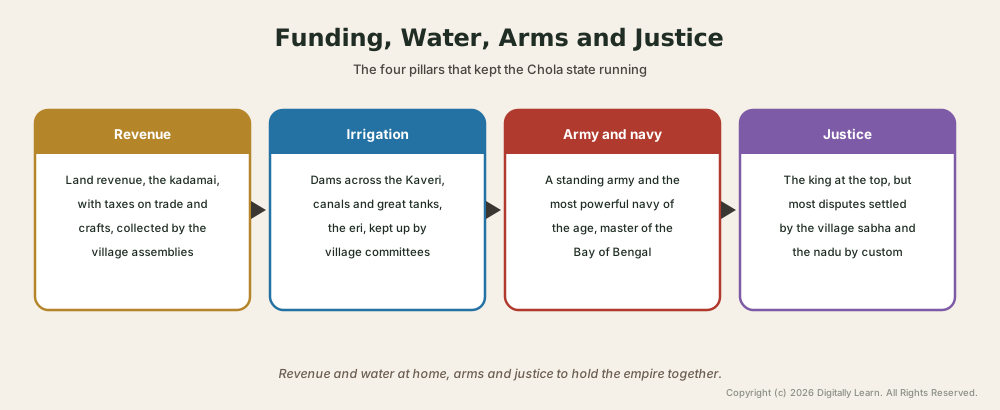
The Cholas funded, watered, defended and governed their state through four great systems. Land revenue, the kadamai, assessed on carefully surveyed and classified land, was the chief source of income, supplemented by taxes on trade and crafts. Irrigation, through dams across the Kaveri, canals and great tanks, was the foundation of the farming economy. The army and, above all, the most powerful navy of the age held the empire together and carried Chola arms across the seas, while justice was dispensed mostly by the local assemblies under the king.
Land Revenue and Taxation
Land Survey, Classification and the Kadamai
What is the significance of the land revenue: the chief source of the Chola state's income was the tax on land, the kadamai, a share of the produce of the soil. Since the whole administration rested on this revenue, the Cholas took great care to assess it fairly and fully.
Distinguishing the survey: under Rajaraja I the state carried out detailed surveys of the land, measuring and classifying it by its fertility and use so that the tax could be set justly. The assessment was liable to periodic revision, and the records were carefully kept.
Distinguishing the tenures: cultivable land was held under different tenures. Most was vellan-vagai, the land of ordinary peasant proprietors who paid revenue to the state; other land was held on service tenure or was granted tax-free to temples and Brahmins as charitable gifts.
Other Taxes and the Assemblies' Role in Collection
Distinguishing the other taxes: besides the land tax, the state drew income from many sources, as the table sets out: tolls and customs on goods in transit, taxes on trades and professions, dues on ceremonies such as marriages, and the fines of the courts.
| Source of revenue | What it was |
|---|---|
| Land revenue (kadamai) | The main tax, a share of the produce of the land |
| Tolls and customs | Dues on goods carried from place to place and traded |
| Professional taxes | Taxes on trades, crafts and professions |
| Ceremonial and other dues | Levies on occasions such as marriages |
| Judicial fines | Fines imposed by the courts |
What is the significance of the assemblies' role: much of the revenue was not gathered by royal officials directly but assessed and collected by the village assemblies and the nadu, which then remitted the state's share. This made collection efficient and tied the local self-government of earlier parts of this series to the finances of the state.
Irrigation and Water Management
Dams, Canals and the Great Tanks of the Cholas
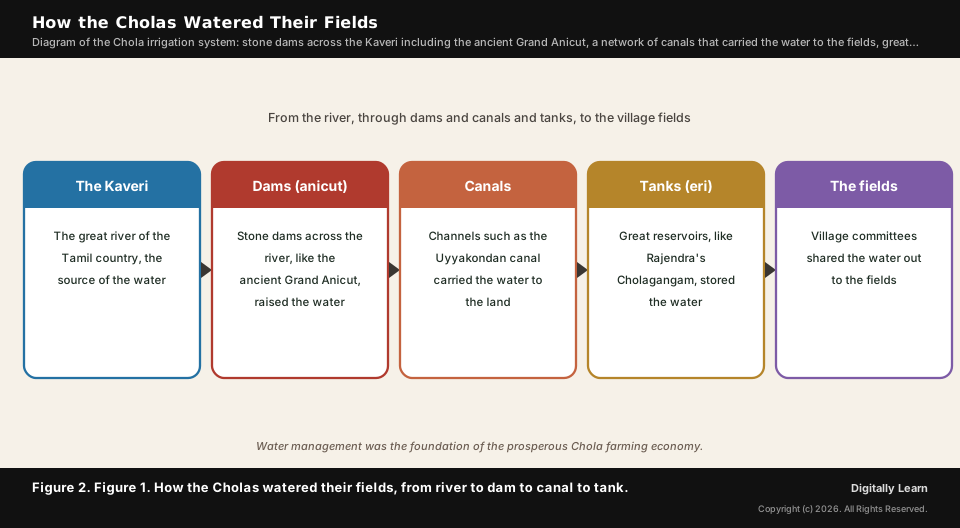
Why this matters: in the dry Tamil country, farming depended on irrigation, and the wealth of the Cholas rested on the water they could command. The state and the villages together built and kept up an elaborate network of works to capture and spread the water of the rivers.
Distinguishing the works: the Cholas built stone dams across the Kaveri and maintained the ancient Grand Anicut, attributed to the early Chola Karikala, which still turns the river's water onto the fields. From the dams, canals such as the Uyyakondan canal carried the water across the land.
Distinguishing the tanks: where there was no river, great tanks, or eri, stored the rain. The most famous was the Cholagangam, a vast reservoir dug by Rajendra I near his new capital, a lake so large it was called a liquid pillar of his victories.
The Village Committees and the Upkeep of Irrigation
What is the significance of local management: the great works were built with the state's help, but their day-to-day upkeep lay with the villages. The tank committee, the eri-variyam, of the village sabha looked after the tanks, sluices and channels on which every harvest depended.
Distinguishing the shared duty: alongside the tank committee, the garden committee tended the groves, and the whole community took part in clearing and repairing the channels. Water management was thus a meeting point of the strong central state and the self-governing village.
The Chola Military and Naval Power
The Standing Army: Infantry, Cavalry and Elephants
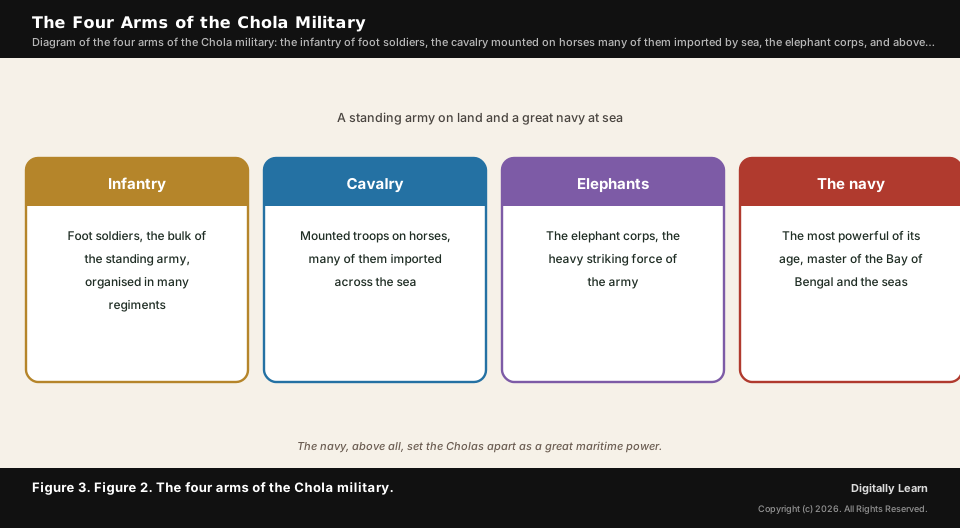
What is the significance of the army: the empire was won and held by force, and the Cholas kept a large standing army. It was made up of foot soldiers, mounted troops and an elephant corps, organised in many regiments and quartered in military settlements across the land.
Distinguishing its parts: the infantry formed the bulk of the army; the cavalry rode horses, many of them imported by sea since the south bred few; and the elephant corps was the heavy striking force. A famous body of loyal troops, sworn to defend the king to the death, guarded his person.
The Navy, Overseas Expeditions and the Mastery of the Seas
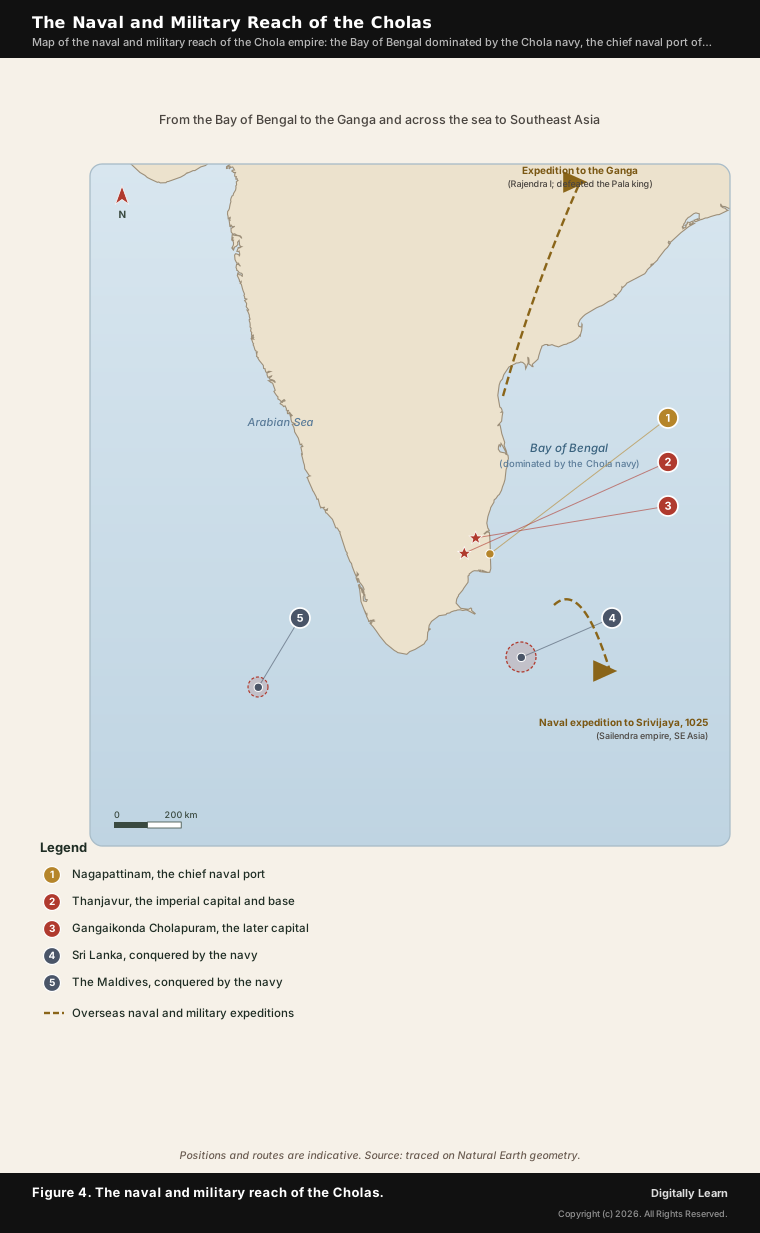
What is the significance of the navy: the true glory of the Chola military was its navy, the most powerful of its age. It made the Bay of Bengal a Chola sea, protected the empire's rich overseas trade, and carried Chola arms to lands across the water that no Indian power had reached before.
Distinguishing the conquests: with this navy Rajaraja I conquered the island of Sri Lanka and the Maldives. His son Rajendra I led a famous expedition north to the river Ganga, defeating the Pala king, and then, in 1025, a daring naval expedition across the sea against the Srivijaya, or Sailendra, empire of Southeast Asia, seizing its ports.
Distinguishing the motive: behind the overseas expeditions lay the wish to protect and extend Chola trade with Southeast Asia and China, and to add to the king's glory. The navy made the Cholas not just a great land power but a great maritime one.
Judicial Administration
The King, the Sabha and the Nadu as Courts
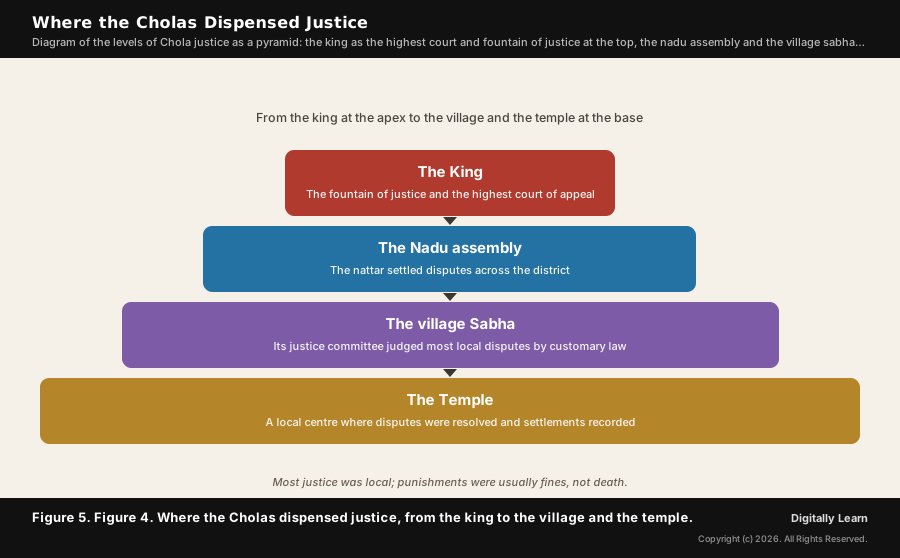
What is the significance of Chola justice: the king was the fountain of justice and the highest court of the land, but in keeping with the decentralised spirit of the system, most disputes were not brought to him. Justice, like government, was largely a local affair.
Distinguishing the local courts: most quarrels were settled in the village by the sabha, through its justice committee, or by the assembly of the nadu, the nattar. These bodies applied the customary law of the country, the accepted usages of the community, rather than a written code imposed from above.
Customary Law, Punishments and the Temple as a Judicial Centre
Distinguishing the law and punishments: Chola justice followed custom and the broad principles of dharma. Punishments were usually moderate, most often fines or a form of penance, and the death penalty was rare, a notably humane feature of the system.
What is the significance of the temple: the temple was not only a place of worship but often a centre of justice, where disputes were heard, settlements agreed and the decisions recorded on its walls. The temple, the tank and the assembly together held village life in order.
UPSC Relevance and Exam Focus
Where This Fits in the UPSC-CSE Syllabus
This topic belongs to General Studies Paper I: medieval Indian history, where Chola land revenue, irrigation and above all the navy are high-yield, and it links to Paper III through the historical roots of water harvesting and maritime power.
For Prelims, hold the key facts: the land tax was the kadamai; the great tank of Rajendra I was the Cholagangam; the Chola navy controlled the Bay of Bengal; Rajaraja I took Sri Lanka and the Maldives; and Rajendra I led the expeditions to the Ganga and against the Srivijaya empire.
For Mains, the Chola system is a rich example for questions on India's tradition of community water harvesting and on India's deep maritime and naval heritage, themes that recur in the modern papers.
Recurring linked concepts an aspirant should keep in working memory:
- Kadamai: the Chola land tax, a share of the produce.
- Eri and eri-variyam: the village tank and the committee that maintained it.
- The Chola navy: the most powerful of its age, master of the Bay of Bengal.
- The Srivijaya expedition: Rajendra I’s naval campaign of 1025 in Southeast Asia.
A common Prelims trap is to credit the Srivijaya expedition to the wrong king: it was Rajendra I, not his father Rajaraja I, who led the great naval campaign of 1025 in Southeast Asia.
A common Mains trap is to treat the Cholas only as a land power. Their distinctive achievement was sea power, a navy that reached Sri Lanka, the Maldives and Southeast Asia.
Previous Year UPSC-CSE Questions
Previous Year UPSC-CSE Questions By the end you will be able to draft model answers for the following UPSC questions. Each question carries a collapsible framework showing how to approach it in the exam.
- UPSC Prelims 2025 GS-IWho among the following led a successful military campaign against the kingdom of Srivijaya, the powerful maritime State, which ruled the Malay Peninsula, Sumatra, Java and the neighbouring islands?
How to approach this Prelims question
Approach: Recall which Indian king led the naval campaign against Srivijaya.
Trap to watch: It was the Chola Rajendra I, not a Rashtrakuta, Kakatiya or Hoysala ruler, who reached Srivijaya across the sea.
Key facts to recall:
- Rajendra I of the Cholas led the naval expedition of 1025 against the Srivijaya empire.
- The Chola navy was the most powerful of its age and controlled the Bay of Bengal.
Answer signal: Rajendra I (Chola) led the campaign against Srivijaya.
- UPSC Mains 2018 GS-I“The ideal solution of depleting ground water resources in India is water harvesting system.” How can it be made effective in urban areas?
How to structure the answer in the exam
Introduction: Open with depleting groundwater and India's long tradition of water harvesting, from the Chola tanks to today.
Body (sub-themes to develop):
- Tradition: the Chola eri (tank) system shows community water harvesting working at scale.
- Urban methods: rooftop harvesting, recharge wells, mandatory provisions in building rules.
- Revival of tanks and water bodies, desilting and community management.
- Governance: incentives, awareness and local-body responsibility.
Conclusion: Conclude that effective water harvesting needs both modern urban methods and the revival of India's community-managed tradition.
- UPSC Mains 2022 GS-IIIWhat are the maritime security challenges in India? Discuss the organisational, technical and procedural initiatives taken to improve the maritime security.
How to structure the answer in the exam
Introduction: Open with India's long maritime tradition, from the Chola navy to the modern Indian Ocean, and its security stakes.
Body (sub-themes to develop):
- Challenges: piracy, terrorism from the sea, trafficking, contested waters and a long coastline.
- Organisational: the Navy, Coast Guard, coastal police and intelligence coordination.
- Technical: coastal radar chains, surveillance and information-sharing centres.
- Procedural: coastal security exercises, registration of craft and inter-agency drills.
Conclusion: Conclude that securing India's seas, as in the age of the Chola navy, needs coordinated organisation, technology and vigilance.
Sources and Further Reading
Editorial Disclaimer
This article is for UPSC preparation. Details of the Chola revenue, irrigation and military systems are reconstructed from inscriptions; verify specific figures against standard histories before relying on them.