


Overview
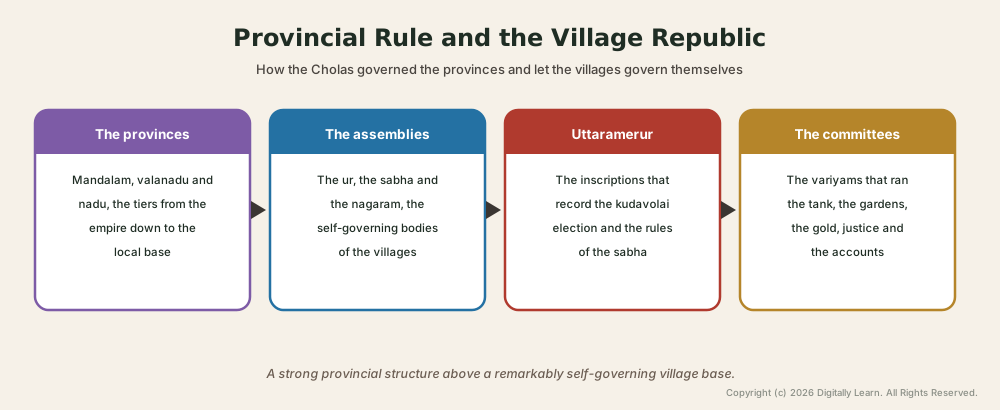
Chola local self-government was the system by which the villages of the Chola empire ran their own affairs through elected assemblies, beneath a provincial structure of mandalams, valanadus and nadus. The most organised of the village bodies was the sabha of a brahmadeya village, whose constitution is recorded in the famous Uttaramerur inscriptions, including the kudavolai, a pot-ticket method of choosing members by lot, and the variyam committees that managed the tank, the gardens, the gold and the village's justice. This village autonomy is India's most celebrated early example of democratic decentralisation.
Provincial Administration: Mandalam, Valanadu and Nadu
The Administrative Hierarchy from Mandalam to Village
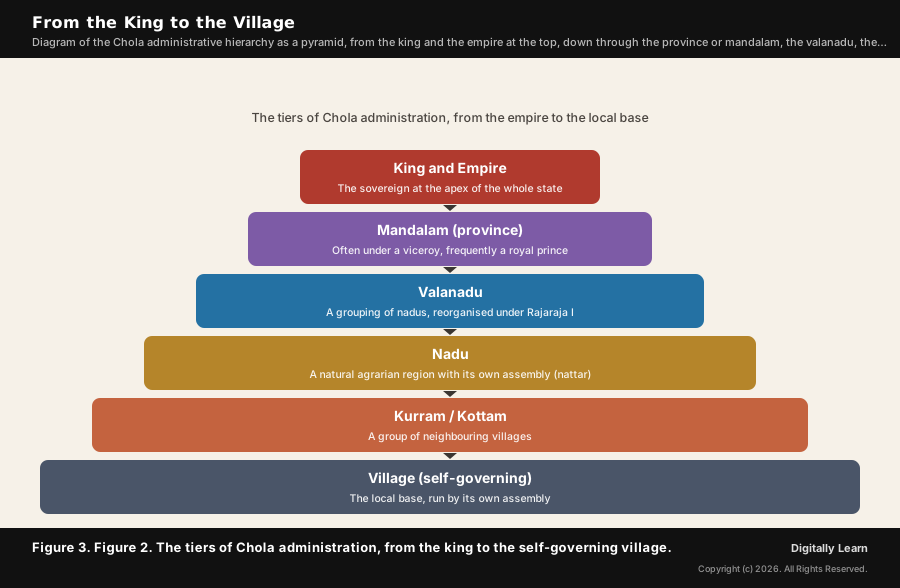
What is the significance of the provincial structure: to govern so wide an empire, the Cholas built a clear ladder of administrative units. The largest were the provinces, the mandalams, several of them named after kings, each placed under a viceroy who was often a royal prince.
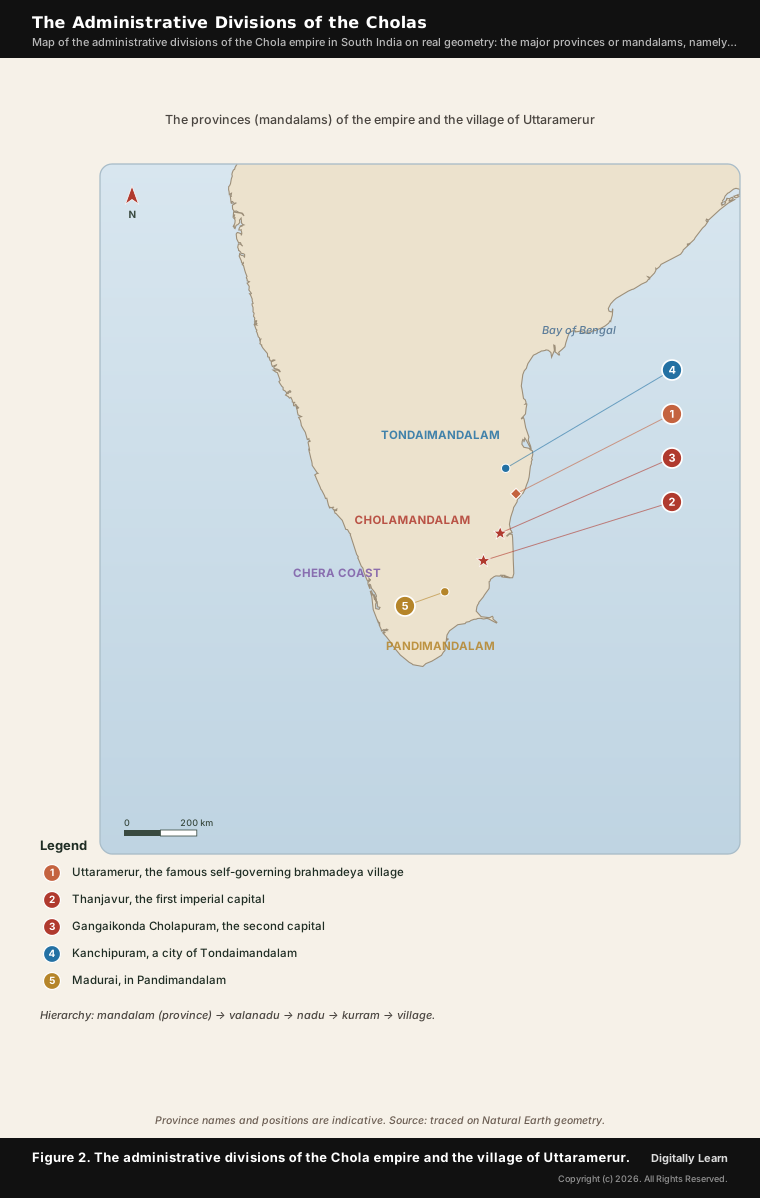
Distinguishing the lower tiers: below the mandalam came the valanadu, a grouping of districts that was reorganised under Rajaraja I, then the nadu, then the kurram or kottam, a cluster of neighbouring villages, and at the base the village itself. This ordered hierarchy carried the king's authority from the capital down to the fields, as the map and the pyramid show.
The Nadu and Its Assembly in Revenue and Justice
What is the significance of the nadu: the nadu was a key intermediate unit, a natural region of villages bound together by farming and custom. It was not merely a line on a map but a living community with its own assembly.
Distinguishing the nattar: the assembly of the nadu, the nattar or men of the nadu, was made up of the leading landholders. It assessed and collected much of the local revenue and settled many local disputes, forming the link between the self-governing village below and the provincial structure above.
Local Self-Government: The Chola Village Republic
Why Chola Village Government Is Called Early Local Self-Government
Why this matters: the most celebrated feature of the whole Chola system was the autonomy of the village. The villages governed their own affairs through their own assemblies, so that historians describe Chola rule as one of the earliest and fullest examples of local self-government in Indian, and even world, history.
Distinguishing the scope of autonomy: a Chola village managed its own land and irrigation, kept its own accounts, ran its own temple and settled most of its own disputes, with little interference from above so long as it paid its taxes and kept the peace. The central state set the frame; the village filled it in.
Autonomy, Decentralisation and Public Participation
What is the significance of this decentralisation: the Chola village was decentralisation in living practice. Real power over local life lay not with a distant official but with the villagers themselves, acting through assemblies that met, debated, kept records and chose committees to do the work.
Distinguishing the democratic element: a modern examination defines local self-government as an exercise in democratic decentralisation, the very thing the Cholas practised a thousand years ago. Participation was real, though it was not universal, a limit examined later in this series.
The Village Assemblies: Ur, Sabha and Nagaram
The Ur: Assembly of the Ordinary Village
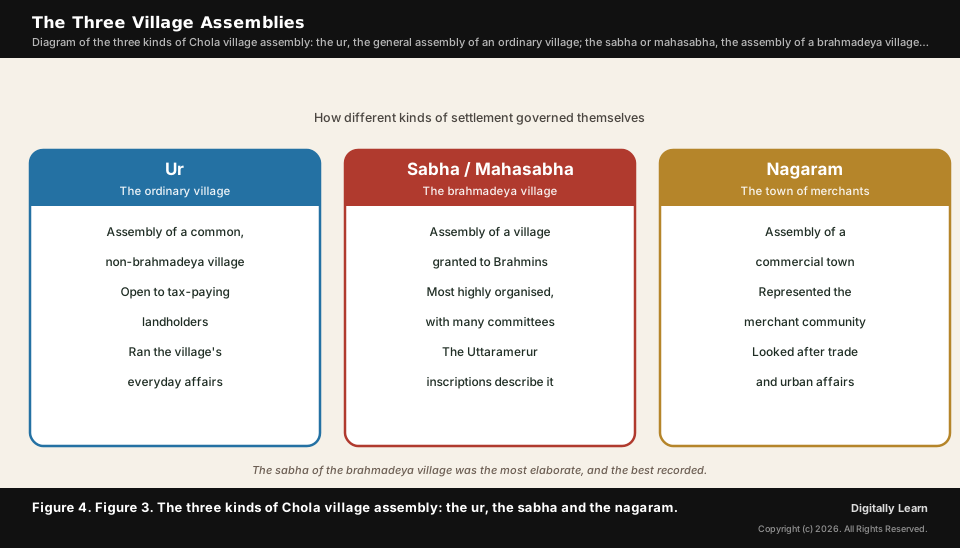
Distinguishing the ur: the ur was the general assembly of an ordinary village, one not specially granted to Brahmins. It was open to the tax-paying landholders of the village and was a less formal body than the sabha, but it managed the common affairs of the ordinary settlement, the bulk of the countryside.
What is the significance of the ur: because the great majority of villages were ordinary settlements of cultivators, the ur was the most common form of village government across the Chola country. Its members, the resident landholders, met to look after the village's common land, its tank and temple, and its dealings with the state, governing the everyday life of the rural mass.
The Sabha or Mahasabha: The Brahmadeya Village Assembly
What is the significance of the sabha: the sabha, or mahasabha, was the assembly of a brahmadeya, a village granted tax-free to Brahmins. It was by far the most highly organised of the assemblies, working through a developed system of elected committees, and it is the sabha whose detailed constitution survives in the Uttaramerur inscriptions.
Distinguishing its membership: because it governed a learned brahmadeya, the sabha set careful rules of qualification for its members and ran an elaborate annual cycle of election and audit, which is why it has become the classic example of Chola village self-government.
The Nagaram: The Assembly of Merchants and Towns
Distinguishing the nagaram: the nagaram was the assembly of a town or a chiefly commercial settlement, representing the community of merchants. As trade grew under the Cholas, the nagaram looked after the affairs of the market town, so that town, farming village and brahmadeya each had its own self-governing body.
What is the significance of the nagaram: it gave the trading community its own voice in local affairs and worked closely with the great merchant guilds that carried Chola commerce across the seas. The nagaram managed the market, the collection of dues on trade and the concerns of the urban settlement, the mercantile counterpart to the farming village's ur and the brahmadeya's sabha.
The Uttaramerur Inscriptions and the Constitution of the Sabha
The Uttaramerur Inscriptions of Parantaka I
What is the significance of Uttaramerur: at the village of Uttaramerur, near Kanchipuram, two inscriptions of the reign of Parantaka I, dated to 919 and 921 CE, are engraved on the wall of the village temple. They set out, in remarkable detail, the constitution of the sabha of this brahmadeya village, and they are the single most famous record of local self-government in early India.
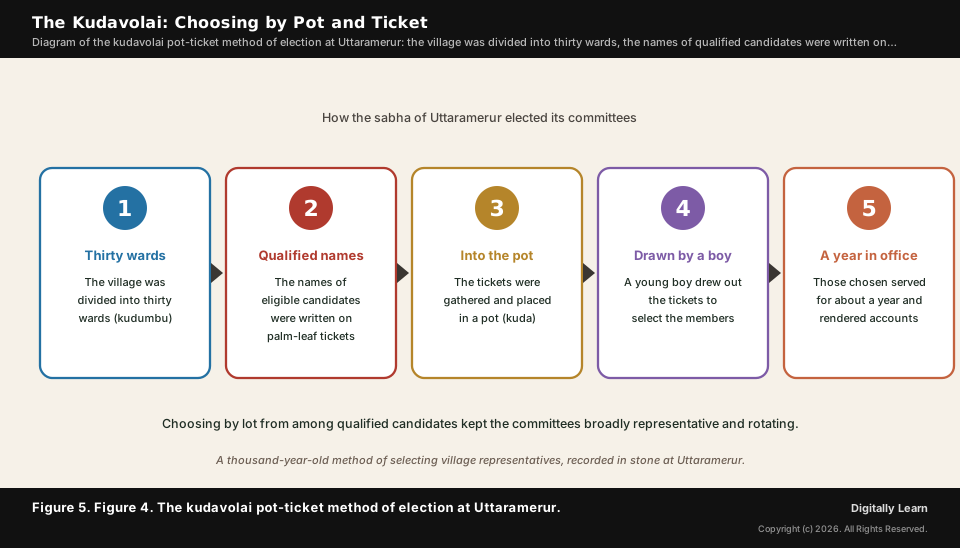
Distinguishing the wards: for the purpose of choosing its committees, the inscriptions divide the village into thirty wards, the kudumbu. From each ward, qualified men were put forward, and from them the members of the committees were selected each year by lot.
The Kudavolai Pot-Ticket Method of Election
What is the significance of the kudavolai: the members were chosen by the kudavolai, the pot-ticket method, a way of selecting representatives by lot. The names of the eligible candidates were written on small palm-leaf tickets, which were gathered and placed in a pot.
Distinguishing the draw: a young boy then drew out the tickets one by one before the assembly, and those whose names came out were declared chosen for the committees. Choosing by lot from among the qualified kept the committees rotating and broadly representative, and guarded against the permanent grip of a few families.
Qualifications, Disqualifications and Rotation of Members
What is the significance of the qualifications: the inscriptions lay down careful rules for who could stand. A candidate had to own tax-paying land, at least a quarter of a veli, a requirement reduced to an eighth for a man learned in a Veda and a commentary, had to own a house, be of mature age, and have a knowledge of business and affairs.
Distinguishing the disqualifications: equally careful rules barred the unfit. Those who had not submitted the accounts of committees on which they had served, those guilty of grave offences or sins, and their close relatives, were disqualified, a striking insistence on honesty in public office.
Distinguishing rotation and accountability: members held office for about a year, roughly 360 days, after which fresh committees were chosen. Their accounts were audited, and anyone found guilty of wrongdoing was removed at once and barred from office, so that the system rested on rotation and a strict reckoning.
The Variyam Committees and the Working of the Sabha
The Tank, Garden, Justice, Gold, Revenue and Annual Committees
What is the significance of the committees: the real work of the sabha was done not by the whole assembly but by its committees, the variyams, each of about six to twelve members chosen by lot from the wards. The work of the village was parcelled out among them, as the table sets out.
| Committee (variyam) | Main charge |
|---|---|
| Annual committee (samvatsara variyam) | The general yearly affairs of the village |
| Tank committee (eri variyam) | The irrigation tanks and water channels |
| Garden committee | The gardens and groves of the village |
| Gold committee (pon variyam) | The gold and the treasury of the assembly |
| Revenue committee | The collection and account of the village dues |
| Justice committee | The settlement of local disputes |
Distinguishing the committee system: by dividing the work in this way among small, elected and rotating committees, the sabha could run a complex village economy efficiently and hold each body to account for its own sphere.
Irrigation, Public Works, Audit and Judicial Functions
What is the significance of the committees' functions: through the variyams the village did real and vital work. The tank committee maintained the irrigation tanks and channels on which every harvest depended, the single most important task in a farming society, while the garden committee tended the village's groves.
Distinguishing the financial and judicial work: the gold and revenue committees kept the treasury and the accounts, all of which were regularly audited, and the justice committee settled local disputes. The temple, the tank and the assembly were the three pillars of village life, and the committees held them up.
UPSC Relevance and Exam Focus
Where This Fits in the UPSC-CSE Syllabus
This topic belongs to General Studies Paper I: medieval Indian history, where the Chola village assemblies and the Uttaramerur inscriptions are among the most frequently examined themes, and it links directly to Paper II through the idea of local self-government and Panchayati Raj.
For Prelims, hold the key facts: the three assemblies were the ur, the sabha and the nagaram; the sabha governed a brahmadeya village; the Uttaramerur inscriptions of Parantaka I record the kudavolai election and the variyam committees; and local self-government means democratic decentralisation.
For Mains, the Chola village is a powerful example for any question on local self-government, decentralisation and the working of democracy at the grassroots, a recurring theme connected to the modern Panchayati Raj system.
Recurring linked concepts an aspirant should keep in working memory:
- Ur, sabha and nagaram: the assemblies of the ordinary village, the brahmadeya and the merchant town.
- Uttaramerur: the village whose inscriptions record the constitution of the sabha.
- Kudavolai: the pot-ticket method of choosing committee members by lot.
- Variyams: the committees that ran the tank, the gardens, the gold, the revenue and justice.
A common Prelims trap is to confuse the assemblies: the ur was the assembly of an ordinary village, the sabha of a brahmadeya granted to Brahmins, and the nagaram of a town of merchants.
A common Mains trap is to treat the Chola village as a full modern democracy. It was a remarkable self-governing system, but membership was qualified by property and learning, and it was not open to all.
Previous Year UPSC-CSE Questions
Previous Year UPSC-CSE Questions By the end you will be able to draft model answers for the following UPSC questions. Each question carries a collapsible framework showing how to approach it in the exam.
- UPSC Prelims 2017 GS-IILocal self-government can be best explained as an exercise in
How to approach this Prelims question
Approach: Recall what local self-government essentially is.
Trap to watch: It is democratic decentralisation, not federalism (which is between levels of government) or mere administrative delegation (which keeps power at the top).
Key facts to recall:
- Local self-government means devolving real decision-making power to elected local bodies, that is democratic decentralisation.
- The Chola village assemblies are an early example of this idea.
Answer signal: Local self-government is best explained as democratic decentralisation.
- UPSC Prelims 1996 GS-IWhat is the system of governance in the Panchayati Raj setup?
How to approach this Prelims question
Approach: Recall the number of tiers in the modern Panchayati Raj system.
Trap to watch: The modern system is a three-tier structure at the village, block (intermediate) and district levels, not a single or four-tier one.
Key facts to recall:
- Modern Panchayati Raj is a three-tier structure at the village, block and district levels.
- It continues the old Indian tradition of village self-government seen under the Cholas.
Answer signal: It is a three-tier structure at the village, block and district levels.
- UPSC Mains 2017 GS-II“The local self-government system in India has not proved to be effective instrument of governance.” Critically examine the statement and give your views to improve the situation.
How to structure the answer in the exam
Introduction: Open with the long Indian tradition of local self-government, from the Chola assemblies to the 73rd and 74th Amendments.
Body (sub-themes to develop):
- Strengths: constitutional status, reservation, grassroots participation and local awareness.
- Weaknesses: limited funds, functions and functionaries; weak devolution by states; capture by elites.
- Historical benchmark: the Chola sabha shows elected committees, audit and rotation working effectively at the village.
- Reforms: genuine devolution of funds and powers, capacity-building and accountability.
Conclusion: Conclude that local self-government can be effective, as history shows, if it is given real powers, funds and accountability.
Sources and Further Reading
Editorial Disclaimer
This article is for UPSC preparation. Details of the Chola assemblies are reconstructed from inscriptions, above all those at Uttaramerur; verify specific figures against standard histories before relying on them.