


Overview
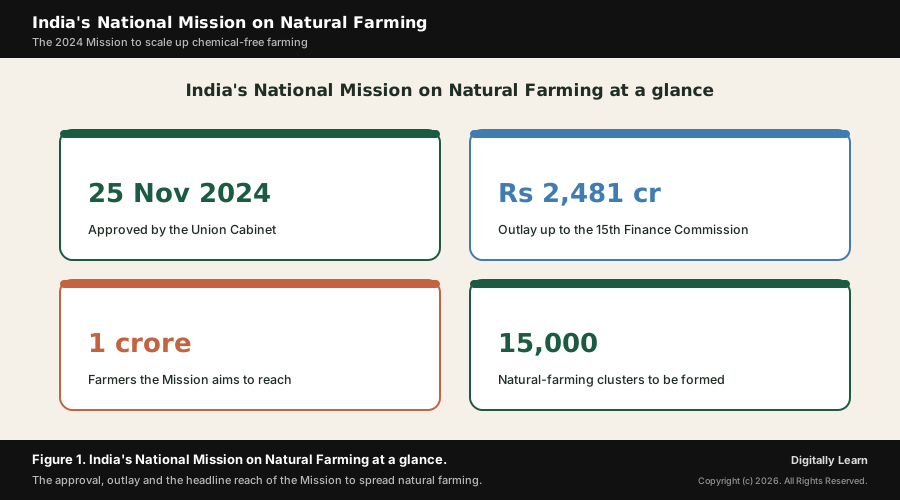
The National Mission on Natural Farming, or NMNF, is India's flagship programme to spread chemical-free, ecosystem-based farming, approved by the Union Cabinet on 25 November 2024 with an outlay of Rs 2,481 crore up to the 15th Finance Commission period. Run by the Ministry of Agriculture and Farmers Welfare as a standalone Centrally Sponsored Scheme, it aims to take natural farming to about one crore farmers across 15,000 clusters, covering about 7.5 lakh hectares. Natural farming is a low-cost method that uses on-farm, cow-based inputs in place of synthetic chemicals, drawing on traditional knowledge to rebuild soil and cut a farmer's dependence on bought fertilisers and pesticides.
What the National Mission on Natural Farming Is: A Chemical-Free Farming Mission
A Rs 2,481 crore Centrally Sponsored Scheme for chemical-free farming
The National Mission on Natural Farming is India's central plan to spread chemical-free farming. It was approved by the Union Cabinet on 25 November 2024 as a standalone Centrally Sponsored Scheme, with an outlay of Rs 2,481 crore up to the 15th Finance Commission period. The Centre and the States share the cost, in a ratio of 90:10 for Hilly and North-Eastern States and 60:40 for the other States.
The Mission is run by the Ministry of Agriculture and Farmers Welfare, the nodal ministry for the effort. Its purpose is to promote natural farming in mission mode across the country: a way of growing crops that uses on-farm, cow-based inputs in place of synthetic chemical fertilisers and pesticides, and that is rooted in traditional Indian knowledge of the soil.
The reason this matters is that decades of chemical-heavy farming have raised costs for farmers and strained the soil and water. By backing a low-cost, ecosystem-based method, the Mission ties together three goals at once: lower costs for the farmer, healthier soil and a safer environment. The figure below sets out the Mission at a glance.
Why the Natural Farming Mission Is in the News: Rollout and Early Numbers
From cabinet approval to clusters on the ground
Why it matters now is that the Mission has moved from approval on paper to a visible rollout in the field. After the November 2024 approval, the Ministry issued the scheme guidelines and began forming natural-farming clusters in willing Gram Panchayats, setting up the resource centres and training the workers who carry the method to farmers.
The early figures are best read as approximate and as-of the Government's progress reporting around mid-2025, because a live scheme changes as more clusters are formed. By that point more than 10 lakh farmers had been enrolled, about 1,100 Natural Farming Model Farms had been developed, and several hundred training institutes, about 806, had been engaged to train the field workers.
These early numbers matter because they show the Mission turning targets into activity on the ground: real clusters, real demonstration farms and real farmers being trained. As more clusters are formed in the coming years, the enrolled area and farmer numbers grow, which is why each fresh progress report keeps the Mission in the news and lets the country track its march toward the one-crore-farmer goal.
Understanding the Significance of Natural Farming for India
Lower costs, healthier soil and a safer environment
What is the significance of the National Mission on Natural Farming lies first in the economic relief it offers farmers. Because the method uses on-farm, locally available inputs instead of bought chemicals, it sharply lowers the cost of cultivation. Lower input costs mean less borrowing and less debt, which is a direct gain for the small and marginal farmers who make up most of Indian agriculture.
Its second significance is ecological. Replacing synthetic fertilisers and pesticides with cow-based microbial inputs helps rebuild soil health, restores the tiny organisms that keep soil fertile, supports biodiversity above and below ground, and reduces the chemical run-off that pollutes water. Healthier soil also holds more water and carbon, which builds resilience against drought and a changing climate.
Its third significance is for health and sustainability. Food grown without chemical residues is safer to eat, and a farming system that cuts chemical use and emissions fits squarely within sustainable agriculture and the wider aim of raising farm incomes. Together these make the Mission a tool for the farmer, the environment and the consumer at once.
What Natural Farming Is: Cow-Based Inputs, and Natural versus Organic and Chemical
An agroecological method built on on-farm resources
To follow the Mission, it helps to be clear on what natural farming actually is. It is a chemical-free, low-cost form of agroecology, the science of applying ecological principles to farming. Instead of buying fertilisers and pesticides, the farmer makes inputs on the farm from locally available resources, so the field works more like a natural ecosystem than a chemical factory.
The core inputs are cow-based. A small quantity of cow dung and cow urine is fermented to make microbial preparations such as Jeevamrit, a soil tonic that multiplies helpful microbes, and Beejamrit, a seed treatment. These are combined with mulching, the covering of soil with crop residue to hold moisture, and with on-farm biomass recycling and diversified, mixed cropping that keeps the soil alive and the farm resilient.
Seen against the global frame, this is what bodies such as the FAO describe as agroecology: a holistic approach whose principles include recycling, cutting external inputs, building soil health and protecting biodiversity. Natural farming is India's traditional, low-cost expression of that idea, which is why it is presented as both a practice and a path to sustainable agriculture.
How natural farming differs from organic and chemical farming
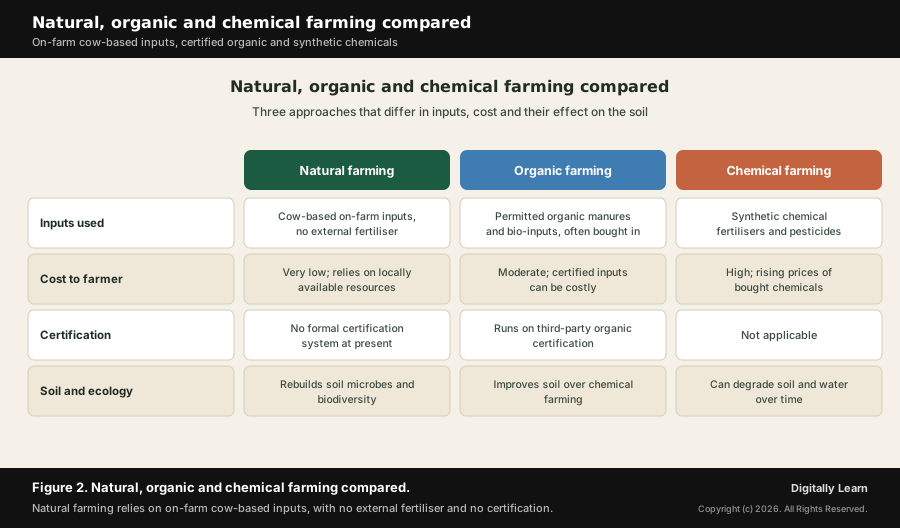
Natural farming is easily confused with organic farming, but the two differ in an important way. Organic farming also avoids synthetic chemicals, yet it often relies on purchased organic inputs, such as bought manures or bio-fertilisers, and it runs on a formal certification system. That can keep costs and paperwork high for a small farmer.
Natural farming, by contrast, leans almost entirely on on-farm, cow-based inputs and carries no external-fertiliser bill and, at present, no formal certification. Where organic farming substitutes one set of bought inputs for another, natural farming tries to free the farmer from bought inputs altogether, which is the heart of its low-cost promise.
Both stand apart from chemical or conventional farming, which depends on synthetic fertilisers and pesticides. Chemical farming can lift yields quickly but raises costs and, over time, can degrade the soil and pollute water. The figure below sets the three approaches side by side so the distinctions are clear.
How the Mission Works: Clusters, Resource Centres, Krishi Sakhis and an Incentive
The cluster model and the targets
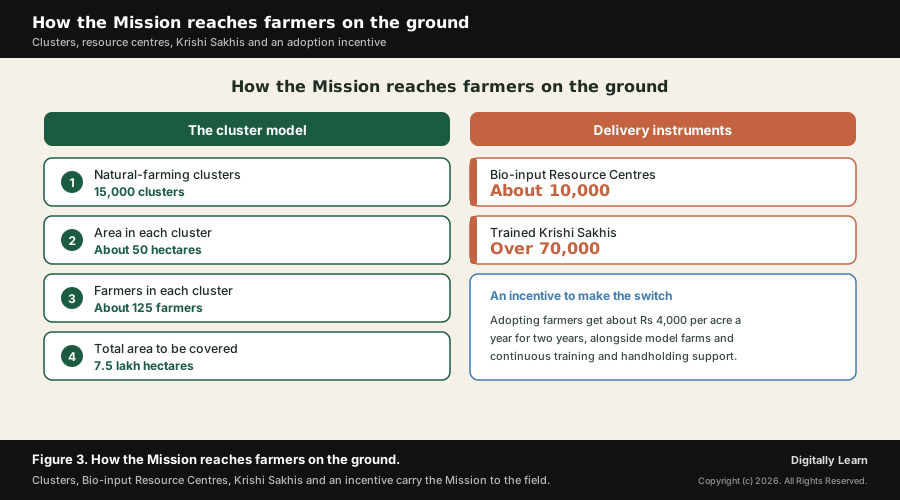
The Mission is built around a cluster model. Rather than scatter support thinly, it concentrates effort in 15,000 natural-farming clusters formed in willing Gram Panchayats. Each cluster is a contiguous area of about 50 hectares with around 125 farmers, so that neighbours adopt the method together and can share inputs, knowledge and demonstration plots.
Across these clusters the Mission aims to reach about one crore farmers and to bring roughly 7.5 lakh hectares under natural farming. Grouping farmers in this way matters because natural farming spreads best by example: when a whole neighbourhood shifts together, the soil and pest balance of the area improves and the change becomes easier to sustain.
| Element of the cluster model | Scale | Why it is designed this way |
|---|---|---|
| Natural-farming clusters | 15,000 clusters | Concentrate support so neighbours adopt the method together |
| Area in each cluster | About 50 hectares | A contiguous block that can shift to natural farming as one |
| Farmers in each cluster | About 125 farmers | Enough to share inputs, learning and demonstration plots |
Read together, the rows show the logic of the cluster: a contiguous block of land and a group of farmers large enough to learn together, repeated 15,000 times, so that the Mission can carry natural farming to a crore farmers and 7.5 lakh hectares in an orderly way.
Resource centres, Krishi Sakhis, model farms and an incentive
To make the clusters work, the Mission sets up a chain of delivery instruments. At its base are about 10,000 Bio-input Resource Centres, or BRCs, local enterprises that prepare and sell ready-to-use natural-farming inputs to farmers who do not wish to make every preparation themselves, so that the cow-based inputs are always within reach.
People matter as much as inputs. Over 70,000 trained Krishi Sakhis, women agriculture workers, give farmers last-mile guidance, while model demonstration farms at Krishi Vigyan Kendras, agricultural universities and farmers' fields let people see the method working before they adopt it. A network of master trainers and community resource persons offers continuous hand-holding.
Because a farmer can lose income while the soil recovers, the Mission also offers a direct incentive: about Rs 4,000 per acre each year for two years to those who take up natural farming. The figure below sets out how clusters, resource centres, Krishi Sakhis and the incentive fit together to carry the Mission to the field.
Progress, the Benefits and the Real Challenges Including the Yield Debate
Early progress and the benefits on the ground
Early progress, stated as approximate and as-of the Government's reporting around mid-2025, suggests the Mission is taking root. More than 10 lakh farmers had been enrolled, about 1,100 model farms had been set up, and several hundred training institutes had been engaged, with tens of thousands of community resource persons identified to support farmers in the clusters.
The benefits reported by adopting farmers track the Mission's logic. The clearest is lower cost: using on-farm inputs sharply reduces spending on fertiliser and pesticide, which cuts borrowing and debt. Over a few seasons many also report firmer, darker soil, more earthworms and better moisture-holding, the visible signs of returning soil health.
Beyond the farm, the gains are environmental and social. Less chemical use means cleaner water and lower emissions, diversified cropping spreads a household's risk, and chemical-free produce can fetch a price premium and is safer to eat. Taken together, these are the ecological and economic benefits that make a chemical-free model attractive for a sustainable farm future.
The challenges: the yield debate, scaling, markets and standards
A balanced view must weigh the challenges, the more so because UPSC questions reward this balance. The most debated is the yield question. When a farmer first stops using chemical fertiliser, yields can dip while the soil recovers, and the scientific evidence on whether natural farming matches chemical-farming yields over the long run is still being gathered. The honest position is that gains in cost and soil health are clearer than any blanket claim of higher output.
A second cluster of challenges is about scaling and support. Shifting a crore farmers needs sustained training, assured supply of bio-inputs and patient hand-holding through the transition years, which is exactly why the Mission leans on clusters, resource centres and Krishi Sakhis. Without that continuous support, early adopters can slip back to chemicals after a poor season.
Further challenges sit on the market and standards side. Natural farming has no formal certification yet, so it can be hard for a farmer to prove the produce is chemical-free and to win a price premium. Building a credible certification and a reliable market link, alongside standardising the cow-based inputs, is essential if the method is to pay. None of these is fatal, but each must be solved for the Mission to succeed.
Natural Farming in Context: BPKP, Doubling Farmer Income and Climate-Smart Agriculture
How the Mission sits within India's farm and climate goals
Contemporary linkages place the Mission within a longer policy story. Natural farming was earlier promoted as the Bharatiya Prakritik Krishi Paddhati, a scheme run under the Paramparagat Krishi Vikas Yojana. The new Mission up-scales that earlier effort into a full, stand-alone programme, so it builds on tested ground rather than starting from scratch.
The Mission also connects to the goal of better farm incomes. By cutting the cost of cultivation, natural farming raises the margin a farmer keeps from each crop, which supports the wider aim of improving and doubling farmers' income. Lower costs, rather than only higher output, are the route to a better return that this method emphasises.
In the climate frame, natural farming is a form of climate-smart agriculture. Healthier, carbon-richer soil stores more water and withstands drought better, while cutting synthetic fertiliser lowers the emissions tied to its manufacture and use. This ties the Mission to India's climate commitments and to the global push, led by bodies such as the FAO, for agroecology and sustainable food systems.
- Bharatiya Prakritik Krishi Paddhati: The earlier natural-farming scheme under the Paramparagat Krishi Vikas Yojana that the Mission up-scales.
- Doubling farmers income: Natural farming raises margins mainly by lowering the cost of cultivation rather than only by raising output.
- Soil health and water: Cow-based inputs and mulching rebuild soil organisms, hold moisture and cut chemical run-off.
- Climate-smart agriculture: Carbon-richer soil and lower fertiliser emissions tie natural farming to India’s climate goals.
Finally, the Mission sits within India's evolving sustainable-agriculture architecture, alongside the Soil Health Card, micro-irrigation, millet promotion and crop diversification. It does not stand alone; it is one carefully funded piece of a much larger shift toward a lower-input, more resilient farm economy.
UPSC Relevance and Exam Focus
Where this fits in the UPSC-CSE syllabus
This topic maps most directly to General Studies Paper III: major crops and cropping patterns, and issues of farm subsidies and agricultural inputs, and to the conservation of the environment. It also reaches into the economics of farmer welfare and into the climate-change and sustainability themes that recur across the paper.
For Prelims, hold the high-yield facts: the National Mission on Natural Farming was approved on 25 November 2024 with an outlay of Rs 2,481 crore, is run by the Ministry of Agriculture and Farmers Welfare, and aims to reach about one crore farmers across 15,000 clusters; its tools are Bio-input Resource Centres and Krishi Sakhis; and natural farming uses on-farm, cow-based inputs such as Jeevamrit, distinct from certified organic farming.
For Mains, the recurring framing is to set out the ecological and economic benefits of chemical-free farming, weigh them honestly against the yield, scaling and market challenges, and link the method to soil health, farmer income and sustainable agriculture. A strong answer treats natural farming as a cost and soil story first, and is careful not to overstate the yield claims.
Recurring linked concepts an aspirant should keep in working memory:
- Natural farming: Chemical-free farming using on-farm, cow-based inputs such as Jeevamrit and Beejamrit, with no external fertiliser.
- Agroecology: The application of ecological principles, such as recycling, input reduction and soil health, to sustainable farming.
- Bio-input Resource Centre: A local enterprise that supplies ready-to-use natural-farming inputs within a cluster.
- Sustainable agriculture: Farming that protects soil, water and biodiversity while supporting farm incomes over the long run.
A common Prelims trap is to treat natural farming and organic farming as the same thing. Both avoid synthetic chemicals, but organic farming permits bought organic inputs and relies on certification, while natural farming leans on on-farm, cow-based inputs with no external fertiliser and, at present, no certification.
A common Mains trap is to praise natural farming without testing it. Its exam value lies in a balanced judgment: the genuine gains in input cost, soil health and the environment, set honestly against the debated yields in the transition years, the heavy demand for training and support, and the missing certification and market links.
Previous Year UPSC-CSE Questions By the end you will be able to draft model answers for the following UPSC questions. Each question carries a collapsible framework showing how to approach it in the exam.
- UPSC Mains 2018 GS-IIISikkim is the first ‘Organic State’ in India. What are the ecological and economical benefits of Organic State?
How to structure the answer in the exam
Body (sub-themes to develop):
- Ecological benefits, soil and biodiversity: chemical-free, cow-based inputs rebuild soil microbes, organic matter and biodiversity above and below ground, reversing the degradation caused by synthetic chemicals.
- Ecological benefits, water and climate: less chemical run-off keeps water cleaner, and carbon-richer soil holds more moisture, building drought resilience and cutting fertiliser-related emissions.
- Economic benefits, costs and debt: using on-farm inputs instead of bought chemicals sharply lowers the cost of cultivation, reducing borrowing and debt for small and marginal farmers.
- Economic benefits, income and markets: chemical-free produce can earn a price premium and access niche and export markets, and higher margins support better and doubled farm incomes.
- A balancing note: early-year yield dips, the evidence debate, certification and market links must be managed, so benefits are realised only with sustained support.
Sources and Further Reading
- PIB: Launch of National Mission on Natural Farming
- PIB: Promotion of Natural Farming under National Mission on Natural Farming
- Department of Agriculture and Farmers Welfare: National Mission on Natural Farming guideline
- NITI Aayog Natural Farming initiative: Components of Natural Farming
- NITI Aayog Natural Farming initiative: Bharatiya Prakritik Krishi Paddhati (BPKP)
- Natural Farming Portal, Department of Agriculture and Farmers Welfare: Concept
- FAO: The 10 elements of agroecology
- Wikipedia: Zero Budget Natural Farming
Editorial Disclaimer
This briefing is for UPSC preparation. Verify the figures and scheme details against the official PIB and Ministry of Agriculture and Farmers Welfare sources before relying on them.