


Overview
India has begun the commercial production and shipment of its first Made-in-India semiconductor chips from the Micron facility at Sanand, Gujarat, inaugurated in February 2026. The plant assembles, tests and packages DRAM and NAND memory chips, the kind that store data in phones, computers and data centres. It is an assembly, test and packaging facility rather than a wafer fabrication plant, the first project approved under the India Semiconductor Mission, and it marks an early step in building a home-grown chip industry and reducing India's near-total reliance on imported semiconductors.
India Ships Its First Made-in-India Semiconductor Chips
The Micron Sanand facility begins commercial production
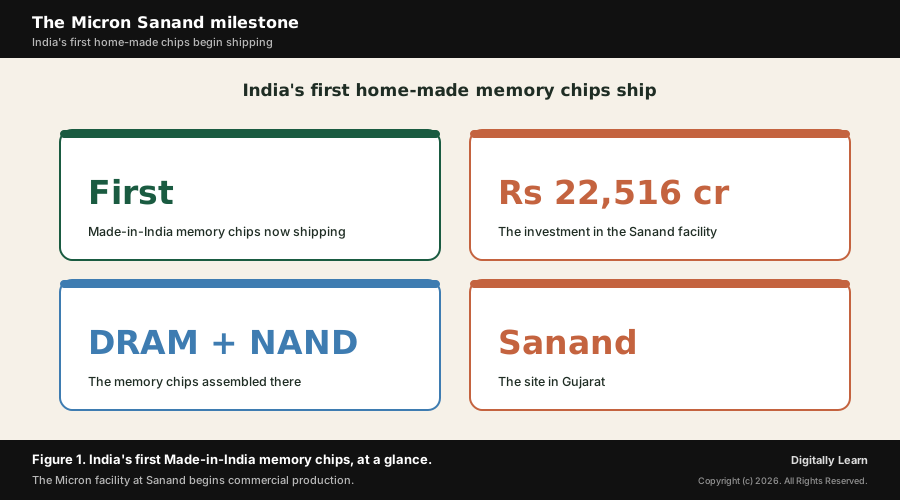
India has reached a milestone in electronics manufacturing: the commercial production and shipment of the first Made-in-India semiconductor chips, from the Micron facility at Sanand in Gujarat, inaugurated in February 2026. For the first time, chips finished on Indian soil are reaching the market.
The plant makes memory chips, the DRAM and NAND devices that store data in smartphones, laptops, servers and the data centres behind artificial intelligence. The facility was set up with an investment of about 22,516 crore rupees and was the first proposal cleared under the India Semiconductor Mission, with its ground-breaking in September 2023.
It is important to be precise about what the plant does. It is an assembly, test and packaging facility: it takes semiconductor wafers made in Micron's factories abroad and turns them into finished, usable chips. It is not yet a wafer fabrication plant, the most complex stage, but it is the first part of the chain to operate at commercial scale in India.
Why Domestic Chip-Making Matters
Chips run the modern economy, and India imports almost all of them
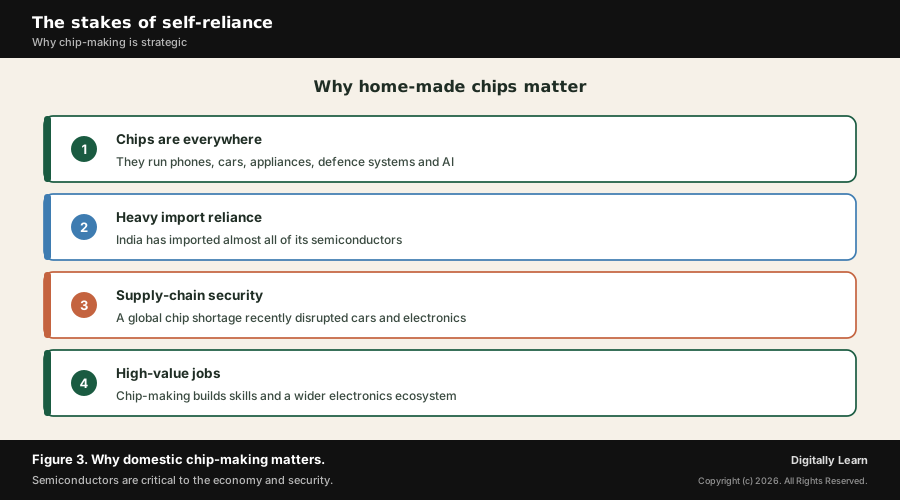
Why it matters is that semiconductors are the foundation of the modern economy. They are the tiny brains inside phones, cars, medical devices, weapons systems and the servers that run the internet, so a country that cannot make them depends on others for the heart of its technology.
India has long imported nearly all of its chips, a costly and strategically risky dependence. The global chip shortage of recent years, which held up the production of cars and electronics worldwide, showed how fragile that reliance can be, and why governments now treat chip-making as a matter of national security.
The Significance of the First Made-in-India Chips
A first step up the semiconductor value chain
What is the significance of this milestone lies in its being a genuine first, while remaining only a first step. The Sanand facility proves that India can run a part of the chip-making chain at world-class scale, build the skilled workforce it needs, and attract the global firms that lead the industry.
At the same time, the honest picture is that India has entered the chain at the packaging end, not the fabrication end. Making the wafers themselves, in a fab, is more complex, more expensive and still to come. The significance is therefore real but measured: a credible start, not yet self-sufficiency.
Packaging, Fabrication and the Semiconductor Value Chain
What the Micron Sanand facility does, and does not, do
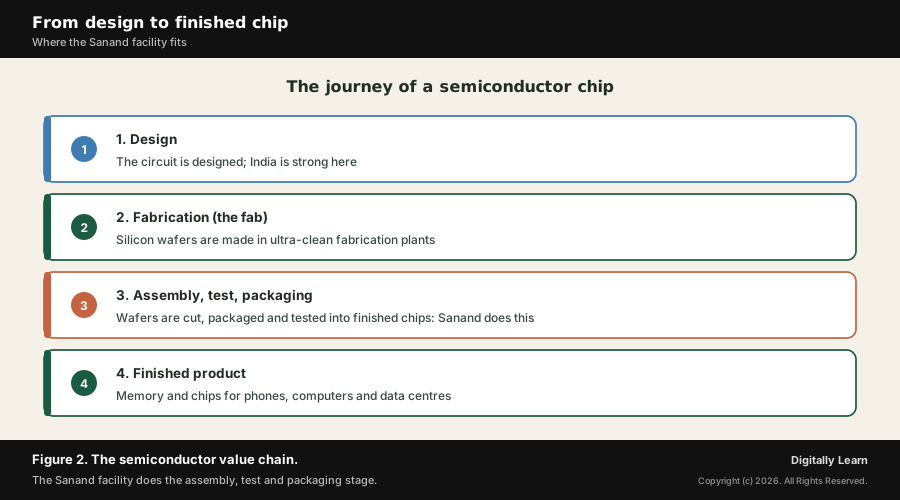
Making a chip runs through several stages, and it helps to see where the Sanand plant fits. The table sets out the key facts of the facility, and the figure shows the wider value chain from design to finished product.
| Feature | Detail |
|---|---|
| Company | Micron Technology |
| Location | Sanand, Gujarat |
| What it makes | DRAM and NAND memory chips |
| Type of plant | Assembly, test and packaging, not a wafer fabrication plant |
| Investment | About 22,516 crore rupees |
| Programme | The first project approved under the India Semiconductor Mission |
The distinction matters for the exam and for policy. A fabrication plant, or fab, makes the silicon wafers in ultra-clean conditions; an assembly, test and packaging unit takes those wafers and turns them into the finished chips that go into devices. Sanand does the second job.
The India Semiconductor Mission and Its Approved Units
The push is driven by the India Semiconductor Mission, the government's nodal body for building a chip ecosystem, which offers large fiscal support to approved projects. Several units have now been cleared, covering different parts of the chain.
Beyond the Micron packaging plant, the most significant is the country's first fabrication plant, a joint venture between the Tata group and Taiwan's Powerchip at Dholera in Gujarat. Further assembly and packaging units, including those of CG Power and Kaynes at Sanand and a Tata facility at Morigaon in Assam, fill out the ecosystem.
Taken together, these projects show a deliberate strategy: start with the assembly and packaging stages, which are quicker to build, while the more demanding fabrication capacity is constructed in parallel. The Sanand chips are the first visible result of that plan.
What to Watch in India's Semiconductor Push
Three milestones that will define the mission
The first chips point to three developments worth following, since a chip industry is built stage by stage over many years.
- (a) The first fabrication plant. Whether the Tata-Powerchip fab at Dholera begins making wafers on Indian soil, the harder and more valuable stage.
- (b) Ecosystem depth. Whether a supporting base of materials, gases, equipment and trained engineers grows around the new plants.
- (c) Import substitution. Whether domestic output begins to replace imported chips in Indian electronics and reduces the import bill.
The real test is whether these first packaging plants are followed by working fabs and a deep supplier ecosystem, so that India moves from finishing chips to truly making them.
Make in India, Supply Chains and Strategic Autonomy
How chips connect to India's biggest economic debates
Contemporary linkages tie the Sanand chips to the wider goals of Make in India and self-reliance. Semiconductors are among the highest-value things a country can manufacture, so domestic chip-making is a flagship test of whether India can move up the manufacturing ladder.
They connect, too, to the idea of supply-chain resilience. Chips have become a strategic commodity, central to rivalry between major powers, and building some capacity at home is a hedge against shortages, export controls and geopolitical shocks.
There are real challenges. Chip plants need vast amounts of ultra-pure water and reliable power, a deep pool of specialised engineers, and steady demand; sustaining the effort beyond the first projects will test policy and execution.
For India, the lesson is that the first Made-in-India chips are a beginning, not an arrival. The strategic aim is a self-reliant electronics industry, and reaching it will need patient investment in fabrication, talent and the wider ecosystem.
UPSC Relevance and Exam Focus
Where this fits in the UPSC-CSE syllabus
This topic maps to General Studies Paper III: developments in science and technology, and the Indian economy and manufacturing, with links to Make in India and indigenisation, and to security through critical technologies.
For Prelims, hold the key distinctions and facts: a fabrication plant, or fab, makes the wafers, while an assembly, test and packaging unit finishes them into chips; the Micron Sanand plant is a packaging facility; DRAM and NAND are types of memory; and the India Semiconductor Mission is the nodal programme.
For Mains, the recurring framings are how chip-making advances Make in India, and what supply-chain security and self-reliance in critical technologies mean for India.
Recurring linked concepts an aspirant should keep in working memory:
- India Semiconductor Mission: the nodal programme that offers fiscal support to approved chip projects.
- Fabrication versus packaging: making the wafer versus finishing it into a usable chip.
- Make in India: the manufacturing-promotion drive of which chip-making is a flagship.
- Supply-chain resilience: reducing dependence on imported critical goods such as chips.
A common Prelims trap is to call the Micron Sanand plant a fabrication unit. It is an assembly, test and packaging facility; the first fabrication plant is the separate project at Dholera.
A common Mains trap is to present the first chips as self-sufficiency. India has entered the chain at the packaging end; making the wafers at home is the harder stage still to come.
Previous Year UPSC-CSE Questions By the end you will be able to draft model answers for the following UPSC questions. Each question carries a collapsible framework showing how to approach it in the exam.
- UPSC Mains 2015 GS-III“Success of ‘Make in India’ programme depends on the success of ‘Skill India’ programme and radical labour reforms.” Discuss with logical arguments.
How to structure the answer in the exam
Introduction: Open with Make in India's goal of raising manufacturing and its dependence on skills and a flexible labour market.
Body (sub-themes to develop):
- Skills: high-value manufacturing such as chip-making needs specialised, trained engineers and technicians.
- Labour reforms: flexible, predictable labour rules help attract large manufacturing investment.
- Ecosystem: suppliers, infrastructure and stable policy are needed alongside skills and reforms.
- Evidence: the India Semiconductor Mission and the first Made-in-India chips illustrate both the promise and the dependence.
Conclusion: Conclude that Make in India succeeds only when matched by skilling and labour reforms that let high-value manufacturing take root.
- UPSC Prelims 2012 GS-IWhat is/are the recent policy initiative(s) of Government of India to promote the growth of manufacturing sector?
- Setting up of National Investment and Manufacturing Zones
- Providing the benefit of ‘single window clearance’
- Establishing the Technology Acquisition and Development Fund Select the correct answer using the codes given below:
How to approach this Prelims question
Approach: Recall the tools the government uses to promote manufacturing.
Trap to watch: All three are genuine manufacturing-promotion measures under the National Manufacturing Policy framework.
Key facts to recall:
- National Investment and Manufacturing Zones, single-window clearance and a technology fund are all manufacturing-promotion measures.
- The India Semiconductor Mission, with its fiscal support, is a more recent initiative in the same spirit.
Answer signal: All three statements are correct, so the answer is 1, 2 and 3.
- UPSC Mains 2023 GS-IIIFaster economic growth requires increased share of the manufacturing sector in GDP, particularly of MSMEs. Comment on the present policies of the Government in this regard.
How to structure the answer in the exam
Introduction: Open with manufacturing's modest share of India's GDP and the goal of raising it.
Body (sub-themes to develop):
- High-value manufacturing: missions such as the India Semiconductor Mission target advanced sectors.
- Incentives: production-linked and fiscal-support schemes attract investment.
- MSMEs: credit, formalisation and supply-chain linkages support smaller firms.
- Gaps: skills, infrastructure and ecosystem depth still constrain the manufacturing share.
Conclusion: Conclude that present policies are a serious push but must be sustained on skills, infrastructure and MSME support to lift manufacturing's share of GDP.
Sources and Further Reading
- Press Information Bureau: Prime Minister inaugurates Micron's Semiconductor Assembly, Test and Packaging facility in Sanand, Gujarat
- Press Information Bureau: Prime Minister to visit Gujarat on 28 February
- Press Information Bureau: Micron's semiconductor project at Sanand on fast track
- Ministry of Electronics and Information Technology: Semiconductors and Display Fab Ecosystem
- Press Information Bureau: Government notifies India's first chip fabrication plant at SEZ Dholera
Editorial Disclaimer
This briefing is for UPSC preparation. Verify the latest project details against the official Press Information Bureau and Ministry of Electronics and Information Technology sources before relying on them.


