


Overview
All-weather roads to every unconnected village
A centrally sponsored scheme launched in 2000 to give every eligible unconnected rural habitation a good all-weather road, run by the Ministry of Rural Development through NRIDA, delivering the physical connectivity that brings markets, health, schooling and jobs within reach and forms the basis of rural development.
Pradhan Mantri Gram Sadak Yojana, or PMGSY, is a centrally sponsored scheme launched on 25 December 2000 to give every eligible unconnected habitation a good all-weather road. It is run by the Ministry of Rural Development through the National Rural Infrastructure Development Agency, connects habitations above set population thresholds, and has moved through phases PMGSY-I to PMGSY-IV while building a durable core network to a fixed quality. By bringing the market, the clinic, the school and the job within reach, PMGSY delivers the physical connectivity on which rural development rests.
What PMGSY Is: The 2000 Launch and the All-Weather Rural Road Mandate
The 25 December 2000 launch, the Ministry of Rural Development mandate and all-weather connectivity
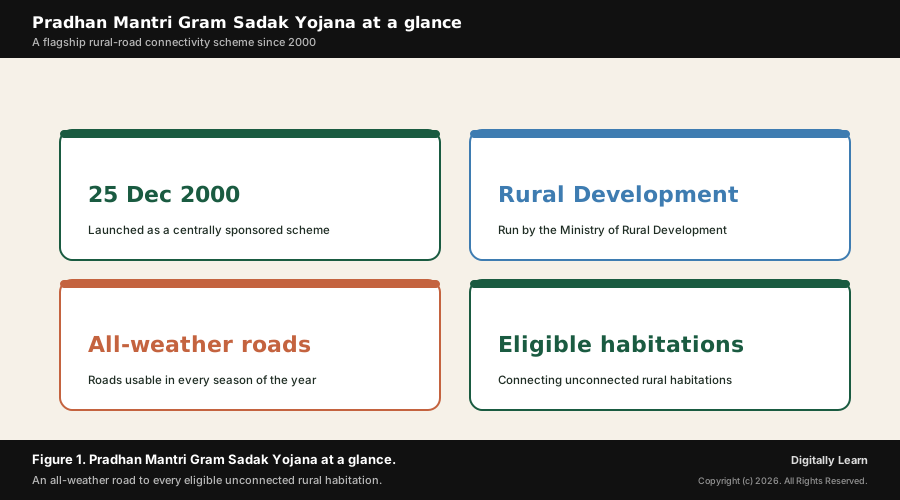
Pradhan Mantri Gram Sadak Yojana, widely shortened to PMGSY, is India's flagship effort to bring an all-weather road to every village that still lacks one. The scheme was launched on 25 December 2000 as a centrally sponsored programme under the Ministry of Rural Development, with a single, clear mandate: to connect every eligible unconnected habitation by a road that is usable in every season of the year. An all-weather road is one that stays open through the monsoon and the dry months alike, so that a village is never cut off when it most needs to move.
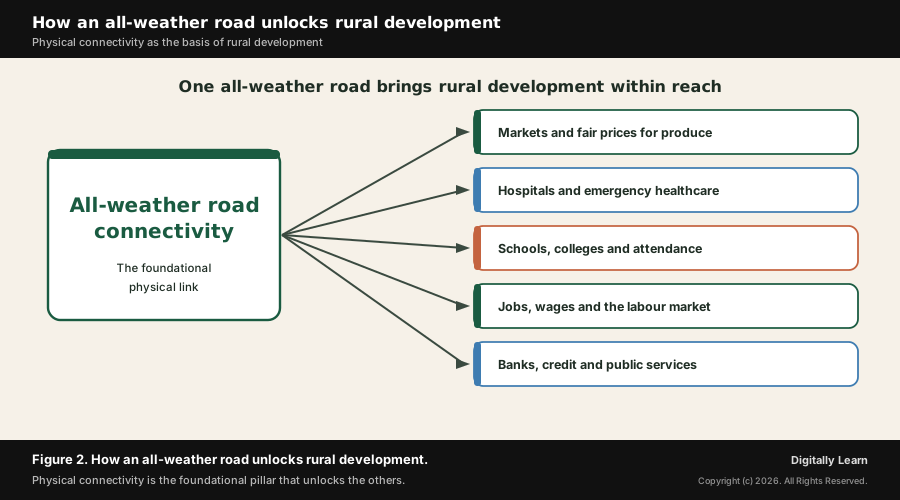
Why it matters is that a village without a dependable road is a village cut off from the rest of the economy. When the only track turns to mud in the rains, the farmer cannot move produce to the market, the patient cannot reach the hospital, the child misses school and the worker cannot reach a job. By making the road reliable in every season, PMGSY removes the single barrier that keeps a remote habitation poor, and it does so as a focused, time-bound infrastructure mission rather than a vague promise.
The ambition of the scheme is national in scale. PMGSY set out to connect every eligible unconnected habitation that sits on the planned core network of rural roads, prioritising the larger and the more remote settlements first. Government reports record that, across its phases, the scheme has sanctioned more than eight lakh kilometres of rural roads and provided connectivity to well over a lakh habitations, figures that are framed as government-reported and rounded. The figure below sets out PMGSY at a glance.
Connectivity as the Basis of Rural Development: The PURA Four-Connectivities Insight
Why rural development rests on connectivity, the PURA framing of four connectivities and road connectivity as the foundational pillar
To see why a rural road is so powerful, it helps to start from a simple idea: rural development rests on connectivity. A village left in isolation cannot trade, learn, heal or earn beyond its own boundary, so its people stay poor however hard they work. The moment a settlement is connected, the outside world of markets, services and jobs becomes reachable, and development becomes possible. This is why connectivity, and not any single building or subsidy, is treated as the true foundation of bringing urban amenities and opportunity to rural areas.
This insight was captured by the PURA idea, short for Providing Urban Amenities to Rural Areas, a vision set out by Dr A P J Abdul Kalam. PURA framed four connectivities: physical connectivity through roads and transport, electronic connectivity through communications, knowledge connectivity through schools and skills, and, flowing from these three, economic connectivity that raises rural prosperity. PURA as a standalone scheme was later restructured and then discontinued, so it is honest to treat it as a defunct programme; its central insight, that connectivity is the basis of rural development, has nonetheless endured.
Among the four, physical road connectivity is the foundational pillar that unlocks the others. A good all-weather road is what first brings the market, the hospital, the school, the bank and the job within reach, and it is the road that later carries the electricity poles, the optical fibre and the teachers who deliver the other connectivities. PMGSY is the flagship instrument through which India delivers this physical pillar, giving every eligible unconnected habitation the all-weather road on which all later development depends. The figure below shows how one road opens many doors.
Eligibility and Coverage: Unconnected Habitations and Population Thresholds
The eligible unconnected habitation, the core network and the 500, 250 and 100 population thresholds
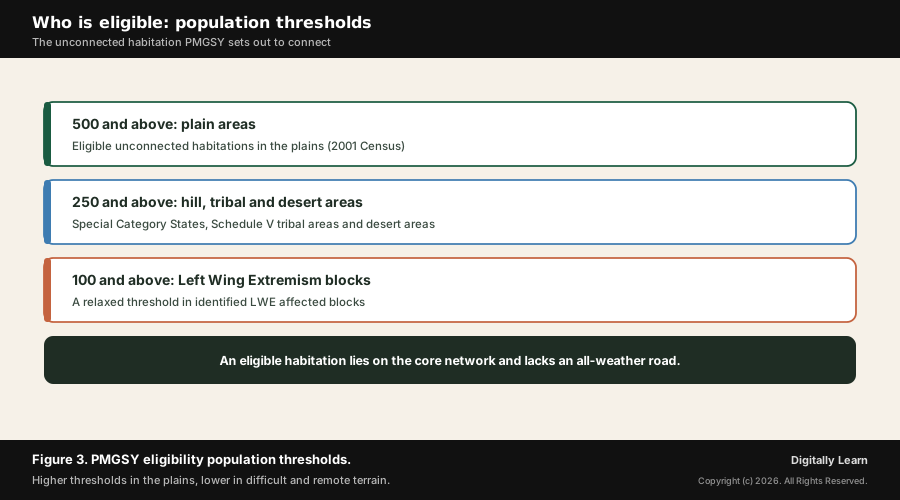
PMGSY does not try to build every road at once; it works to a careful definition of what counts as eligible. The unit it connects is the habitation, a cluster of homes, rather than the revenue village, because a single village may contain several scattered habitations. A habitation is eligible when it sits on the planned core network of rural roads and does not yet have an all-weather road. By fixing on the unconnected habitation, the scheme directs scarce money to the places that have nothing, rather than to upgrading roads that already exist.
Which habitations qualify depends on population thresholds set against the 2001 Census. In the plains, a habitation of 500 people and above is eligible. In the harder country, the bar is lower, set at 250 people and above for the Special Category hill states of the North East and the Himalayas, for Schedule V tribal areas, and for the identified desert areas. The lower threshold recognises that these settlements are smaller and more scattered, yet just as cut off, so a higher bar would leave them permanently unconnected.
In the most difficult country of all, the bar falls further. For the blocks affected by Left Wing Extremism, the threshold is relaxed to just 100 people and above, so that even tiny, remote hamlets in these troubled districts can be reached. This sliding scale, 500 in the plains, 250 in hill, tribal and desert areas and 100 in the worst-affected blocks, is how PMGSY balances limited resources against the goal of leaving no eligible habitation behind. The figure below sets out these thresholds.
The Phases of PMGSY: From PMGSY-I to PMGSY-IV
PMGSY-I, PMGSY-II, the Road Connectivity Project for LWE Areas, PMGSY-III and PMGSY-IV
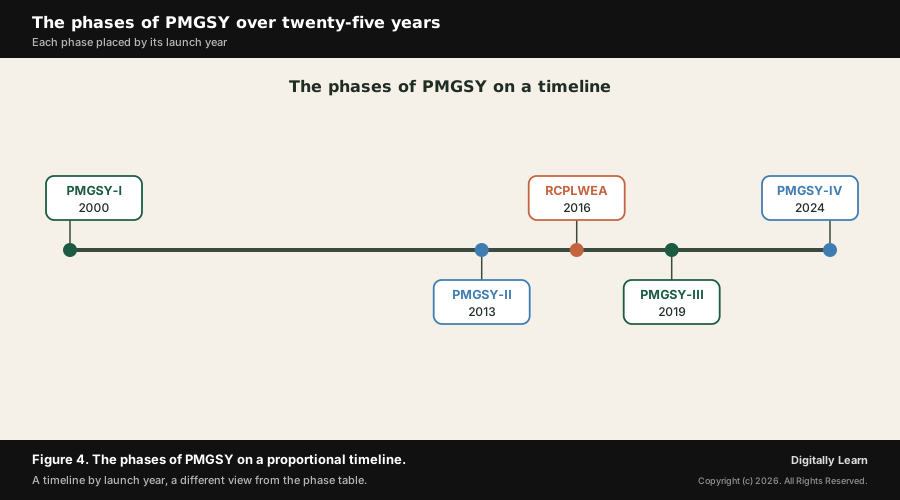
PMGSY has grown through a series of phases, each answering a new need as the earlier one matured. PMGSY-I, the original 2000 phase, set out to give first-time all-weather connectivity to eligible unconnected habitations, and it remains the heart of the scheme. As that network spread, the government widened the ambit and launched PMGSY-II in 2013 to upgrade and consolidate about 50,000 kilometres of the existing rural road network, so that roads already built could carry heavier traffic and last longer.
Two further phases sharpened the focus. In 2016 the government launched the Road Connectivity Project for Left Wing Extremism Affected Areas, or RCPLWEA, a separate vertical to build strategically important roads in the worst LWE districts, where connectivity carries a security as well as a development purpose. Then in 2019 came PMGSY-III, aimed at the consolidation of about 1,25,000 kilometres of through-routes and major rural links that connect habitations to schools, hospitals and markets, strengthening the spine of the network rather than only its ends.
The latest phase looks to finish the task. PMGSY-IV, approved in 2024 for the period 2024-25 to 2028-29, sets out to connect about 25,000 remaining eligible habitations through roughly 62,500 kilometres of new road, with an outlay of about Rs 70,125 crore, government figures state. Read together, the phases move from first connectivity, to upgrading, to securing difficult areas, to consolidation, and finally to reaching the last habitations. The table below sets out the phases, and the figure places them on a timeline.
| Phase | Year | Focus | Key target (government-reported) |
|---|---|---|---|
| PMGSY-I | 2000 | All-weather connectivity to unconnected habitations | Connect eligible unconnected habitations |
| PMGSY-II | 2013 | Upgrading and consolidating the existing network | Upgrade about 50,000 km of rural roads |
| RCPLWEA | 2016 | Strategic roads in Left Wing Extremism areas | Roads in the worst LWE-affected districts |
| PMGSY-III | 2019 | Consolidating through-routes and major links | Consolidate about 1,25,000 km of routes |
| PMGSY-IV | 2024 | Connecting the remaining eligible habitations | About 25,000 habitations via 62,500 km |
Implementation Architecture: Ministry of Rural Development, NRIDA, States and Fund-Sharing
The Ministry of Rural Development nodal role, NRIDA, the state agencies and the 60:40 and 90:10 fund-sharing
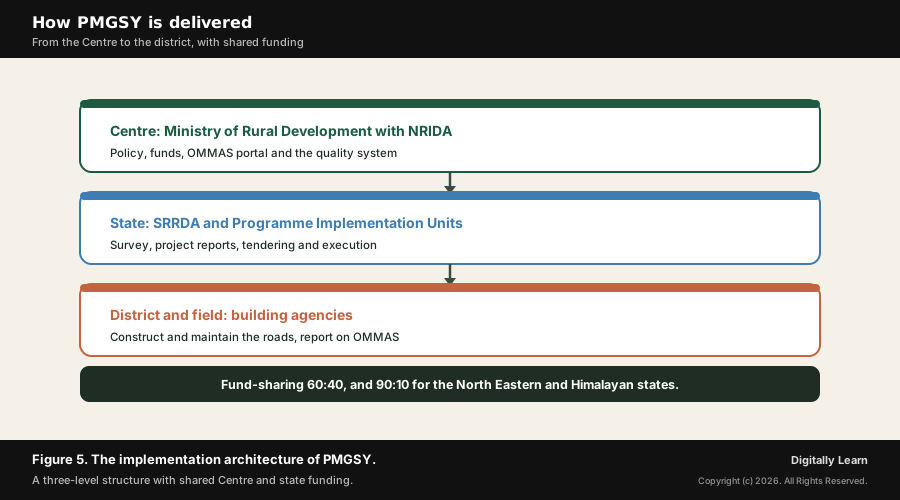
PMGSY is delivered through a structure that shares the work between the Centre and the states. At the national level the Ministry of Rural Development is the nodal ministry, and the scheme is administered by the National Rural Infrastructure Development Agency, the NRIDA, which sets standards, frames guidelines and runs the online management and monitoring system known as OMMAS. This central body provides the technology, the quality framework and the funds, but it does not itself build roads on the ground.
The building is done by the states. Each state works through a State Rural Roads Development Agency and a network of Programme Implementation Units that carry out the survey, prepare the detailed project reports, invite tenders and supervise construction. This division matters, because only the state and district machinery can map the habitations, acquire the land and manage the contractors, while the Centre sets the rules and releases the money. The result is a partnership in which each level does what it is best placed to do.
The money is shared on a fixed pattern. PMGSY is a centrally sponsored scheme in which the cost is divided 60:40 between the Centre and the states for most states, and 90:10 for the eight North Eastern states and the three Himalayan states, where the Centre bears the larger share to reflect their difficult terrain and weaker finances. This higher central support for the hill and frontier states is a deliberate choice, so that the hardest places to build are not left behind for want of state funds. The figure below sets out this architecture.
Quality Assurance and Green Road Technology
The three-tier quality monitoring chain, the Defect Liability Period and e-MARG, and new and green technologies
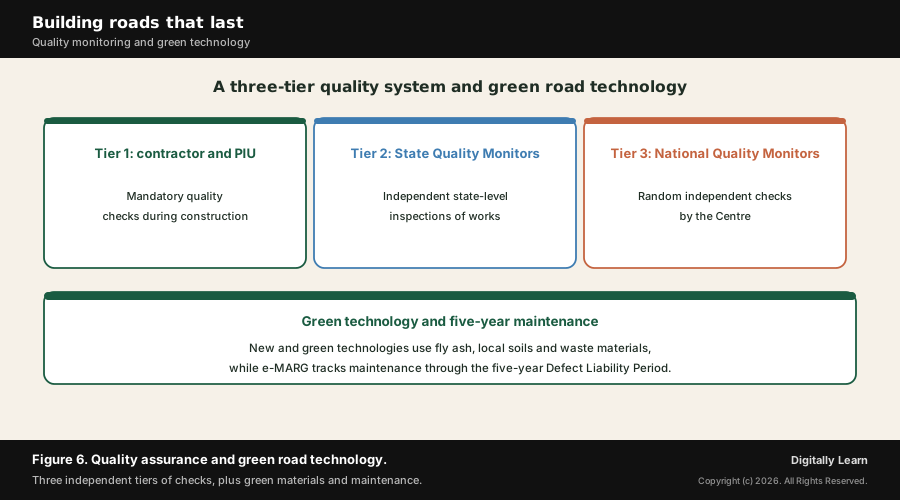
A road is only as good as its quality, and PMGSY is known for a strong, three-tier system to guard it. The first tier is the contractor and the Programme Implementation Unit, who run mandatory quality checks during construction. The second tier is a body of independent State Quality Monitors, who inspect works on behalf of the state. The third tier is the National Quality Monitors, senior independent experts who make random checks on behalf of the Centre, so that no single level can sign off on its own work unchecked.
Quality is also protected after the road is finished. Every PMGSY road carries a Defect Liability Period, during which the contractor must repair defects at its own cost, and maintenance for these years is built into the contract. To track this, the government runs e-MARG, the Electronic Maintenance of Rural Roads platform, which monitors the upkeep of each road over the five-year maintenance period that follows completion. This focus on maintenance, not just construction, is what keeps a new road from decaying back into the mud track it replaced.
PMGSY has also become a showcase for new and green technologies in road building. To cut cost and protect the environment, it promotes roads that use local and waste materials such as fly ash, local soils, plastic waste and industrial by-products in place of scarce crushed rock. This green approach has drawn international support: the World Bank has backed PMGSY since its early years, including a financing project for all-weather rural roads built with green technologies. The figure below sets out the quality system and the green-technology push.
Outcomes and Development Impact: Roads Built, Habitations Connected and Lives Changed
Roads built, habitations connected and the development the new roads unlock on the ground
After a quarter of a century, the scale of PMGSY is large. Government reports record that, across its phases, the scheme has sanctioned more than eight lakh kilometres of rural roads and completed the great majority of them, a physical progress of around ninety-five per cent of the sanctioned length, framed as government-reported figures. These roads run through the plains, the hills, the forests and the desert, knitting once-isolated habitations into the wider network of the country and standing among the largest rural-road efforts anywhere in the world.
The human reach is just as striking. Out of the eligible list, well over a lakh habitations have been provided with all-weather connectivity, government statements report, bringing roads to villages that had waited generations for one. The World Bank and other partners have supported this work, particularly in the economically weaker and hill states. Behind each rounded number is a settlement that can now be reached in every season, a change that quietly reshapes daily life for millions of rural people.
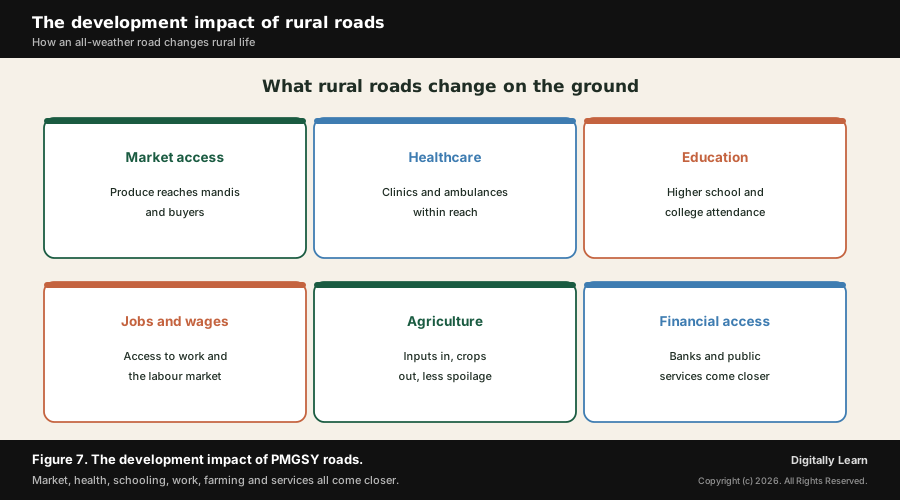
What the roads change on the ground is wide-ranging. Better market access lets farmers sell produce at fairer prices and waste less to spoilage. Closer healthcare means an ambulance can reach a village and a patient can reach a clinic in time. Schools and colleges see higher attendance, especially among girls; jobs and the wider labour market come within reach; agriculture gains as inputs flow in and crops flow out; and banks and public services move closer. The figure below sets out this development impact.
Challenges: Maintenance, Difficult Terrain, the Last Habitations and Quality
Road maintenance, hilly and LWE terrain, the hardest last habitations, and construction quality and equity
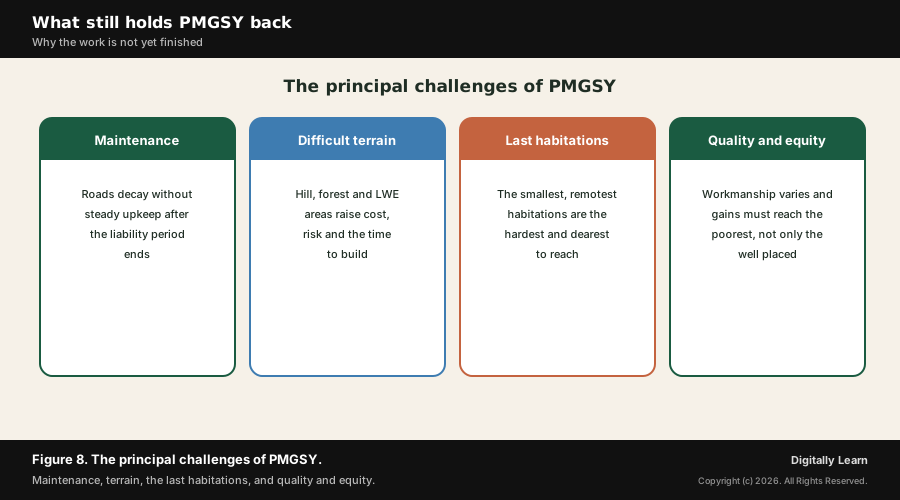
For all its reach, PMGSY faces real challenges, and the first is maintenance. Building a road is only half the task; without steady upkeep, a rural road decays within a few years, especially once the Defect Liability Period ends and the duty passes to cash-strapped state agencies. The e-MARG system and the five-year maintenance window help, but the long-term funding of repairs remains the scheme's hardest open question, since a road that is not maintained soon undoes the very connectivity it was built to provide.
A second challenge is difficult terrain. Much of the work that remains lies in hill, forest and Left Wing Extremism affected country, where building is dearer, slower and more dangerous, and where landslides and heavy rain can cut a new road within a season. A third challenge is the last habitations. The smallest, remotest and most scattered settlements are the costliest to reach for the fewest people, so they tend to be left for last even though their need is greatest, which is part of why later phases keep extending the effort.
A fourth challenge is quality and equity. Despite the three-tier system, workmanship still varies between states and contractors, and a poorly built road fails early. There is also the question of whether the gains reach the poorest, since a road can help the larger trader and landholder more than the landless worker unless other supports follow. These obstacles do not deny the scheme's success; they explain why connectivity alone is necessary but not sufficient for rural transformation. The figure below sets out the principal challenges.
Linked Schemes and Convergence: PURA Legacy, Rurban Mission and PM GatiShakti
The PURA legacy, the Shyama Prasad Mukherji Rurban Mission, PM GatiShakti and the digital and wider-road links
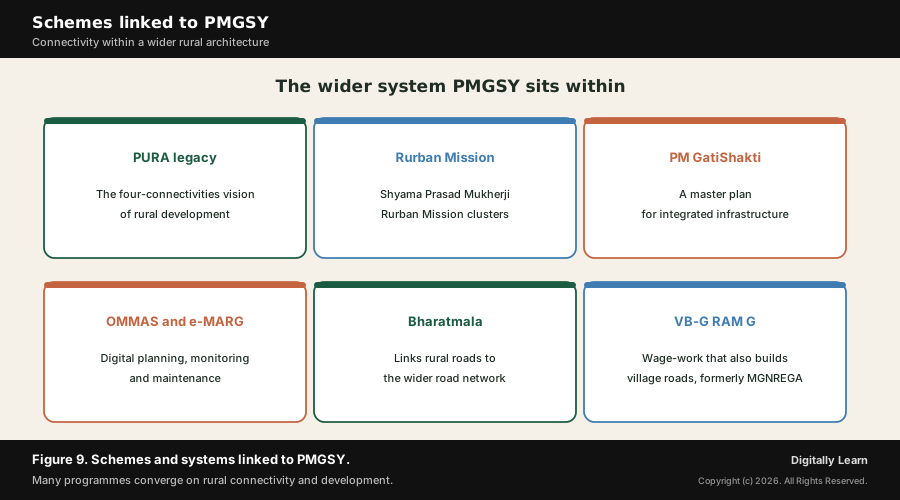
PMGSY does not stand alone; it sits within a wider system of programmes that share its goal of rural connectivity and development. Its deepest link is to the PURA legacy, whose insight that connectivity is the basis of rural development PMGSY now operationalises through physical roads. Close to it is the Shyama Prasad Mukherji Rurban Mission, which develops clusters of villages with urban-like amenities, an effort that depends on the very roads PMGSY builds to tie a cluster together and to the towns beyond it.
PMGSY also plugs into the national push for integrated infrastructure. Under PM GatiShakti, the national master plan for coordinated infrastructure, rural roads are planned alongside rail, power and digital lines so that investments reinforce one another. Through frameworks such as Bharatmala and the wider highway grid, the village road feeds into the arterial network, so that a farmer's produce can move from the hamlet to the national market on a continuous chain of connectivity rather than stopping at the edge of the district.
Digital and employment programmes complete the picture. The OMMAS and e-MARG platforms bring transparency to planning, monitoring and maintenance, while wage-work under the rural employment guarantee law, MGNREGA until its repeal on 1 July 2026 and the VB-G RAM G Act, 2025 since, also builds and repairs village roads, adding to the rural network. This convergence, many programmes pointed at rural connectivity and development, is the real strength of the approach, though it demands careful coordination so the supports reinforce rather than duplicate each other. The figure below maps these linked schemes.
Understanding the Significance: Physical Connectivity, Inclusion and Rural Transformation
Delivering the foundational physical connectivity, advancing inclusion and access, and driving rural transformation
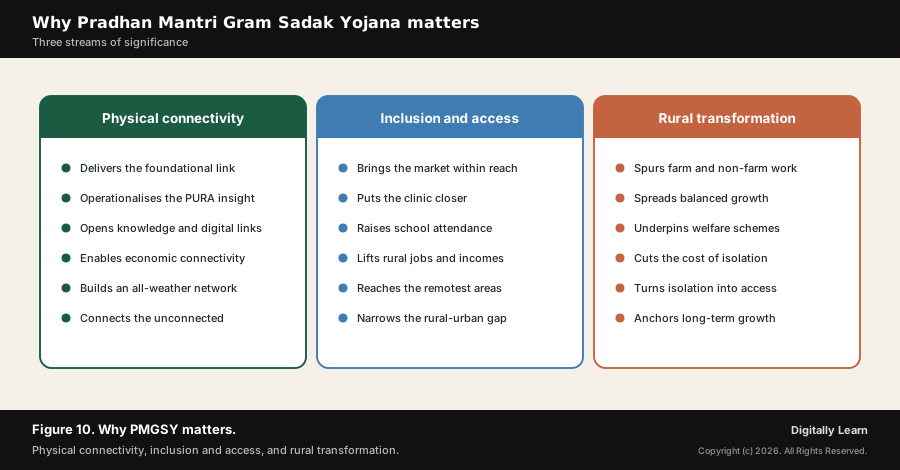
What is the significance of Pradhan Mantri Gram Sadak Yojana lies first in the physical connectivity it delivers. PMGSY gives an unconnected village the all-weather road that is the foundational pillar of rural development, the link that brings the market, the clinic, the school and the job within reach. In doing so it makes real the PURA insight that connectivity is the basis of providing urban amenities in rural areas, and it opens the path for the electronic, knowledge and economic connectivities that a road later carries into the village.
Its second significance is inclusion and access. By reaching the smallest and most remote habitations, including those in tribal, desert and Left Wing Extremism affected areas, PMGSY extends opportunity to the very people most likely to be left out. It lifts rural employment and incomes, narrows the gap between village and town, and turns physical isolation into everyday access to services and work. A road, in this sense, is one of the most equalising pieces of public infrastructure a state can provide.
Its third significance is rural transformation. By connecting habitations, PMGSY spurs both farm and non-farm activity, spreads more balanced regional development across districts rather than only the cities, and underpins the delivery of many other welfare schemes that depend on roads to reach people. Read together, the delivery of physical connectivity, the advance of inclusion, and the spread of rural transformation are why PMGSY is treated as one of the foundational programmes of India's development effort. The figure below maps these strands.
The Way Forward: From New Roads to a Maintained, All-Weather Network
Sustaining maintenance, reaching the last habitations, and measuring outcomes rather than kilometres
The way forward follows from the challenges. The first priority is maintenance. A road that is built and then neglected is money lost, so dependable funding for upkeep, full use of the e-MARG platform, and a clear handover of responsibility once the Defect Liability Period ends are essential to keep the network all-weather for the long run. Building new roads while old ones decay would leave the country running to stand still.
A second priority is to reach the last habitations. The remaining work lies in the hardest terrain, so phases such as PMGSY-IV must be matched with appropriate engineering, green and local-material technologies and special care for hill, forest and Left Wing Extremism areas, so that even the smallest settlement is not abandoned because it is expensive. Connectivity that stops at the easy villages is not the universal connectivity the scheme promised.
A third priority is to measure outcomes, not only kilometres. PMGSY is best judged by the development it unlocks, such as market access, school attendance, health visits and incomes raised, rather than by length of road alone. Pairing the new roads with the other connectivities of the PURA vision, and with the welfare schemes that ride on them, would turn a strong road programme into a durable engine of rural transformation and balanced growth.
UPSC Relevance and Exam Focus
Where Pradhan Mantri Gram Sadak Yojana fits in the UPSC-CSE syllabus
This topic maps to both General Studies Paper II and General Studies Paper III. Under GS-II it falls within government schemes and welfare, and the governance question of how policy delivers services to vulnerable rural populations. Under GS-III it sits in infrastructure and inclusive growth, since rural roads are core economic infrastructure. The 2013 PURA question shows how the examiner links rural connectivity to development, making PMGSY a ready worked example for either paper.
For Prelims, hold the high-yield facts: PMGSY was launched on 25 December 2000 under the Ministry of Rural Development and is administered by the NRIDA; it connects eligible unconnected habitations above population thresholds of 500 in the plains, 250 in hill, tribal and desert areas and 100 in LWE blocks; its fund-sharing is 60:40, and 90:10 for the North Eastern and Himalayan states; and it has run through phases PMGSY-I to PMGSY-IV.
For Mains, the recurring framing is whether connectivity is the basis of rural development, the very point of the 2013 PURA question. A strong answer treats PMGSY as the case study in delivering physical connectivity, explains how a road unlocks the market, health, schooling and jobs, and weighs the scheme's real gains against the challenges of maintenance, terrain, the last habitations and quality, locating success in a maintained network rather than in kilometres announced.
Recurring linked concepts and common exam traps
Recurring linked concepts an aspirant should keep in working memory:
- PURA: The Providing Urban Amenities to Rural Areas vision of Dr A P J Abdul Kalam, framing four connectivities, physical, electronic, knowledge and economic, with connectivity as the basis of rural development.
- NRIDA: The National Rural Infrastructure Development Agency, which administers PMGSY, sets standards and runs the OMMAS monitoring system under the Ministry of Rural Development.
- Population thresholds: 500 in the plains, 250 in hill, tribal and desert areas and 100 in Left Wing Extremism blocks, against the 2001 Census, that decide an eligible habitation.
- Phases: PMGSY-I (2000), PMGSY-II (2013, upgrading), RCPLWEA (2016, LWE areas), PMGSY-III (2019, consolidation) and PMGSY-IV (2024, the last habitations).
A common Prelims trap is to confuse the bodies and the ratios. Hold that PMGSY is a scheme of the Ministry of Rural Development administered by the NRIDA, not of the highways ministry, and that the fund-sharing is 60:40 in general but 90:10 for the North Eastern and Himalayan states. Remember too that the lower population thresholds apply in hill, tribal, desert and LWE areas, not everywhere.
A common Mains trap is to praise PMGSY as a road-building success and stop there. The exam value lies in a balanced judgment: the genuine gain in connectivity, access and rural incomes, set honestly against the unfinished challenges of maintenance, terrain, the last habitations and quality, with durable success located in a maintained, all-weather network paired with the other connectivities of rural development.
Previous Year UPSC-CSE Questions By the end you will be able to draft model answers for the following UPSC questions. Each question carries a collapsible framework showing how to approach it in the exam.
- UPSC Mains 2013 GS-IIThe basis of providing urban amenities in rural areas (PURA) is rooted in establishing connectivity. Comment.
How to structure the answer in the exam
Body (sub-themes to develop):
- Explain the PURA thesis: providing urban amenities in rural areas rests on connectivity, and Dr A P J Abdul Kalam framed four connectivities, physical, electronic, knowledge and economic, with economic connectivity emerging from the first three.
- Establish physical road connectivity as the foundational pillar: an all-weather road is what first brings the market, the clinic, the school, the bank and the job within reach, and it carries the digital and knowledge links that follow.
- Position PMGSY as India's flagship instrument for this physical pillar, giving every eligible unconnected habitation an all-weather road through phases PMGSY-I to PMGSY-IV under the Ministry of Rural Development.
- Show the development that connectivity unlocks: better market access, health, education, employment, agriculture and financial inclusion, the urban amenities and opportunities the PURA idea sought for rural areas.
- Offer a balanced comment: PURA as a standalone scheme was discontinued, yet its core insight endures, and connectivity must be paired with maintenance, quality and the other three connectivities to deliver durable rural transformation.
Relevance to this topic. The article teaches that rural development rests on connectivity, that PURA framed four connectivities with physical road connectivity as the foundation, and that PMGSY operationalises that pillar by giving every eligible unconnected habitation an all-weather road.
Sources and Further Reading
- NRIDA: Pradhan Mantri Gram Sadak Yojana (About PMGSY)
- NRIDA: Frequently Asked Questions on PMGSY (thresholds and fund-sharing)
- Press Information Bureau: Celebrating 25 years of PMGSY
- Press Information Bureau: Cabinet approves PMGSY-IV (2024-25 to 2028-29)
- World Bank: $500 million additional financing for all-weather rural roads using green technologies
- NITI Aayog: rural connectivity and balanced regional development
- Ministry of Statistics and Programme Implementation
- Wikipedia: Pradhan Mantri Gram Sadak Yojana
- Wikipedia: Providing Urban Amenities to Rural Areas (PURA)
Editorial Disclaimer
This briefing is for UPSC preparation. Verify the figures against the official PMGSY, NRIDA and Ministry of Rural Development sources before relying on them.


