


Overview
A greenfield enterprise loan for SC, ST and women entrepreneurs
The Stand-Up India scheme, launched in 2016 under the Department of Financial Services, facilitates bank loans between ten lakh and one crore rupees to at least one Scheduled Caste or Scheduled Tribe borrower and at least one woman borrower per bank branch for a greenfield, first-time enterprise, refinanced through SIDBI and backed by a dedicated credit guarantee.
Stand-Up India is the scheme through which the Indian state set out to put a first formal enterprise loan within reach of the entrepreneur the credit system had long passed over. Launched on 5 April 2016 and run by the Department of Financial Services, it facilitates a bank loan between ten lakh and one crore rupees to at least one Scheduled Caste or Scheduled Tribe borrower and at least one woman borrower per bank branch of the scheduled commercial banks. The loan funds a greenfield, that is a first-time, enterprise in manufacturing, services, trading or activities allied to agriculture, as a composite loan covering both the term and the working-capital need. Standing behind the lender are a refinance window through SIDBI, the standupmitra handholding portal and the Credit Guarantee Fund for Stand-Up India.
What Stand-Up India Is: A Targeted Greenfield Credit Scheme for the Excluded Entrepreneur
The 2016 scheme, the SC, ST and women credit barrier and why a first venture loan matters
Stand-Up India is the scheme through which the Indian state set out to give the Scheduled Caste, the Scheduled Tribe and the woman entrepreneur a first formal loan to build an enterprise of their own. It was launched on 5 April 2016, run by the Department of Financial Services in the Ministry of Finance, with the stated purpose of promoting entrepreneurship among these groups. Its target is not the established firm but the borrower who has never held a business loan, and its instrument is a sizeable bank loan directed deliberately at the people the formal system had always found a reason to refuse.
The problem Stand-Up India attacks is a deep credit barrier. An aspiring entrepreneur from an SC or ST community, or a woman setting up her first venture, very often lacks the collateral, the property title and the credit history that a bank reads before it lends, and may also meet the quiet bias of a lender who has rarely funded such a borrower. Why it matters is that this barrier locked talent and ambition out of formal enterprise, confining the excluded to tiny informal trades or to the moneylender, so the want of a first loan, more than any want of ideas, kept whole communities from building businesses that could employ others and create wealth.
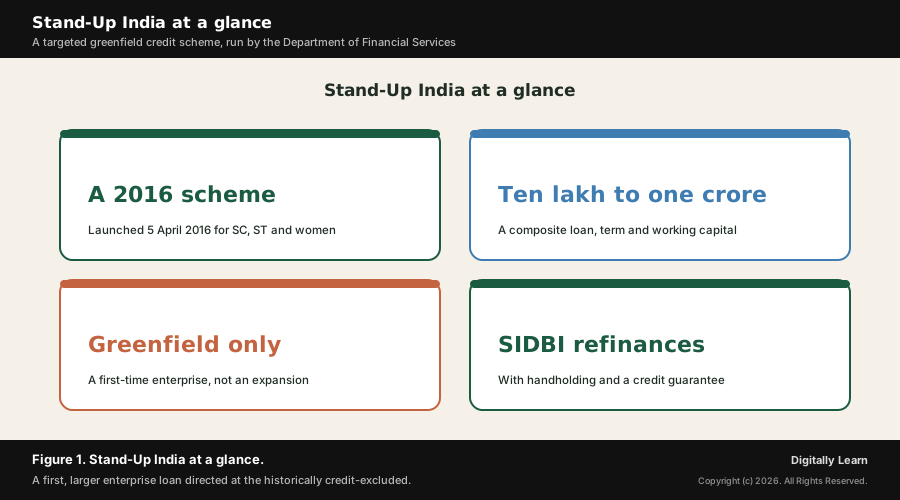
The choice to fund a greenfield venture, a first-time enterprise rather than the expansion of an existing one, is central to the design. By backing the borrower at the hardest moment, the very start, when there is no track record to show and the risk looks highest to a bank, the scheme aims to break the cycle in which the excluded can never begin because they have never begun before. By making this first, larger loan reachable, Stand-Up India seeks to turn a first-generation entrepreneur into an established one, and to widen the narrow base of those who own and run formal businesses in India. The figure below sets out the headline features before the detail that follows.
The Design of the Scheme: The Loan Band, the Per-Branch Mandate and Eligible Activities
The ten lakh to one crore band, the per-branch SC, ST and woman requirement, the greenfield rule and eligible sectors
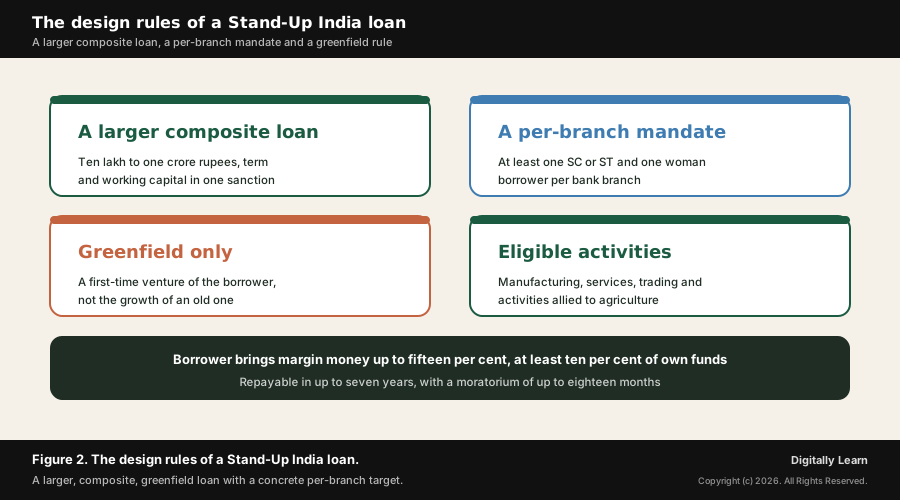
The defining number of Stand-Up India is its loan band. The scheme facilitates a bank loan of between ten lakh and one crore rupees, a sum chosen to be far larger than the tiny micro-loan, so that it can fund a real enterprise with premises, machinery and stock rather than a hand-to-mouth trade. The loan is a composite loan, meaning it bundles the term loan for fixed assets and the working capital for daily running into a single sanction, so the borrower does not have to assemble the two separately. This deliberately larger ticket is what marks the scheme out as an instrument to build businesses, not merely to ease daily survival.
The most distinctive feature is the per-branch mandate. The scheme requires every branch of a scheduled commercial bank to lend to at least one Scheduled Caste or Scheduled Tribe borrower and at least one woman borrower, turning a general ambition into a concrete target spread across the banking network. The borrower must be above eighteen years of age, and for a non-individual enterprise, at least fifty-one per cent of the shareholding and controlling stake must be held by an SC or ST or woman entrepreneur, so the benefit reaches the intended owner. The borrower also brings a share of the cost: the scheme allows margin money of up to fifteen per cent through convergence with eligible central or state schemes, while the borrower contributes at least ten per cent of the project cost from own funds.
Two rules fix what the loan may fund. First, the venture must be greenfield, the first-time enterprise of the borrower in the chosen line, so the scheme funds a beginning and not the growth of a business already running. Second, the field is wide but bounded: the enterprise must be in manufacturing, services, the trading sector or activities allied to agriculture such as dairy, poultry, fisheries, agri-clinics and food and agro-processing, while crop cultivation itself is left to the separate farm-credit channels. The loan is repayable over a period of up to seven years with a moratorium, a breathing space, of up to eighteen months before repayment begins, recognising that a new enterprise needs time to find its feet. The figure and table below set out these terms.
| Feature | What the scheme provides |
|---|---|
| Loan amount | A composite bank loan between ten lakh and one crore rupees |
| Who must be funded | At least one SC or ST borrower and one woman borrower per bank branch |
| Nature of venture | A greenfield, first-time enterprise only |
| Eligible activities | Manufacturing, services, trading or activities allied to agriculture |
| Borrower contribution | Margin money up to fifteen per cent, with at least ten per cent from own funds |
| Repayment | Up to seven years, with a moratorium of up to eighteen months |
How Stand-Up India Differs from MUDRA and from Startup India
The larger greenfield SC, ST and women loan set apart from micro-credit and the startup ecosystem
Stand-Up India is easily confused with two other well-known schemes, so the differences must be held clearly. It is not the same as the Pradhan Mantri MUDRA Yojana. MUDRA gives a smaller, collateral-free micro-loan of up to a few lakh rupees to any non-farm micro enterprise, new or existing, across the whole population of small businesses. Stand-Up India, by contrast, gives a much larger loan, from ten lakh to one crore rupees, only for a greenfield venture, and only to SC, ST and women borrowers, with a fixed per-branch target. Where MUDRA spreads tiny credit widely, Stand-Up India directs a bigger sum narrowly at the start-up of an enterprise by the most excluded.
It is also not the same as Startup India. Startup India is a scheme to build an innovation ecosystem, offering tax benefits, easier compliance and a path to venture capital for technology-driven and scalable startups recognised by the government, irrespective of the founder's social group. Stand-Up India is a bank-credit scheme for an ordinary first enterprise, a workshop, a small unit or a service business, defined by the social identity of the borrower rather than by the novelty of the idea. Holding these three apart, the micro-loan of MUDRA, the ecosystem of Startup India and the targeted greenfield loan of Stand-Up India, is a common and rewarding point in the examination.
The Institutional Architecture: Banks, SIDBI Refinance, the Handholding Portal and the Credit Guarantee
The Department of Financial Services, the scheduled commercial banks, the SIDBI and NABARD refinance, standupmitra and the Credit Guarantee Fund for Stand-Up India
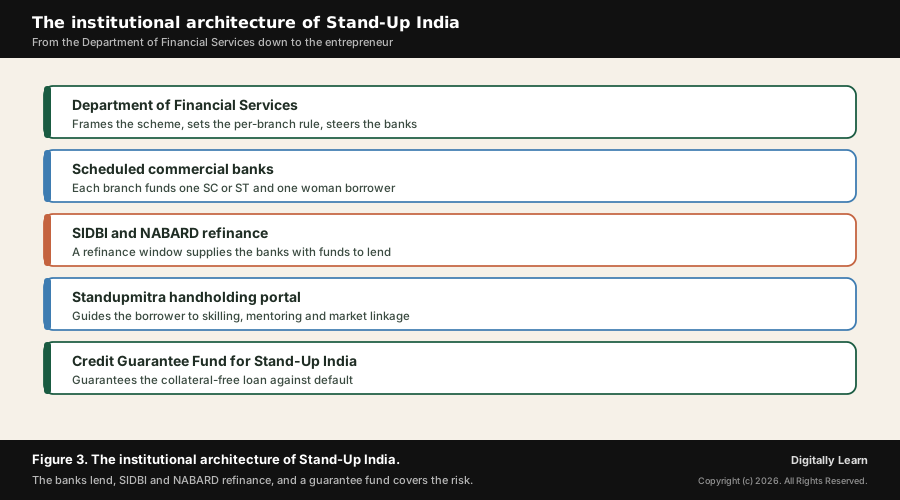
Stand-Up India works through a chain of institutions that together turn the promise into a loan in a borrower's hands. At the top sits the Department of Financial Services, the wing of the Ministry of Finance that oversees banking, which frames the scheme, sets its rules and steers the lenders. The loan itself is made by a scheduled commercial bank, the network of public-sector, private and regional banks whose branches reach across the country, and it is each branch of these banks that carries the per-branch obligation to fund at least one SC or ST and one woman borrower. The borrower meets the scheme at the bank branch, but a wider apparatus stands behind that counter.
Behind the lending banks lies a refinance arrangement. The scheme provides a refinance window through SIDBI, the Small Industries Development Bank of India, the national development bank for small industry, which supplies the banks with funds so they can lend more readily, and the National Bank for Agriculture and Rural Development, the NABARD, supports the rural reach of the scheme. SIDBI also runs the operational backbone. The standupmitra portal developed by SIDBI provides the borrower with handholding support, guidance before the loan and during the running of the enterprise, connecting the would-be entrepreneur through a network of handholding agencies to skilling, mentoring, registration and market-linkage help. This support recognises that a first-time owner needs more than money to succeed.
The collateral problem is met by a dedicated guarantee. To extend collateral-free cover, the government set up the Credit Guarantee Fund for Stand-Up India, the CGFSI, which guarantees the eligible loans against default so that a bank lending to a borrower with no property to pledge is still protected if the venture fails. By absorbing a share of the lender's risk, the guarantee makes the bank willing to advance a large loan to a first-generation entrepreneur it would otherwise have refused. Together the framing department, the lending banks, the SIDBI and NABARD refinance, the standupmitra handholding and the credit guarantee form a complete delivery system, each part of which the borrower relies on without ever seeing the whole. The figure below maps this architecture.
Inclusion Outcomes: Reaching Women, SC and ST First-Generation Entrepreneurs
The reach to women borrowers, SC and ST entrepreneurs and the rise of first-generation enterprise
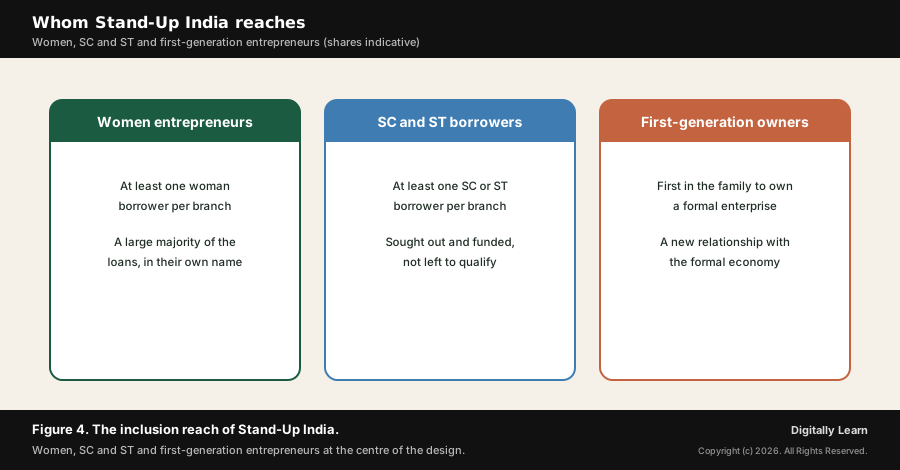
The purpose of Stand-Up India is realised in whom it reaches, and its strongest record is with women. The scheme requires every branch to fund at least one woman borrower, and across its operation a large majority of the loans sanctioned have gone to women entrepreneurs, giving many of them a first business loan and a credit record in their own name. For a country where women own only a small share of formal enterprises despite running countless informal ones, this targeted reach is a meaningful shift, drawing women out of the margins of the economy and into ownership of a registered business.
The scheme also reaches the Scheduled Caste and Scheduled Tribe entrepreneur, the borrower kept furthest from formal credit by the want of property, history and connection. By mandating an SC or ST loan at every branch, the scheme forces the banking system to seek out and fund these borrowers rather than wait for them to qualify on conventional terms, and a meaningful share of the sanctioned accounts are held by SC and ST entrepreneurs. The precise shares between women, SC and ST borrowers move with each official report and are best read as indicative of direction rather than as fixed figures, but the pattern is steady across the reporting.
Read at the level of the individual, each loan funds a first-generation entrepreneur, a person who is the first in the family to own a formal enterprise, and so the scheme builds not only a business but a new relationship with the formal economy. By easing the credit barrier, it lets the historically excluded buy premises, hire workers and trade on their own account, and it rests on the wider JAM base of bank accounts, digital identity and direct transfers that made it possible to identify and reach such borrowers at scale. Sitting alongside MUDRA and the broader inclusion drive, it deepens the credit side of a development project that had earlier concentrated on opening accounts. The figure below sets out the inclusion design.
The Critiques and Debates: Per-Branch Uptake, Greenfield Risk and the Want of Capability
Low utilisation per branch, the risk of a first-time venture, awareness gaps and the balance between women and SC and ST uptake
A balanced reading weighs the design against the critiques that independent economists, researchers and parliamentary scrutiny have raised, set out here neutrally. The most common concern is low utilisation per branch. Because the mandate is one SC or ST and one woman borrower per branch, the maximum possible reach is finite, and observers have noted that many branches fall short even of that modest target, so the actual number of loans, while substantial, remains far below the network's potential. Critics read this as a sign that the banks treat the obligation as a formality, and that the supply of ready, bankable greenfield proposals from these groups is thinner than the scheme assumed.
A second debate concerns the greenfield risk. Lending a large sum to a first-time entrepreneur with no track record is inherently risky, and some argue that the insistence on a brand-new venture, while bold, raises the chance of failure and default compared with funding the expansion of a unit already trading. A related worry is the want of awareness: many eligible borrowers, especially in rural and remote areas, simply do not know the scheme exists or find the application and project-report requirements daunting, which suggests that outreach and the handholding support, though present, have not reached deep enough to convert eligibility into loans.
A third discussion is over the balance of uptake. The scheme has reached women entrepreneurs far more successfully than SC and ST entrepreneurs, and the gap raises a fair question about whether the structural barriers facing SC and ST borrowers, including the deeper want of collateral and of family business experience, need remedies beyond a per-branch quota. Critics also note that a loan alone, without sustained mentoring, skilling and market linkage, may leave a first-generation owner ill-equipped to run a growing business. On the central question, whether Stand-Up India has genuinely widened ownership of enterprise among the excluded, a careful answer treats the matter as open, crediting the real reach to women while acknowledging the unfinished work on scale, SC and ST uptake and capability.
Understanding the Significance: Financial Inclusion, Social Justice and a Wider Ownership Base
A tool of credit-side inclusion, an instrument of social justice and a widening of the entrepreneurial base
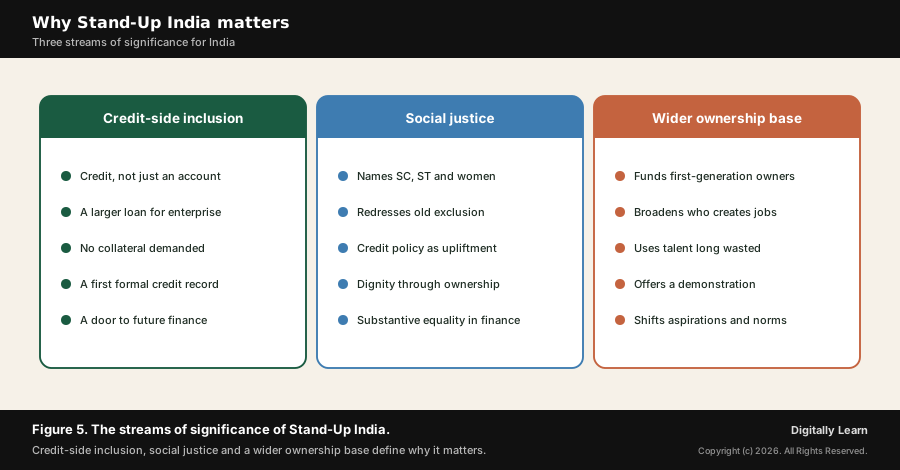
What is the significance of Stand-Up India lies first in its character as an instrument of financial inclusion on the credit side. By directing a sizeable bank loan at borrowers the formal system had always avoided, the scheme converts inclusion from the mere holding of a bank account into the active use of credit to build an enterprise, and it gives the excluded borrower a record that can unlock larger and cheaper finance in future. This deepening of inclusion, from access to an account to access to enterprise credit, is its most distinctive contribution to India's development effort.
Its second significance is as an instrument of social justice. By naming the Scheduled Castes, the Scheduled Tribes and women as its intended borrowers, the scheme uses the machinery of credit policy to redress a historical exclusion from wealth and ownership, treating entrepreneurship not as a private luxury but as a route to dignity and economic power for communities long denied both. It complements the constitutional commitment to the upliftment of these groups, carrying the idea of substantive equality into the world of business and finance where it has rarely reached.
Its third significance is the widening of the entrepreneurial base. A society in which ownership of enterprise is concentrated in a few communities wastes the talent of the rest, and by funding first-generation owners from outside that narrow circle the scheme broadens the base of those who create businesses, jobs and wealth. Each successful venture also offers a demonstration, showing others in the same community that a formal enterprise is possible for them too, which can over time shift aspirations and norms. Read together, credit-side inclusion, social justice and a wider ownership base are why Stand-Up India is treated as a landmark in India's effort to make growth inclusive. The figure below maps these strands.
The Way Forward: Deeper Outreach, Capability Support and Stronger SC and ST Uptake
Raising per-branch utilisation, pairing credit with mentoring and closing the SC and ST gap
The way forward follows directly from the critiques. The first priority is to raise utilisation by deepening outreach: to make the eligible borrower aware of the scheme through camps, local bodies and the handholding network, and to ease the application and project-report burden, so that the per-branch target is met in full rather than left as an unmet line in a circular.
The second priority is to move from credit to capability. Because a first-time owner needs more than a loan, the handholding support through the standupmitra network should be strengthened into sustained mentoring, skilling and market linkage, so that the funded enterprise can actually survive and grow, lowering the greenfield risk that worries lenders and protecting the borrower from default. A sound credit guarantee should be maintained so that banks remain willing to lend without collateral, while care is taken that easy credit does not push an unready borrower into unmanageable debt.
The third priority is to close the gap in SC and ST uptake. Since the scheme has reached women far better than SC and ST entrepreneurs, targeted measures, including stronger convergence with caste-specific development funds, dedicated mentoring and a closer watch on each branch's SC and ST lending, would help the scheme reach the borrowers for whom the barriers are deepest. Pursued together, deeper outreach, real capability support and a stronger focus on SC and ST uptake would move Stand-Up India closer to its founding promise: not merely a loan made available, but a genuine widening of who in India gets to own and run an enterprise.
UPSC Relevance and Exam Focus
Where Stand-Up India fits in the UPSC-CSE syllabus
This topic maps most directly to General Studies Paper III: inclusive growth and issues arising from it, and the mobilisation of resources, since Stand-Up India is a targeted credit instrument whose design and channels sit at the centre of financial inclusion and enterprise promotion. It also links strongly to General Studies Paper II, government policies and interventions for development and welfare schemes for vulnerable sections, where the reach of the scheme to Scheduled Caste, Scheduled Tribe and women borrowers is examined, and it supplies rich material on entrepreneurship, social justice and the working of development finance.
For Prelims, hold the high-yield facts: Stand-Up India is a 2016 scheme run by the Department of Financial Services to promote entrepreneurship among SC, ST and women; it facilitates a bank loan of ten lakh to one crore rupees to at least one SC or ST and one woman borrower per bank branch; it funds only a greenfield, first-time enterprise in manufacturing, services, trading or activities allied to agriculture; and it provides for refinance through SIDBI, handholding through the standupmitra portal and a credit guarantee through the Credit Guarantee Fund for Stand-Up India. The two statements in the 2016 question turn on exactly these facts, that the scheme promotes SC, ST and women entrepreneurship and that it provides for refinance through SIDBI.
For Mains, the recurring framing is to assess whether targeted credit can widen ownership of enterprise among the excluded: how the per-branch mandate and the greenfield loan brought first-generation SC, ST and women owners into formal business, and how far low per-branch uptake, the greenfield risk and the want of capability support have limited the gains. A strong answer treats Stand-Up India as a case study in credit-side financial inclusion and social justice, weighing its real reach to women against the unfinished work on scale and on SC and ST uptake.
Recurring linked concepts an aspirant should keep in working memory:
- Greenfield enterprise: A first-time venture set up from scratch, which Stand-Up India funds, as distinct from the expansion of an existing unit.
- SIDBI: The Small Industries Development Bank of India, the development bank that provides the refinance window and runs the standupmitra handholding portal.
- Credit Guarantee Fund for Stand-Up India: The fund that guarantees the eligible loans against default so that banks can lend without collateral.
- MUDRA: The separate micro-finance scheme of smaller collateral-free loans, distinct from the larger, greenfield, SC, ST and women loan of Stand-Up India.
A common Prelims trap is to confuse Stand-Up India with MUDRA or Startup India; hold that Stand-Up India is run by the Department of Financial Services, that it lends a larger sum of ten lakh to one crore rupees only to SC, ST and women borrowers for a greenfield venture, that it provides for refinance through SIDBI, and that only activities allied to agriculture qualify while crop cultivation is funded through separate farm-credit channels.
A common Mains trap is to praise the targeting and stop there. The exam value lies in a balanced judgment: the real achievement in reaching women entrepreneurs, set honestly against the open problems of low per-branch utilisation, weaker SC and ST uptake and whether a loan alone, without capability support, builds lasting enterprises.
Previous Year UPSC-CSE Questions By the end you will be able to draft model answers for the following UPSC questions. Each question carries a collapsible framework showing how to approach it in the exam.
- UPSC Prelims 2016 GS Paper IDecide which of two statements about the Stand-Up India Scheme are correct: that its purpose is to promote entrepreneurship among SC, ST and women entrepreneurs, and that it provides for refinance through SIDBI.
How to approach this Prelims question
Approach: Test each statement against what the Stand-Up India Scheme is. Statement one says the purpose is to promote entrepreneurship among SC, ST and women entrepreneurs, which is the defining aim of the scheme, so it is correct. Statement two says the scheme provides for refinance through SIDBI, which is part of its institutional design, so it is also correct. With both statements correct, the answer is option (c), both 1 and 2.
Trap to watch: Do not second-guess the SIDBI statement by confusing the agency. SIDBI, not NABARD alone, runs the refinance window and the standupmitra handholding portal for Stand-Up India, so statement two stands; rejecting it would wrongly push you to a 1 only answer.
Key facts to recall:
- Stand-Up India is a 2016 scheme run by the Department of Financial Services to promote entrepreneurship among SC, ST and women.
- It facilitates a ten lakh to one crore rupee bank loan to one SC or ST and one woman borrower per branch for a greenfield enterprise.
- It provides for refinance through SIDBI, which also runs the standupmitra handholding portal, and is backed by a dedicated credit guarantee.
Answer signal: Both the SC, ST and women purpose and the SIDBI refinance are core, stated features of the scheme, so both statements are correct and option (c) is the answer.
Relevance to this topic. Named, exact topical fit. The question concerns the Stand-Up India Scheme itself, which is the sole subject of this article, and both of its statements correspond to load-bearing facts the body teaches: the SC, ST and women entrepreneurship purpose and the SIDBI refinance window.
Sources and Further Reading
- Department of Financial Services: Stand-Up India Scheme (SUPI) scheme page
- Press Information Bureau: Prime Minister to launch the Stand-Up India scheme on April 5th, 2016
- Press Information Bureau: Stand-Up India Scheme extended up to the year 2025
- Press Information Bureau: Stand-Up India Scheme provides financial and institutional aid to the marginalised
- Reserve Bank of India: FAQs on Priority Sector Lending
- Ministry of Finance: Summary of the Union Budget 2024-2025
- NITI Aayog: Decoding government support to women entrepreneurs in India
- Wikipedia: Stand-Up India
Editorial Disclaimer
This briefing is for UPSC preparation. Verify the facts and figures against the official Department of Financial Services, Stand-Up India and PIB sources before relying on them.


