


Overview
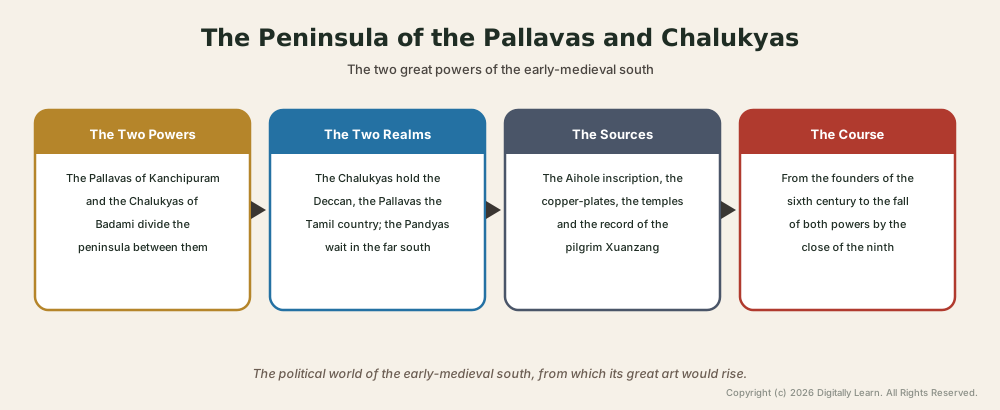
The early-medieval peninsula, in the centuries after the Satavahanas, was shaped by two great powers. In the Deccan rose the Chalukyas of Badami, ruling from Vatapi, whose greatest king was Pulakeshin II; in the Tamil country rose the Pallavas of Kanchipuram, the builders of the temples of Mamallapuram. For three centuries these two, with the older Pandyas of the far south, contended for the mastery of the south, and from their rivalry came some of the greatest art of India. This part covers the two powers, their realms, the sources for the age, the course of the age and the exam focus.
The Peninsula in the Age of the Two Powers
After the Satavahanas: The Pallavas and the Chalukyas
What is the significance of the peninsular age: the early-medieval south was the age of two great powers, the Pallavas and the Chalukyas, whose rivalry and whose temples shaped the history of the peninsula.
After the fall of the Satavahanas and the close of the old Sangam age, the peninsula passed into the hands of new powers. In the Deccan, the Chalukyas of Badami rose to rule from Vatapi; in the Tamil country, the Pallavas of Kanchipuram grew into a great kingdom; and in the far south the older line of the Pandyas held Madurai.
For three centuries these powers contended for the mastery of the south. The long war of the Pallavas and the Chalukyas, with the Pandyas as a shifting third force, fills the political history of the age, while their temples and their letters make it one of the great creative periods of India.
The Two Realms and Their Capitals
Distinguishing the two realms: the two great powers held two different worlds of the south, the Deccan plateau and the Tamil plain, each with its own capital and its own character.
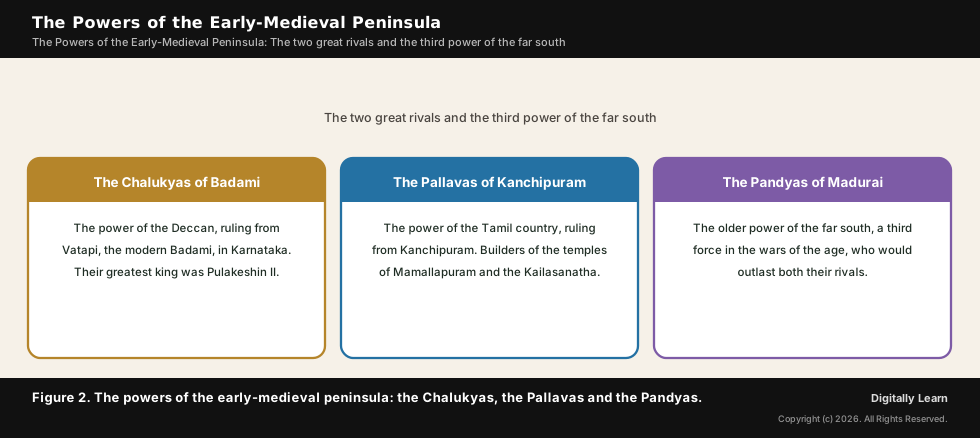
The Chalukyas ruled the Deccan from Vatapi, the modern Badami in Karnataka, a land of the Kannada tongue where they patronised both the Hindu and the Jain faiths. The Pallavas ruled the Tamil country from Kanchipuram, a city of temples and learning, where Sanskrit was the language of the court and Tamil of the people.
Between these two worlds lay the debated land of the eastern Deccan and Vengi, over which the two powers would fight. The table below sets the two dynasties side by side, by capital, founder, greatest king and end.
| Aspect | The Chalukyas of Badami | The Pallavas of Kanchipuram |
|---|---|---|
| Capital | Vatapi (Badami), in the Deccan. | Kanchipuram, in the Tamil country. |
| Founder | Pulakeshin I (about 543). | Revived by Simhavishnu (late sixth century). |
| Greatest king | Pulakeshin II. | Narasimhavarman I Mamalla. |
| End | Overthrown by the Rashtrakutas, 753. | Overthrown by the Cholas, about 897. |
The Sources for the Peninsular Age
Inscriptions, Temples and the Chinese Pilgrim
What is the significance of the sources: the age is unusually well recorded, by its inscriptions, its copper-plate grants, its temples and the account of a foreign pilgrim, each to be read with care.
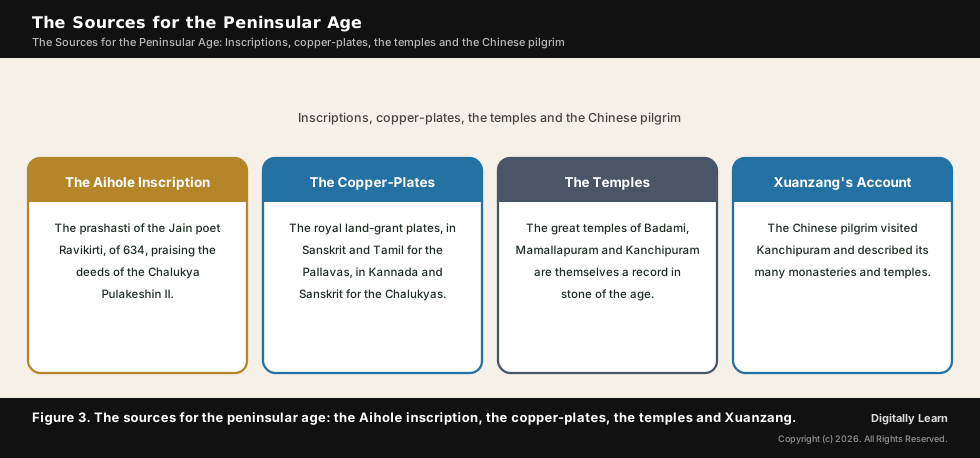
The inscriptions are the firmest ground. The greatest is the Aihole inscription, a prashasti, or eulogy, composed by the Jain poet Ravikirti in 634 in praise of the Chalukya Pulakeshin II; it records his wars in fine Sanskrit verse. Beside it stand the royal copper-plate grants, in Sanskrit and Tamil for the Pallavas, and in Kannada and Sanskrit for the Chalukyas.
The temples themselves are a record in stone, and the cave shrines of Badami and the monuments of Mamallapuram tell us much of the age. To these is added the account of the Chinese pilgrim Xuanzang, who visited Kanchipuram in the reign of Narasimhavarman I and described its many monasteries and temples.
The Course of the Peninsular Age
From the Founders to the Fall of the Two Powers
What is the significance of the course of the age: the three centuries of the two powers run from their founding, through their long war, to their fall before two new powers of the south.
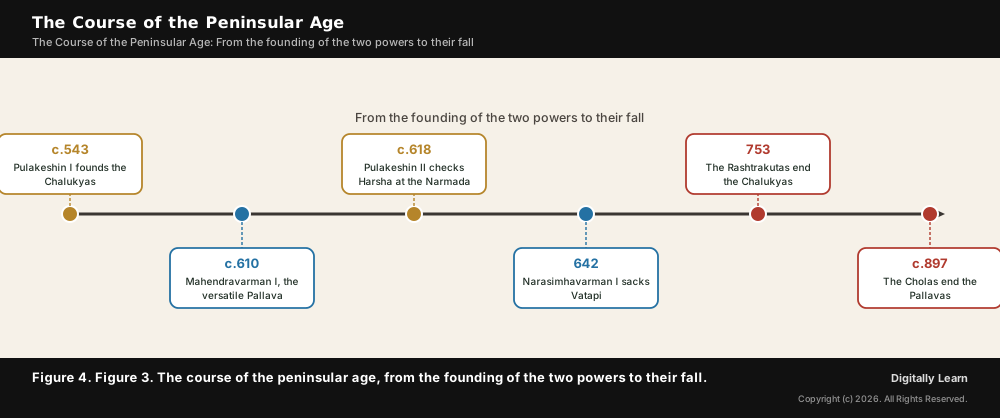
The Chalukyas were founded by Pulakeshin I about 543, and reached their height under Pulakeshin II, who checked Harsha at the Narmada about 618. The Pallavas, revived under Simhavishnu and Mahendravarman I, found their own great king in Narasimhavarman I, who avenged the Pallavas by sacking Vatapi in 642.
The long war went on for another century, until both powers were spent. The Chalukyas of Badami fell to the Rashtrakutas in 753, and the Pallavas to the rising Cholas about 897. The timeline below sets out the chief landmarks of the age.
UPSC Relevance and Exam Focus
Where the Peninsular Age Fits in the UPSC-CSE Syllabus
This topic belongs to General Studies Paper I: ancient and early-medieval Indian history and art and culture, and it frames every later part of this cluster.
The questions most often test the two powers and their place in time: the Pallavas of Kanchipuram, the Chalukyas of Badami, and their order among the dynasties of early-medieval India.
Several linked points recur and are worth holding in working memory:
- The Chalukyas of Badami: The power of the Deccan, ruling from Vatapi.
- The Pallavas of Kanchipuram: The power of the Tamil country.
- The Aihole inscription: Ravikirti’s eulogy of Pulakeshin II, of 634.
- Pulakeshin II: The greatest Chalukya, who checked Harsha at the Narmada.
- Narasimhavarman I: The Pallava who sacked Vatapi in 642.
A 2020 question set four dynastic events in order, among them the establishment of Pallava power under Mahendravarman I, in the early seventh century; the Pallava rise belongs near the start of this story, before the Pratihara peak under Bhoja and the Chola Parantaka I.
A common trap confuses the two great battles of the age, which the later parts will treat in full: Pulakeshin II defeated Harsha at the Narmada, but was himself defeated by the Pallava Narasimhavarman I, who sacked his capital.
Previous Year UPSC-CSE Questions
Previous Year UPSC-CSE Questions By the end you will be able to draft model answers for the following UPSC questions. Each question carries a collapsible framework showing how to approach it in the exam.
- UPSC Prelims 2020 GS-IConsider the following events in the history of India:
- Rise of Pratiharas under King Bhoja
- Establishment of Pallava power under Mahendravarman I
- Establishment of Chola power by Parantaka I
- Pala dynasty founded by Gopala
What is the correct chronological order of the above events, starting from the earliest time?
How to approach this Prelims question
Approach: Date each: Pallava power under Mahendravarman I (early 7th c., earliest), Gopala founding the Palas (mid-8th c.), the Pratihara peak under Bhoja (from c.836), Parantaka I the Chola (early 10th c., latest); then order 2-4-1-3.
Trap to watch: The Pallava event is the earliest; do not place the Cholas (Parantaka I) before the Pallavas or the Palas.
Key facts to recall:
- Pallava power under Mahendravarman I belongs to the early 7th century.
- Gopala founded the Palas about the mid-8th century; the Pratihara peak under Bhoja came from about 836.
- Parantaka I the Chola ruled in the early 10th century, the latest of the four.
Answer signal: 2 – 4 – 1 – 3.
Sources and Further Reading
Editorial Disclaimer
This article is for UPSC preparation. The dates of the Pallava and Chalukya kings are approximate, and the account follows the standard scholarship on early-medieval South India.