

Overview
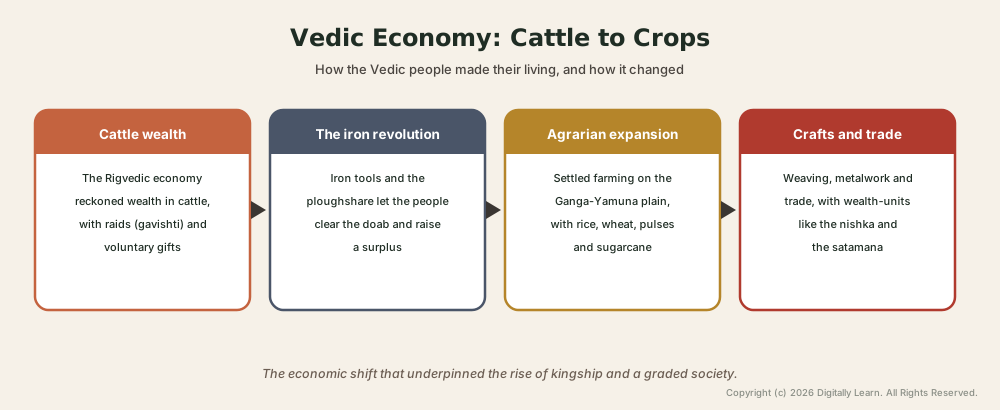
The economy of the Vedic Age was transformed between its two phases, and that change was the engine of everything else. The Rigvedic economy was pastoral: wealth was reckoned in cattle, battles were fought to seize them, and agriculture was light. By the Later Vedic age the people had settled on the rich soils of the Ganga-Yamuna plain and turned to agriculture, and the coming of iron let them clear the heavy forest and raise a surplus. That surplus fed crafts and trade, gave the king his tribute, and underpinned the more stratified society of the age. This part traces the shift from cattle to crops, from the pastoral world of the Rigveda to the iron-age farming economy of the Later Vedic age.
The Rigvedic Pastoral Economy: Cattle as the Measure of Wealth
Gavishti, Cattle-Raids and the Vocabulary of the Cow
What is the significance of the cattle economy: in the Rigvedic age the cow was the centre of economic life, and the language of the Rigveda is steeped in cattle, which the examiner expects a student to recognise.
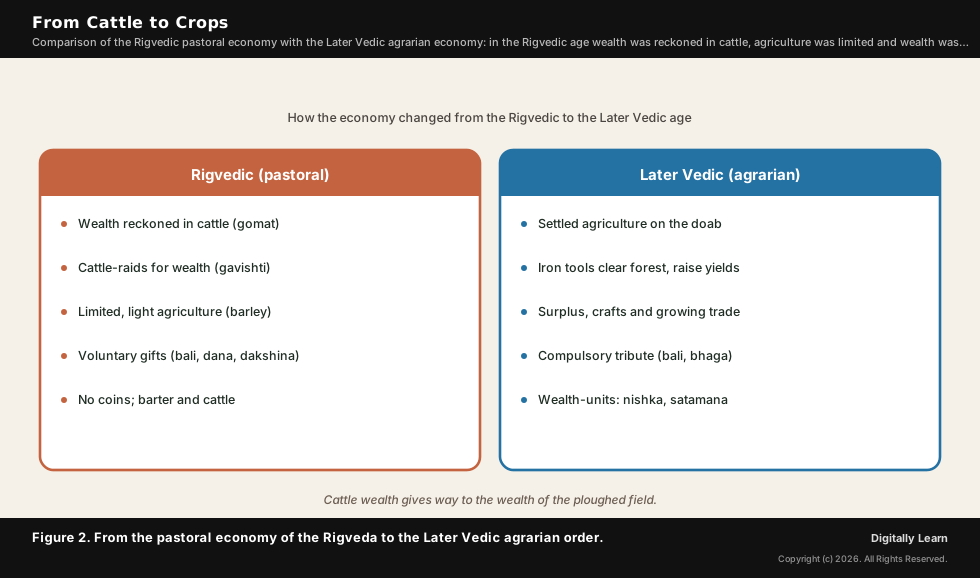
Wealth was reckoned in cattle: a rich man was one who owned many cows (gomat), and the cow was the chief measure of value and the main object of gift and exchange. So central was the cow that the very word for a battle or raid, gavishti, means a search for cows. The Rigvedic people were primarily pastoralists, keeping cattle, horses, sheep and goats, and moving with their herds.
Limited Agriculture and the Sharing of Wealth
Distinguishing the rest of the economy: agriculture was known but limited, growing chiefly barley (yava) on light soils, and the Rigvedic people did not yet farm the heavy forests of the east. There were no coins; exchange went by barter and by cattle.
Wealth was not hoarded but shared. What the chief gained in war or tribute he kept in part, gave in part to the priests as gifts (dana and dakshina), and distributed in part among the people. This redistribution, rather than taxation, was how the early economy held together, and the gift to the priest was a central act of the sacrifice.
The Iron Revolution of the Later Vedic Age
Krishna Ayas, the Iron Ploughshare and Paddy Transplantation
What is the significance of iron: the coming of iron is the single most important economic fact of the Later Vedic age, for it made possible the settled farming of the Ganga plain, and it is a favourite examination point.
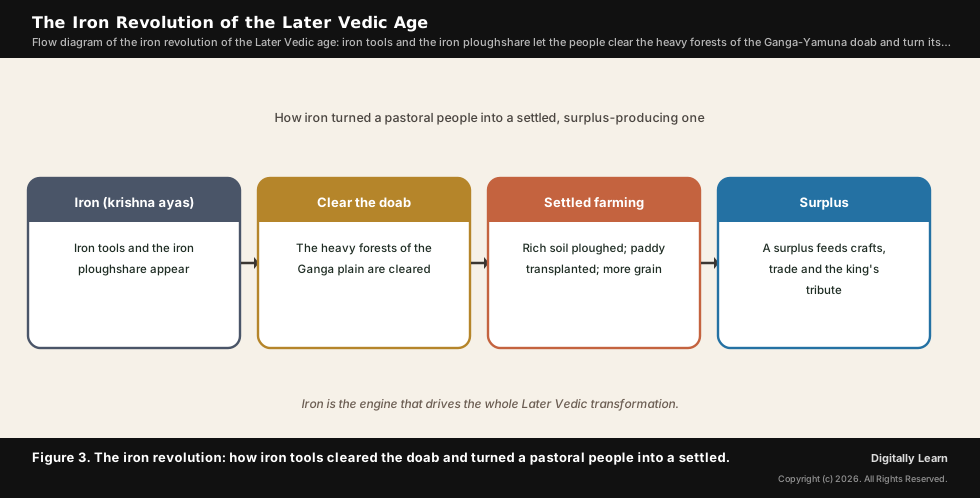
Iron, called krishna ayas or shyama ayas, the dark metal, came into use from about 1000 BCE. The iron ploughshare could turn the heavy, clayey soil of the doab far better than the old wooden plough, so that more grain could be grown. With iron axes the people could clear the dense forests of the east and bring new land under the plough.
Farming itself grew more productive. The Later Vedic people practised the transplantation of paddy, raising rice seedlings and then planting them out, a laborious method that greatly increased the harvest. The crops widened from barley to rice, wheat, pulses, sesame and sugarcane, and agriculture, not cattle, became the base of the economy.
Agrarian Expansion into the Ganga-Yamuna Doab
Settled Farming and the Painted Grey Ware Villages
What is the significance of the eastward expansion: the move of the Later Vedic people east into the Ganga-Yamuna doab was made possible by the new farming, and it reshaped the whole map of Vedic life.
The settlements of this age, marked by the Painted Grey Ware pottery, cluster in the doab, the land between the Ganga and the Yamuna, and the surrounding plain. Here the people lived in settled villages, kept cattle and grew their crops, and the surplus of the rich land supported a growing population.
This agrarian heartland, the land of the Kuru and Panchala, became the centre of the Later Vedic world, and its archaeology is treated in full in the closing part of this series.
Crafts, Trade and the Units of Exchange
The Crafts and Occupations of the Vedic People
What is the significance of crafts and trade: beyond farming and herding, the Vedic economy supported a range of crafts, and as the surplus grew so did exchange, a sign of an economy growing more complex.
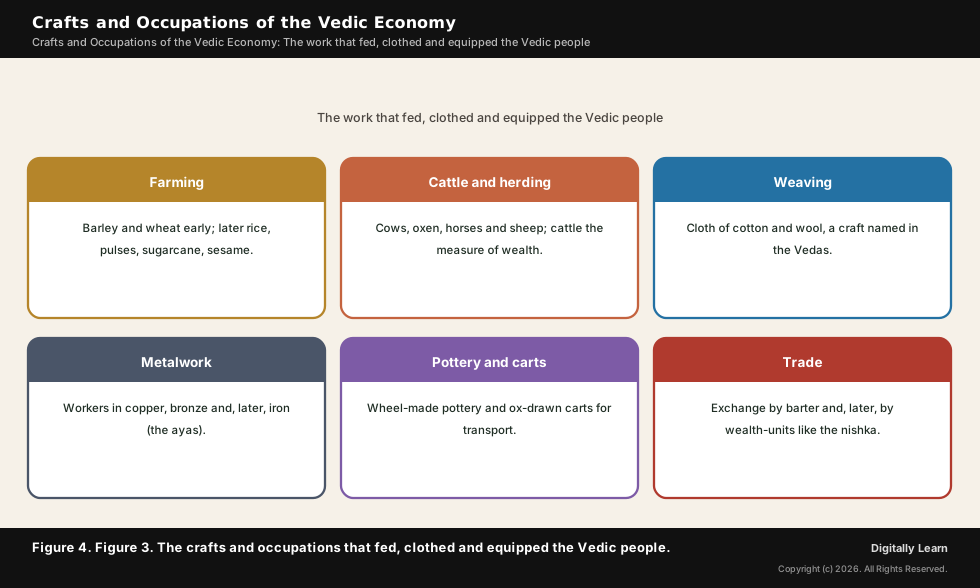
Distinguishing the crafts: the texts name the weaver working cotton and wool, the carpenter and the maker of chariots, the worker in leather, and the metalworker in copper, bronze and later iron, the ayas. Pottery was made on the wheel, and goods moved by ox-cart. In the Later Vedic age specialised crafts multiplied, the beginning of the occupational groups that the varna order would harden.
Nishka, Satamana and the Units of Exchange
Distinguishing the units of exchange: the Vedic economy had no coins in the proper sense; exchange went by barter and by recognised units of value.
| Unit | What it was |
|---|---|
| Nishka | A piece or ornament of gold, used as a measure of wealth |
| Satamana | A standard weight of gold or silver used in exchange |
| Krishnala | A small seed (the gunja) used as a tiny unit of weight |
It is important not to mistake these for coins. The nishka and the satamana were measures of gold and silver by weight and ornament, used in barter and in gift; true minted coinage appears only later, in the age of the Mahajanapadas, treated in the final part of this series.
The Parallel Change in Society
Distinguishing the linked change: the economic change went hand in hand with a social one, as the Mains question on the Rig Vedic to Later Vedic transition reminds us.
The farming surplus of the Later Vedic age supported a more stratified society. As the fluid Rigvedic order hardened into the birth-based varna hierarchy, the vaishya became the taxpaying farmer and herder, the shudra served, and the priest and warrior lived on the surplus the others produced. Economy and society thus changed together, the surplus of the ploughed field underpinning the graded order, which the previous part treats in full.
UPSC Relevance and Exam Focus
Where the Vedic Economy Fits in the UPSC-CSE Syllabus
This topic belongs to General Studies Paper I: ancient Indian history and culture, and the economic change from the Rig Vedic to the Later Vedic age is a recurring theme for both Prelims and Mains.
For Prelims, hold the firm facts: the Rigvedic economy was pastoral, with wealth in cattle and gavishti meaning a search for cows; iron (krishna ayas) and the iron ploughshare drove Later Vedic agriculture; the surplus came from the doab; and the nishka and satamana were units of value, not coins.
For Mains, the economic change is the engine of the larger Rig Vedic to Later Vedic transition, and a complete answer links it to the parallel changes in society and polity.
Recurring linked concepts an aspirant should keep in working memory:
- The pastoral economy: Wealth in cattle (gomat); gavishti = a search for cows.
- Redistribution: Voluntary gifts (bali, dana, dakshina), not taxes.
- Iron: Krishna ayas and the iron ploughshare; clearing the doab.
- Agriculture: Paddy transplantation; rice, wheat, pulses, sugarcane.
- Units of value: Nishka and satamana, not coins (coinage came later).
A common Prelims trap is to call the nishka and satamana coins. They were units of value by weight and ornament; true coinage appears only in the Mahajanapada age.
Another trap is to make the Rigvedic economy agricultural. It was primarily pastoral, with light farming; settled agriculture came with iron in the Later Vedic age.
Previous Year UPSC-CSE Questions By the end you will be able to draft model answers for the following UPSC questions. Each question carries a collapsible framework showing how to approach it in the exam.
- UPSC Mains 2024 GS-IUnderline the changes in the field of society and economy from the Rig Vedic to the later Vedic period.
How to structure the answer in the exam
Introduction: Open with the move from a pastoral, cattle-keeping economy to settled iron-age agriculture.
Body (sub-themes to develop):
- Economy: from cattle-wealth (gomat, gavishti) and voluntary gifts (bali, dana) to settled agriculture on the doab, worked with iron, producing a surplus and compulsory tribute (bali, bhaga); crafts and exchange grow, with wealth-units like the nishka.
- Society: from the fluid Rigvedic order to the hardened, birth-based varna hierarchy, with the vaishya as taxpayer and the shudra serving.
- The link: the agricultural surplus underpinned both the stronger kingship and the more stratified society.
Conclusion: Conclude that the economic shift from pastoralism to agriculture drove the parallel hardening of society, the two changes being a single transformation.
Prelims MCQ practice
Each question below tests one specific concept on the topic. Click to reveal the answer and a full option-wise explanation.
Q1. In the Rigvedic economy, the term 'gavishti' literally means:
- A gift to the priest
- A search for cows
- A unit of gold
- A type of plough
Show answer and explanation
Answer: A search for cows
Explanation.
Option (b) is correct. Gavishti, a word for a raid or battle, literally means a search for cows, showing how central cattle were. Hence option (b).
Q2. The Rigvedic economy is best described as primarily:
- Settled agricultural
- Pastoral (cattle-keeping)
- Trade-based
- Industrial
Show answer and explanation
Answer: Pastoral (cattle-keeping)
Explanation.
Option (b) is correct. The Rigvedic economy was primarily pastoral, with wealth in cattle and only light agriculture. Hence option (b).
Q3. In the Later Vedic period, iron was known by which one of the following names?
- Lohit ayas
- Krishna ayas
- Hiranya
- Nishka
Show answer and explanation
Answer: Krishna ayas
Explanation.
Option (b) is correct. Iron was called krishna ayas or shyama ayas, the dark metal. Hiranya is gold and nishka a unit of value. Hence option (b).
Q4. With reference to the economy of the Later Vedic period, consider the following statements:
- The iron ploughshare allowed the heavy soil of the doab to be cultivated.
- The transplantation of paddy was practised, increasing the harvest.
Which of the statements given above is/are correct?
- 1 only
- 2 only
- Both 1 and 2
- Neither 1 nor 2
Show answer and explanation
Answer: Both 1 and 2
Explanation.
Both statements are correct. The iron ploughshare turned the heavy doab soil and paddy was transplanted, both raising the harvest. Hence option (c).
Q5. The nishka and the satamana of the Vedic age are best described as:
- Minted coins
- Units of value by weight or ornament
- Iron tools
- Sacrificial vessels
Show answer and explanation
Answer: Units of value by weight or ornament
Explanation.
Option (b) is correct. The nishka and satamana were units of value by weight and ornament, not minted coins; true coinage came in the Mahajanapada age. Hence option (b).
Q6. In the Rigvedic age, wealth gained by the chief was chiefly:
- Collected as a fixed tax
- Redistributed as gifts to priests and people
- Stored in a royal treasury
- Exported in trade
Show answer and explanation
Answer: Redistributed as gifts to priests and people
Explanation.
Option (b) is correct. In the Rigvedic age wealth was redistributed as gifts (dana, dakshina) to priests and shared with the people, not collected as a fixed tax. Hence option (b).
Sources and Further Reading
- NCERT, Ancient India (Our Pasts I), Chapters 5-6 (NCERT-inspired grounding)
- Wikipedia: Vedic period
- Wikipedia: Painted Grey Ware culture
- Wikipedia: History of agriculture in the Indian subcontinent
- Wikipedia: Iron Age in India
- Wikipedia: Coinage of India
- Wikipedia: Economic history of India
- Wikipedia: Kuru Kingdom
Editorial Disclaimer
This article is for UPSC preparation. The dating of iron and of economic change in the Vedic age is given in the conventional ranges used by historians. Verify specific details before relying on them.


