


Overview
The National Green Hydrogen Mission is India's flagship programme to build a green-hydrogen economy, approved by the Union Cabinet in January 2023 with an outlay of Rs 19,744 crore for the years to 2029-30. Run by the Ministry of New and Renewable Energy, its overarching aim is to make India a global hub for the production, use and export of green hydrogen and its derivatives. Green hydrogen is hydrogen made by splitting water with renewable electricity, so its production emits almost no carbon. The Mission's core is the SIGHT programme, which funds both the making of electrolysers and the production of green hydrogen, in pursuit of a 2030 target of at least 5 million tonnes of green hydrogen a year, alongside large gains in renewable capacity, jobs and avoided emissions.
What the National Green Hydrogen Mission Is: A Bid to Lead in Clean Hydrogen
A Rs 19,744 crore mission to make India a global green-hydrogen hub
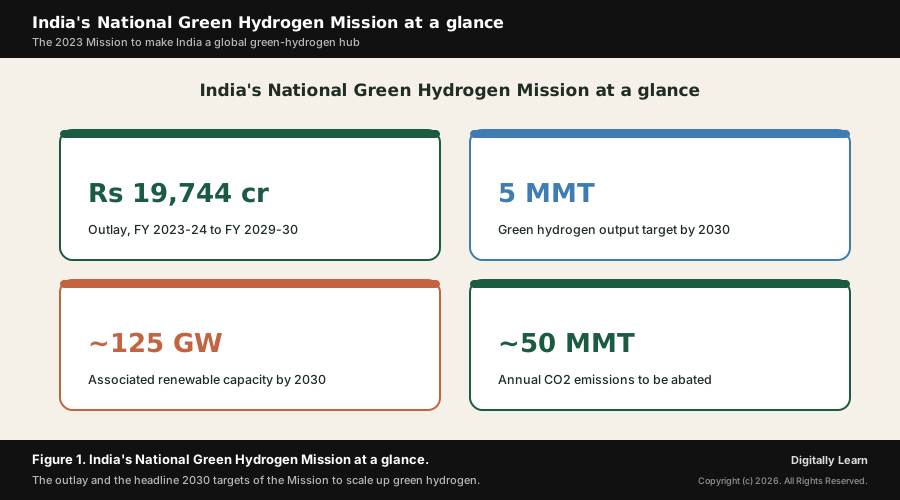
The National Green Hydrogen Mission is India's central plan to build an economy around green hydrogen. It was approved by the Union Cabinet in January 2023, with an initial outlay of Rs 19,744 crore spread over the financial years up to 2029-30. The Mission is run by the Ministry of New and Renewable Energy, the MNRE, which is the nodal ministry for the whole effort.
The Mission's overarching objective is to make India a global hub for the production, use and export of green hydrogen and its derivatives, such as green ammonia. In plain terms, the government wants the country not only to produce clean hydrogen for its own industries, but to become a place that the rest of the world buys it from, turning India's abundant renewable energy into a tradable clean fuel.
The reason this matters is that hydrogen is a versatile fuel and feedstock, but the way it is made today is dirty. By backing green hydrogen, made cleanly from water and renewable power, the Mission ties together three national goals at once: cleaner industry, greater energy independence and a new export industry. The figure below sets out the Mission at a glance.
Why the Green Hydrogen Mission Is in the News: Incentives Awarded and Capacity Bid Out
From cabinet approval to the first awards under SIGHT
Why it matters now is that the Mission has moved from approval on paper to its first concrete awards. After the 2023 approval, the MNRE issued the detailed scheme guidelines and began the competitive bidding through which public incentives are handed out, so money has started to flow into actual green-hydrogen and electrolyser projects.
The figures are best read as approximate and as-of the government's progress reporting, because a live scheme changes as more tranches are awarded. Under the electrolyser-manufacturing incentive, about 15 companies have been awarded a total of roughly 3,000 MW per annum of manufacturing capacity. Under the green-hydrogen production incentive, about 18 companies have been awarded a cumulative capacity of around 8,62,000 tonnes a year, close to 0.86 million tonnes.
These first awards matter because they turn the targets into committed capacity: real factories to build electrolysers and real plants to produce green hydrogen. As fresh rounds of bidding are completed, the awarded capacity grows, which is why each new tranche under the SIGHT programme keeps the Mission in the news and lets the country track its progress toward the 2030 goal.
Understanding the Significance of the Green Hydrogen Mission for India
Energy security, cleaner industry and a new clean-tech industry
What is the significance of the National Green Hydrogen Mission lies first in energy security. India imports most of its oil and gas, which drains foreign exchange and exposes the economy to price shocks abroad. Green hydrogen, made at home from domestic renewable power, can replace some of those imports, and the Mission expects to cut over Rs 1 lakh crore of fossil-fuel imports by 2030.
Its second significance is the chance to decarbonise industry that is otherwise hard to clean up. Sectors such as oil refining, fertiliser, steel and shipping cannot easily run on electricity alone, but they can switch from grey hydrogen and fossil fuels to green hydrogen and green ammonia. This makes the Mission a key tool for cutting the emissions that ordinary renewable power cannot reach.
Its third significance is industrial. By funding domestic electrolyser manufacturing, the Mission seeks to build a home-grown clean-technology industry rather than importing the equipment, creating jobs and capability. Together these make the Mission a central pillar of India's energy transition and of its long-term pledge to reach net zero by 2070.
What Green Hydrogen Is: Electrolysis, and Green versus Grey and Blue
Hydrogen made by splitting water with renewable electricity
To follow the Mission, it helps to be clear on what green hydrogen actually is. Hydrogen is the lightest element and a clean-burning fuel: when it is used, it gives off energy and water, not carbon dioxide. The catch is that hydrogen does not exist freely in nature in usable form, so it must be made, and the way it is made decides how clean it really is.
Green hydrogen is made by electrolysis of water. An electric current is passed through water in a device called an electrolyser, splitting the water into hydrogen and oxygen. When the electricity comes from renewable sources such as solar and wind, the whole process emits almost no carbon, which is exactly why this route is called green and why the Mission funds both the electrolysers and the renewable power behind them.
Its derivatives matter too. Green hydrogen can be combined with nitrogen to make green ammonia, which is easier to store and ship and is itself a feedstock for fertiliser and a possible fuel. Through such derivatives, green hydrogen can reach sectors, from fertiliser to shipping, where pure hydrogen is awkward to use directly.
Why colour labels matter: green, grey and blue hydrogen
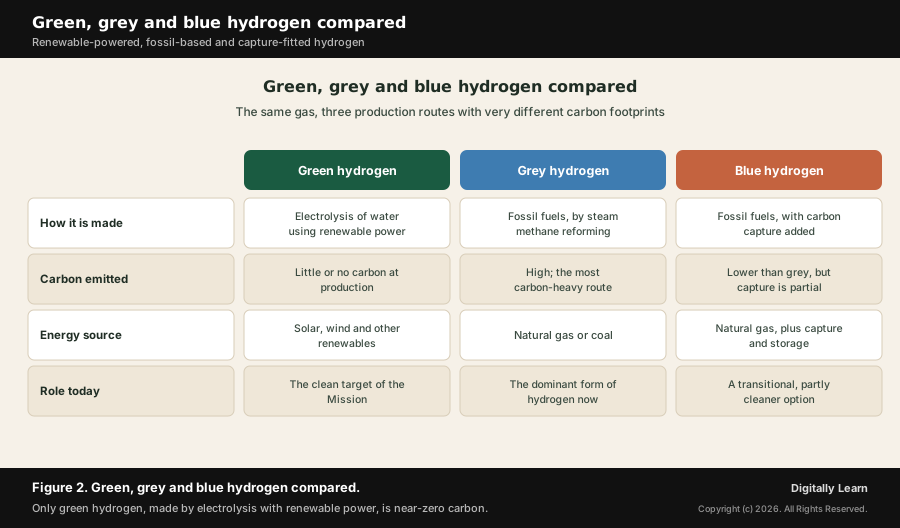
The same hydrogen gas is given different colour labels depending on how it is made, and the difference is entirely about carbon. Most hydrogen in the world today is grey hydrogen, made from fossil fuels, usually natural gas, by a process called steam methane reforming. It is the cheapest route today, but it is also the most carbon-heavy, which is the problem the Mission exists to solve.
Blue hydrogen is the same fossil-based hydrogen, but with much of the carbon dioxide captured and stored rather than released. It is cleaner than grey hydrogen, yet it still starts from fossil fuels and the carbon capture is only partial, so it is best seen as a transitional step rather than a true clean solution.
Green hydrogen is the goal. Because it is made by electrolysis powered by renewables, it carries little or no carbon at the point of production, and it does not depend on fossil fuels at all. This is why India's Mission is built specifically around green hydrogen, not merely hydrogen of any kind. The figure below sets the three routes side by side.
How the Mission Works: The SIGHT Programme, Pilots, R&D, Hubs and Standards
SIGHT: incentives for production and for electrolyser manufacturing
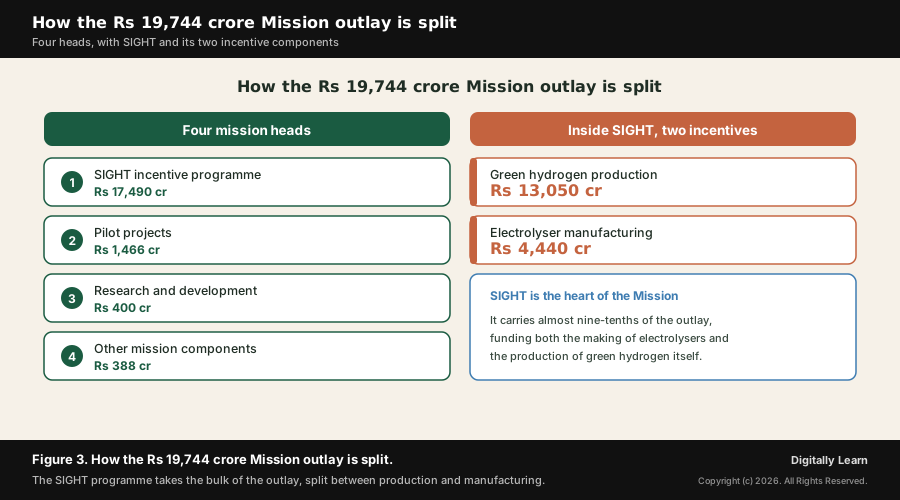
The engine of the Mission is the SIGHT programme, short for Strategic Interventions for Green Hydrogen Transition. SIGHT takes the bulk of the money, an outlay of Rs 17,490 crore out of the total Rs 19,744 crore, and works by offering financial incentives to make green hydrogen cheaper to produce and its equipment cheaper to build in India.
SIGHT has two distinct incentive components. The first, of about Rs 4,440 crore, supports the domestic manufacturing of electrolysers, the core machines that split water, so that India makes this equipment at home rather than importing it. The second, of about Rs 13,050 crore, supports the actual production of green hydrogen, narrowing the cost gap that today makes green hydrogen dearer than the grey kind.
| SIGHT incentive component | Outlay (approx.) | What it supports |
|---|---|---|
| Green hydrogen production | Rs 13,050 crore | Lowering the cost of producing green hydrogen in India |
| Electrolyser manufacturing | Rs 4,440 crore | Building a domestic industry to make electrolysers |
Read together, the two components show the logic of SIGHT: support both the demand side, by making green hydrogen cheaper to produce, and the supply side, by building a home industry for the machines. This is a deliberate shift of public support toward clean energy, the kind of subsidy reorientation that drives an energy transition.
Pilot projects, research, hydrogen hubs and standards
Beyond SIGHT, the Mission spends on other building blocks. About Rs 1,466 crore funds pilot projects, which test green hydrogen in real uses such as steel-making, transport and shipping, so that the technology is proven in Indian conditions before it is scaled up. These pilots turn a laboratory idea into working demonstrations.
A further Rs 400 crore is set aside for research and development, to improve electrolysers, bring down costs and develop the storage and safety know-how that a hydrogen economy needs. The remaining Rs 388 crore covers other mission components, including skilling, awareness and the running of the programme itself.
The Mission also plans Green Hydrogen Hubs, regions where production, use and export are concentrated to gain scale, and it provides for common standards and a certification scheme, so that hydrogen sold as green genuinely meets a low-emission threshold. Standards matter because, without them, the green label would mean little to buyers at home or abroad.
The 2030 Targets, the Energy-Transition Benefits and the Real Challenges
The headline 2030 targets and how they fit India's renewable push
The Mission sets out a clear set of 2030 targets. The headline is a green-hydrogen production capacity of at least 5 million tonnes a year. Reaching it is expected to require an associated addition of about 125 GW of renewable energy capacity, because making green hydrogen at that scale needs vast amounts of clean electricity to run the electrolysers.
That renewable figure is what links this Mission directly to India's wider energy-transition goal of meeting about half of its electricity capacity from non-fossil sources by 2030. Green hydrogen is not a side-show to the renewable build-out; it is a powerful new source of demand for solar and wind power, pulling even more renewable capacity onto the grid and helping the country toward that 2030 ambition.
The Mission also projects over Rs 8 lakh crore in total investment, over 6 lakh jobs, the abatement of nearly 50 million tonnes of carbon dioxide a year, and a cut of over Rs 1 lakh crore in fossil-fuel imports by 2030. Together these numbers show the Mission as an instrument of climate action, energy security and economic growth at the same time.
Shifting public support from fossil fuels to renewables
A central idea behind the Mission is a deliberate shift of public support from fossil fuels toward renewables. For decades, governments worldwide, including India, have spent heavily to keep fossil fuels affordable. Redirecting that fiscal effort toward clean energy changes the economics: it makes renewable power and the green hydrogen built on it more competitive against coal, oil and gas.
The SIGHT incentives are exactly this kind of redirection. By paying producers to make green hydrogen and rewarding firms that manufacture electrolysers, the State lowers the cost of the clean option instead of the dirty one. As India also trims fuel subsidies and raises the share of renewables, this reallocation of money is what tilts investment toward solar, wind and green hydrogen, and so accelerates the move to a low-carbon energy mix.
This is why a subsidy shift is so powerful for the 2030 renewable goal. Cheaper clean energy attracts private capital, which builds still more renewable capacity; that capacity in turn makes green hydrogen cheaper, creating a virtuous circle. The Mission is, in effect, a worked example of how moving public money from fossil fuels to renewables can pull a country toward its clean-energy targets.
The challenges: cost, renewable and water needs, storage and demand
A balanced view must weigh the challenges, the more so because UPSC questions reward this balance. The first is cost: green hydrogen is today significantly dearer to produce than the grey hydrogen made from fossil fuels, and closing that gap, which the SIGHT incentives are meant to do, is the single biggest hurdle to wide adoption.
The second is the sheer scale of renewable energy and water needed. Producing green hydrogen at the 5-million-tonne target demands the roughly 125 GW of extra renewable capacity noted above, plus large, steady supplies of water for electrolysis, a serious concern in a country with uneven water availability. Siting plants where both clean power and water are plentiful is a real constraint.
Further challenges sit on the infrastructure and demand side. Hydrogen is light and hard to store and transport, needing new pipelines, storage and safety systems. And clean supply alone is not enough: there must be assured demand and offtake, with industries committed to buying green hydrogen, alongside the technology and scale-up effort to bring costs down. None of these is fatal, but each must be solved for the Mission to succeed.
The Green Hydrogen Mission in Context: Net Zero, the Energy Transition and the Global Race
How the Mission sits within India's climate goals and the world hydrogen race
Contemporary linkages place the Mission within India's larger climate commitments. India has pledged to reach net zero by 2070 and to sharply raise the share of non-fossil energy by 2030, and green hydrogen is one of the few tools that can cut emissions from the heavy industry and long-distance transport that electricity alone cannot reach.
The Mission also belongs to the wider story of India's energy transition. The same renewable build-out that powers homes and factories now has a new, large customer in green hydrogen, and policy supports such as the Ministry of Power's waiver of inter-state transmission charges for green-hydrogen projects knit the two efforts together. Bodies such as NITI Aayog have mapped how green hydrogen can drive deep decarbonisation across Indian industry.
Globally, the Mission is India's entry into a fast-moving green-hydrogen race. Many countries are funding their own programmes, and institutions such as the World Bank see green hydrogen as central to the energy transition in developing economies, valuable for export revenue, jobs and lower emissions. India's combination of cheap renewable power and a large home market is its bid to compete in this emerging global market.
- Net zero by 2070: Green hydrogen is a key route to cut emissions from industry and transport that electrification cannot easily reach.
- The renewable-energy build-out: Green hydrogen adds vast new demand for solar and wind, reinforcing India’s 2030 clean-power goals.
- Hard-to-abate sectors: Refining, fertiliser, steel and shipping are the priority users the Mission and its pilots target.
- The global hydrogen race: Many nations are funding green hydrogen, and the World Bank backs it for the energy transition in developing countries.
Finally, the Mission sits within India's evolving clean-energy architecture, alongside the renewable-capacity targets, the push for electric mobility and the wider effort to cut the carbon intensity of the economy. It does not stand alone; it is one carefully funded piece of a much larger transition.
UPSC Relevance and Exam Focus
Where this fits in the UPSC-CSE syllabus
This topic maps most directly to General Studies Paper III: infrastructure, energy, and the conservation of the environment, and to the mobilisation of resources and economic growth. It also reaches into science and technology, since green hydrogen is a technology story, and into the climate-change and energy-security themes that recur across the paper.
For Prelims, hold the high-yield facts: the National Green Hydrogen Mission was approved in January 2023 with an outlay of Rs 19,744 crore, is run by the MNRE, and aims for at least 5 MMT of green hydrogen a year by 2030; its core is the SIGHT programme; and green hydrogen is made by electrolysis of water using renewable power, as against grey hydrogen from fossil fuels and blue hydrogen with carbon capture.
For Mains, the recurring framing is to explain how green hydrogen advances India's energy security and decarbonisation, to weigh its benefits against the cost, water and infrastructure challenges, and to link it to the renewable-energy transition and the net-zero pledge. A strong answer treats the Mission as both a climate and an economic instrument.
Recurring linked concepts an aspirant should keep in working memory:
- Green hydrogen: Hydrogen made by electrolysis of water using renewable electricity, with almost no carbon emitted at production.
- SIGHT programme: The Mission’s incentive scheme for green-hydrogen production and for electrolyser manufacturing.
- Hard-to-abate sectors: Industries such as steel, refining, fertiliser and shipping that are difficult to decarbonise with electricity alone.
- Energy transition and net zero: The shift from fossil fuels to clean energy, with India targeting net zero by 2070.
A common Prelims trap is to treat all hydrogen as clean. Only green hydrogen, made by electrolysis with renewable power, is near-zero carbon; grey hydrogen from fossil fuels is the dominant and dirtiest form, and blue hydrogen is only partly cleaned by carbon capture.
A common Mains trap is to praise the Mission without testing it. Its exam value lies in a balanced judgment: the genuine gains in energy security, decarbonisation and a home clean-tech industry, set honestly against the high cost of green hydrogen, the heavy renewable and water needs, and the infrastructure and demand still to be built.
Previous Year UPSC-CSE Questions By the end you will be able to draft model answers for the following UPSC questions. Each question carries a collapsible framework showing how to approach it in the exam.
- UPSC Mains 2022 GS-IIIDo you think India will meet 50 percent of its energy needs from renewable energy by 2030? Justify your answer. How will the shift of subsidies from fossil fuels to renewables help achieve the above objective? Explain.
How to structure the answer in the exam
Body (sub-themes to develop):
- Justifying the trajectory: India's rapid solar and wind build-out, falling renewable costs and large new demand drivers such as the green-hydrogen Mission make a high non-fossil share by 2030 plausible, though not automatic.
- Green hydrogen as a demand pull: the Mission's 5-million-tonne target needs about 125 GW of added renewable capacity, so it actively pulls more solar and wind onto the grid toward the 2030 goal.
- The subsidy shift, mechanism: moving public money from keeping fossil fuels cheap to incentives for renewables and green hydrogen, as the SIGHT scheme does, lowers the cost of the clean option rather than the dirty one.
- The subsidy shift, effect: cheaper clean energy attracts private investment, which builds more renewable capacity, which makes green hydrogen cheaper still, a virtuous circle that accelerates the transition.
- Caveats: cost gaps, grid integration, storage, land and water needs and assured demand must still be managed, so the target is achievable only with sustained policy support.
Sources and Further Reading
- MNRE: National Green Hydrogen Mission
- PIB: Cabinet approves National Green Hydrogen Mission
- PIB: National Green Hydrogen Mission (NGHM) overview
- NITI Aayog: Harnessing Green Hydrogen, Opportunities for Deep Decarbonisation in India
- Ministry of Power: Green Hydrogen Policy
- World Bank: Green Hydrogen in Developing Countries
- Wikipedia: Green hydrogen
- Wikipedia: Hydrogen production
Editorial Disclaimer
This briefing is for UPSC preparation. Verify the figures and scheme details against the official MNRE and PIB sources before relying on them.


