


Overview
India's Gross Domestic Product grew by 7.7 per cent in real terms in the financial year 2025-26, according to the provisional national-income estimates released by the National Statistics Office on 5 June 2026. Real GDP measures the value of all goods and services produced in the economy, after removing the effect of rising prices, so the figure shows how fast the economy actually expanded, up from 7.1 per cent the year before.
India's GDP Grew 7.7 Per Cent in 2025-26
What the provisional estimates show
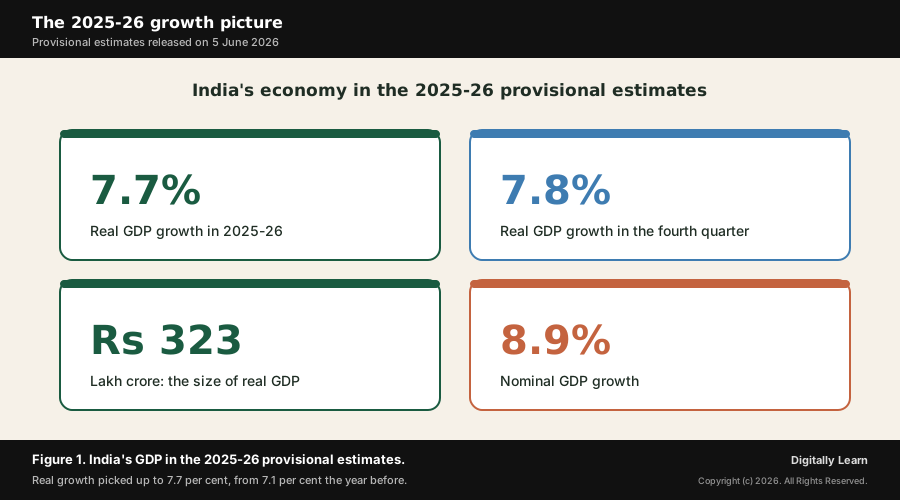
On 5 June 2026, the National Statistics Office released the provisional estimates of India's national income for the financial year 2025-26. They show that real Gross Domestic Product grew by 7.7 per cent, up from 7.1 per cent the year before.
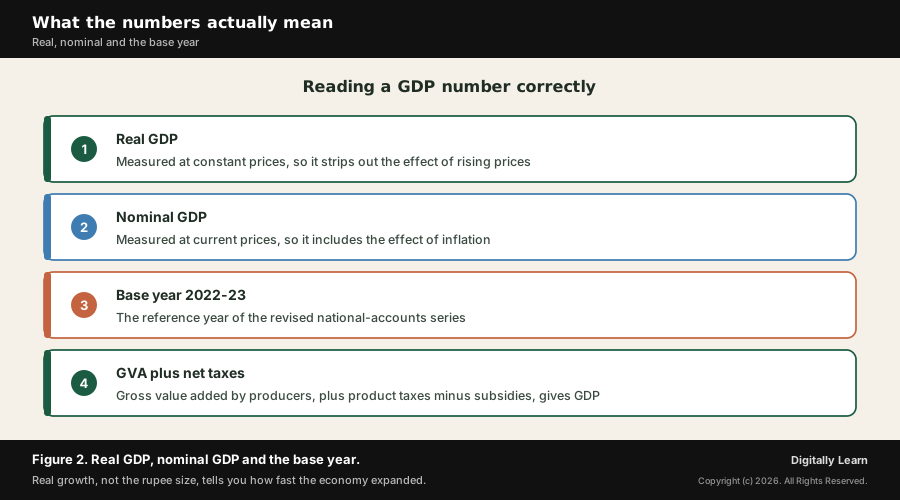
Real GDP is the value of everything the economy produces, measured at constant prices so that price rises do not inflate the figure. Measured at current prices, nominal GDP grew faster, by about 8.9 per cent, the gap between the two reflecting inflation.
Growth was strong in the final quarter as well, with real GDP rising about 7.8 per cent in the January to March quarter. In size, real GDP reached roughly 323 lakh crore rupees for the full year.
Why the Growth Number Matters
The economy's single most-watched figure
Why it matters is that the annual GDP figure is the headline measure of the economy's health. It feeds into the Union Budget, guides the Reserve Bank's interest-rate decisions, and frames how India compares with other large economies.
A real growth rate of 7.7 per cent keeps India among the fastest-growing major economies. Sustained high growth is also what allows rising tax revenue, more spending on welfare and infrastructure, and a falling debt burden relative to the size of the economy.
What a Provisional Estimate Signifies
Why the figure is provisional, not final
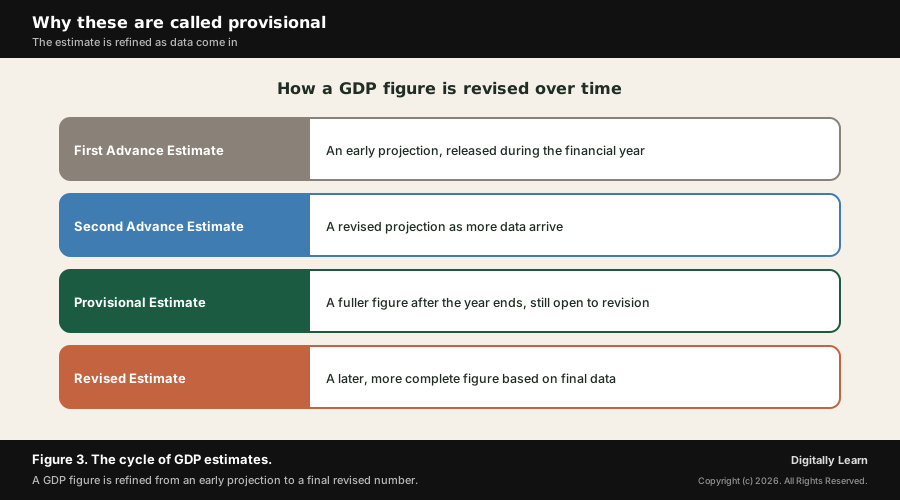
What is the significance of this estimate lies partly in the word provisional. The figure is not the first guess, nor the last word; it is a fuller estimate made after the year has ended, but one that can still be revised as more complete data arrive.
During the year the statistics office issues early advance estimates; after the year closes it issues provisional and then revised estimates. Each step uses more actual data, so a growth number can move up or down over time, which is why a single release is read as a signpost rather than a final verdict.
Real Versus Nominal GDP and the New Base Year
The 2025-26 estimates at a glance
The table sets out the main numbers in the release and what each one means. Together they show an economy growing fast in real terms, with the rupee size of output rising faster still because of price changes.
| Measure | Value |
|---|---|
| Real GDP growth, 2025-26 | 7.7 per cent, up from 7.1 per cent the year before |
| Real GDP growth, fourth quarter | About 7.8 per cent |
| Real GDP, full year | About 323 lakh crore rupees |
| Nominal GDP growth | About 8.9 per cent |
| Released by | The National Statistics Office, on 5 June 2026 |
| Base year of the series | 2022-23, in the revised national-accounts series |
Read together, the rows make one point clear: the real growth rate, not the rupee size, tells you how fast the economy expanded. The larger nominal figure simply carries the effect of inflation on top of real growth.
Why the base year and the measure both matter
To measure real growth, output is valued at the prices of a fixed reference year, the base year. India has revised this base year to 2022-23 in its national-accounts series, replacing an older base so the figures reflect the present structure of the economy.
The headline number is also built up from Gross Value Added, the output of producers across agriculture, industry and services. Adding product taxes and subtracting product subsidies to gross value added gives GDP at market prices, which is the figure usually quoted.
What to Watch in India's Growth Story
Three things to track from here
The provisional estimate points to three things worth following, since a single year's figure is a marker rather than the whole story.
- (a) The revision. Whether the later revised estimates raise or lower the 7.7 per cent figure as fuller data arrive.
- (b) The quality of growth. Whether fast output growth also creates enough jobs, since growth without jobs is a recurring concern.
- (c) The sectoral spread. Whether agriculture, industry and services all share in the growth, or whether it rests on a few sectors.
The deeper test is whether high headline growth translates into rising incomes and employment for ordinary households, rather than a number that looks strong but is narrowly based.
How India Measures and Revises Its GDP
From the statistics office to the national accounts
Contemporary linkages tie this release to the wider machinery of economic statistics. India's national accounts are compiled by the National Statistics Office, part of the Ministry of Statistics and Programme Implementation, which sets the methods and the base year.
The methodology has changed over time. India moved its headline measure towards GDP at market prices and gross value added in an earlier revision, and it periodically updates the base year so the figures track the changing shape of the economy.
These figures connect directly to policy. The Reserve Bank weighs growth against inflation when it sets interest rates, and the government uses the GDP estimate to frame the Budget, to judge the deficit relative to the size of the economy, and to plan borrowing.
Growth statistics also feed the debate on development. A rising GDP is necessary but not sufficient, since real progress shows up only when growth lifts employment, incomes and human well-being, not in the headline number alone.
UPSC Relevance and Exam Focus
Where this fits in the UPSC-CSE syllabus
This topic maps to General Studies Paper III: Indian economy, growth and development, and the mobilisation of resources, and to the national-income portion of the Prelims economy syllabus.
For Prelims, hold the high-yield distinctions: real versus nominal GDP, the role of the base year, gross value added versus GDP at market prices, and which body releases the estimates.
For Mains, two framings recur: how India's GDP computing methodology changed, and whether steady growth alone signals a healthy economy or whether jobs and inclusion matter just as much.
Recurring linked concepts an aspirant should keep in working memory:
- Real GDP: output valued at constant prices, removing the effect of inflation.
- Nominal GDP: output valued at current prices, including inflation.
- Gross Value Added: output of producers; GDP equals it plus product taxes minus subsidies.
- Base year: the reference year for measuring real growth, revised to 2022-23.
A common Prelims trap is to assume a rising rupee size of GDP means faster growth; the real growth rate, not the nominal level, measures how fast the economy expanded.
A common Mains trap is to treat GDP growth as development itself. Growth is necessary but does not by itself guarantee jobs, lower inequality or better human well-being.
Previous Year UPSC-CSE Questions By the end you will be able to draft model answers for the following UPSC questions. Each question carries a collapsible framework showing how to approach it in the exam.
- UPSC Mains 2021 GS-IIIExplain the difference between computing methodology of India's Gross Domestic Product (GDP) before the year 2015 and after the year 2015?
How to structure the answer in the exam
Introduction: Open by noting that India revised its GDP methodology to align with international practice.
Body (sub-themes to develop):
- Before 2015: headline at factor cost, older base year.
- After 2015: headline shifted to GDP at market prices and gross value added.
- Base year revised, and later updated again, to reflect the present economy.
- Wider data sources, including the corporate database, were brought in.
Conclusion: Conclude that the revision aligned India's GDP measure with global standards but drew debate over data.
- UPSC Mains 2019 GS-IIIDo you agree with the view that steady GDP growth and low inflation have left the Indian economy in good shape? Give reasons in support of your arguments.
How to structure the answer in the exam
Introduction: Open with the headline strengths of steady growth and moderate inflation.
Body (sub-themes to develop):
- In favour: high real growth, contained inflation, macro stability.
- Against: weak job creation, uneven sectoral and regional spread.
- The quality of growth matters as much as the rate.
- Other risks: external shocks, private investment and demand.
Conclusion: Conclude that steady growth is welcome but a healthy economy also needs jobs and inclusion.
- UPSC Prelims 2015 GS-IWith reference to Indian economy, consider the following statements:
- The rate of growth of Real Gross Domestic Product has steadily increased in the last decade.
- The Gross Domestic Product at market prices (in rupees) has steadily increased in the last decade.
Which of the statements given above is/are correct?
How to approach this Prelims question
Approach: Separate the growth rate of real GDP from the rupee level of GDP at market prices.
Trap to watch: Statement 1 confuses a rising level with a steadily rising growth rate; the growth rate fluctuates.
Key facts to recall:
- The rupee size of GDP at market prices rises almost every year, so statement 2 is correct.
- The real growth rate goes up and down, so statement 1 is wrong.
Answer signal: Reject statement 1 and the answer is 2 only.
- UPSC Prelims 2018 GS-IIncrease in absolute and per capita real GNP do not connote a higher level of economic development, if
How to approach this Prelims question
Approach: Recall that growth in output is not the same as development.
Trap to watch: Sectoral pace is a distractor; the real signal of development is poverty and jobs.
Key facts to recall:
- A rise in real GNP does not connote higher development if poverty and unemployment increase.
- Development means rising well-being, not only rising output.
Answer signal: The phrase 'poverty and unemployment increase' is the development signal.
Sources and Further Reading
- Ministry of Statistics and Programme Implementation: Provisional Estimates of Annual GDP for 2025-26 and Q4
- Press Information Bureau: Provisional Estimates of Annual GDP for 2025-26 and Fourth Quarter
- Press Information Bureau: New Series of GDP Estimates with Base Year 2022-23
- Ministry of Statistics and Programme Implementation: Quarterly GDP growth data
Editorial Disclaimer
This briefing is for UPSC preparation. Verify the latest GDP figures against the official National Statistics Office releases before relying on them.


