


Overview
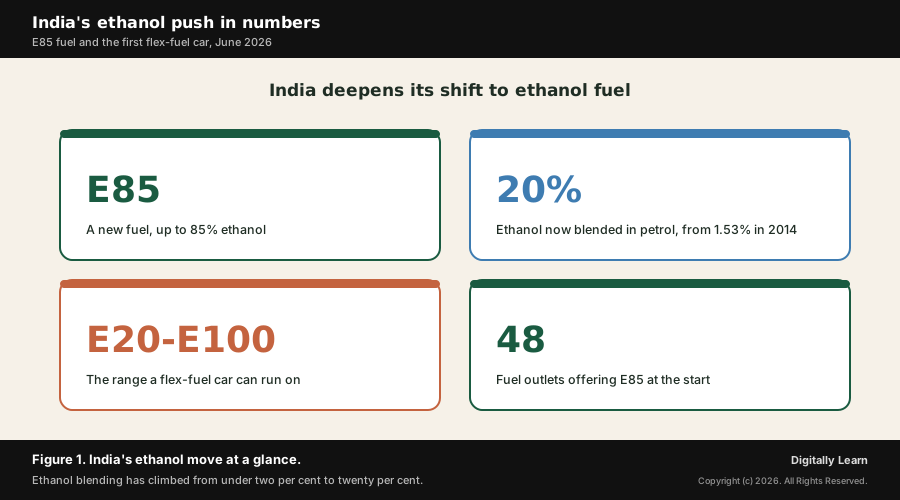
In June 2026, India launched E85, a motor fuel made of up to eighty-five per cent ethanol, along with the country's first flex-fuel passenger car. Ethanol is a biofuel blended into petrol to cut the use of imported oil. These steps deepen India's ethanol blending programme, under which the share of ethanol in petrol has risen from about 1.53 per cent in 2014 to twenty per cent today.
India Launches E85 Fuel and Its First Flex-Fuel Car
A high-ethanol fuel and a car to use it
In June 2026, on World Environment Day, India launched E85 fuel, a blend of up to eighty-five per cent ethanol with petrol. The fuel went on sale first at forty-eight retail outlets of the public-sector oil companies, with plans to expand it across the country.
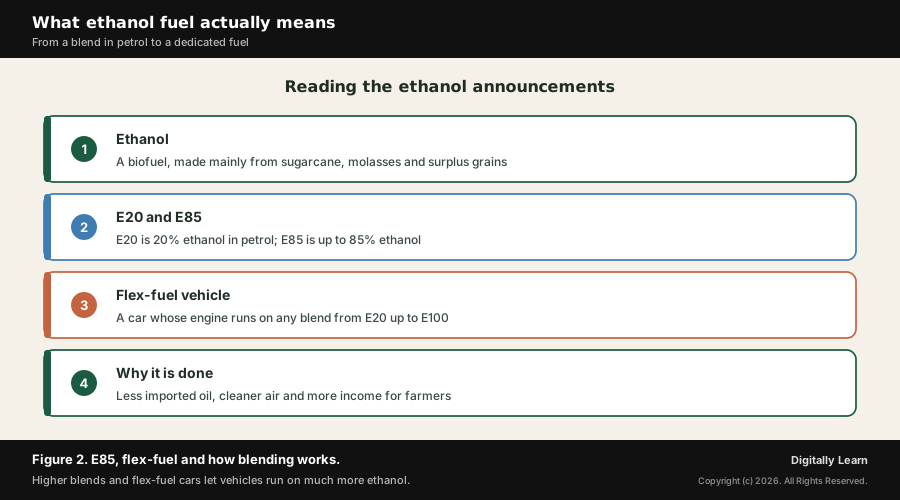
Around the same time, the government launched India's first flex-fuel passenger car, made by Maruti Suzuki. A flex-fuel vehicle has an engine that can run on a wide range of ethanol-petrol blends, from E20 up to E100.
These moves matter because ordinary cars cannot use very high ethanol blends. Pairing a high-ethanol fuel like E85 with flex-fuel vehicles that can burn it is what allows India to use far more ethanol than a simple blend in regular petrol.
Why a Bigger Ethanol Push Matters
Cutting the oil import bill
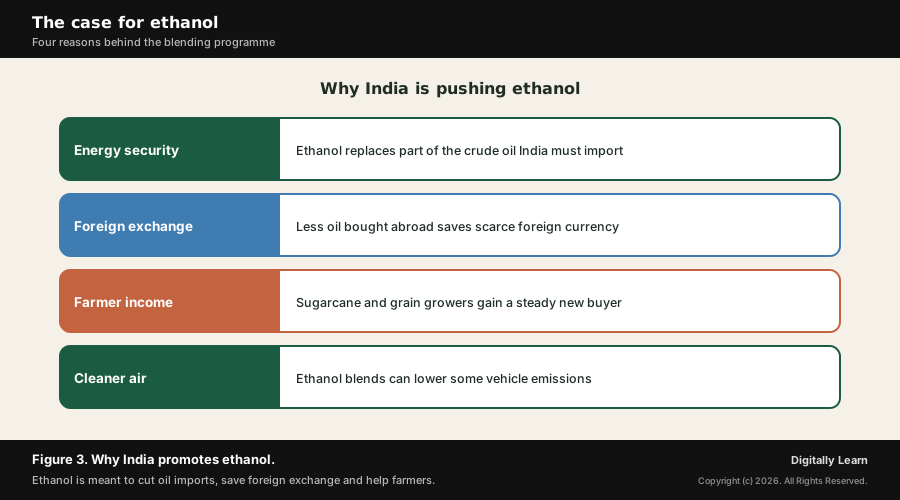
Why it matters is that India imports most of the crude oil it uses, a major drain on its foreign exchange. Every litre of ethanol blended into petrol replaces a litre of fuel that would otherwise have to be bought abroad.
The government says blending has already saved a large sum in foreign exchange and substituted a big volume of crude imports. It also gives farmers who grow sugarcane and surplus grains a steady market, linking energy policy to rural incomes.
What the Move to Higher Ethanol Blends Signifies
From a small blend to a dedicated fuel
What is the significance of this step lies in how far the programme has come. India met its target of twenty per cent ethanol in petrol about five years ahead of schedule, a sharp rise from the tiny share blended in 2014.
Going beyond twenty per cent needs vehicles built for it. The launch of E85 and a flex-fuel car signals the next phase, where ethanol is not just a small additive but a fuel in its own right for engines designed to use it.
E85, Flex-Fuel Vehicles and How Ethanol Blending Works
The June 2026 ethanol announcements at a glance
The table sets out the key features of the announcements and what each one means. Together they show India moving from a blend in ordinary petrol towards dedicated high-ethanol fuels and vehicles.
| Item | Detail |
|---|---|
| E85 fuel | A blend of up to 85 per cent ethanol with petrol, for flex-fuel vehicles |
| Launched on | World Environment Day, in June 2026 |
| Rollout | Across 48 retail outlets of public-sector oil companies at first |
| First flex-fuel car | India's first flex-fuel passenger vehicle, made by Maruti Suzuki |
| Flex-fuel range | Such vehicles run on blends from E20 up to E100 |
| Blending reached | 20 per cent ethanol in petrol, up from 1.53 per cent in 2014 |
Read together, the rows show two halves of one plan: a fuel with much more ethanol, and a vehicle able to run on it.
Ethanol and Its Feedstocks: Sugarcane, Molasses and Grain
Ethanol is an alcohol that can be burned as fuel. In India it is made mainly from sugarcane and its by-product molasses, and increasingly from surplus grains such as maize and rice, under the Ethanol Blended Petrol programme.
Because it is made from crops, ethanol is a biofuel and a partly renewable source of energy, unlike the fossil petrol it replaces. This is why the programme is tied both to energy policy and to support for farmers who supply the feedstock.
What to Watch in India's Ethanol Story
Three things to track from here
The launch points to three developments worth following, since a new fuel is only useful if vehicles and supply keep pace.
- (a) The rollout. Whether E85 spreads from a few dozen outlets to the thousands the government has promised.
- (b) Flex-fuel vehicles. Whether carmakers offer more flex-fuel models so the fuel has enough users.
- (c) The feedstock. Whether ethanol can be supplied without straining food crops, land or water.
The real test is whether higher ethanol use cuts oil imports and helps farmers without creating a food-versus-fuel strain on crops and water.
India's Ethanol Programme and Energy Strategy
Biofuels within India's energy transition
Contemporary linkages tie the E85 launch to India's wider energy strategy. The Ethanol Blended Petrol programme, run by the petroleum ministry and the oil companies, is one strand of a push to reduce dependence on imported fossil fuels.
It sits alongside India's drive for renewable energy from solar and wind, green hydrogen, and electric vehicles. Each aims to cut the share of imported oil and coal in India's energy mix and to lower emissions over time.
Biofuels also raise hard choices. Using crops for fuel must be balanced against food security, land and water use, which is why India leans on by-products like molasses and surplus grain rather than diverting the main food supply.
The shift of support from fossil fuels towards cleaner energy, including biofuels, is central to how India hopes to meet a large share of its energy needs from non-fossil sources in the years ahead.
UPSC Relevance and Exam Focus
Where this fits in the UPSC-CSE syllabus
This topic maps to General Studies Paper III: infrastructure and energy, and conservation and environment, with links to the agriculture and farmer-income portions of the same paper.
For Prelims, hold the high-yield facts: what ethanol and a flex-fuel vehicle are, the meaning of blends such as E20 and E85, the feedstocks for ethanol, and the twenty per cent blending milestone.
For Mains, two framings recur: how a shift of support from fossil fuels to renewables and biofuels serves India's energy goals, and the food-versus-fuel and water concerns that biofuels raise.
Recurring linked concepts an aspirant should keep in working memory:
- Ethanol: a biofuel made from sugarcane, molasses and surplus grains.
- Ethanol Blended Petrol: the programme to mix ethanol into petrol.
- Flex-fuel vehicle: a vehicle that runs on a wide range of ethanol-petrol blends.
- Energy security: reducing dependence on imported crude oil.
A common Prelims trap is to confuse ethanol with biodiesel; ethanol is an alcohol blended into petrol, while biodiesel is made from oils and blended into diesel.
A common Mains trap is to treat biofuels as cost-free. They raise real food-versus-fuel, land and water questions that policy must manage.
Previous Year UPSC-CSE Questions By the end you will be able to draft model answers for the following UPSC questions. Each question carries a collapsible framework showing how to approach it in the exam.
- UPSC Mains 2022 GS-IIIDo you think India will meet 50 percent of its energy needs from renewable energy by 2030? Justify your answer. How will the shift of subsidies from fossil fuels to renewables help achieve the above objective? Explain.
How to structure the answer in the exam
Introduction: Open with India's renewable-energy targets and current progress.
Body (sub-themes to develop):
- Progress: solar and wind growth, ethanol blending, green hydrogen.
- Gaps: grid, storage, land and finance constraints.
- Subsidy shift: removing fossil-fuel support raises clean-energy competitiveness.
- Risks: managing the transition for affected sectors and consumers.
Conclusion: Conclude that the target is achievable if subsidies and investment shift decisively towards clean energy.
- UPSC Prelims 2009 GS-IIn the context of alternative sources of energy, ethanol as a viable bio-fuel can be obtained from
How to approach this Prelims question
Approach: Recall the main feedstock for ethanol in India.
Trap to watch: Several crops can yield ethanol, but the classic and main Indian feedstock is sugarcane.
Key facts to recall:
- Ethanol in India is obtained mainly from sugarcane and its by-product molasses.
- Surplus grains such as maize are an increasing source too.
Answer signal: Sugarcane is the standard answer for India's ethanol feedstock.
- UPSC Prelims 2013 GS-IWith reference to the usefulness of the by-products of the sugar industry, which of the following statements is/are correct?
- Bagasse can be used as biomass fuel for the generation of energy.
- Molasses can be used as one of the feedstocks for the production of synthetic chemical fertilizers.
- Molasses can be used for the production of ethanol.
Select the correct answer using the codes given below:
How to approach this Prelims question
Approach: Check each sugar by-product against its real use.
Trap to watch: Molasses makes ethanol, not synthetic chemical fertilizers; statement 2 is wrong.
Key facts to recall:
- Bagasse is a biomass fuel and molasses is a feedstock for ethanol, so statements 1 and 3 are correct.
- Molasses is not used to make synthetic chemical fertilizers.
Answer signal: Reject statement 2 and the answer is 1 and 3 only.
Sources and Further Reading
- Press Information Bureau: E85 rollout commences across 48 retail outlets of Public Sector OMCs
- Press Information Bureau: Petroleum Minister launches India's first Flex-Fuel passenger vehicle
- Press Information Bureau: Flex Fuel Vehicles offer India a practical solution to reduce crude oil imports
- Ministry of Petroleum and Natural Gas: Ethanol Blended Petrol Programme
Editorial Disclaimer
This briefing is for UPSC preparation. Verify the latest figures against the official Ministry of Petroleum and Natural Gas sources before relying on them.

