


Overview
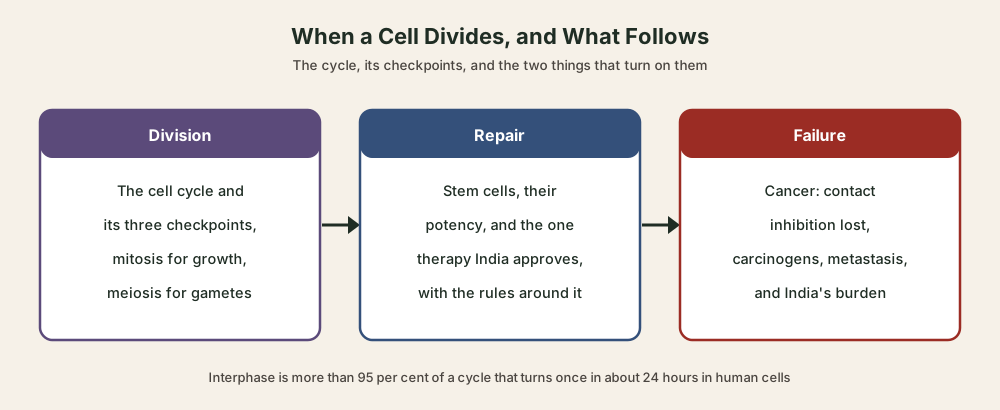
The cell cycle and cell division are the sequence by which a cell copies its DNA, grows and divides into two daughter cells. Mitosis keeps the chromosome number the same and builds and repairs the body; meiosis halves it to make gametes. Checkpoints decide whether a cell may go on dividing, and the two applied faces of that control, stem cell therapy and cancer, both turn on it.
Cell Cycle: Interphase, M Phase and Checkpoints
What Is Cell Cycle? Phases of Cell Cycle: G1, S, G2 and M
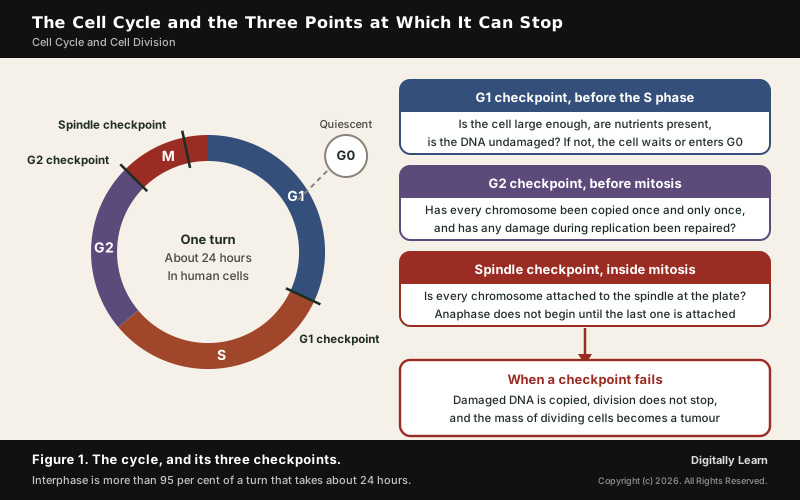
The cell cycle is the sequence of events by which a cell duplicates its genome, synthesises the other parts of the cell and divides into two daughter cells. A typical human cell in culture divides about once every 24 hours, though the time varies with the organism and the cell type; yeast completes a cycle in about 90 minutes.
The cycle has two basic phases. Interphase lasts more than 95 per cent of the cycle, and the M phase, the actual division, lasts only about an hour in a 24-hour human cycle. Interphase is often called the resting phase, but the cell is busy throughout it, growing and replicating its DNA in an orderly way.
- G1 phase (gap 1): The cell is metabolically active and grows continuously, but does not replicate its DNA.
- S phase (synthesis): DNA is replicated, so the amount of DNA per cell doubles, but the number of chromosomes does not change.
- G2 phase (gap 2): Proteins are made in preparation for mitosis while cell growth continues.
- M phase (mitosis): The chromosomes are separated (karyokinesis) and the cytoplasm divides (cytokinesis).
The S phase deserves a closer look. If the DNA content at the start is written as 2C, it rises to 4C by the end of S, yet a diploid (2n) cell still has 2n chromosomes. In animal cells the centriole also duplicates in the cytoplasm during the S phase.
G0 Phase and the Three Cell Cycle Checkpoints
Some cells stop dividing. Cells that leave the cycle after G1 enter an inactive stage called the quiescent stage (G0). They stay metabolically active but no longer proliferate unless the organism calls on them. Some adult animal cells, such as heart cells, do not appear to divide at all, and many others divide only occasionally, to replace cells lost to injury or cell death.
Passage round the cycle is controlled. There are many checkpoints, and the cell moves on only when conditions are favourable. Three are the major ones:
- G1 checkpoint: Also called the Start, restriction or major checkpoint.
- G2/M checkpoint: At the passage from G2 into mitosis.
- Spindle checkpoint: At the metaphase-to-anaphase transition.
Progress through these checkpoints depends on enzymes called cyclin-dependent kinases, switched on by regulatory proteins called cyclins. In the body, cell growth and differentiation are highly controlled; in cancer cells these regulatory mechanisms break down.
Cell Division: Mitosis and Meiosis
Mitosis: Prophase, Metaphase, Anaphase and Telophase
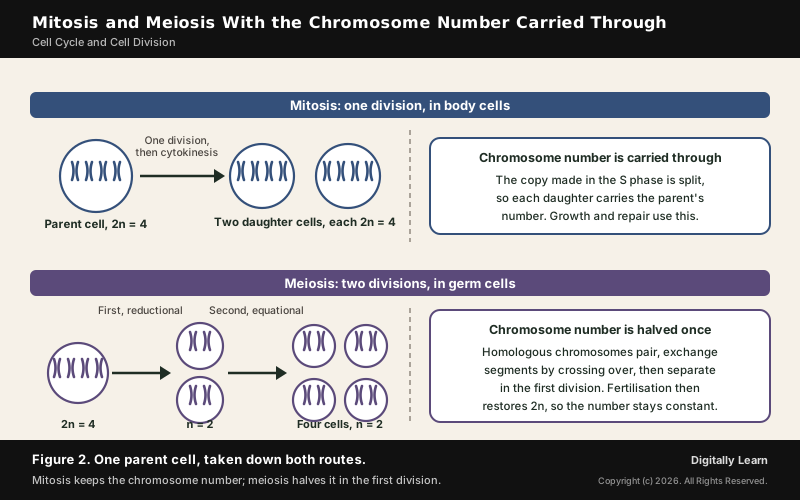
Mitosis is called the equational division because the number of chromosomes in the parent and progeny cells is the same. In animals it takes place only in diploid somatic cells, though male honey bees are an exception. It drives growth, restores the balance between nucleus and cytoplasm, and repairs the body: the upper layer of the skin, the lining of the gut and blood cells are constantly replaced. Plants can divide by mitosis in both haploid and diploid cells, and mitosis in the meristems, the apical and lateral cambium, lets a plant grow throughout its life.
- Prophase: The chromosomal material begins to condense, and the centrosome, duplicated in the S phase, moves towards opposite poles.
- Metaphase: Spindle fibres attach to the kinetochores, and the chromosomes line up at the metaphase plate.
- Anaphase: The centromeres split and the sister chromatids move to opposite poles.
- Telophase: The chromosomes cluster at the poles, and a nuclear envelope forms around each group.
Division of the nucleus is karyokinesis; division of the cytoplasm is cytokinesis. An animal cell forms a furrow in the plasma membrane that deepens until it meets in the centre. A plant cell, enclosed by a relatively inextensible wall, builds a new wall from the centre outwards; its precursor, the cell plate, becomes the middle lamella between the walls of the two adjacent cells.
Meiosis I and Meiosis II: Crossing Over and Reduction
Meiosis is the specialised division that halves the chromosome number to form haploid gametes. It has two sequential cycles of nuclear and cell division, meiosis I and meiosis II, with only a single cycle of DNA replication, so one diploid cell gives four haploid cells.
| Stage of prophase I | What happens |
|---|---|
| Leptotene | Chromosomes become visible under the light microscope and keep compacting |
| Zygotene | Homologous chromosomes pair (synapsis) and the synaptonemal complex forms |
| Pachytene | Crossing over between homologous chromosomes, catalysed by the enzyme recombinase |
| Diplotene | The synaptonemal complex dissolves; the homologues stay joined at the chiasmata |
| Diakinesis | Chiasmata terminalise, the spindle assembles, the nucleolus and nuclear envelope disappear |
- Pairing (synapsis): In prophase I, homologous chromosomes pair; each pair, held by the synaptonemal complex, is called a bivalent or tetrad.
- Crossing over: Homologous chromosomes exchange genetic material; the X-shaped points where they stay linked are called chiasmata.
- Reduction: In anaphase I the homologous chromosomes separate, while the sister chromatids stay together at their centromeres.
- Interkinesis: A short gap between the two divisions, with no DNA replication.
- Second division: Meiosis II resembles a normal mitosis and separates the sister chromatids.
Meiosis keeps the chromosome number of each species constant across generations: it produces the haploid phase of the life cycle, and fertilisation restores the diploid phase. It also increases the genetic variability of the population from one generation to the next, and variations are very important for the process of evolution.
Difference Between Mitosis and Meiosis
The difference between mitosis and meiosis is easiest to hold as a table. Mitosis makes more of the same cell; meiosis makes gametes that differ genetically.
| Feature | Mitosis | Meiosis |
|---|---|---|
| Number of divisions | One | Two (meiosis I and II) |
| Daughter cells | Two | Four |
| Chromosome number | Same as the parent (equational) | Halved (reductional) |
| Pairing of homologues | Does not occur | Occurs in prophase I (synapsis) |
| Crossing over | Does not occur | Occurs, at the chiasmata |
| Where it happens | Diploid somatic cells: growth and repair | Diploid cells that form gametes |
| Genetic result | Daughters identical to the parent | Daughters genetically different |
Apoptosis: Programmed Cell Death
Apoptosis and How It Differs From Necrosis
Cells also have natural ways of dying to keep the body in balance. Programmed cell death is a genetically regulated and organised process of selective cell destruction, essential for normal development, cellular quality control and immune function. When an embryo develops, programmed cell death removes the tissue between the fingers; without it, we would have webbed hands.
| Point | Apoptosis | Necrosis |
|---|---|---|
| Cause | Genetically regulated, part of normal life | Acute injury to the cell |
| Process | Highly regulated and controlled | Traumatic, uncontrolled |
| What remains | Apoptotic bodies that phagocytes engulf | Cell contents spill onto neighbouring cells |
| Inflammation | None | Damage to surrounding cells |
The scale is large: an average adult human loses 50 to 70 billion cells a day to apoptosis. Phagocytes remove the dying cells in an orderly way, without setting off inflammation.
Stem Cells: Types, Potency and Stem Cell Therapy
Types of Stem Cells: Embryonic, Adult and Induced Pluripotent
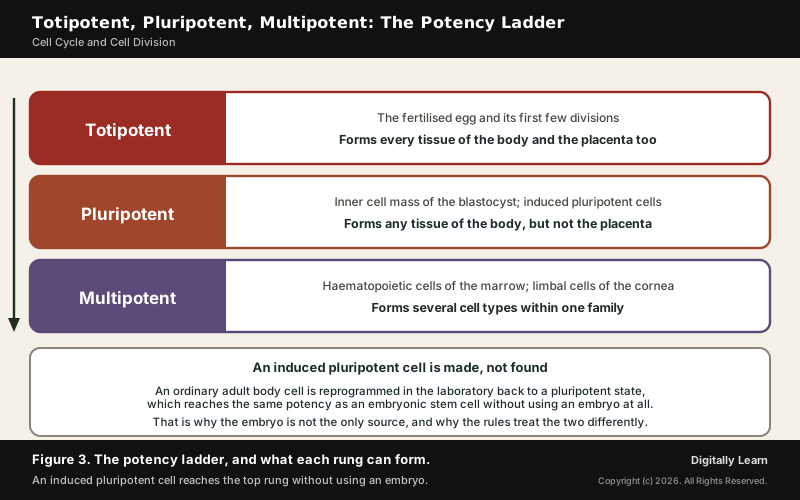
Unspecialised cells that can renew themselves and give rise to specialised cells are called stem cells. They are classified by origin and by potency, the range of cell types they can become.
- Totipotent: Cells from embryos before the inner cell mass forms (the morula stage) can give rise to the entire organism, including extra-embryonic tissues.
- Pluripotent: Embryonic stem cells from the inner cell mass of the blastocyst can give rise to all the cell types of the body, but not the placenta.
- Multipotent: Cells that can form the different specialised cells of one tissue or organ.
- Somatic (adult) stem cells: Self-renewing cells present in virtually all organs and tissues; their capacity is limited, multipotent or unipotent.
A third source avoids the embryo altogether. Induced pluripotent stem cells are made by reprogramming ordinary somatic cells; they are pluripotent, much like embryonic stem cells, and capable of indefinite expansion. Stem cells are not limited to animals either: the meristem of a plant is made of stem cells, undifferentiated cells capable of continuous division.
- Research uses: Developmental biology, disease modelling, tissue engineering, drug development and toxicity testing.
- Regenerative medicine: Restoring the function of cells and tissues damaged by degeneration or injury.
Stem Cell Therapy in India: Bone Marrow Transplants and Cord Blood
One stem cell therapy is fully established: haematopoietic stem cell transplantation (HSCT), the transplant of blood-forming stem cells. In India there are no approved indications for stem cell therapy other than HSCT for the listed conditions; every other use is investigational and allowed only within a clinical trial.
- Blood cancers: Leukaemias, Hodgkin and other lymphomas, and myeloma are on the approved list.
- Inherited blood disorders: Thalassemia major and sickle cell disease are on the list.
- Standard of care: Blood stem cells for haematological, immunological and metabolic disorders are already an established standard of medical care.
Umbilical cord blood is one source of these stem cells. The Indian Council of Medical Research is plain about private banking: there is no scientific basis for preserving cord blood for future self-use, and private storage is advisable only when an elder child in the family has a condition treatable with these cells.
- Licensing: Cord blood banks may operate only under licence and monitoring by the Central Drugs Standard Control Organisation.
- Other tissues: For stem cells from cord tissue, placenta and similar sources, there is at present no scientific evidence of clinical benefit.
- Eye burns: Abroad, limbal stem cells were recommended for approval in 2014 for severe limbal stem cell deficiency caused by burns in the eye.
Somatic Cell Nuclear Transfer and Cloning
Cloning by nuclear transfer (SCNT) takes the nucleus of a body cell and implants it in an egg whose own nucleus has been removed. The egg develops into an early embryo with the same genome as the donor, a clone. The technique is used for both reproductive and therapeutic cloning.
- Reproductive cloning: The clone embryo is implanted in a host mother and carried to term. Dolly the sheep, born on 5 July 1996, was the first mammal cloned from an adult somatic cell.
- Therapeutic cloning: The clone embryo is used to obtain stem cells instead of being implanted.
SCNT is often confused with other biotechnology. Biolarvicides, for example, are a different matter: some strains of Bacillus thuringiensis make proteins that kill insects such as beetles and flies, including mosquitoes. None of this involves moving a nucleus.
India's Stem Cell Research Guidelines, 2017
The National Guidelines for Stem Cell Research, 2017 sort all stem cell research into three categories, permissible, restrictive and prohibited, according to the ethical and safety concerns each raises.
| Category | Examples | What it needs |
|---|---|---|
| Permissible | Laboratory studies with stem cells from tissues; new ESC lines from spare embryos; iPSC lines | Prior approval of the institutional committees (IC-SCR and IEC) |
| Restrictive | Creating embryos to derive stem cell lines; chimera studies; gene editing of embryos in the laboratory | Additional review by the national apex committee (NAC-SCRT) and other bodies |
| Prohibited | Germ line gene therapy and reproductive cloning; culturing a human embryo beyond 14 days or the primitive streak | Not permitted |
- 14-day limit: A human embryo may not be cultured beyond 14 days from fertilisation or the formation of the primitive streak, whichever is earlier.
- Gene editing: Editing of human embryos is restricted to laboratory (in vitro) studies, reviewed finally by the Review Committee on Genetic Manipulation.
- Chimeras: Studies that mix stem cells from two or more species are restricted research.
- Collaborations and imports: International collaborations need the Health Ministry’s Screening Committee; imports of stem cells need a licence.
The guidelines also target the clinics that sell unproven cures. Advertising stem cell therapy for a cure breaks the medical ethics regulations and the Drugs and Magic Remedies (Objectionable Advertisements) Act, 1954, which prohibits misleading advertisements. New cell lines must be registered with the national apex committee through the institutional committee.
Cancer Cells: When the Cell Cycle Fails
Cancer Cells, Tumours and Metastasis
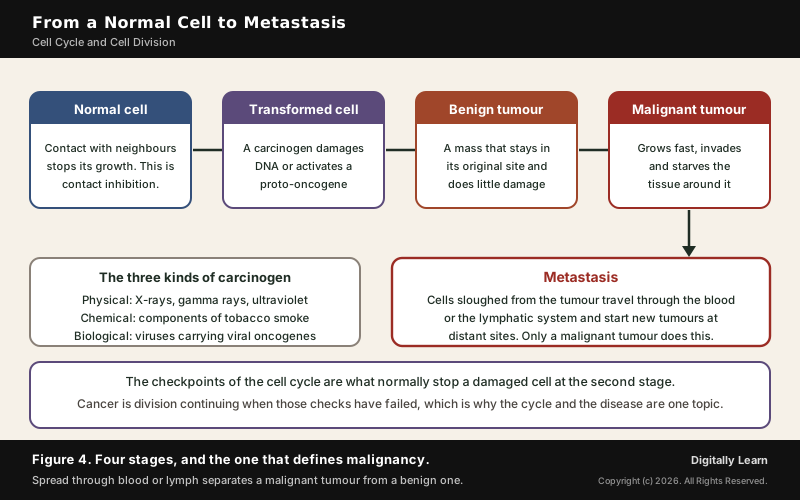
Normal cells show contact inhibition: contact with other cells stops their growth. Cancer cells appear to have lost this property, so they keep dividing and form masses of cells called tumours.
| Point | Benign tumour | Malignant tumour |
|---|---|---|
| Spread | Stays in its original location | Invades and spreads to other parts |
| Growth | Causes little damage | Grows rapidly, damages surrounding tissue |
| Effect on normal cells | Little | Starves them by competing for nutrients |
The most feared property of a malignant tumour is metastasis. Cells sloughed from the tumour travel through the blood to distant sites and start new tumours wherever they settle.
Carcinogens, Oncogenes and Tumour Suppressor Genes
Normal cells turn into cancerous, neoplastic cells under physical, chemical or biological agents called carcinogens.
- Physical carcinogens: Ionising radiation such as X-rays and gamma rays, and non-ionising radiation such as UV, damage DNA.
- Chemical carcinogens: Carcinogens in tobacco smoke are a major cause of lung cancer.
- Biological carcinogens: Oncogenic viruses carry genes called viral oncogenes.
Two kinds of gene decide the outcome. Normal cells carry proto-oncogenes, or cellular oncogenes, which can cause cancer when activated under certain conditions. Tumour suppressor genes do the opposite job: they regulate the cell during division and replication, and when one is mutated and loses its function, the cell may grow abnormally.
Cancer Detection and Treatment
- Biopsy: A piece of the suspected tissue is cut into thin sections, stained and examined under the microscope by a pathologist.
- Leukaemia tests: Leukaemias are detected through blood and bone marrow tests.
- Imaging: Radiography uses X-rays; CT uses X-rays to build a three-dimensional image; MRI uses strong magnetic fields and non-ionising radiation.
- Antibodies and genes: Antibodies against cancer-specific antigens detect some cancers, and molecular biology can find genes that raise a person’s risk.
Treatment usually combines surgery, radiotherapy and chemotherapy. In radiotherapy, tumour cells are irradiated lethally while the normal tissue around them is protected as far as possible. Most chemotherapy drugs have side effects such as hair loss and anaemia.
Because tumour cells avoid detection by the immune system, patients are also given biological response modifiers such as alpha interferon, which activate the immune system and help it destroy the tumour.
Cancer Burden in India and the National Programme
India has recorded its cancer burden since 1982 through the National Cancer Registry Programme of the Indian Council of Medical Research. Its 2020 report drew on 28 population-based registries.
| Measure | Figure | Year |
|---|---|---|
| Estimated cancer cases in India | 13.9 lakh | 2020 |
| Projected cases | 15.7 lakh | 2025 |
| Estimated cancer cases | More than 14 lakh | 2023 |
| Tobacco-related cancers | 3.7 lakh (27.1 per cent) | 2020 |
| Gastrointestinal cancers | 2.7 lakh (19.7 per cent) | 2020 |
| Breast cancer in women | 2.0 lakh (14.8 per cent) | 2020 |
| Cancer of the cervix | 0.75 lakh (5.4 per cent) | 2020 |
| Cancer deaths worldwide | Nearly 10 million | 2024 |
More than a quarter of cases are tobacco-related. Incidence also varies sharply by place: Aizawl district recorded the highest rate among men, 269.4 per 100,000.
- Programme: The National Programme for Prevention and Control of Cancer, Diabetes, Cardiovascular Diseases and Stroke (NPCDCS) is a flagship initiative under the National Health Mission.
- Screening: Population-based screening covers three common cancers: oral, breast and cervical.
- Facilities: 770 district NCD clinics are among the facilities set up under the programme.
- Guidelines: The National Institute of Cancer Prevention and Research is the nodal agency for research and screening guidelines.
Previous Year UPSC-CSE Questions
Previous Year UPSC-CSE Questions By the end you will be able to draft model answers for the following UPSC questions. Each question carries a collapsible framework showing how to approach it in the exam.
- UPSC Prelims 2001 Prelims-GSThe cellular and molecular control of programmed cell death is known as
How to approach this Prelims question
Approach: Read the word control in the stem: the question asks for the regulated process, not for any way in which a cell can die.
Trap to watch: Necrosis is also cell death but is unregulated and follows injury, so it is the intended distractor.
Key facts to recall:
- (a) Apoptosis: right. It is programmed cell death under genetic control, and it needs energy.
- (b) Ageing: wrong. Ageing is the slow decline of a whole organism over time, not the controlled death of a single cell.
- (c) Degeneration: wrong. Degeneration is the decay of a tissue's structure and function, not a regulated programme of death.
- (d) Necrosis: wrong. Necrosis is cell death too, but it is unregulated and follows injury; the cell swells and bursts, with inflammation.
Answer signal: Apoptosis, so option (a) is the answer.
- UPSC Prelims 2001 Prelims-GS“Metastasis” is the process by which
How to approach this Prelims question
Approach: Separate the spread of a tumour from the behaviour of a dividing cell, which is what two of the distractors describe.
Trap to watch: Option (c) describes the metaphase attachment of chromosomes to the spindle, which shares a prefix but nothing else.
Key facts to recall:
- (a) cells divide rapidly under the influence of drugs: wrong. Rapid division describes a growing tumour, not its spread.
- (b) cancer cells spread through the blood or lymphatic system: right. That spread to other sites is metastasis, the mark of a malignant tumour.
- (c) chromosomes attached to the spindle before anaphase: wrong. That is metaphase in an ordinary dividing cell.
- (d) cancer cells inhibited from dividing further: wrong. That is the aim of treatment, the opposite of metastasis.
Answer signal: Spread through the blood or lymphatic system, so option (b) is the answer.
- UPSC Prelims 2002 Prelims-GSWith reference to the latest developments in stem-cell research, consider the following statements:
- The only source of human stem cells are the embryos at blastocyst stage.
- The stem cells can be derived without causing destruction to blastocysts.
- The stem cells can regenerate themselves in vitro virtually forever.
- Indian research centres also created a few cell lines which can be developed into many types of tissues.
Which of these statements are correct?
How to approach this Prelims question
Approach: Test the word only in the first statement before anything else, since a single counter-example settles it.
Trap to watch: Statement 2 is a claim about the state of the art at the time, not about what is possible in principle; the key marks it incorrect.
Key facts to recall:
- (a) 1, 2, 3 and 4: wrong. Statement 1 is false: adult stem cells and induced pluripotent cells are human stem cells that do not come from blastocysts.
- (b) 1, 2 and 3: wrong. It includes the false statement 1 and leaves out statement 4.
- (c) 1, 2 and 4: wrong. It includes the false statement 1 and leaves out statement 3, a defining property of a stem cell line.
- (d) 3 and 4: right, as the official key prints it. Stem cell lines renew themselves in culture, and Indian centres hold registered lines; the key also marks statement 2 incorrect.
Answer signal: Statements 3 and 4 are correct, so option (d) as printed in the official key is the answer.
- UPSC Prelims 2012 Prelims-GSWith reference to 'stem cells', frequently in the news, which of the following statements is/are correct?
- Stem cells can be derived from mammals only.
- Stem cells can be used for screening new drugs.
- Stem cells can be used for medical therapies.
Select the correct answer using the codes given below:
How to approach this Prelims question
Approach: Treat the word only in statement 1 as the pivot, then confirm the two use statements separately.
Trap to watch: Statement 3 is correct even though approved therapies are few, because the claim is that stem cells can be used, not that every claimed therapy works.
Key facts to recall:
- (a) 1 and 2 only: wrong. Statement 1 is false, since plants keep stem cells in their meristems.
- (b) 2 and 3 only: right. Stem cell lines are used to screen drugs, and blood stem cell transplants are an established therapy.
- (c) 3 only: wrong. It leaves out drug screening, which is a real use of stem cell lines.
- (d) 1, 2 and 3: wrong. Stem cells are not derived from mammals only.
Answer signal: Statements 2 and 3 are correct, so option (b) is the answer.
- UPSC Prelims 2017 Prelims-GSWhat is the application of Somatic Cell Nuclear Transfer Technology?
How to approach this Prelims question
Approach: Read the technique literally: a body cell nucleus placed in an enucleated egg reproduces the donor's genome, so the application is cloning.
Trap to watch: Disease-free organisms come from other techniques such as tissue culture, not from nuclear transfer.
Key facts to recall:
- (a) Production of biolarvicides: wrong. Biolarvicides come from microbes such as bacteria, not from nuclear transfer.
- (b) Manufacture of biodegradable plastics: wrong. That is an industrial use of microbes and plants, unrelated to moving a nucleus.
- (c) Reproductive cloning of animals: right. A body cell nucleus in an enucleated egg reproduces the donor's genome; Dolly the sheep was made this way.
- (d) Production of organisms free of diseases: wrong. Disease-free plants come from other techniques such as tissue culture.
Answer signal: Reproductive cloning of animals, so option (c) is the answer.
- UPSC Prelims 2020 Prelims-GSConsider the following statements:
- Genetic changes can be introduced in the cells that produce eggs or sperms of a prospective parent.
- A person's genome can be edited before birth at the early embryonic stage.
- Human induced pluripotent stem cells can be injected into the embryo of a pig.
Which of the statements given above is/are correct?
How to approach this Prelims question
Approach: Read each statement as a claim about technical possibility, not about legality, which is the usual reason candidates reject the first two.
Trap to watch: India restricts or prohibits all three in practice, but the question asks what can be done, not what is permitted.
Key facts to recall:
- (a) 1 only: wrong. Statements 2 and 3 are also technically possible.
- (b) 2 and 3 only: wrong. Germ line editing of the cells that make eggs and sperm can be done, so statement 1 holds too.
- (c) 2 only: wrong. It leaves out germ line editing and the human-pig chimera research.
- (d) 1, 2 and 3: right. All three can be done; India restricts or prohibits them in practice, but the question asks what is possible.
Answer signal: All three statements are correct, so option (d) is the answer.
- UPSC Mains 2017 GS-IIIStem cell therapy is gaining popularity in India to treat a wide variety of medical conditions including Leukaemia, Thalassemia, damaged cornea and severe burns. Describe briefly what stem cell therapy is and what advantages it has over other treatments?
Answer outline: how to structure the answer
What the question asks, the main arguments, relevant examples and the direction of the conclusion. This is not a full model answer.
Introduction: Stem cell therapy replaces or repairs damaged tissue using unspecialised cells that can both renew themselves and differentiate into the cell type the patient has lost.
Body (sub-themes to develop):
- What it is: self-renewal and potency, graded as totipotent, pluripotent and multipotent, with haematopoietic cells of the marrow as the worked example.
- How the four named conditions are treated: transplantation of blood-forming stem cells for leukaemia and thalassaemia, limbal cells for the damaged cornea, cultured skin for burns.
- Advantages: it restores the tissue rather than managing the symptom; an autologous graft avoids rejection; one transplant can replace lifelong transfusion in thalassaemia; drug screening on human cells reduces the risk carried into trials.
- Limits: only haematopoietic transplantation for the listed indications is approved in India, every other use is investigational, and unproven clinics advertise on the gap.
- Governance: the 2017 national guidelines sort research into permissible, restrictive and prohibited areas with a named chain of oversight.
Conclusion: Stem cell therapy offers repair where conventional treatment offers management, but its proven range in India is still narrow, so the case for it rests on regulated trials rather than on advertisement.
Sources and Further Reading
- NCERT: Biology, Class 11, Chapter 10, Cell Cycle and Cell Division
- NCERT: Biology, Class 12, Chapter 7, Human Health and Disease
- NCERT: Science, Class 9, Chapter 2, Cell: The Building Block of Life
- NCERT: Biology, Class 12, Chapter 10, Biotechnology and its Applications
- Indian Council of Medical Research and Department of Biotechnology: National Guidelines for Stem Cell Research, 2017
- Indian Council of Medical Research: Guidelines for Umbilical Cord Blood Banking
- Indian Council of Medical Research: Evidence Based Status of Stem Cell Therapy for Human Diseases
- ICMR-NCDIR: Press release on the National Cancer Registry Programme Report, 18 August 2020
- Press Information Bureau: Towards a Cancer-Free India, Ministry of Health and Family Welfare, 13 February 2025
- World Health Organization: Cancer, fact sheet
- Central Drugs Standard Control Organisation: Biologics, including stem cells and cell based products and blood centres
- Wikipedia: Apoptosis
- Wikipedia: Cell cycle checkpoint
- Wikipedia: Somatic cell nuclear transfer
Editorial Disclaimer
This article is for UPSC preparation and explains how cells divide and what follows when that control is used or lost. Medical and regulatory points follow the national guidelines and programme documents cited, which govern any question of practice.


