


Overview
India's catch-up drive for full child immunization
A 2014 immunization drive of the Ministry of Health and Family Welfare that works within the Universal Immunization Programme to reach the unvaccinated and partially vaccinated child and pregnant women, carrying vaccines the last mile through frontline workers to advance full immunization and Health for All.
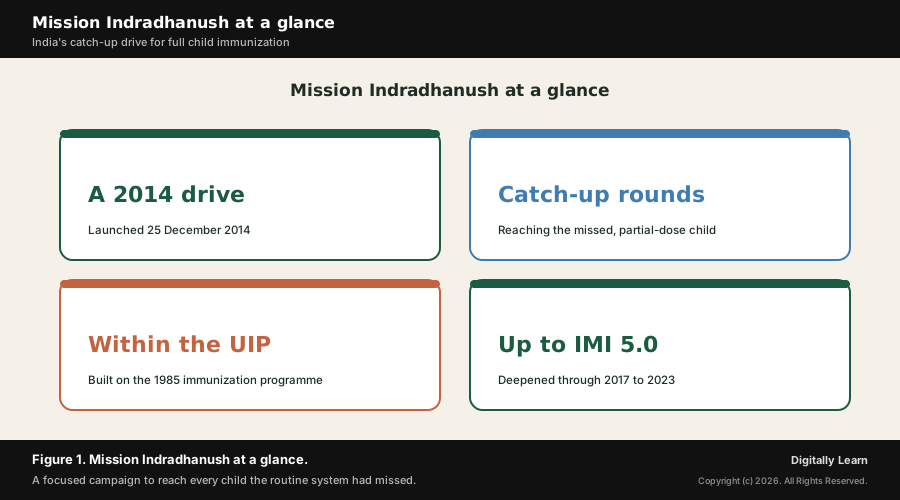
Mission Indradhanush is India's special catch-up immunization drive, launched on 25 December 2014 by the Ministry of Health and Family Welfare to raise the country's full-immunization coverage. It works within the Universal Immunization Programme of 1985, holding repeated focused rounds in districts and pockets of low coverage to reach the partially vaccinated and unvaccinated children up to two years of age and pregnant women whom routine services had missed. The campaign deepened into Intensified Mission Indradhanush in 2017 and ran through successive rounds up to IMI 5.0 in 2023. Delivered by frontline workers through village-level micro-planning, it advances the goal of Health for All.
What Mission Indradhanush Is: India's Catch-Up Drive for Full Child Immunization
The 2014 launch, the routine-immunization coverage gap and why a special catch-up campaign was needed
Mission Indradhanush is the special catch-up immunization drive through which the Indian state set out to carry vaccines to every child the routine system had missed. It was launched on 25 December 2014 by the Ministry of Health and Family Welfare, and it works within the older Universal Immunization Programme rather than replacing it. Its name, meaning the colours of the rainbow, stands for the core vaccine-preventable diseases the drive set out to defeat. The target is the partially vaccinated and unvaccinated child up to two years of age, together with pregnant women, in the districts and pockets where coverage had stalled.
The problem the drive attacks is the coverage gap in routine immunization. Although India had vaccinated children for decades, a large share of infants were still left partially immunized or wholly unimmunized, missing one or more doses in their first two years. Why it matters is that an unimmunized child is exposed to diseases that kill or disable, such as measles, diphtheria and tetanus, so the missed child is not a statistic but a preventable death waiting to happen. The gap was widest among the poorest and hardest-to-reach families, which made low immunization both a health failure and a question of equity.
Mission Indradhanush is best understood as a focused, time-bound campaign layered on top of everyday services. Rather than wait for families to come to the clinic, it sends health teams in repeated rounds into the areas of lowest coverage, finds each child who has missed a dose, and completes the schedule. The drive set itself the goal of reaching 90 per cent full immunization and sustaining it, a target the routine system alone had not met. By joining a head-count of the missed child to a fixed calendar of catch-up rounds, the campaign attacks the gap directly. The figure below sets out the headline features before the detail that follows.
The Universal Immunization Programme Base: The 1985 Foundation and the Vaccines It Delivers
The 1985 Universal Immunization Programme, the diseases it prevents and the coverage gap the drive attacks
Mission Indradhanush does not stand alone; it rests on the Universal Immunization Programme, the bedrock of India's child-health effort. The programme was launched in 1985 by the Ministry of Health and Family Welfare and is one of the largest public-health undertakings in the world, giving free vaccines to crores of children and pregnant women every year. It is delivered through a vast network of health centres, sub-centres and outreach sessions, and it carries no charge to the family, the cost being borne by the state. Mission Indradhanush is the accelerator for this programme, not a separate scheme.
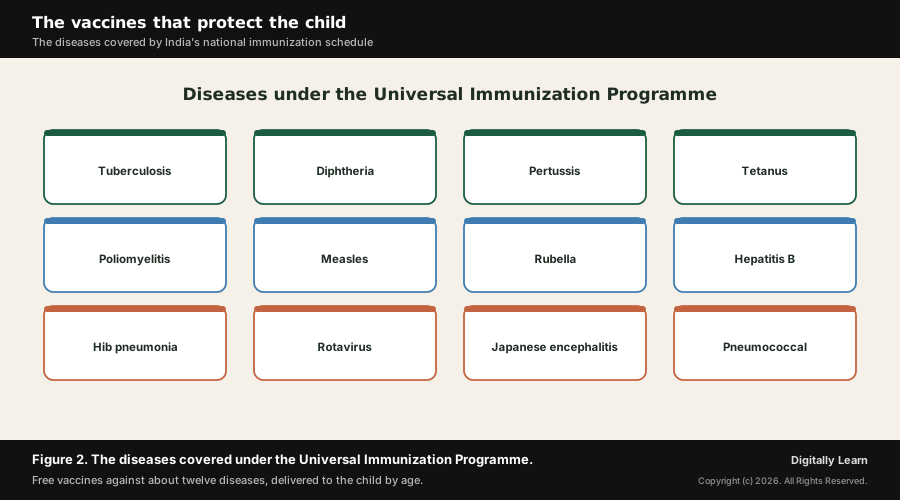
The programme today protects against about twelve diseases through a national schedule of vaccines. These include tuberculosis, diphtheria, pertussis or whooping cough, tetanus, poliomyelitis, measles and rubella, hepatitis B, rotavirus diarrhoea, Japanese encephalitis in endemic districts, and pneumonia caused by Haemophilus influenzae type B and the pneumococcus. Each vaccine is timed to a child's age in a fixed schedule from birth through the second year, and several are given in more than one dose. The figure below sets out the diseases the programme guards against.
The reason a special drive was still needed is the distance between a vaccine that exists and a child who receives it. A schedule on paper means nothing if the family never reaches the session, if the health worker never reaches the hamlet, or if the child takes the first dose but not the later ones. Across India this distance left millions partially immunized, with coverage lowest in remote villages, urban slums and among migrant families. Mission Indradhanush was designed to close exactly this gap, taking the programme's vaccines the last mile to the child the routine session had failed to reach.
The Phases of the Drive: From Mission Indradhanush 2014 to Intensified Mission Indradhanush 5.0
Mission Indradhanush, Intensified Mission Indradhanush and the successive IMI 2.0 to 5.0 rounds
Mission Indradhanush has run not as a single event but as a series of intensifying rounds, each sharpening the focus on the hardest pockets. The first Mission Indradhanush, from 2014, held catch-up rounds across districts of low coverage to bring the partially and unvaccinated child into the schedule. As the early gains showed, the government moved from a broad drive to a more targeted one, concentrating on the districts and urban areas where the missed children were most heavily clustered, and tightening the planning and the monitoring of each round.
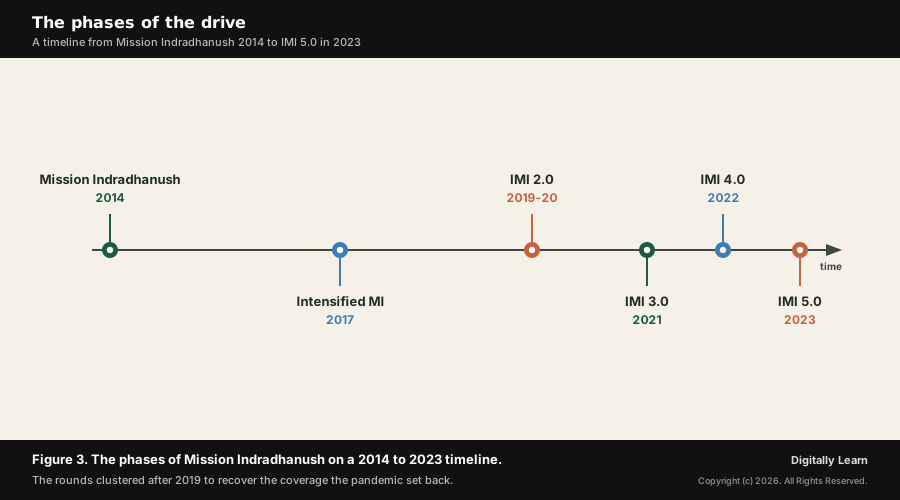
The drive was relaunched as Intensified Mission Indradhanush on 8 October 2017, led by the Prime Minister, to push coverage in the lowest-performing districts and urban slums with a sharper plan and closer monitoring. It then ran through successive rounds: IMI 2.0 over 2019 to 2020, reaching identified districts and blocks; IMI 3.0 in 2021, a catch-up after the COVID-19 disruption to routine services; and IMI 4.0 in 2022, restoring the coverage the pandemic had set back.
The most recent round, IMI 5.0 in 2023, marked a clear step up. For the first time the campaign ran in all districts of the country, and it widened its reach to children up to five years of age rather than two, with a special focus on raising measles and rubella coverage towards the goal of eliminating those diseases. It also used the U-WIN digital platform to record every vaccination. The table below sets out the phases and their focus, and the figure that follows maps them onto a timeline.
| Phase | Year | Focus |
|---|---|---|
| Mission Indradhanush | 2014 | Catch-up rounds in districts of low routine-immunization coverage |
| Intensified Mission Indradhanush | 2017 | A sharper push in the lowest-coverage districts and urban slums |
| IMI 2.0 | 2019-20 | Reaching the unreached in identified districts and blocks |
| IMI 3.0 | 2021 | A catch-up after the COVID-19 disruption to routine services |
| IMI 4.0 | 2022 | Restoring the routine coverage the pandemic had set back |
| IMI 5.0 | 2023 | All districts, children up to five years, a measles and rubella focus |
Implementation Architecture: The MoHFW Nodal Role, District Micro-Planning and the Frontline Worker
The Ministry of Health and Family Welfare as nodal, district micro-planning and the ASHA, ANM and Anganwadi frontline
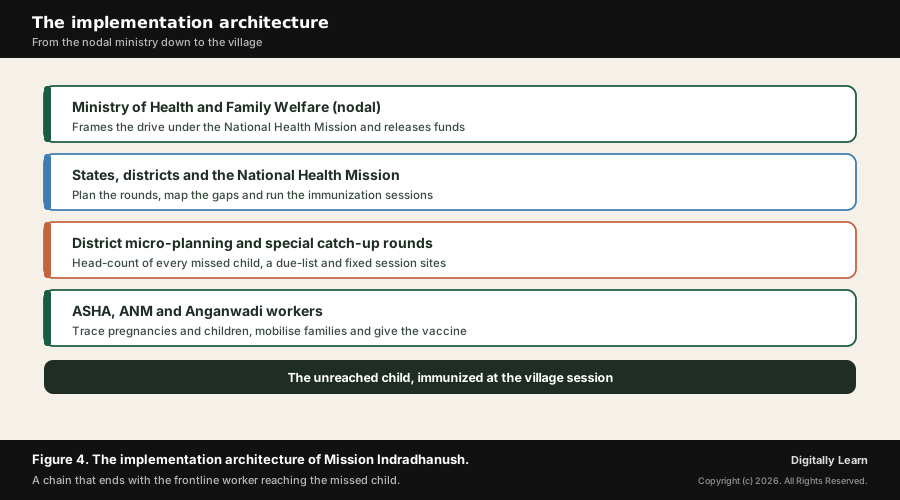
Mission Indradhanush is delivered not from a single office but through a chain that runs from the capital down to the village. At the top the Ministry of Health and Family Welfare, working through the National Health Mission, frames the drive, sets its guidelines and releases funds. The states and districts then plan the rounds, decide the session sites and direct the staff, because immunization is delivered by the states. The design assumes that the centre can fund and steer the effort, but only the local machinery can actually find and vaccinate each missed child.
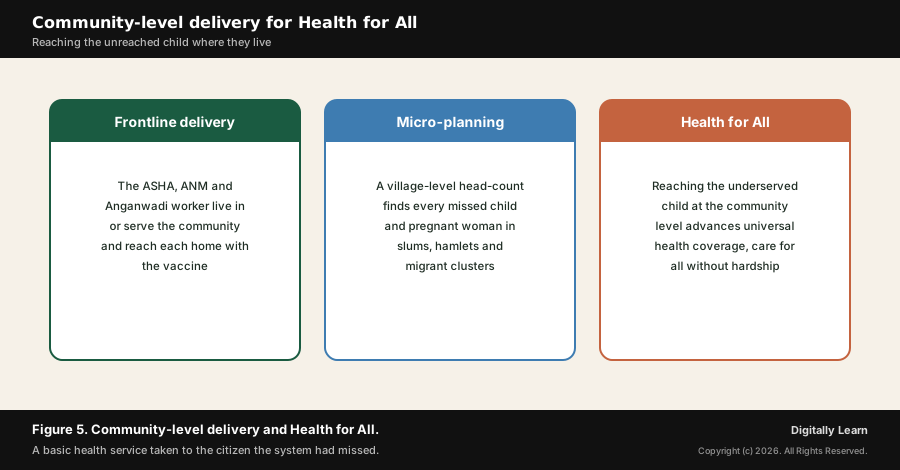
The heart of the drive is district micro-planning, a community-level exercise that turns a broad target into a named list of children. Local staff carry out a head-count of every settlement, list each pregnant woman and each child who has missed a dose, map the hamlets, slums and migrant clusters that the routine session never reached, and fix the dates and sites for catch-up rounds. This bottom-up plan, built village by village, is what lets the campaign reach the underserved pocket rather than only the families who already come forward. Appropriate local planning, not a national average, is what closes the gap.
The last mile is walked by the frontline worker. The accredited social health activist, the ASHA, lives in the village and traces every pregnancy and birth; the auxiliary nurse midwife, the ANM, gives the vaccine at the session; and the Anganwadi worker mobilises families and lends the centre as a session site. Together they form the community-level team that knows each household by name, persuades the hesitant parent, and brings the child to the vaccine. It is this human chain, rooted in the community, that turns a scheme on paper into a child immunized. The figure below maps the chain from the centre to the village.
Community-Level Delivery and Health for All: Reaching the Unreached Child
How frontline workers, micro-planning and village-level convergence advance universal health coverage
Mission Indradhanush is, at its core, a local community-level healthcare intervention, and that is precisely why it advances the larger goal of Health for All. Universal immunization cannot be achieved from a hospital ward; it is won or lost in the village, the slum and the hamlet, where the unreached child actually lives. By placing the health worker inside the community and building the plan around each missed child, the drive delivers a basic health service to the people the formal system had passed over, which is the first test of any claim to universal health.
The reach to the underserved pocket is deliberate. The special rounds are aimed at urban slums, remote and tribal hamlets, riverine and migrant settlements, and the construction sites where families move with work, the very places where routine coverage is lowest. Through micro-planning, fixed session sites and repeated catch-up rounds, the campaign carries immunization to the doorstep rather than waiting for the family to travel to a distant clinic. This is community-level delivery in practice: the service goes to the citizen, and the citizen who could never reach the system is finally reached.
This village-level delivery is also an exercise in convergence. The health worker, the Anganwadi and the local body work together so that immunization rides alongside antenatal care, nutrition and birth registration, turning many scattered services into one visit for the family. Immunization is among the most cost-effective of all health interventions, so reaching the last child yields a large return in lives saved. By closing the immunization gap at the community level, Mission Indradhanush becomes a building block of universal health coverage, the promise that every person receives the care they need without hardship. The figure below sets out this community-level design.
Outcomes and the Full-Immunization Coverage Trend Since 2014
The survey-reported rise in full immunization from NFHS-4 to NFHS-5 and the district-level gains
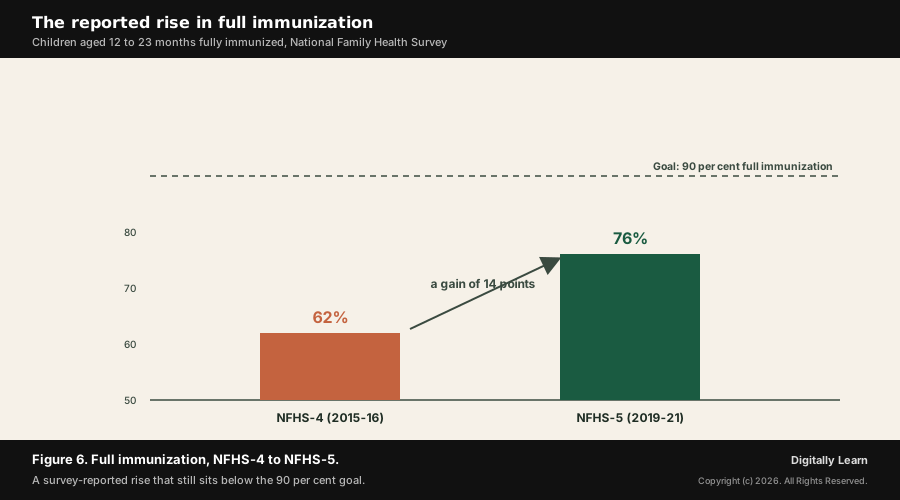
The headline outcome the government reports is a rise in full immunization, the share of children who receive all the vaccines due in their first years. According to the National Family Health Survey, full immunization among children aged twelve to twenty-three months rose from about 62 per cent in the fourth round, of 2015-16, to about 76 per cent in the fifth round, of 2019-21, a gain that the survey and the government link in part to the Mission Indradhanush drive.
Behind the national figure lie wider gains. The drive reached crores of children and pregnant women across its successive rounds, and many of the low-coverage districts it targeted recorded faster improvement than the country as a whole, narrowing the gap between the best and the worst areas. Officials also credit the campaign with strengthening the routine system itself, since the micro-planning, head-counts and monitoring built for the rounds left the everyday service better organised. These are real gains in child health, even where the exact share moves with each survey.
These reported gains must be read with care. Survey figures are drawn from sample households and move between rounds, so a single percentage should be read as a direction rather than a fixed truth; coverage still falls short of the 90 per cent goal in many districts; and an improving average can hide pockets where children are still missed. Honest assessment also notes that some of the rise reflects wider social and economic change, not the campaign alone. The drive's defenders read the trend as proof that focused catch-up rounds work, while its critics ask how durable the gains will prove once the campaign mode ends. The figure below charts the reported trend.
The Challenges: Urban Slums, Migrants, Vaccine Hesitancy, the Cold Chain and Dropouts
Hard-to-reach pockets, migration, vaccine hesitancy, the cold chain and the dropout between doses
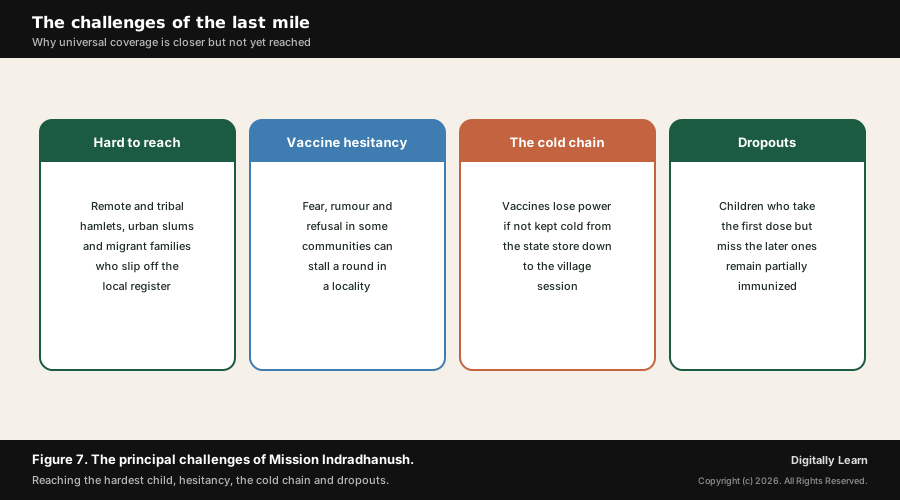
For all its gains, Mission Indradhanush faces persistent challenges, the first of which is simply reaching the last child. The families who remain unimmunized are often the hardest to find: those in remote and tribal hamlets, in crowded urban slums, and above all the migrant households that move with seasonal work and so slip off every local register. A child counted in one place and vaccinated nowhere is the recurring gap the drive must close, and it grows harder as the easy-to-reach children are covered and only the difficult remainder is left.
A second challenge is vaccine hesitancy. In some communities fear, rumour or cultural suspicion leads families to refuse or delay vaccination, and a single rumour can undo months of work in a locality. Overcoming this needs patient community engagement, the trust of the local ASHA, and the backing of religious and community leaders, none of which can be ordered from above. A third challenge is the cold chain: vaccines lose their power if they are not kept cold from the state store down to the village session, so a single failed refrigerator or a hot journey can spoil a whole supply.
A fourth challenge is the dropout between doses. Many children receive the first dose of a vaccine but miss the later ones, so they are recorded as partially immunized and remain unprotected, which is why the drive stresses completing the full schedule rather than only starting it. Underlying all of these are the shortages of staff and funds that strain a stretched health system, and the difficulty of sustaining the energy of a campaign year after year. These obstacles explain why universal coverage, though closer, has still not been fully reached. The figure below sets out the principal challenges.
Linked Systems: U-WIN, eVIN and the Ayushman Bharat Health and Wellness Centres
The U-WIN and eVIN digital backbone, the cold-chain network and the Ayushman Bharat primary-care link
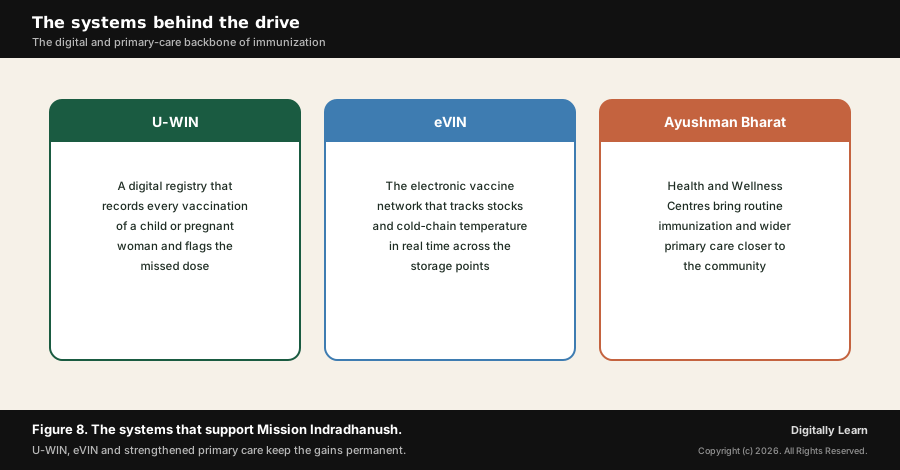
Mission Indradhanush is supported by a set of linked systems that make mass immunization workable. The most recent is U-WIN, a digital platform that records every vaccination given to a pregnant woman or child, so that each beneficiary has an electronic record, due doses can be tracked, and the missed child can be followed up by name. Modelled on the digital backbone built for the COVID-19 vaccination, U-WIN turns the paper register into a real-time national record, and it was carried into the recent rounds of the drive.
A second system is eVIN, the electronic vaccine intelligence network, which tracks vaccine stocks and the temperature of the cold chain in real time across thousands of storage points. By showing managers where stocks are low and where a refrigerator has failed, eVIN protects the cold chain on which every dose depends and reduces both shortages and waste. Together U-WIN and eVIN give the drive the data it needs to find the unreached child and to keep each vaccine potent until it is given.
The drive also connects to the wider primary-care reform. Under Ayushman Bharat, the country's network of sub-centres and primary health centres is being upgraded into Health and Wellness Centres, now Ayushman Arogya Mandirs, that bring a broader range of services, including immunization, closer to the community. By embedding routine immunization in this strengthened primary-care layer, the state aims to make the gains of the campaign permanent, so that the child is reached not only during a special round but every day. The figure below sets out the systems that support the drive.
Understanding the Significance: Child Survival, Equity and Universal Health Coverage
Protecting the child's right to survival, closing the immunization equity gap and advancing Health for All
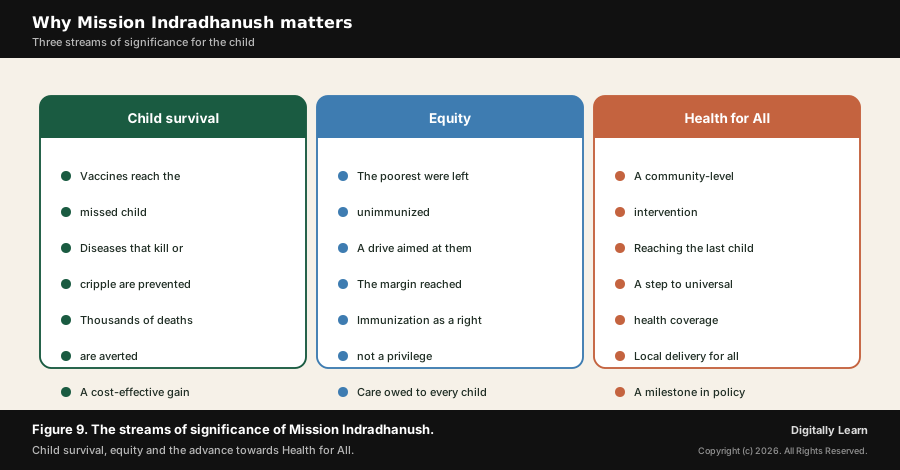
What is the significance of Mission Indradhanush lies first in the defence of child survival. By carrying vaccines to the children the routine system had missed, the drive protects them from diseases that kill or cripple, and every percentage point of full immunization stands for thousands of deaths averted. Immunization is among the most cost-effective of all public-health measures, so the campaign delivers a very large gain in child health for a modest outlay, which is why it is treated as a landmark in India's health policy.
Its second significance is equity. The children left unimmunized were overwhelmingly the poorest and most marginal, in remote hamlets, urban slums and migrant families, so a drive aimed precisely at them narrows the gap between the child of the city and the child of the margin. By targeting the underserved rather than the easily reached, Mission Indradhanush treats immunization not as a service for those who can come forward but as a right owed to every child, which gives it a meaning beyond the medical.
Its third significance is its place in the journey towards Health for All. As a community-level intervention that reaches the last child, the drive is a concrete step towards universal health coverage, the promise that everyone receives needed care without hardship, and it shows how a basic service can be taken to the whole population through local delivery. Read together, the defence of survival, the pursuit of equity and the advance towards universal coverage are why Mission Indradhanush is judged a milestone, even as the unfinished challenges qualify how far it has yet to reach. The figure below maps these strands.
The Way Forward: From Campaign Mode to Sustained Routine Immunization
Folding the drive into routine primary care, reaching the last child and measuring real outcomes
The way forward follows from the challenges. The first priority is to move from the energy of a campaign to the steadiness of strong routine immunization, so that the child is reached every day and not only during a special round. The micro-planning, head-counts and monitoring built for the drive must be folded into the everyday service through the strengthened primary-care network, so that the gains do not fade once the rounds are over and the health worker has moved on.
A second priority is to reach the truly unreached by name. Better use of digital tools such as U-WIN to track each beneficiary, special plans for migrant and urban-slum families who slip off local registers, and patient work against vaccine hesitancy through trusted local voices would close the last and hardest part of the gap. A robust cold chain, kept reliable through eVIN, must underpin all of this, since no plan succeeds if the vaccine is spoiled before it is given.
A third priority is to measure the drive by real outcomes. Judging it by full-immunization coverage, by the fall in vaccine-preventable disease and by the narrowing of the gap between districts, rather than by rounds held, would keep it honest and direct effort where it is most needed. Pursued together, a strong routine system, a determined reach to the last child and an honest measure of results would move Mission Indradhanush closer to its promise: a country where every child is fully immunized and Health for All is more than a slogan.
UPSC Relevance and Exam Focus
Where Mission Indradhanush fits in the UPSC-CSE syllabus
This topic maps most directly to General Studies Paper II: government policies and interventions for development in the health sector, and the issues relating to the development and management of social services, since Mission Indradhanush is a flagship health intervention. It links to questions on welfare schemes for vulnerable sections, on the mechanisms and bodies that deliver them, and on the gap between a scheme and its reach on the ground, and it supplies rich material on health, governance and the delivery of public services to the poor.
For Prelims, hold the high-yield facts: Mission Indradhanush is a 2014 immunization drive of the Ministry of Health and Family Welfare, working within the Universal Immunization Programme of 1985; it targets partially vaccinated and unvaccinated children and pregnant women; it was intensified from 8 October 2017 as Intensified Mission Indradhanush and ran up to IMI 5.0 in 2023, which covered all districts and children up to five years; and its digital tools are U-WIN and eVIN. Distinguish the drive from the programme it accelerates.
For Mains, the recurring framing is whether a community-level intervention such as this can deliver Health for All, and how a special campaign relates to the routine system beneath it. A strong answer treats Mission Indradhanush as a case study in last-mile delivery, weighing the reported rise in full immunization and the reach to the underserved against the unfinished challenges of migration, hesitancy, the cold chain and dropouts, and locating the lasting cure in a strong primary-care system rather than in repeated campaigns.
Recurring linked concepts an aspirant should keep in working memory:
- Universal Immunization Programme: The 1985 programme, run by the Health Ministry, that gives free vaccines against about twelve diseases and which Mission Indradhanush accelerates.
- Full Immunization: A child who has received all the vaccine doses due in the early years; the share rose from about 62 per cent in NFHS-4 to about 76 per cent in NFHS-5.
- U-WIN and eVIN: The digital platforms that record each vaccination and track the cold chain and vaccine stocks in real time.
- Universal Health Coverage: The goal that every person receives needed health care without financial hardship, towards which immunization is a basic building block.
A common Prelims trap is to confuse the drive with the programme. Hold that Mission Indradhanush is a catch-up campaign launched in 2014, while the Universal Immunization Programme is the older 1985 service it accelerates; that the drive is run by the Ministry of Health and Family Welfare, not by Women and Child Development; and that Intensified Mission Indradhanush, from 2017, is the sharpened version, with IMI 5.0 the round that first covered all districts and children up to five years.
A common Mains trap is to praise the coverage numbers and stop there. The exam value lies in a balanced judgment: the real gain in reaching the underserved child and lifting full immunization, set honestly against the unfinished challenges of migration, hesitancy, the cold chain and dropouts, with the durable solution located in a strong routine system and universal health coverage rather than in campaigns alone.
Previous Year UPSC-CSE Questions By the end you will be able to draft model answers for the following UPSC questions. Each question carries a collapsible framework showing how to approach it in the exam.
- UPSC Mains 2018 GS-IIAppropriate local community level healthcare intervention is a prerequisite to achieve ‘Health for All’ in India. Explain.
How to structure the answer in the exam
Body (sub-themes to develop):
- Establish why the community level is decisive: the unreached patient lives in the village, the slum and the hamlet, so a service confined to hospitals leaves out exactly the poor and marginal whom Health for All is meant to cover.
- Use Mission Indradhanush as the worked example of a community-level intervention: a catch-up immunization drive that finds each missed child through district micro-planning and a household head-count rather than a national average.
- Show the human delivery chain: the ASHA, the ANM and the Anganwadi worker who live in or serve the community, trace each pregnancy and child, persuade the hesitant family and give the vaccine at a local session.
- Explain how this advances Health for All: reaching the underserved pocket narrows the equity gap, immunization is among the most cost-effective interventions, and community-level delivery is a building block of universal health coverage.
- Acknowledge the conditions for success: a strong routine primary-care system, a reliable cold chain, digital tracking such as U-WIN, and patient work against vaccine hesitancy, without which even a good campaign cannot reach the last citizen.
Relevance to this topic. Mission Indradhanush is a community-level immunization intervention delivered by ASHA, ANM and Anganwadi workers through district micro-planning and special catch-up rounds. The article shows how this last-mile, village-level delivery reaches the underserved child and advances universal health coverage, the substance the question demands.
Sources and Further Reading
- Ministry of Health and Family Welfare: immunization and Mission Indradhanush
- Press Information Bureau: Intensified Mission Indradhanush 5.0
- National Health Mission: Intensified Mission Indradhanush guidelines
- Press Information Bureau: National Family Health Survey-5, Phase II findings
- NITI Aayog: SDG India Index, health and immunization indicators
- World Health Organization India: immunization
- Ministry of Statistics and Programme Implementation: National Family Health Survey data
- Wikipedia: Mission Indradhanush
- Wikipedia: Universal Immunization Programme
Editorial Disclaimer
This briefing is for UPSC preparation. Verify the facts and figures against the official Ministry of Health and Family Welfare, National Health Mission and PIB sources before relying on them.


