


Overview
The Genome India Project, led by the Department of Biotechnology, has sequenced the whole genomes of ten thousand healthy Indians drawn from ninety-nine communities across the country, and made the data available to researchers through the Indian Biological Data Centre. A genome is the complete set of a person's DNA. By cataloguing the genetic variation of India's diverse populations, the project lays a foundation for precision medicine and for research into diseases as they affect Indians.
India Completes the Genome India Project
Ten thousand genomes, opened to researchers
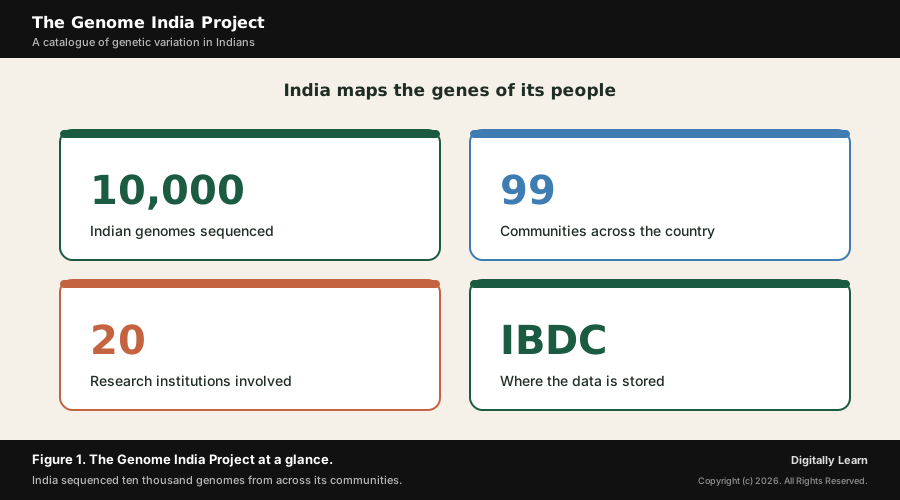
India has completed a major phase of the Genome India Project, sequencing the whole genomes of ten thousand healthy people drawn from ninety-nine communities across the country. The effort was led by the Department of Biotechnology with about twenty research institutions.
The resulting data, a catalogue of the genetic variation found in India's populations, has been made available to researchers through the Indian Biological Data Centre. Opening the data is meant to let scientists across the country use it.
A genome is the complete set of an individual's DNA, the chemical instructions that shape the body. Reading the genomes of many people from many communities builds a picture of how Indians differ from one another and from populations elsewhere.
Why an Indian Genome Database Matters
Filling a gap in the world's genetic data
Why it matters is that India's people are among the most genetically diverse in the world, yet they are poorly represented in the global databases that medicine relies on. Much genetic research has been built on a narrow set of populations.
This gap has real costs. Genetic tests and medicines tuned to other populations may work less well for Indians, and diseases that are common here may be poorly understood. A home-grown database lets research and treatment reflect India's own genetic make-up.
What the Genome Data Signifies
A foundation, not a finished cure
What is the significance of this project lies in what it makes possible. A reference catalogue of Indian genomes is the raw material for studying disease, designing better diagnostic tests and moving towards medicine tailored to a person's genes.
It is, though, a foundation rather than a finished result. Knowing the genome reveals predispositions and risks, but most diseases arise from a mix of genes, environment and lifestyle, so the data informs research and care rather than explaining every illness on its own.
Genomes, Sequencing and the Indian Database
The Genome India Project at a glance
The table sets out the key features of the project and what each one means. Together they show a large, nationally representative effort to map the genes of India's people.
| Feature | Detail |
|---|---|
| Genomes sequenced | The whole genomes of 10,000 healthy Indians |
| Communities covered | Ninety-nine communities across linguistic and social groups |
| Institutions | About twenty research institutions |
| Lead body | The Department of Biotechnology |
| Data home | The Indian Biological Data Centre |
| Future goal | A target of sequencing many more genomes |
Read together, the rows show the project's ambition: not a few samples, but a broad, representative map of the country's genetic diversity for use by researchers.
What a Genome Is and How It Is Sequenced
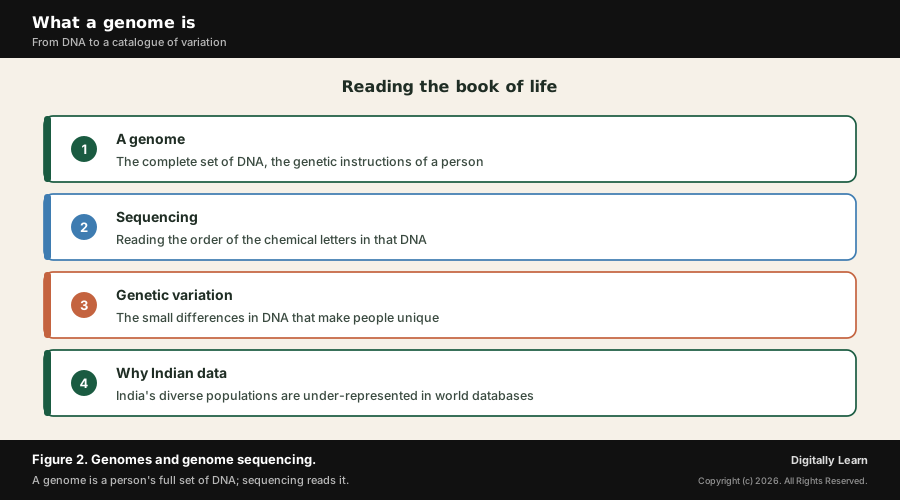
A genome is the full set of genetic instructions in a cell, written in the four chemical letters of DNA. Genome sequencing is the process of reading the exact order of those letters, which lets scientists see the small variations that make each person unique.
Comparing genomes across many people reveals which variations are common, which are rare, and which are linked to traits or diseases. Doing this for Indian populations is the heart of the project, because such patterns can differ from one group to another.
What to Watch in India's Genomics
Three things to track from here
The project points to three developments worth following, since building a database is the start of a longer scientific effort rather than its end.
- (a) Use of the data. Whether researchers and doctors actually use the database to study disease and guide treatment.
- (b) The next phase. Whether India expands towards its goal of sequencing many more genomes.
- (c) Privacy and ethics. Whether genetic data is protected and used fairly, given how sensitive it is.
The real test is whether the data leads to better diagnosis and treatment for Indians, while their genetic privacy is safeguarded.
From Genome Data to Precision Medicine
Genomics within India's biotechnology drive
Contemporary linkages tie the Genome India Project to India's wider push in biotechnology. The country has set out to grow its bio-economy, and a national genome database is a key piece of scientific infrastructure for that ambition.
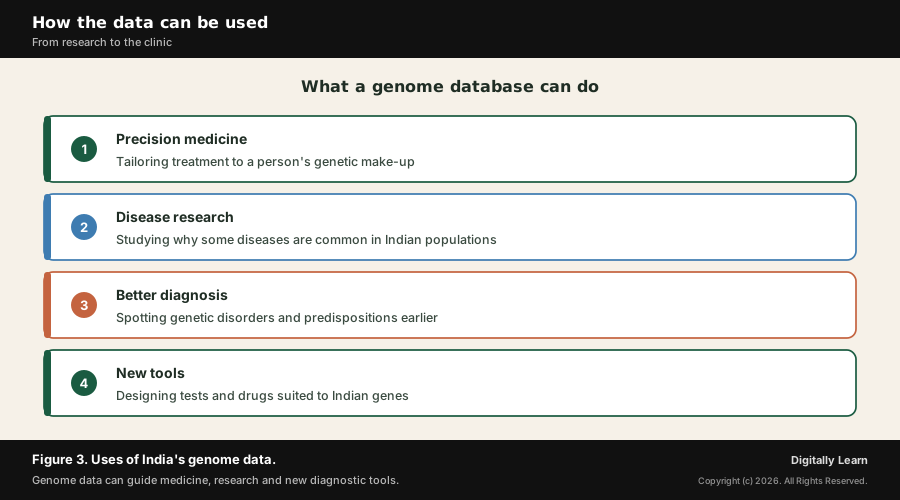
The most discussed use is precision medicine, in which treatment is tailored to a patient's genetic make-up rather than applied the same way to everyone. Indian genome data can make such medicine more accurate for Indian patients.
The data also supports research into rare and inherited diseases, the design of diagnostic tests suited to Indian genes, and studies of how populations respond differently to drugs, a field that depends on broad, representative data.
With this power come duties. Genetic data is deeply personal, so its storage in the Indian Biological Data Centre, and its use, must protect privacy and guard against misuse, an issue that grows as genomic research expands.
UPSC Relevance and Exam Focus
Where this fits in the UPSC-CSE syllabus
This topic maps to General Studies Paper III: developments in science and technology, including biotechnology and its applications, with links to health and ethics.
For Prelims, hold the high-yield facts: what a genome and genome sequencing are, the Genome India Project and its ten thousand genomes, the Department of Biotechnology and the Indian Biological Data Centre, and the idea of precision medicine.
For Mains, two framings recur: the achievements of applied biotechnology and how they can help society, and the promise and ethical risks of genomic data.
Recurring linked concepts an aspirant should keep in working memory:
- Genome: the complete set of an organism’s DNA.
- Genome sequencing: reading the exact order of the letters in DNA.
- Precision medicine: treatment tailored to a person’s genetic make-up.
- Indian Biological Data Centre: the national repository where the genome data is stored.
A common Prelims trap is to assume that knowing the genome explains every human disease; most diseases arise from genes, environment and lifestyle together.
A common Mains trap is to focus only on the benefits. Genomic data raises serious questions of privacy, consent and possible misuse that policy must address.
Previous Year UPSC-CSE Questions By the end you will be able to draft model answers for the following UPSC questions. Each question carries a collapsible framework showing how to approach it in the exam.
- UPSC Mains 2021 GS-IIIWhat are the research and developmental achievements in applied biotechnology? How will these achievements help to uplift the poorer sections of the society?
How to structure the answer in the exam
Introduction: Open with India's growing strength in applied biotechnology.
Body (sub-themes to develop):
- Health: genome databases, precision medicine, vaccines and diagnostics.
- Agriculture: improved crop varieties and pest resistance.
- Reaching the poor: affordable diagnostics, disease-specific research.
- Enablers: institutions, data infrastructure and the bio-economy.
Conclusion: Conclude that biotechnology can uplift the poor if its benefits are made affordable and accessible.
- UPSC Prelims 2011 GS-IAt present, scientists can determine the arrangement or relative positions of genes or DNA sequences on a chromosome. How does this knowledge benefit us?
- It is possible to know the pedigree of livestock.
- It is possible to understand the causes of all human diseases.
- It is possible to develop disease-resistant animal breeds.
Which of the statements given above is/are correct?
How to approach this Prelims question
Approach: Test what knowing gene positions actually allows.
Trap to watch: Statement 2 overstates the power of genomics; it cannot explain the causes of all human diseases.
Key facts to recall:
- Gene-position knowledge helps with livestock pedigree and breeding disease-resistant animals, so statements 1 and 3 are correct.
- Most diseases arise from genes, environment and lifestyle, so statement 2 is wrong.
Answer signal: Reject statement 2 and the answer is 1 and 3 only.
- UPSC Prelims 2017 GS-IWith reference to agriculture in India, how can the technique of 'genome sequencing', often seen in the news, be used in the immediate future?
- Genome sequencing can be used to identify genetic markers for disease resistance and drought tolerance in various crop plants.
- This technique helps in reducing the time required to develop new varieties of crop plants.
- It can be used to decipher the host-pathogen relationships in crops.
Select the correct answer using the code given below:
How to approach this Prelims question
Approach: Check each stated use of genome sequencing in agriculture.
Trap to watch: All three are valid uses; do not drop any.
Key facts to recall:
- Genome sequencing identifies markers for disease resistance and drought tolerance, speeds the breeding of new varieties, and helps study host-pathogen relationships.
- All three statements are therefore correct.
Answer signal: All three are correct, so the answer is 1, 2 and 3.
Sources and Further Reading
Editorial Disclaimer
This briefing is for UPSC preparation. Verify the project's figures and details against the official government and Department of Biotechnology sources before relying on them.


