

Overview
Nanomaterials, carbon nanotubes and applications
What changes when matter is only a few billionths of a metre across.
Nanotechnology is the manipulation of matter with at least one dimension between 1 and 100 nanometres, where size itself changes a material's colour, strength and reactivity; it is used in medicine, agriculture, electronics, energy and water treatment.
Nanoscience and Nanotechnology: The Science of the Very Small
What Is Nanotechnology: The Nanometre Scale and Its History
Nanotechnology is the manipulation of matter with at least one dimension between 1 and 100 nanometres (nm), a scale at which surface area and quantum effects begin to decide how matter behaves. Nanoscience is the near-synonym that stresses the pure science, while nanotechnology is its applied output, in fields from nanomedicine to nanoelectronics.
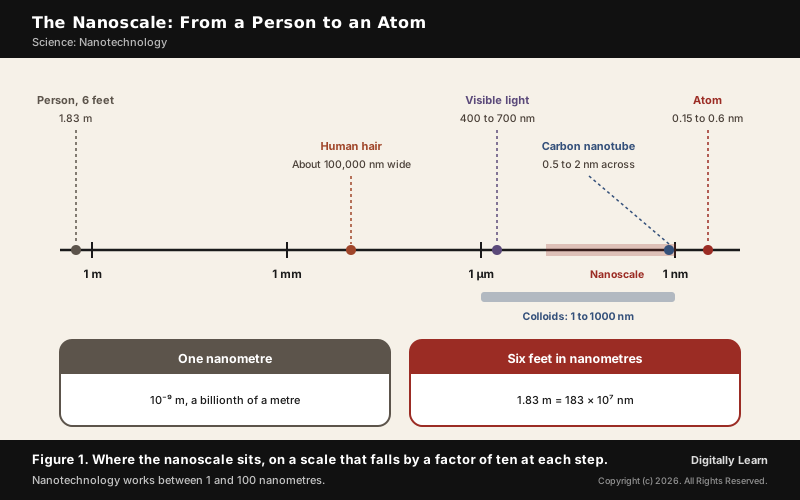
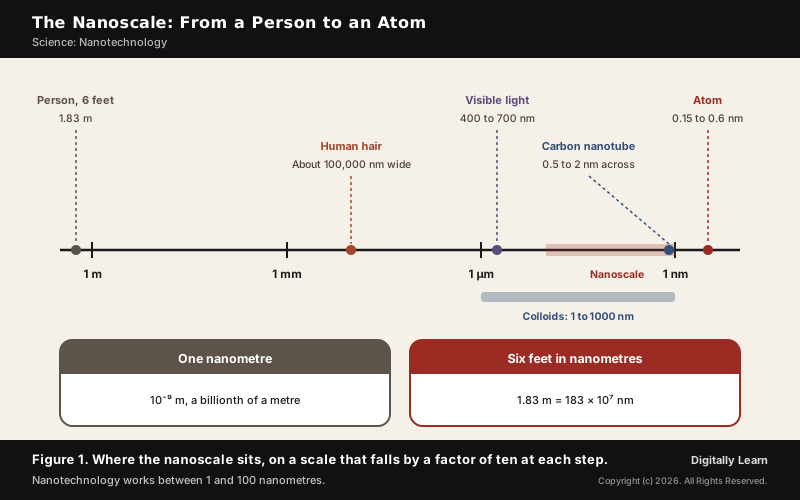
- The nanometre: The prefix nano means 10⁻⁹, so one nanometre is a billionth of a metre. A person six feet tall is 6 × 0.3048 = 1.83 m, which is 1.83 × 10⁹ nm, or 183 × 10⁷ nm.
- Scale markers: An atom is 0.15 to 0.6 nm across; a single-walled carbon nanotube is 0.5 to 2 nm, about a 100,000th the width of a human hair; visible light has wavelengths of 400 to 700 nm.
- Feynman’s lecture: Richard Feynman’s talk There’s Plenty of Room at the Bottom, given at Caltech on 29 December 1959, first discussed making things by directly manipulating atoms.
- The word: Norio Taniguchi first used the term nano-technology in 1974, and K. Eric Drexler popularised it in his 1986 book Engines of Creation.
- Tools and discoveries: The scanning tunnelling microscope of 1981 made individual atoms visible; fullerenes were discovered in 1985; hollow carbon nanotubes are credited to Sumio Iijima in 1991.
- Two approaches: In the bottom-up approach, materials assemble themselves chemically from molecular components; in the top-down approach, nano-objects are made from larger entities without atomic-level control.
Why Nanomaterials Behave Differently: Surface Area and Quantum Effects
A nanoparticle is not just a small piece of the bulk material. Because atoms are only 0.15 to 0.6 nm across, a large fraction of a nanoparticle's material lies within a few atoms of its surface, so the surface layer can dominate the properties of the whole. At this scale quantum mechanical effects also matter, and a nanomaterial can differ sharply from the same substance in bulk.
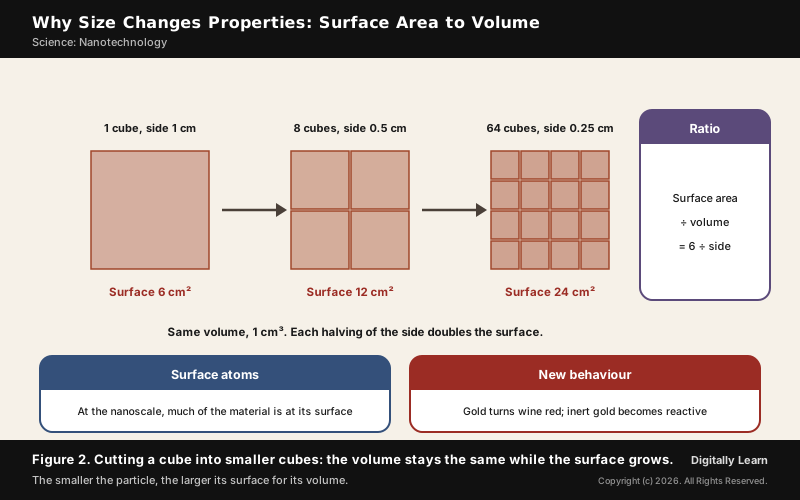
- Surface area to volume: Cutting a cube into smaller cubes keeps the volume but raises the surface. For a cube, surface divided by volume equals 6 divided by the side, so halving the side doubles the ratio.
- Colour: Gold nanoparticles in water look wine red when smaller than 100 nm and blue-purple when larger. The 4th-century Roman Lycurgus Cup, coloured with colloidal gold, shows red when lit from behind and green when lit from the front.
- Reactivity: Even inert elements such as gold become highly active at nanometre dimensions.
- Size sets the colour: In quantum dots, semiconductor crystals a few nanometres across, the colour of emitted light changes with size: the larger the dot, the redder its light.
- Invisible, and filter-passing: Being far smaller than the wavelengths of visible light, nanoparticles cannot be seen with ordinary optical microscopes, their dispersions can be transparent, and they pass easily through common filters.
Nanoparticles: Natural, Incidental and Engineered
A nanoparticle is a particle of matter 1 to 100 nanometres in diameter. These particles are not only a human invention: they are naturally produced by cosmological, geological, meteorological and biological processes, and a significant fraction of the interplanetary dust still falling on the Earth is nanoscale.
- Natural: Volcanic eruptions and atmospheric chemistry; clays with nanoscale structure; opals, formed through volcanic activity, are natural photonic crystals because of their nanoscale structure.
- Incidental: By-products of combustion and industry such as diesel soot, vehicle exhaust, smelting, welding fumes and cooking fires; fullerenes form when gas, biomass or a candle burns.
- Engineered: Made on purpose for their properties. Titanium dioxide, zinc oxide and silicon dioxide nanoparticles are thought to be the three most produced, and nanoparticles go into paints, plastics, metals, ceramics and magnetic products.
- Colloids: Colloidal particles range from 1 to 1000 nm, between true solutions and suspensions, so many dispersions of nanoparticles are colloids.
- How they are made: Most often by wet chemistry, reducing a silver salt such as silver nitrate in solution to colloidal silver; by combustion or pyrolysis of a gas such as methane, the way soot forms; or biologically, as when the fungus Fusarium oxysporum turns silver ions into particles of 5 to 15 nm.
Nanomaterials: Carbon, Metal and Metal Oxide
Carbon Nanomaterials: Carbon Nanotubes, Fullerenes and Graphene
Materials with at least one dimension below 100 nm are called nanomaterials, and they often have properties different from their bulk form that are technologically useful. Carbon gives the best-known family, built from the same bonding as the allotropes described under carbon and its compounds, with the carbon nanotube at its centre.
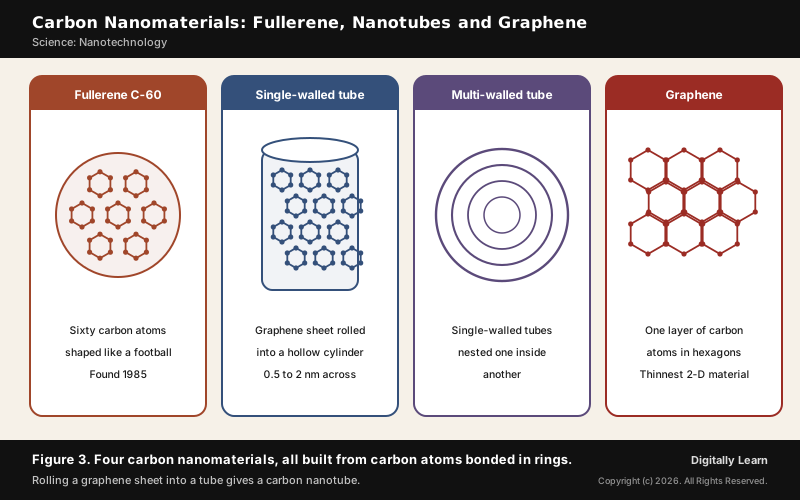
A carbon nanotube is a tube of carbon with a diameter in the nanometre range, one of the allotropes of carbon. A single-walled nanotube can be pictured as a graphene sheet rolled into a hollow cylinder 0.5 to 2 nm across; a multi-walled nanotube nests several such tubes one inside another.
- Properties: Exceptional tensile strength and thermal conductivity; some nanotubes conduct electricity well while others are semiconductors, and they can be chemically modified.
- Discovery: Hollow nanometre-size tubes of graphitic carbon are usually credited to Sumio Iijima of NEC in 1991; a way to make single-walled tubes followed in 1993.
- In medicine: Their large surface lets nanotubes carry drugs, genes, vaccines and antibodies directly into cells, and single-walled tubes serve as highly sensitive biosensors.
- Fullerene: C-60, a football of sixty carbon atoms, discovered in 1985 by Harry Kroto, Richard Smalley and Robert Curl, who shared the 1996 Nobel Prize in Chemistry.
- Graphene: A single layer of carbon atoms, the thinnest two-dimensional material and the strongest ever measured; it was isolated in 2004, and its discoverers won the 2010 Nobel Prize in Physics.
Metal and Metal Oxide Nanoparticles: Silver, Gold, Titanium Dioxide and Zinc Oxide
Metal oxides lead the output of engineered nanoparticles, and metals such as silver and gold add uses of their own. Their value comes from an extremely large surface for their mass and from optical behaviour that depends on size.
- Silver: Silver nanoparticles, 1 to 100 nm across, are used mostly for medicinal and antibacterial purposes; India’s Nano Mission produced a nanosilver-based antimicrobial textile coating.
- Gold: Colloidal gold has stained glass since ancient times; gold nanoparticles are now studied as carriers that take siRNA and strands of DNA into cells.
- Titanium dioxide: Particles under 100 nm block ultraviolet radiation while staying transparent on the skin, so they are used in sunscreens; the risk from use on intact skin is considered extremely low.
- Zinc oxide: Its most common use is also in sunscreen, because it absorbs ultraviolet light yet is transparent to visible light; it is being tested for killing microbes in packaging and in UV-protective textiles.
- Quantum dots: Semiconductor nanocrystals whose light emission is set by quantum effects. Their discovery and synthesis won the 2023 Nobel Prize in Chemistry, and potential uses include solar cells, LEDs, lasers, quantum computing and medical imaging.
Applications of Nanotechnology
Nanotechnology in Medicine: Targeted Drug Delivery and Diagnostics
Nanotechnology in medicine, or nanomedicine, works because nanomaterials are about the same size as most biological molecules and structures. Joining nanomaterials to biology has already given diagnostic devices, contrast agents, analytical tools and drug delivery vehicles.
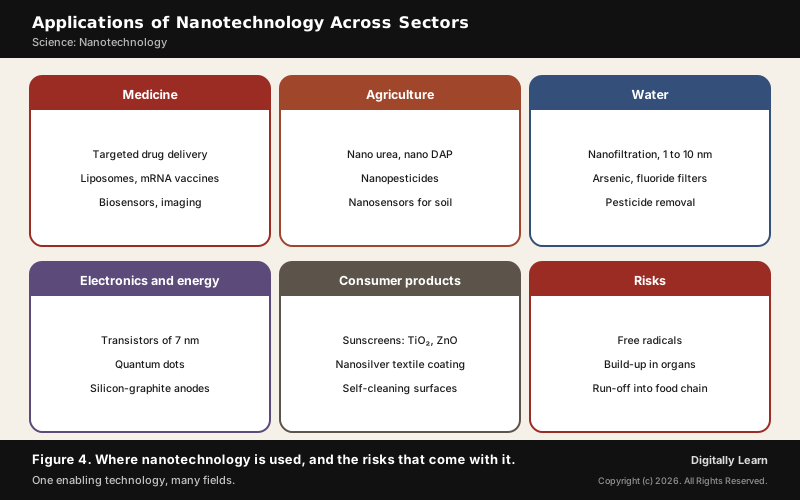
- Targeted drug delivery: Depositing a drug only in the diseased region may significantly lower the total dose and the side effects. Liposomes, spheres of lipid bilayers around a watery core, were proposed for chemotherapy in 1974; the liposomal drug Doxil now treats Kaposi’s sarcoma, ovarian cancer and multiple myeloma.
- Gene and mRNA delivery: Lipid nanoparticles carried the mRNA of COVID-19 vaccines such as Comirnaty and Spikevax, and non-viral nanocarriers deliver other nucleic acid medicines; gene therapy itself can be considered a form of nanobiotechnology.
- Diagnostics and imaging: Nanoelectronic biosensors and carbon nanotube sensors detect biomolecules with high sensitivity, and nanoparticles serve as contrast agents for imaging inside the body.
- Better absorption: Nanocrystal drugs dissolve faster and are absorbed better; Rapamune, a nanocrystal drug approved in 2000, prevents organ rejection after transplants.
- India’s rules: The Guidelines for Evaluation of Nanopharmaceuticals in India, released on 24 October 2019, cover products with materials of 1 to 100 nm in at least one dimension, or up to 1000 nm if nanotechnology changes their behaviour, and give them a clear regulatory pathway.
- Limits: Long-lasting nanoparticles can be trapped in the liver and spleen; such build-up of non-biodegradable material has caused organ damage and inflammation in mice.
| Medicine | Nano form | Use |
|---|---|---|
| Doxil | Drug in liposomes | Kaposi's sarcoma, ovarian cancer, multiple myeloma |
| Onivyde | Irinotecan in liposomes, approved 2015 | Metastatic pancreatic cancer |
| Rapamune | Nanocrystal, approved 2000 | Prevents organ rejection after transplants |
| Comirnaty, Spikevax | mRNA in lipid nanoparticles | COVID-19 vaccines |
| Cabenuva | Injectable nano-suspensions | Monthly complete treatment for HIV-1 |
Nanotechnology in Agriculture: Nano Urea and Nano Fertilisers
Nanotechnology in agriculture aims to raise yields while cutting the damage farming does to soil and water. Conventional fertilisers waste much of what is applied: by the government's estimate only about 35 per cent of the nitrogen in urea is used by the crop and the rest affects the soil, while runoff from farms degrades water quality.
- Nano fertilisers: Their small size lets them pass through plant cell walls, so they deliver nutrients more efficiently and leach less into water; studies report slow release over 40 to 50 days, against 4 to 10 days for conventional fertilisers.
- Nano urea: A liquid urea approved in February 2021 and marketed from August 2021, sprayed on the leaves. The government states that a 500 ml bottle has the same effect on the crop as a 45 kg bag of granular urea; seven plants can make 27.22 crore bottles a year, and 10.68 crore had been sold by July 2025.
- Nano DAP: A liquid diammonium phosphate launched in April 2023 with 8 per cent nitrogen and 16 per cent phosphorus; three plants can make 7.64 crore bottles a year.
- Nanopesticides: Nano-encapsulation releases a pesticide gradually, which extends its effect and reduces the amount needed.
- Nanosensors: Devices for precision agriculture that monitor soil health, detect pathogens and track water in the soil to save irrigation.
- Clean-up: Nanoclays trap pesticide residues so they do not leach into water, and clay-polymer nanocomposites are used to control farm runoff.
For farmers the promise is lower input cost and less waste: the government expects nano DAP to cost half as much as DAP, and spraying by Kisan Drones and battery sprayers is offered through village-level entrepreneurs who hire out the service. The caution is equally real: how nanoparticles move and accumulate in food is not fully known, and unless they are affordable, nano products could benefit large farms more than smallholders.
Nanotechnology in Electronics, Energy, Water and the Environment
Beyond medicine and farming, nanotechnology reaches into electronics, energy and water. Modern transistors are already nanodevices: silicon chip generations of 22 nm, 14 nm, 10 nm and 7 nm all fall within the 1 to 100 nm range of nanoelectronics.
- Batteries: Silicon mixed into the graphite anode raises the capacity of lithium-ion cells; ISRO’s silicon-graphite anode cells reach 190 Wh/kg, as explained under lithium-ion batteries.
- Water: Nanofiltration membranes, with pores of about 1 to 10 nm, soften and disinfect water and remove impurities; the Nano Mission produced filters that remove arsenic and fluoride and a technology to remove pesticides from drinking water.
- Self-cleaning surfaces: Copying the micro- and nanoscale structure of the lotus leaf, which lets water roll off carrying dirt, has given self-cleaning coatings, paints, roof tiles and fabrics.
- Stronger materials: Carbon nanotubes replace or complement carbon fibres in composites, and small amounts of nanotubes or graphene strengthen biodegradable polymers for bone and tissue engineering.
- Next-generation chips: Candidates for nanoelectronics beyond today’s silicon include carbon nanotubes, silicon nanowires and molecular electronics.
- Industry: Nanoparticles serve as chemical catalysts, and nanomaterials go into paints, filters, insulation and lubricant additives that reduce friction in moving parts.
India's Nano Mission and the Risks of Nanotechnology
Nano Mission: India's Mission on Nano Science and Technology
India's public effort began with the Nano Science and Technology Initiative of the Department of Science and Technology in October 2001. It grew into the Nano Mission, launched in May 2007 with a planned public investment of ₹1,000 crore over five years as an umbrella capacity-building programme.
- Aims: Education and human resource programmes, research, centres of excellence, institution-industry projects through public-private partnerships and business incubators, with special efforts to develop and commercialise nanotechnology.
- Phase II: Approved on 20 February 2014 for the 12th Plan at ₹650 crore, with more stress on application-oriented research; anchored in the Department of Science and Technology and steered by a Nano Mission Council chaired by an eminent scientist.
- Results: India rose to third in the world in nanoscience publications; the mission produced about 5,000 research papers and 900 PhDs, products such as nano hydrogel eye drops and arsenic and fluoride filters, and a road-map for a national regulatory framework.
- Global facilities: Indian scientists gained access to the Photon Factory at Tsukuba, Japan, and PETRA III in Hamburg, Germany.
- Institutions: The Institute of Nano Science and Technology in Mohali, an autonomous institute of the department, works on agricultural nanotechnology, nanomedicine, energy, quantum materials and nanoelectronics.
- Today: The mission was completed on 31 March 2017 and converted into the National Programme on Nano Science and Technology, which invited proposals on advanced materials in 2024; draft guidelines for the safe handling of nanomaterials in laboratories and industry have also been issued.
| Sector | Examples in India |
|---|---|
| Health | Nano hydrogel eye drops; rules for nanopharmaceuticals since 2019 |
| Agriculture | Nano urea and nano DAP, with 27.22 crore bottles of annual urea capacity |
| Water | Filters for arsenic and fluoride; pesticide removal from drinking water |
| Energy and space | Silicon-graphite anode lithium-ion cells of 190 Wh/kg |
| Textiles | Nanosilver antimicrobial coating |
Risks of Nanoparticles: Toxicity, Environment and Regulation
The small size that makes nanoparticles useful also makes them risky. Nanotoxicology, the study of their toxicity, notes that the body is built to attack larger particles while nanoparticles move far more freely; in animal studies zinc oxide nanoparticles have crossed the placenta and the blood-brain barrier.
- Free radicals: High reactivity can raise the production of reactive oxygen species, including free radicals, one of the main ways nanoparticles do harm: oxidative stress, inflammation and damage to proteins, membranes and DNA.
- Lungs: Inhalation is the greatest concern. In animal studies carbon nanotubes and nanofibres caused inflammation, granulomas and lung fibrosis as potent as silica or asbestos, and some nanomaterials caused cancer.
- Environment and food chain: Zinc oxide washed off with sunscreen can leach into runoff water and travel up the food chain; metal nanoparticles can release ions that affect soil and its microbes, and carbon nanomaterials resist degradation for much longer.
- Build-up: Non-degradable or slowly degradable particles can accumulate in organs.
- Regulation: Whether nanotechnology needs special regulation is contested. European sunscreen labels must disclose nanoparticles, organic certification in Australia, the UK and Canada excludes engineered nanoparticles, and India’s 2019 nanopharmaceutical guidelines were meant to lead to safety rules for agri-inputs, cosmetics and implants.
- Perspective: As of 2011 no human illness was known to result from any engineered nanoparticle.
Not every nanomaterial carries the same risk. Particles fixed inside a composite, a device or a coated surface stay put, while free nanoparticles, loose at some stage of production or use, can travel; there is broad agreement that the immediate concern is with the free ones.
Previous Year UPSC-CSE Questions
Previous Year UPSC-CSE Questions By the end you will be able to draft model answers for the following UPSC questions. Each question carries a collapsible framework showing how to approach it in the exam.
- UPSC Prelims 2008 Prelims-GSHow can the height of a person who is six feet tall be expressed (approximately) in nanometres?
How to approach this Prelims question
Approach: Step 1: convert feet to metres. One foot is 0.3048 m, so 6 × 0.3048 = 1.8288 m, about 1.83 m. Step 2: convert metres to nanometres. One metre is 10⁹ nm, so 1.83 m = 1.83 × 10⁹ nm. Step 3: match the option form. 1.83 × 10⁹ = 183 × 10⁷, because moving the decimal point two places to the right takes two powers of ten away.
Trap to watch: Six feet is 1.83 m, not 2.34 m.
Key facts to recall:
- (a) 183 × 10⁶ nm: wrong. That is 0.183 m, about 18 cm, a tenth of the real height; the power of ten is one short.
- (b) 234 × 10⁶ nm: wrong. That is 0.234 m, about 23 cm; both the digits and the power are off.
- (c) 183 × 10⁷ nm: right. It equals 1.83 × 10⁹ nm, which is 1.83 m, six feet.
- (d) 234 × 10⁷ nm: wrong. That is 2.34 m, about 7 feet 8 inches, far taller than six feet.
Answer signal: Six feet is 1.83 m, which is 183 × 10⁷ nm, so option (c) is the answer.
- UPSC Prelims 2022 Prelims-GSConsider the following statements:
- Other than those made by humans, nanoparticles do not exist in nature.
- Nanoparticles of some metallic oxides are used in the manufacture of some cosmetics.
- Nanoparticles of some commercial products which enter the environment are unsafe for humans.
Which of the statements given above is/are correct?
How to approach this Prelims question
Approach: Judge each statement on its own. Statement 1 claims nanoparticles are only man-made; the article shows natural sources. Statement 2 asks about metal oxides in cosmetics; titanium dioxide and zinc oxide in sunscreens settle it. Statement 3 asks about safety; nanotoxicology records harm from some products that enter the environment. Only 2 and 3 survive.
Trap to watch: Nanoparticles are naturally produced too, so statement 1 is false.
Key facts to recall:
- (a) 1 only: wrong. Statement 1 is false: volcanic eruptions, atmospheric chemistry and interplanetary dust produce nanoparticles naturally.
- (b) 3 only: wrong. It leaves out statement 2, which is true: titanium dioxide and zinc oxide nanoparticles are used in sunscreens.
- (c) 1 and 2: wrong. It includes the false statement 1.
- (d) 2 and 3: right. Metal oxide nanoparticles go into cosmetics, and some, such as zinc oxide washed off with sunscreen, can travel up the food chain and do harm.
Answer signal: Statement 1 is false and statements 2 and 3 are true, so option (d) is the answer.
- UPSC Prelims 2015 Prelims-GSWith reference to the use of nanotechnology in health sector, which of the following statements is/are correct?
- Targeted drug delivery is made possible by nanotechnology.
- Nanotechnology can largely contribute to gene therapy.
How to approach this Prelims question
Approach: Check each medical use against the medicine section. Statement 1: targeted drug delivery deposits a drug only where it is needed, through carriers such as liposomes (Doxil). Statement 2: lipid nanoparticles and other non-viral nanocarriers deliver nucleic acids, and gene therapy itself counts as nanobiotechnology. Both hold.
Trap to watch: Gene delivery by nanocarriers is real.
Key facts to recall:
- (a) 1 only: wrong. It drops statement 2, although nanocarriers deliver genes and mRNA.
- (b) 2 only: wrong. It drops statement 1, although liposomal drugs such as Doxil are targeted delivery in use.
- (c) Both 1 and 2: right. Nanotechnology enables both targeted drug delivery and gene delivery.
- (d) Neither 1 nor 2: wrong. Both uses are established.
Answer signal: Both statements are correct, so option (c) is the answer.
- UPSC Prelims 2014 Prelims-GSThere is some concern regarding the nanoparticles of some chemical elements that are used by the industry in the manufacture of various products. Why?
- They can accumulate in the environment, and contaminate water and soil.
- They can enter the food chains.
- They can trigger the production of free radicals.
Select the correct answer using the code given below.
How to approach this Prelims question
Approach: Test each concern against the risks section. Statement 1: metal nanoparticles can release ions into soil and water. Statement 2: zinc oxide washed off with sunscreen can move up the food chain. Statement 3: high reactivity raises reactive oxygen species, including free radicals. All three are recorded concerns.
Trap to watch: All three are documented concerns.
Key facts to recall:
- (a) 1 and 2 only: wrong. It leaves out free radicals, one of the main ways nanoparticles do harm.
- (b) 3 only: wrong. It leaves out accumulation in soil and water and entry into food chains.
- (c) 1 and 3 only: wrong. It leaves out the food chain, which zinc oxide from sunscreen can enter.
- (d) 1, 2 and 3: right. All three concerns are documented.
Answer signal: All three statements are valid concerns, so option (d) is the answer.
- UPSC Mains 2016 GS-IIIWhy is nanotechnology one of the key technologies of the 21st century? Describe the salient features of Indian Government’s Mission on Nanoscience and Technology and the scope of its application in the development process of the country.
How to structure the answer in the exam
Introduction: Nanotechnology works with matter at 1 to 100 nanometres, where size itself changes a material's properties, which makes it an enabling technology for many sectors at once.
Body (sub-themes to develop):
- Why key: new properties at the nanoscale; a knowledge-intensive enabling technology for medicine, farming, energy, electronics and water.
- Nano Mission: launched May 2007, ₹1,000 crore over five years; education, research, centres of excellence, industry links; Phase II 2014, ₹650 crore; Nano Mission Council; completed 2017 and continued as a national programme.
- Results: third in world publications; 5,000 papers, 900 PhDs; eye drops, arsenic and fluoride filters, nanosilver textiles; INST Mohali.
- Scope: targeted drug delivery and nanopharmaceutical rules; nano urea and nano DAP; water filters; batteries and chips.
Conclusion: Conclude that the mission built capacity, and the next step is products at scale under clear safety rules.
- UPSC Mains 2020 GS-IIIWhat do you understand by nanotechnology and how is it helping in health sector?
How to structure the answer in the exam
Introduction: Nanotechnology is the manipulation of matter at 1 to 100 nanometres, the size of most biological molecules, which lets it work inside the body.
Body (sub-themes to develop):
- Targeted drug delivery: liposomes, Doxil; lower doses and side effects.
- Gene and mRNA delivery: lipid nanoparticles in COVID-19 vaccines.
- Diagnostics: biosensors, contrast agents, imaging; nanocrystal drugs absorbed better.
- India: 2019 nanopharmaceutical guidelines; nano hydrogel eye drops from the Nano Mission; limits: build-up in liver and spleen.
Conclusion: Conclude that nanomedicine makes treatment more precise, provided safety is tested under clear rules.
- UPSC Mains 2025 GS-IIIHow does nanotechnology offer significant advancements in the field of agriculture? How can this technology help to uplift the socio-economic status of farmers?
How to structure the answer in the exam
Introduction: Conventional fertilisers waste much of what is applied; nanotechnology delivers inputs in smaller, targeted doses.
Body (sub-themes to develop):
- Advances: nano fertilisers with slower release and less leaching; nano urea (500 ml bottle for a 45 kg bag, as the government states) and nano DAP; nanopesticides; nanosensors; nanoclays against runoff.
- Farmers: lower input cost (nano DAP expected at half the price of DAP); less soil damage; drone spraying as a village-level service.
- Country: fewer urea bags consumed and imported; 27.22 crore bottles of annual capacity.
- Cautions: accumulation in food not fully known; benefits may favour large farms.
Conclusion: Conclude that nanotechnology can raise farm incomes if field evidence, extension and safety testing keep pace.
Sources
- NCERT: Chemistry Part I (Class XI), Some Basic Concepts of Chemistry
- NCERT: Chemistry Part I (Class XII), Surface Chemistry
- Department of Science and Technology: National Programme on Nano Science and Technology (earlier Nano Mission)
- PIB: Proposal for Nanoscience and Nanotechnology Mission (18 December 2006)
- PIB: Continuation of the Mission on Nano Science and Technology in the 12th Plan (20 February 2014)
- PIB: Guidelines released for evaluation of nanopharmaceuticals in India (24 October 2019)
- CDSCO: Guidelines for Evaluation of Nanopharmaceuticals in India
- PIB: Nano urea and nano DAP plants and sales (29 July 2025)
- PIB: Launch of IFFCO Nano DAP (Liquid) (26 April 2023)
- PIB: IFFCO Nano Urea Liquid plants at Aonla and Phulpur (14 February 2023)
- Wikipedia: Nanotechnology
- Wikipedia: Nanoparticle
- Wikipedia: Carbon nanotube
- Wikipedia: Nanomedicine
- Wikipedia: Nanotoxicology
- Wikipedia: Quantum dot
- Wikipedia: Nanotechnology in agriculture
- UPSC: Civil Services Examination question papers
Editorial Disclaimer
This article draws on the NCERT chemistry textbooks, the Department of Science and Technology, the Central Drugs Standard Control Organisation, the fertiliser and science ministries through the Press Information Bureau, and the other sources listed on this page.


