


Overview
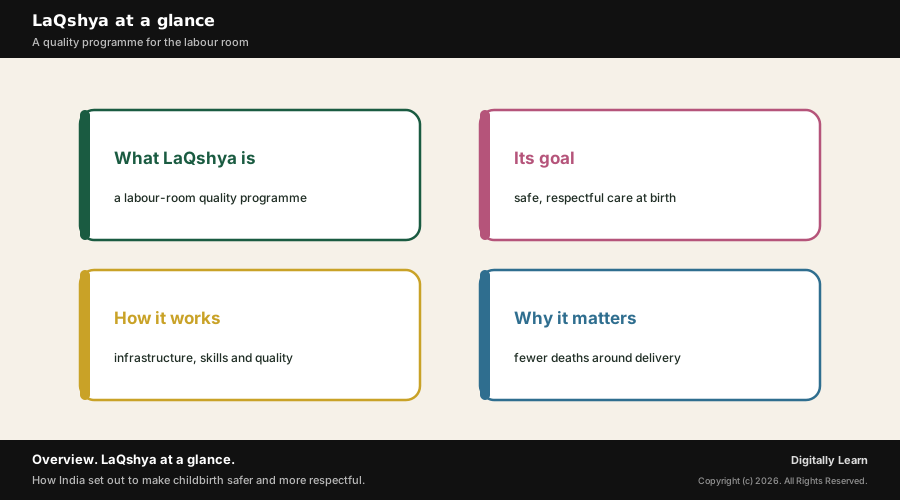
LaQshya, the Labour Room Quality Improvement Initiative, is a programme of the Ministry of Health and Family Welfare to improve the quality of care in the labour rooms and maternity operation theatres of public hospitals. It aims to reduce preventable maternal and newborn deaths, morbidity and stillbirths around the time of delivery and to ensure respectful maternity care, working through a multi-layered strategy and the NQAS certification of facilities.
The Care Around Childbirth in India
What LaQshya Is
LaQshya, the Labour Room Quality Improvement Initiative, is a programme of the Ministry of Health and Family Welfare. Its purpose is to improve the quality of care in the labour rooms and maternity operation theatres of public hospitals.
The name itself, meaning a goal or target, captures its aim: to make the place where a baby is born as safe and as respectful as it can be. It works at the most critical moment in maternal and newborn care.
Why LaQshya Matters
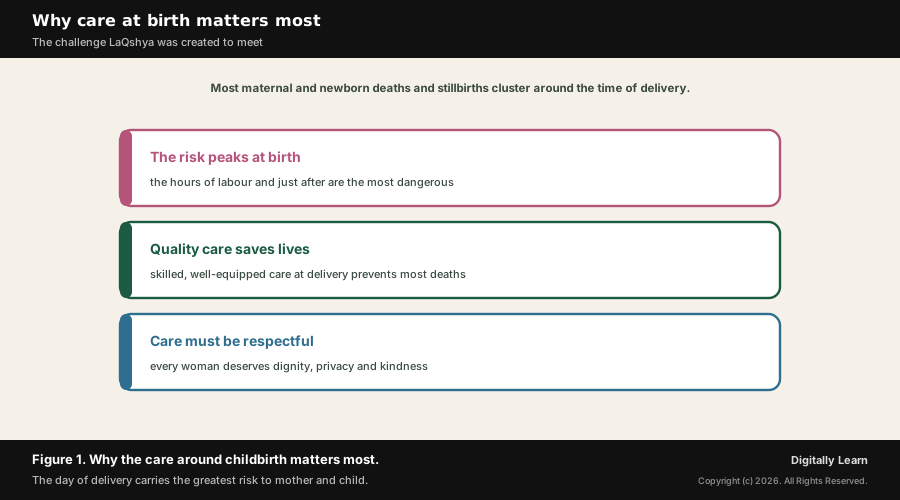
Why it matters is that the hours of labour and the time just after delivery carry the greatest risk to both mother and child. A large share of maternal and newborn deaths, and of stillbirths, occurs around the day of delivery.
Good care at this moment can prevent most of these deaths. LaQshya is built on the simple idea that improving the quality of care in the labour room is one of the most direct ways to save lives.
The Goals and Reach of the Initiative
The Objectives of LaQshya
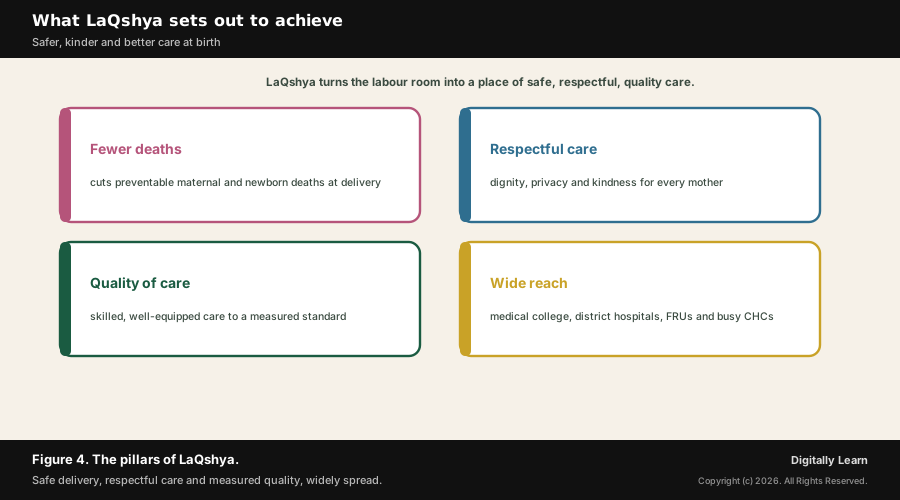
The central aim of LaQshya is to reduce preventable maternal and newborn mortality, morbidity and stillbirths linked to the care given during delivery in the labour room and maternity operation theatre.
It seeks to do this by raising the quality of care at and around childbirth, by ensuring the timely management of complications, and by making sure that every woman receives respectful maternity care.
The Facilities LaQshya Covers
LaQshya is directed at the public facilities that handle the most deliveries. These include the Government Medical College Hospitals and the District Hospitals, where the most complicated cases are managed.
It also covers the designated First Referral Units and the high case-load Community Health Centres, so that the busiest labour rooms, where the need is greatest, are the first to be improved.
How LaQshya Works
A Multi-layered Strategy in the Labour Room
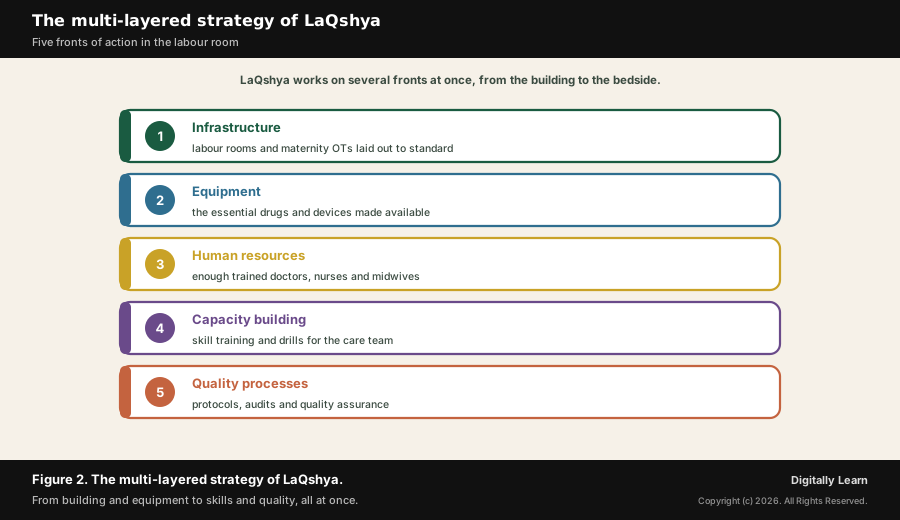
LaQshya does not rely on a single measure. It follows a multi-layered strategy that acts on several fronts at once, from the fabric of the building to the skill of the hands at the bedside.
It reorganises the layout of the labour room and operation theatre to standard, ensures the essential equipment and drugs, provides enough trained staff, builds their skills, and puts quality processes and audits in place.
Respectful Maternity Care and the Risks It Tackles
Alongside the clinical work, LaQshya insists on respectful maternity care, the dignity, privacy and kindness owed to every woman in labour. Care that is safe but harsh is not enough.
Its clinical aim is to manage the dangers that take lives at birth, among them haemorrhage, retained placenta, obstructed labour, preeclampsia and eclampsia, sepsis, and the asphyxia and infection that threaten the newborn.
Measuring and Assuring Quality
NQAS Standards and LaQshya Certification
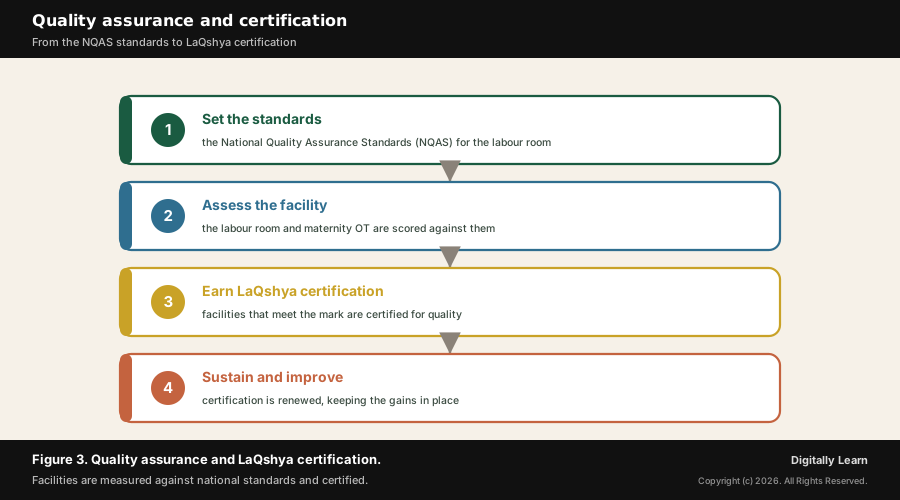
Quality has to be measured, not just promised. LaQshya uses the National Quality Assurance Standards, the NQAS, as the yardstick against which a labour room and maternity operation theatre are assessed.
A facility that meets the mark earns LaQshya certification, a formal recognition that its labour room provides care of an assured quality. The assessment is then repeated to keep the standard from slipping.
Recognition and the Drive to Improve
Certification is meant to be more than a label. By recognising and rewarding the facilities that reach the standard, it creates an incentive for others to follow and for the certified ones to keep their gains in place.
In this way the programme turns a one-off effort into a steady culture of quality. The goal is not a single inspection passed, but care that stays good, year after year.
LaQshya and the Larger Push for Safe Motherhood
Significance for Maternal and Newborn Health
By concentrating on the labour room, LaQshya targets the exact place and moment where most preventable deaths occur. Its significance lies in tackling the problem at its sharpest point.
Better quality and respectful care at delivery feed directly into the national effort to bring down the maternal mortality ratio and the newborn death rate, and to make institutional childbirth genuinely safe.
Its Place Among India's Health Schemes
LaQshya does not stand alone. It fits within a wider family of maternal and child health efforts that bring women to institutions for delivery and support them before and after birth.
Where those schemes raise the number of institutional deliveries, LaQshya works on the quality of the care those women then receive. Together they aim at both the reach and the standard of care at childbirth.
LaQshya in the UPSC Exam
The Wider Significance of the Initiative
What is the significance of LaQshya is that it marks a shift from simply expanding services to assuring their quality. It treats the quality of care, and not only its availability, as a matter of public policy.
| Aspect | Detail |
|---|---|
| Full form | Labour Room Quality Improvement Initiative |
| Ministry | Ministry of Health and Family Welfare |
| Goal | reduce preventable maternal and newborn deaths around delivery; respectful care |
| Facilities | medical college and district hospitals, FRUs, high-caseload CHCs |
| Quality tool | NQAS standards and LaQshya certification |
For the exam, LaQshya is a clear example of a quality-of-care intervention in the health sector, and of the wider turn towards measured standards in governance.
Linkages to the Wider Health Agenda
Contemporary linkages run from LaQshya to the global goals on health. Cutting maternal and newborn mortality is a core aim of the Sustainable Development Goals, and quality of care is central to reaching it.
Placed in the governance syllabus, LaQshya is a study in how standards, certification and accountability can be used to improve a public service. The high-yield points are few and worth holding in mind.
- LaQshya is the Labour Room Quality Improvement Initiative of the Ministry of Health and Family Welfare.
- It aims to cut preventable maternal and newborn deaths and stillbirths around the time of delivery.
- It covers medical college and district hospitals, FRUs and high-caseload CHCs.
- It follows a multi-layered strategy and insists on respectful maternity care.
- It uses the NQAS standards and LaQshya certification to assure quality.
Sources and Further Reading
- National Health Mission: LaQshya (Labour Room Quality Improvement Initiative)
- Ministry of Health and Family Welfare
- Press Information Bureau: LaQshya
- World Health Organization: Maternal Health
- Ministry of Statistics and Programme Implementation (SDG indicators)
- NITI Aayog: Health
- National Health Portal of India
- Office of the Registrar General: Sample Registration System (Maternal Mortality)
Editorial Disclaimer
This article explains the LaQshya initiative for UPSC preparation, drawing on the Ministry of Health and Family Welfare and standard public-health sources. Details reflect the cited authorities.


