

Overview
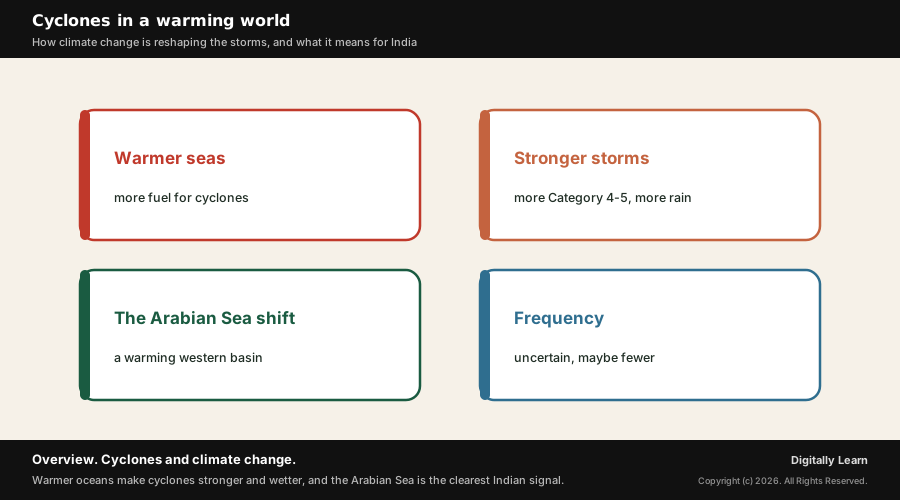
The link between cyclones and climate change is that warming sea surface temperatures give tropical cyclones more energy and a moister atmosphere, so storms are becoming more intense, wetter and more prone to rapid intensification, even as their overall frequency may stay the same or fall, with the warming Arabian Sea the clearest signal over India.
Climate change and tropical cyclones: the central question
Why climate change is reshaping tropical cyclones
The first eleven parts of this series explained how a tropical cyclone forms, moves and is managed. The last part asks a different question: as the planet warms, are cyclones themselves changing, and what does that mean for India?
The short answer is that warming does not simply make every storm worse in every way. It pushes some features up sharply and leaves others uncertain, so the honest picture is a mix of strong signals and open questions that a careful answer must keep separate.
Warming sea surface temperature and cyclone intensity
Sea surface temperature and a cyclone's fuel
A tropical cyclone runs on warm, moist air drawn from the sea, so the sea surface temperature is its fuel gauge. As the oceans warm, there is more of this fuel available, which is the basic link between climate change and stronger storms.
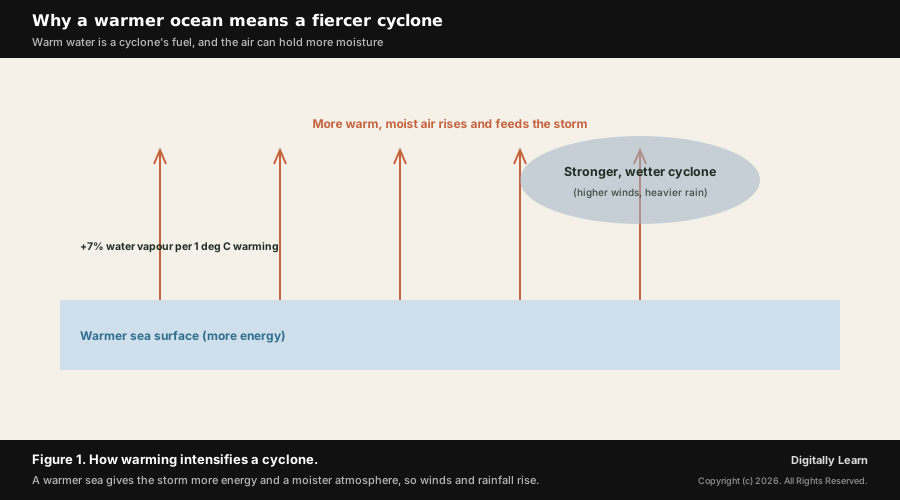
Warmer air also holds more water. For every degree Celsius of warming, the atmosphere can hold roughly seven per cent more water vapour, so a warmer-world cyclone tends to carry and dump noticeably heavier rainfall.
Rising intensity, heavier rainfall and rapid intensification
Stronger and wetter cyclones, but not necessarily more frequent
The clearest change is intensity. Between 1979 and 2017 the proportion of cyclones reaching Category 3 and above rose worldwide, and the IPCC projects that at two degrees of warming a greater share will reach Category 4 and 5 strength.
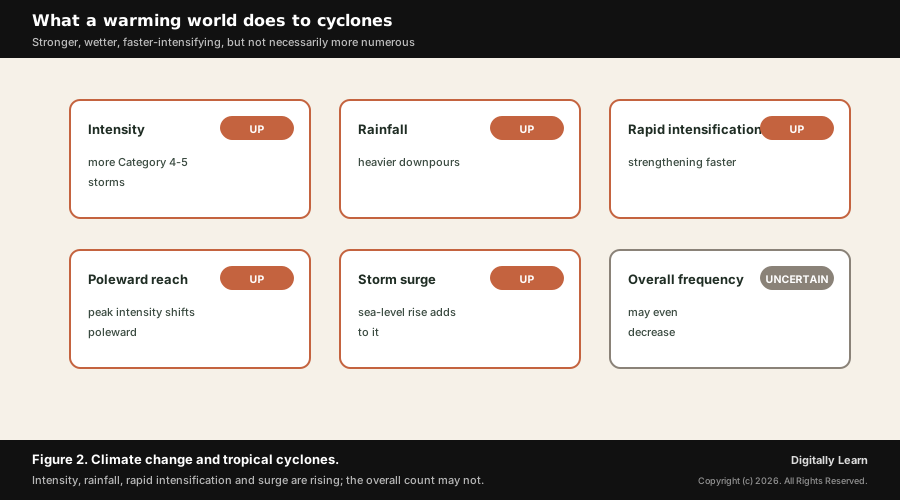
Other signals point the same way. Rapid intensification is becoming more likely, the latitude of peak intensity is shifting poleward, and rising sea levels lift the storm surge. Yet the overall frequency may not rise; most models project the same or fewer storms.
The Arabian Sea shift: a warming basin and severe west-coast cyclones
The warming Arabian Sea and recent west-coast cyclones
India's two basins are not changing equally. The Arabian Sea, long the quieter of the two, has warmed by about 1.2 to 1.4 degrees Celsius in recent decades, and studies link this warming to a rise in the number and strength of its cyclones.
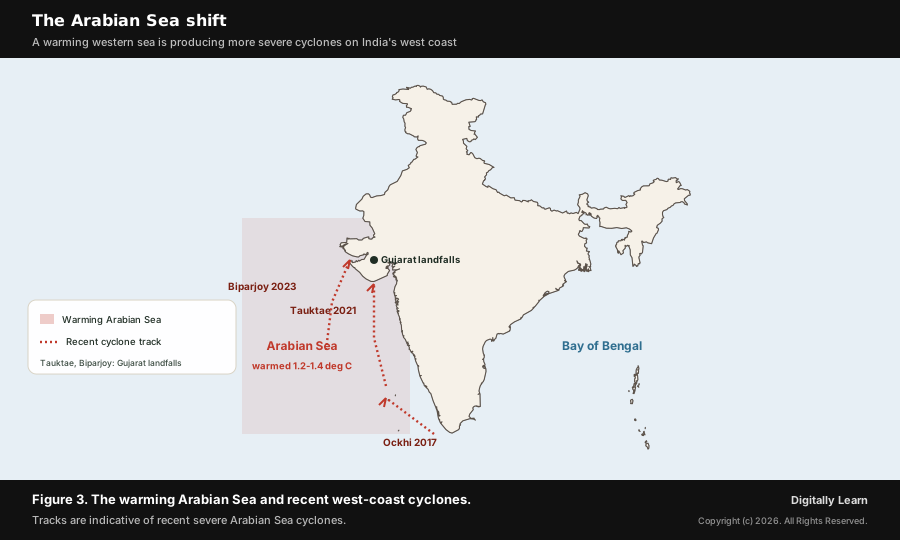
The evidence is on the west coast. Severe storms such as Ockhi in 2017, Tauktae in 2021 and Biparjoy in 2023 struck a coast that once saw few of them, which is why the Arabian Sea shift is now a leading example of climate change in India's weather.
Implications for India: coastal risk, storm surge and adaptation
Coastal risk, storm surge and adaptation measures
For a country with a long, crowded coastline, these trends raise the stakes. Stronger winds, heavier rain and a higher storm surge threaten the deltas, ports and cities of both coasts, and the rising sea makes every future surge more dangerous.
| Change | What it means for India |
|---|---|
| Higher intensity | More destructive landfalls on both coasts |
| Heavier rainfall | Worse coastal and urban flooding |
| Rising sea level | A higher storm surge over low-lying deltas |
| Arabian Sea warming | More severe cyclones threatening the west coast |
The answer is the system built in the previous part. India's adaptation leans on the chain it has already strengthened, and on building climate change into how that chain is planned:
- stronger early warning and the IMD’s four-stage system
- more cyclone shelters and embankments through the NCRMP
- climate-proofed ports, power and coastal infrastructure
- the protection of mangroves and natural coastal buffers
Synthesis: the twelve-part cyclones series in review
The complete cyclones series in one view
This part closes the arc. The series began with how a cyclone forms over a warm ocean, traced its classification, distribution, life cycle and impacts, and turned to forecasting and disaster management; it ends where it began, with the ocean, now warming.
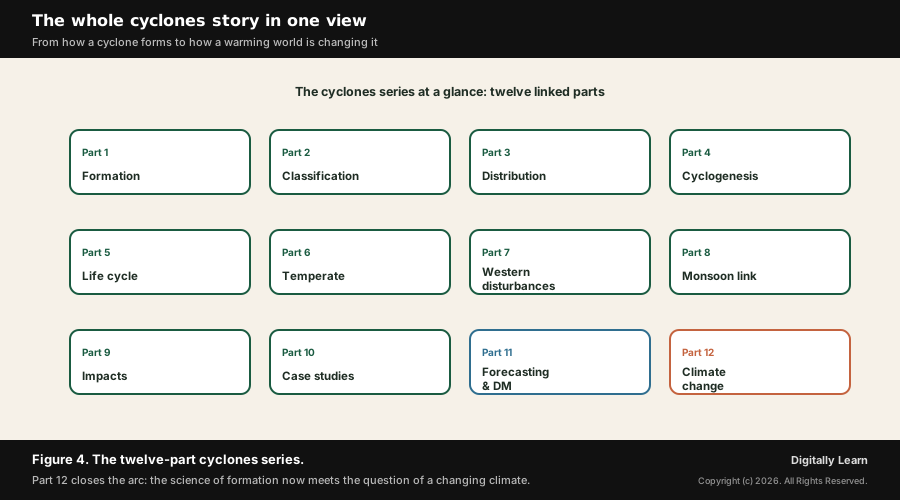
The thread running through all twelve parts is the same. A cyclone is the atmosphere moving heat from a warm sea, so as that sea warms the storm changes, and the task for India is to read those changes early and build for them on the coast.
How this appears in the UPSC exam
What the UPSC exam asks on cyclones and climate change
This topic is squarely in GS Paper I and current-affairs geography. The 2024 question on sea surface temperature rise and tropical cyclone formation is answered directly by this part, and the Arabian Sea shift is a ready, current example.
A strong answer separates the certain from the uncertain. State firmly that intensity, rainfall and surge are rising, note honestly that overall frequency is not settled, and close with the Arabian Sea and India's adaptation as evidence and way forward.
Previous Year UPSC-CSE Questions
Previous Year UPSC-CSE Questions By the end you will be able to draft model answers for the following UPSC questions. Each question carries a collapsible framework showing how to approach it in the exam.
- UPSC Mains 2024 GS-IWhat is sea surface temperature rise? How does it affect the formation of tropical cyclones?
How to structure the answer in the exam
Introduction: Define sea surface temperature rise as the long-term warming of the ocean's surface layer.
Body (sub-themes to develop):
- Warm water is a cyclone's fuel; higher SST means more energy and stronger storms.
- A warmer atmosphere holds about 7% more moisture per degree, so rainfall rises.
- More Category 4-5 storms and more rapid intensification; frequency may not rise.
- The Indian case: the warming Arabian Sea and storms like Tauktae and Biparjoy.
Conclusion: Conclude that SST rise intensifies cyclones, demanding stronger adaptation on India's coasts.
Sources and Further Reading
- Wikipedia: Tropical cyclones and climate change
- Wikipedia: North Indian Ocean tropical cyclone (Arabian Sea warming)
- IPCC AR6 (Working Group I)
- NOAA GFDL: Global warming and hurricanes
- Ministry of Earth Sciences
- India Meteorological Department
- NCERT: Geography (fundamentals of physical geography)
- WMO Tropical Cyclone Programme
Editorial Disclaimer
This article explains the links between cyclones and climate change for UPSC preparation, drawing on the IPCC, NOAA and standard climatology sources. Trends and figures reflect the cited authorities, and areas of scientific uncertainty are noted as such.