


Overview
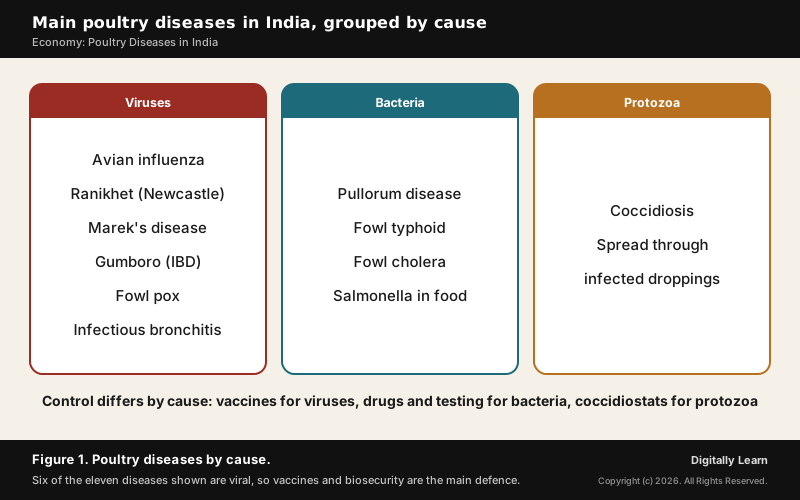
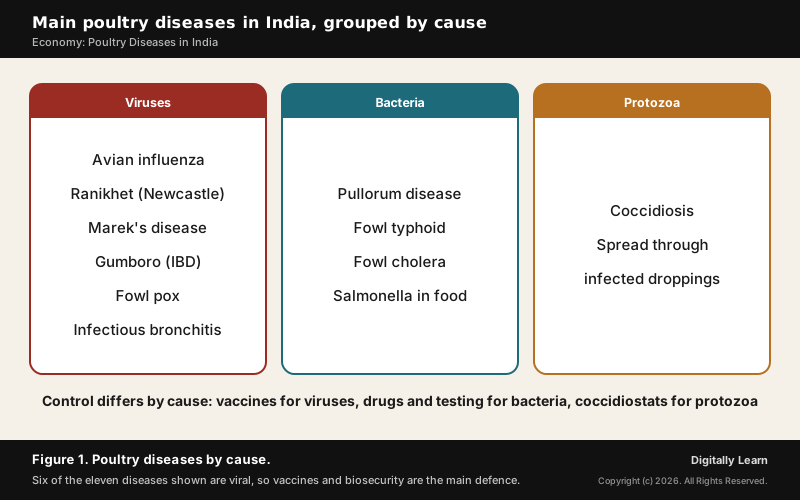
Poultry diseases are infections of chickens, ducks and other domestic birds caused by viruses, bacteria and parasites. Avian influenza and Ranikhet (Newcastle) disease must be reported and can halt trade; they are controlled by vaccination, biosecurity, surveillance and, for bird flu, culling under a national action plan.
Poultry Diseases in India: Causes and Main Types
Viral, Bacterial and Parasitic Poultry Diseases
Poultry diseases matter because a flock lives packed together, so one infection spreads fast. An outbreak brings lower production, more deaths and the cost of control, and some diseases also stop trade in poultry products. The Poultry Disease Action Plan of 2024, issued by the Department of Animal Husbandry and Dairying, covers avian influenza, infectious bronchitis, fowl cholera, fowl pox, Gumboro, Ranikhet disease, pullorum disease and others, for both commercial and backyard flocks.
| Disease | Cause | What it does | Main control |
|---|---|---|---|
| Avian influenza (bird flu) | Influenza A virus | Highly pathogenic strains can kill up to 100 per cent of a flock | Culling, movement control, biosecurity |
| Ranikhet (Newcastle) disease | Avian paramyxovirus type 1 | Breathing and nervous signs; over 50 per cent deaths in an unexposed flock | Live and inactivated vaccines |
| Marek's disease | Alphaherpesvirus | T-cell lymphoma; birds carry the virus for life | Turkey herpesvirus (HVT) vaccine |
| Fowl pox | Avipoxvirus | Scabs on the skin or lesions in mouth and windpipe | Live attenuated vaccine; mosquito control |
| Pullorum disease | Salmonella Pullorum (bacterium) | Passes through the egg; white diarrhoea in chicks | Testing of breeding stock |
| Coccidiosis | Coccidian protozoa | Intestinal disease of young chicks | Coccidiostat in chick feed |
Knowing the cause tells the farmer how to fight the disease. Viral diseases are prevented by vaccination and biosecurity, because antibiotics are not effective against viruses; bacterial diseases are controlled by testing breeding stock and by drugs; coccidiosis is kept down by coccidiostats mixed in chick feed. The economic cost of these diseases is one of the problems of poultry farming in India.
Avian Influenza in India: Bird Flu and Its Control
What Is Avian Flu? Strains, Pathogenicity and Spread
Avian influenza, commonly called bird flu, is a viral infection of domestic poultry and many other birds, caused by influenza A viruses of the family Orthomyxoviridae. The viruses are named by two surface proteins, haemagglutinin (H) and neuraminidase (N), which gives subtypes such as H5N1, H5N8 and H9N2.
- Low pathogenicity avian influenza (LPAI): Few or no signs, or mild breathing trouble and fewer eggs.
- Highly pathogenic avian influenza (HPAI): Severe disease; deaths in a flock can reach 100 per cent.
- Only the H5 and H7 strains are of zoonotic importance and are reported to the World Organisation for Animal Health (WOAH).
Wild waterfowl and shorebirds are the natural reservoir: they carry the virus without falling ill and pass it to other birds. Infected birds shed the virus in saliva, nasal secretions and droppings; it survives long in water and at low temperatures and travels from farm to farm on equipment. H5N1 reached India's wild birds in the first months of 2006, and H9N2, a low pathogenicity strain, was first isolated in India in 2003 from chicken farms in Haryana.
Avian Influenza Control in India: Action Plan, Culling and Compartments
India has run a National Action Plan for the control and containment of avian influenza since 2005, revised in 2021. When highly pathogenic bird flu is confirmed, infected birds and those nearby are culled, movement is restricted, and the area is disinfected, because a quick response stops the virus before it reaches the next farm.
The legal backing comes from the Prevention and Control of Infectious and Contagious Diseases in Animals Act, 2009. Under it, anyone who knows of an outbreak must inform the nearest veterinary dispensary or hospital; the report goes up to the state's Director of Veterinary Services, then to the Department of Animal Husbandry and Dairying, and on to WOAH as an immediate notification.
- Surveillance network: 69,202 institutions, including 13,042 veterinary hospitals and polyclinics, 22,823 dispensaries and 33,337 aid centres and mobile clinics.
- Where to look: Live bird markets, wetlands, border areas and places with dense or migratory bird populations get priority.
- Disease-free compartments: India has 32 poultry compartments free of avian influenza, accepted by WOAH on India’s self-declaration.
Can Avian Flu Affect Humans? Zoonosis and One Health
Avian flu can affect humans, but only sporadically. Influenza A viruses of birds occasionally infect people and other mammals, usually after close contact with infected birds, and that makes bird flu a zoonosis: an infectious disease of humans caused by a pathogen that passes from an animal to a human. In June 2026 the World Health Organization warned Kerala to stay alert to high threat pathogens, among them Nipah, avian influenza H5N1 and Kyasanur Forest Disease.
The danger of such diseases is why health systems now speak of One Health: human, animal and environmental health managed together. The term was first used officially in 2003-2004 and gained ground with the spread of H5N1; the Food and Agriculture Organization, the World Health Organization, the World Organisation for Animal Health and the UN Environment Programme now pursue it together. Food is a second route: non-typhoidal Salmonella, often linked to poultry and eggs, is another zoonosis, which is why poultry and eggs should be cooked thoroughly.
Ranikhet Disease (Newcastle Disease) in Poultry
Ranikhet Disease: Cause, Symptoms and Vaccines
Ranikhet disease, known worldwide as Newcastle disease, is caused by virulent strains of avian paramyxovirus type 1 (APMV-1), of the genus Orthoavulavirus in the family Paramyxoviridae. It takes its Indian name from Ranikhet in Uttarakhand, where the first outbreak in India occurred in 1927, and it is now present in most parts of the country.
- Symptoms: Sneezing, gasping and coughing, greenish watery diarrhoea, twisted neck, drooping wings and paralysis, a sharp fall in egg production and thin-shelled eggs.
- Speed: The incubation period is 3 to 6 days, and deaths can exceed 50 per cent in a flock that has never met the virus.
- Spread: Through the air and by mouth; the movement of live birds and migratory birds can bring it into a new area.
- Vaccines and biosecurity: Live and inactivated vaccines, with oil-based inactivated vaccines given to breeders and layers after a live vaccine, and strict biosecurity. The disease is notifiable and can lead to trade restrictions.
Other Poultry Diseases: Marek's, Gumboro, Fowl Pox and Coccidiosis
Marek's Disease in Poultry and Gumboro Disease
Marek's disease is a highly contagious viral cancer of chickens, caused by an alphaherpesvirus and named after József Marek, the Hungarian veterinarian who described it in 1907. The virus produces T-cell lymphoma and fills nerves and organs with lymphocytes. Infected birds can carry and shed the virus for life, so prevention relies on vaccination: a related herpesvirus of turkeys (HVT) is used as the vaccine strain. Newly hatched chicks are protected by their mother's antibodies for a few weeks, after which a flock that has not been vaccinated is exposed.
Gumboro disease, or infectious bursal disease (IBD), attacks young chickens. It was first identified in Gumboro, Delaware, in 1962. The virus destroys the bursa, the organ that builds the young bird's immunity, so a flock that survives is left weak against other infections. Mortality can reach 30 to 40 per cent or more with very virulent strains.
Fowl Pox, Infectious Bronchitis and Coccidiosis
- Fowl pox: A slow-spreading viral disease (genus Avipoxvirus, family Poxviridae), endemic in India. It causes thick scabs on the skin, the cutaneous form, or lesions in the mouth and windpipe, the diphtheritic form. Mosquitoes spread it; live attenuated vaccines protect flocks.
- Infectious bronchitis: A highly contagious respiratory disease caused by an avian coronavirus, with a fall in egg production and quality. Live and killed vaccines exist, but different types of the virus do not cross-protect, which makes control hard.
- Coccidiosis: A parasitic disease of the intestine caused by coccidian protozoa, spread through infected droppings. It is most serious in young chicks and can kill them or damage digestion; some chick feeds carry a coccidiostat to keep it down.
Bacterial diseases complete the list. Pullorum disease, caused by Salmonella Pullorum, passes through the egg and kills young chicks with white diarrhoea, while fowl typhoid, caused by Salmonella Gallinarum, strikes growing and adult birds; both are endemic in all parts of India and are controlled by testing breeding stock. Fowl cholera, caused by Pasteurella multocida, is also endemic across the country.
Biosecurity on Poultry Farms: Keeping Disease Out
Four Layers of Poultry Farm Biosecurity
Biosecurity means the measures that keep pathogens out of a farm and stop them spreading within it. The Poultry Disease Action Plan sets two objectives, a healthy flock and healthy workers, and divides the measures into four layers, from where the farm is built to who may walk into a shed.
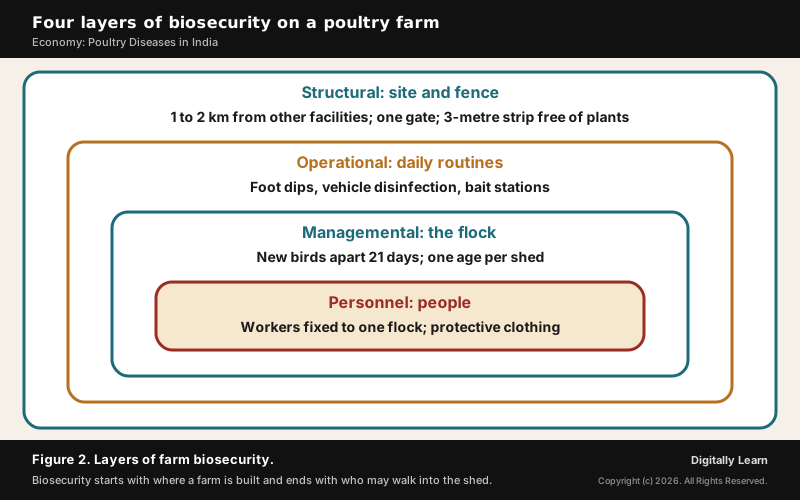
- Structural: The farm 1 to 2 km from other commercial facilities, fenced with a single gate, and a three-metre strip around the sheds kept free of vegetation so that rodents and wild birds stay away.
- Operational: Foot dips of lime and bleaching powder at the entrance, disinfection of every vehicle, and bait stations for rodents.
- Managemental: New birds kept apart from the old flock for at least 21 days, one age group per shed, and a shed left empty for three weeks after an outbreak.
- Personnel: Workers fixed to one flock, protective clothing and footwear for everyone who enters, and visits to younger flocks before older ones.
Vaccines and Virus Culture in Poultry Disease Control
How Vaccines Work: Live, Inactivated and Newer Types
A vaccine is a biological preparation that gives active acquired immunity to a disease. It contains an agent that resembles the microbe, often a weakened or killed form of it, its toxin or one of its surface proteins. The immune system learns to recognise and destroy that agent, and it remembers, so it can destroy the real microbe when it meets it later.
Poultry vaccines show the main types. Ranikhet disease and fowl pox are prevented by live attenuated vaccines, weakened viruses that train the bird's immunity without causing the disease; inactivated vaccines, made from killed virus, must be given to each bird by hand and are often given after a live one. Marek's disease uses a related turkey virus as the vaccine strain.
India's COVID-19 vaccines used three different approaches. Covaxin, made by Bharat Biotech with ICMR's National Institute of Virology, is a whole inactivated virus vaccine. Covishield, made by the Serum Institute of India, is a viral vector vaccine: a harmless chimpanzee adenovirus carries the gene for the coronavirus spike protein. ZyCoV-D, from Cadila Healthcare, is a DNA plasmid vaccine whose plasmid makes the recipient's cells produce the spike protein.
Why Viruses Are Grown in Eggs: Culturing Microbes
Bacteria and fungi can be grown on artificial media such as nutrient broth and agar plates, because they have their own metabolism. A virus cannot: it is a submicroscopic infectious agent that replicates only inside the living cells of an organism, using the host cell's machinery because it has no metabolism of its own. Viruses spread in many ways, through insect vectors, but also in aerosols that are inhaled and in food or water.
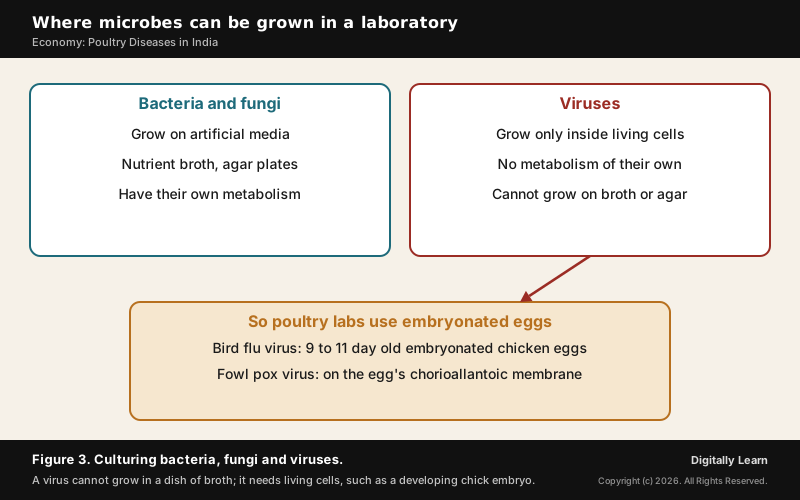
That is why poultry laboratories grow viruses in embryonated chicken eggs. Avian influenza virus is grown in eggs 9 to 11 days old, and fowl pox virus is isolated on the egg's chorioallantoic membrane. The method is old: in 1931 the fowlpox virus was grown in an embryonated chicken egg, and influenza vaccines for people are still made from viruses grown in chicken eggs.
Previous Year UPSC-CSE Questions
Previous Year UPSC-CSE Questions By the end you will be able to draft model answers for the following UPSC questions. Each question carries a collapsible framework showing how to approach it in the exam.
- UPSC Mains 2022 GS-IIIWhat is the basic principle behind vaccine development? How do vaccines work? What approaches were adopted by the Indian vaccine manufacturers to produce COVID-19 vaccines?
Answer outline: how to structure the answer
What the question asks, the main arguments, relevant examples and the direction of the conclusion. This is not a full model answer.
Introduction: A vaccine gives active acquired immunity by showing the immune system a harmless form or part of a pathogen before the real infection arrives.
Body (sub-themes to develop):
- Principle: present an antigen that resembles the pathogen (weakened or killed microbe, toxin, surface protein, or the gene for one) without causing the disease.
- Working: the immune system recognises the antigen as a threat, destroys it, and keeps a memory, so a later infection is met quickly; a short diagram of antigen, immune response and memory helps.
- Types with examples: live attenuated (poultry Ranikhet and fowl pox vaccines), inactivated (killed virus), vector, DNA.
- Indian COVID-19 approaches: Covaxin (Bharat Biotech with ICMR-NIV, whole inactivated virus); Covishield (Serum Institute of India, chimpanzee adenovirus vector carrying the spike gene); ZyCoV-D (Cadila, DNA plasmid).
Conclusion: Conclude that India used several platforms, from inactivated whole virus to a viral vector and DNA, so its vaccine supply did not rest on one technology.
- UPSC Prelims 2021 Prelims-GSConsider the following:
- 1. Bacteria
- 2. Fungi
- 3. Virus
Which of the above can be cultured in artificial/synthetic medium?
How to approach this Prelims question
Approach: Step 1: bacteria grow on nutrient broth and agar, so 1 can be cultured. Step 2: fungi also grow on artificial media, so 2 can. Step 3: a virus replicates only inside living cells and has no metabolism of its own, so it cannot grow in an artificial or synthetic medium; it needs cells, such as an embryonated egg. Answer: 1 and 2 only.
Trap to watch: Viruses are grown in laboratories, which tempts some to say they can be cultured in a medium. They are grown in living cells or eggs, not in a cell-free artificial medium.
Key facts to recall:
- (a) 1 and 2 only: right. Bacteria and fungi grow on artificial media; viruses do not.
- (b) 2 and 3 only: wrong. It leaves out bacteria and includes viruses.
- (c) 1 and 3 only: wrong. It leaves out fungi and includes viruses.
- (d) 1, 2 and 3: wrong. Viruses replicate only inside living cells.
Answer signal: Option (a): bacteria and fungi grow on artificial media; a virus needs living cells.
- UPSC Prelims 2013 Prelims-GSWhich of the following statements is/are correct?
- 1. Viruses lack enzymes necessary for the generation of energy.
- 2. Viruses can be cultured in any synthetic medium.
- 3. Viruses are transmitted from one organism to another by biological vectors only.
Select the correct answer using the codes given below.
How to approach this Prelims question
Approach: Step 1: a virus has no metabolism of its own and uses the host cell's machinery, so it lacks the enzymes to generate energy; statement 1 is correct. Step 2: it replicates only inside living cells, so it cannot be cultured in any synthetic medium; statement 2 is wrong. Step 3: viruses spread in many ways, through insect vectors but also aerosols, food and water, so 'by biological vectors only' is wrong. Answer: 1 only.
Trap to watch: The word 'only' in statement 3. Some viruses do travel by insect vectors, but many, such as influenza, spread through the air or in food and water.
Key facts to recall:
- (a) 1 only: right. Viruses lack their own energy-generating metabolism.
- (b) 2 and 3 only: wrong. Viruses cannot grow in a synthetic medium and do not spread only by vectors.
- (c) 1 and 3 only: wrong. Statement 3 is false because of 'only'.
- (d) 1, 2 and 3: wrong. Statements 2 and 3 are false.
Answer signal: Option (a): viruses have no metabolism of their own; they need living cells and spread in many ways.
Sources
- Department of Animal Husbandry and Dairying: Poultry Disease Action Plan 2024
- NCERT: Science, Class VIII, Chapter 2, Microorganisms: Friend and Foe
- World Health Organization: Antimicrobial resistance and the Quadripartite One Health approach
- Wikipedia: Avian influenza
- Wikipedia: Influenza A virus subtype H5N1
- Wikipedia: Zoonosis
- Wikipedia: Marek's disease
- Wikipedia: Coccidiosis
- Wikipedia: Virus
- Wikipedia: Growth medium
- Wikipedia: Vaccine
- Wikipedia: Covaxin
- Wikipedia: Oxford-AstraZeneca COVID-19 vaccine
- Wikipedia: ZyCoV-D
- The Hindu (Delhi), 7 April 2026: One Health and the response to health crises
- The Hindu (Delhi), 19 June 2026: Kerala's zoonotic risk and WHO's warning on high threat pathogens
- The Hindu (Delhi), 28 August 2026: Salmonella infections and antibiotic resistance
- UPSC: Civil Services Examination question papers
Editorial Disclaimer
This article draws on official documents and the other sources listed on this page.