


Overview
Poultry manure is the droppings of chickens and other farm birds used as organic fertiliser, usually as litter mixed with feed, feathers and bedding. It is the richest animal manure in nitrogen, phosphorus and potassium, but it must be composted or digested first, because fresh droppings harm plants and wet litter releases ammonia, a form of reactive nitrogen.
Poultry Manure: Meaning, Litter and Fertiliser Value
What Is Poultry Manure: Poultry Droppings and Litter
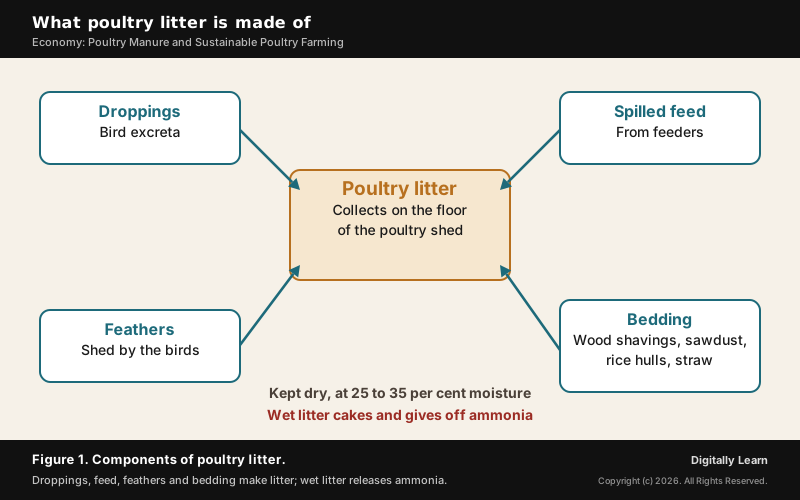
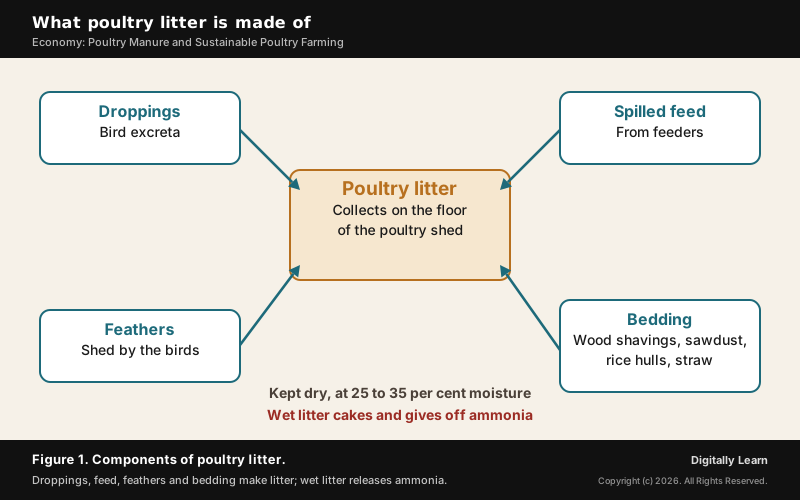
The excreta of chickens, ducks and other domestic birds, when it is used to feed the soil, is called poultry manure. A large part of its nitrogen lies in the urine, so manure that keeps its liquid keeps more of its value. On a commercial farm the droppings fall onto bedding spread on the floor of the shed, and the mixture that builds up is called poultry litter.
- Droppings: The excreta of the birds, the main source of nutrients.
- Spilled feed: Grain and feed that falls from the feeders.
- Feathers: Shed by the birds as they grow.
- Bedding: Dry, absorbent, low-cost material such as wood shavings, sawdust, peanut hulls, rice hulls or straw, which soaks up moisture and limits ammonia and harmful germs.
The quantities are large even for one farm. A broiler, reared for about 47 days, leaves behind about two pounds of litter, so a single broiler house holding more than 20,000 birds can produce over 18,000 kg of litter per flock. One chicken produces about 3.6 to 5 kg of manure a month. With 851.81 million poultry birds counted in 2019, manure is one of the poultry industry's biggest by-products; how that industry is organised is explained in the poultry industry in India.
Poultry Manure as Fertiliser: Nutrients and Limits
Poultry manure as fertiliser has been used for centuries. Like other animal manures it improves soil structure, so the soil holds more water and nutrients, and it feeds the soil's microbes. Its special value is concentration: chicken litter is rich in nitrogen and phosphate and is prized for both, and among animal manures it carries the most nitrogen, phosphorus and potassium. Cattle manure, by comparison, is valued as a good source of nitrogen and organic carbon.
Three limits keep poultry manure from replacing chemical fertiliser. First, fresh droppings are harmful to plants and become a valuable fertiliser only after composting. Second, litter is less concentrated than chemical fertiliser and so worth little per tonne, which makes it uneconomic to carry far; it has to be used on farms near the poultry sheds. Third, it loses nitrogen fairly quickly, much of it as ammonia, unless it is stored well.
The mismatch of place is the real problem. Where many poultry farms cluster and there is little farmland around them, the litter cannot all be spread nearby, its resale value falls, and the surplus becomes a waste to be managed rather than a fertiliser to be sold.
Manure spread in excess also becomes a water problem. Nitrogen in manured land is often used less efficiently than measured mineral fertiliser, and where many animals share too little farmland the surplus washes away. The best known case is Chesapeake Bay in the United States, where runoff from fields fertilised with chicken manure was blamed for rising phosphorus and the growth of dead zones in the bay, and the state of Maryland tried to limit how much poultry manure farmers could use.
Poultry Waste Management: Composting, Biogas and GOBARdhan
Poultry Manure Composting and Poultry Litter Management
Good poultry litter management starts in the shed. In a well-managed broiler house the litter is kept at 25 to 35 per cent moisture, so it stays crumbly. If it gets too wet, around leaking drinkers or under a leaking roof, it cakes into a damp, sticky layer full of bacteria, flies and ammonia, which harms the birds' feet and breasts and raises deaths in the flock. Caked litter must be removed between flocks.
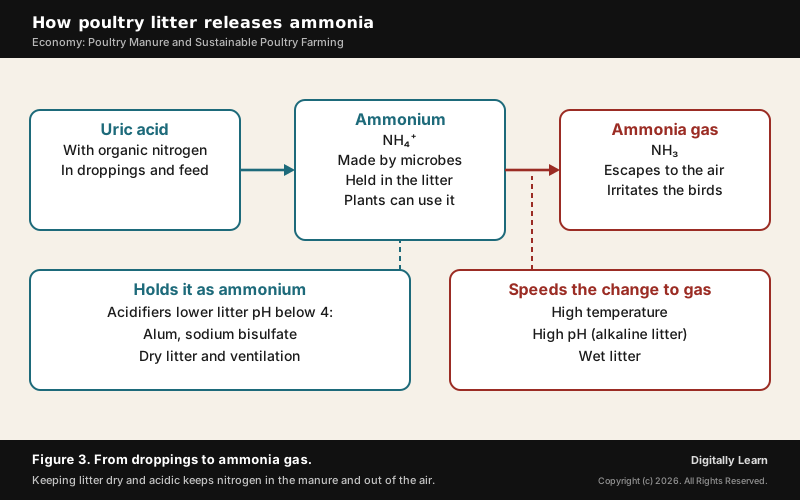
Ammonia is the main enemy inside the shed. Farmers control it with ventilation and with litter amendments, materials mixed into the litter to change its chemistry. The commonest are acidifiers such as alum, sodium bisulfate and ferric sulfate, which lower the surface pH of the litter below 4 for three to five days, so that more nitrogen stays as ammonium instead of escaping as ammonia gas. That also keeps more nitrogen in the litter for the fields.
Poultry manure composting turns the cleared litter into a safe fertiliser. In composting, the manure supplies nitrogen and the bedding supplies carbon. A common method is windrow composting: the litter is piled into long rows, and if the inside of the pile reaches 60 to 71 °C, the heat kills harmful bacteria such as E. coli and Salmonella. Composted manure is also bagged and sold as a soil amendment.
Biogas, Compressed Biogas and the GOBARdhan Scheme
Poultry manure can also make energy. In a biogas plant, microbes break down organic waste without air and give biogas, mostly methane, which can be cleaned and compressed into compressed biogas (CBG) for vehicles and piped gas. In low- and middle-income countries the usual feedstocks are cattle dung, poultry manure, crop residues and food waste, and using them captures methane that would otherwise escape as the waste rots. The slurry left behind, the digestate, becomes organic manure. Several power stations in Britain burn poultry and turkey litter as their primary fuel; the first three in the world were Thetford, Eye and Glanford, and the largest of them, Thetford, generates 38.5 megawatts.
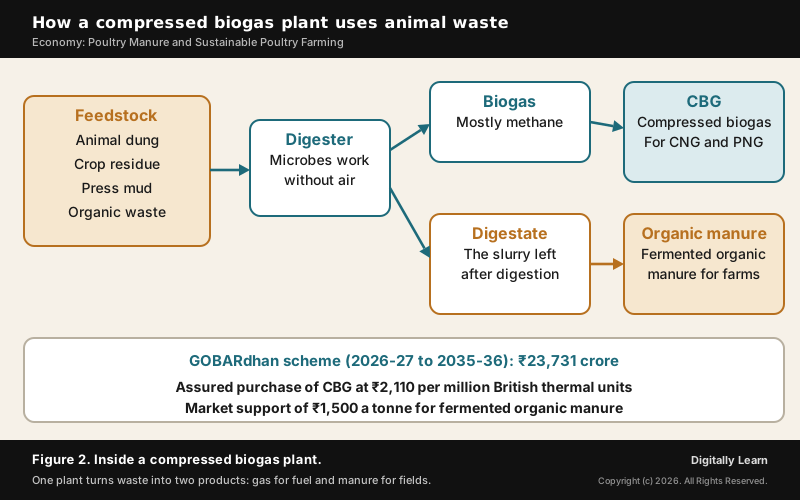
India's policy for this is GOBARdhan (Galvanising Organic Bio-Agro Resources Dhan), launched in April 2018 under the Swachh Bharat Mission (Grameen) to turn cattle dung and other organic waste into biogas and manure, with the Department of Drinking Water and Sanitation coordinating the ministries involved. Progress was slow: the SATAT initiative of 2018 aimed at 5,000 compressed biogas plants by 2023, but only 132 had been completed by June 2026.
- Outlay and period: In August 2026 the Union Cabinet approved the National Circular Bioenergy Scheme, GOBARdhan, with ₹23,731 crore for 2026-27 to 2035-36.
- Target: A roughly tenfold rise in compressed biogas output, from about 0.4 million standard cubic metres a day to 4 to 6.
- Capital help: ₹1.25 crore per tonne per day of new capacity, up to ₹30 crore per project.
- Assured sale: Purchase of up to all eligible output at ₹2,110 per million British thermal units, about ₹98 a kilogram.
- Manure: Around 250 million tonnes of organic manure for farmers is expected, and fermented organic manure from such plants earns market development assistance of ₹1,500 a tonne.
Environmental Impact of Poultry Farming: Ammonia, Nitrogen and Runoff
Ammonia and Reactive Nitrogen from Poultry Litter
The nitrogen in poultry droppings is mostly uric acid and organic nitrogen. Microbes in the litter turn it into ammonium (NH4+), a form plants can use, which binds to the litter and dissolves in water. Part of the ammonium then becomes ammonia gas (NH3), and high temperature, high pH and wet litter all speed that change. Ammonia irritates the eyes and breathing of the birds, lowers their resistance to infection, growth and feed efficiency, and, once vented outside, causes health and environmental problems.
Ammonia is one form of reactive nitrogen, the name for every form of nitrogen except the inert nitrogen gas (N2) of the air: nitrogen oxides, ammonia, nitrous oxide (N2O) and nitrate. Just over half of all reactive nitrogen entering the biosphere now comes from human activity, and an excess of it causes problems such as eutrophication. Agriculture adds it in several ways: fertilised soils give off nitrogen oxides, and soils and livestock operations release ammonia that is carried downwind. Nitrous oxide is about 300 times more effective than carbon dioxide as a greenhouse gas, and in 2020 India produced 10.9 per cent of the world's human-made nitrous oxide emissions, second only to China.
Antibiotics in Poultry Feed and Antimicrobial Resistance
Antibiotics are the other hidden load in poultry manure. They are mixed with the feed of livestock and poultry to check infection, and some of them pass into the droppings. Livestock manure spread on fields typically carries residual antibiotics at 1 to 10 mg per kg, along with resistant bacteria and resistance genes, and crops grown in such soil can take up antibiotics. Overuse in medicine and agriculture is a main driver of antimicrobial resistance, when germs evolve ways to survive the drugs meant to kill them. In June 2026 scientists suggested using Krishi Vigyan Kendras to gather data on antibiotic residues in soils and on poultry and dairy farms.
India's main instrument against resistance is the National Action Plan on Antimicrobial Resistance. The first plan came in 2017, and the second, for 2025 to 2029, was launched on 18 November 2025 to fix its gaps by giving each sector ownership of its tasks, strengthening coordination across ministries and bringing in the private sector. The global frame is the One Health approach of the WHO, the FAO, the UN Environment Programme and the World Organisation for Animal Health; the WHO's global plan for 2026 to 2036 aims to cut antimicrobial use in agrifood systems, and countries report their progress every year through a self-assessment survey.
Resistance does not stay inside hospitals. India is especially exposed because it faces more frequent droughts, heavy antibiotic use in people and livestock, and irrigation with wastewater at the same time. Self-medication, taking antibiotics without a doctor's advice, is one of the primary reasons resistance evolves, and the same logic applies on the farm: antibiotics are meant to treat infections, so giving them routinely in feed to speed growth or prevent disease only adds to the selection of resistant germs. Several countries, including Canada, China, Japan and the United States, have restricted antibiotics in livestock.
How poultry antibiotics are used in rearing and what the rules are is explained in poultry feed and the technology behind Indian poultry, and disease control in poultry diseases and bird flu in India.
Feed, Grain and Climate: How Sustainable Is Chicken
Feed Conversion Ratio: Chicken Compared with Beef and Pork
Part of what makes poultry farming more or less sustainable is how much feed it needs. The feed conversion ratio (FCR) is the feed eaten divided by the meat or eggs produced, so a lower number means less feed per kilogram of food. Broilers are among the most efficient farm animals: in the United States in 2011 they had an FCR of 1.6 and reached market weight in 39 days, and the world average around 2013 was about 2.0 on live weight and 2.8 on carcass weight. Beef cattle in the United States ran above 6 on live weight.
| Animal and system | Feed conversion ratio | Note |
|---|---|---|
| Broilers, United States, 2011 | 1.6 (live weight) | Market weight in 39 days |
| Broilers, world average, 2013 | 2.0 live weight, 2.8 carcass | Average across systems |
| Laying hens, United States, 2011 | About 2 | About 330 eggs per hen a year |
| Average backyard flock | 9.2 for eggs, 14.6 for carcass | Far less efficient |
| Beef cattle, United States, 2013 | Above 6 (live weight) | Typical range 4.5 to 7.5 |
Breeding is the main reason broilers became so efficient. Poultry improved its feed efficiency by about 250 per cent over 50 years, and US broilers halved their FCR between the early 1960s and 2011, mostly through better genetics.
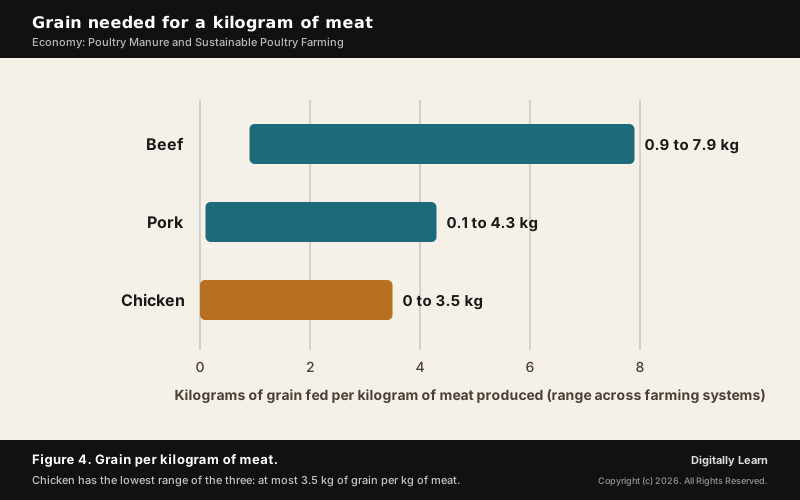
Measured as grain, the gap is just as clear. One kilogram of beef can need 0.9 to 7.9 kg of grain, pork 0.1 to 4.3 kg and chicken 0 to 3.5 kg, depending on the system and the feed. Chicken therefore generally needs less grain than beef or pork, though the feed grown for it still uses land, water and fertiliser.
Maize, Ethanol and the Food, Feed and Fuel Contest
Commercial poultry feed depends on grain, and maize and soybean are the two most important feed grains. That ties the poultry farm to the grain market, which in India is changing. The government said in August 2026 that nearly three-fourths of the ethanol produced in India now comes from grains, mainly maize, as the country blends ethanol into petrol. The shift was steep: the share of sugar diverted to ethanol fell from about 12 per cent in 2022-23 to about 9 per cent in 2025-26, and the government fixes a higher administered price for ethanol made from maize than for ethanol made from rice. Maize export earnings have fallen and India recently became a net importer of maize.
The question is one of use. Grain can feed people directly, feed birds that become food, or become fuel, and each use competes for the same harvest. For sustainable poultry farming, the answer lies in raising maize and soybean output, cutting feed waste through better FCR, and using by-products where they can replace grain.
Heat Stress and Climate Risk for Poultry Farms
Poultry is also exposed to climate change. A report by the Food and Agriculture Organization and the World Meteorological Organization in April 2026 warned that extreme heat is pushing farming to the brink. For livestock it describes a thermal humidity index which, when crossed, triggers acute heat stress, and it notes that sudden temperature spikes can cause mass deaths of poultry in farms without industrial-level climate control.
The same report says every one-degree rise in average global temperature cuts yields of maize, rice, soya and wheat by around 6 per cent, and 2025 ranked among the three hottest years on record. Heat therefore hits poultry twice: directly, in the shed, and through the price of feed. Breeding for heat tolerance is an old answer; Indian cross-breeding programmes have long aimed at summer adaptation and tolerance to high temperature.
Sustainable Poultry Farming in India: Practices and Policy
Sustainable Poultry Farming Practices from Shed to Field
Sustainable poultry farming means producing eggs and meat while keeping the farm's waste, nitrogen, drugs and climate risk under control. Each step below rests on practices described in this article.
- Keep litter dry at 25 to 35 per cent moisture, fix leaking drinkers, and remove caked litter between flocks.
- Use acidifying litter amendments and ventilation to hold nitrogen as ammonium and cut ammonia.
- Compost litter in windrows hot enough (60 to 71 °C) to kill E. coli and Salmonella before it goes to the field.
- Spread manure only on nearby land in measured amounts, so that phosphorus and nitrogen do not run off.
- Send surplus litter to biogas and compressed biogas plants, which give fuel and fermented organic manure.
- Use antibiotics only to treat disease, under veterinary oversight, not routinely in feed.
- Choose heat-tolerant birds and provide shade and ventilation against heat waves.
Backyard poultry fits this picture in its own way. The National Livestock Mission supports rural units that rear low input technology birds suited to free-range rearing and promotes low-cost feeding. Disease control is part of sustainability too: the 2024 Poultry Disease Action Plan builds biosecurity, vaccination and early detection into one framework, and the schemes for small units are listed in the types of poultry farming and government schemes.
Previous Year UPSC-CSE Questions
Previous Year UPSC-CSE Questions By the end you will be able to draft model answers for the following UPSC questions. Each question carries a collapsible framework showing how to approach it in the exam.
- UPSC Mains 2014 GS-IIICan overuse and free availability of antibiotics without Doctor's prescription, be contributors to the emergence of drug-resistant diseases in India? What are the available mechanisms for monitoring and control? Critically discuss the various issues involved.
Answer outline: how to structure the answer
What the question asks, the main arguments, relevant examples and the direction of the conclusion. This is not a full model answer.
Introduction: Antimicrobial resistance arises when microbes evolve ways to survive the drugs meant to kill them; misuse and overuse, in medicine and in agriculture, are its main drivers.
Body (sub-themes to develop):
- Overuse and free availability: self-medication is one of the primary reasons resistance evolves; misuse and overuse are its main drivers.
- Livestock and poultry: antibiotics mixed with feed; residues of 1 to 10 mg per kg in manure with resistant bacteria and genes; crops take them up.
- India's exposure: frequent droughts, heavy antibiotic use in people and livestock, wastewater irrigation.
- Mechanisms: National Action Plan on AMR (2017; second plan 2025 to 2029 with sector ownership, inter-sector coordination, private sector); One Health with the WHO, FAO, UNEP and WOAH; global plan 2026 to 2036 and annual self-assessment reporting; data on residues in soils and farms through Krishi Vigyan Kendras.
- Issues: routine use in animal feed, residues in manure and soil, and monitoring that stops at the hospital door.
Conclusion: Conclude that resistance is a One Health problem: control needs prescription discipline for people, limits on routine use in animals, and surveillance of farms, soils and water as well as hospitals.
- UPSC Prelims 2019 Prelims-GSConsider the following statements :
- 1. Agricultural soils release nitrogen oxides into environment.
- 2. Cattle release ammonia into environment.
- 3. Poultry industry releases reactive nitrogen compounds into environment.
Which of the statements given above is/are correct?
How to approach this Prelims question
Approach: Step 1: statement 1: agricultural fertilisation and soil processes give off nitrogen oxides; correct. Step 2: statement 2: ammonia is emitted from livestock operations, cattle included; correct. Step 3: statement 3: microbes in poultry litter turn uric acid into ammonium and ammonia gas, and ammonia is reactive nitrogen; correct. Step 4: all three, option (d).
Trap to watch: Reactive nitrogen is not a single gas. Ammonia, nitrogen oxides, nitrous oxide and nitrate all count, so a source of any one of them is a source of reactive nitrogen.
Key facts to recall:
- (a) 1 and 3 only: wrong. Statement 2 is also correct; livestock operations emit ammonia.
- (b) 2 and 3 only: wrong. Statement 1 is also correct; fertilised soils give off nitrogen oxides.
- (c) 2 only: wrong. Statements 1 and 3 are also correct.
- (d) 1, 2 and 3: right. Soils, cattle and poultry litter are all sources of reactive nitrogen.
Answer signal: 1, 2 and 3: option (d), the official answer, because soils, livestock and poultry litter all release reactive nitrogen.
- UPSC Prelims 2019 Prelims-GSWhich of the following are the reasons for the occurrence of multi-drug resistance in microbial pathogens in India?
- 1. Genetic predisposition of some people
- 2. Taking incorrect doses of antibiotics to cure diseases
- 3. Using antibiotics in livestock farming
- 4. Multiple chronic diseases in some people
Select the correct answer using the code given below.
How to approach this Prelims question
Approach: Step 1: genetic predisposition of some people: resistance arises in the microbes, by mutation, gene transfer and selection under antibiotic use, not from the patient's genes; not a reason. Step 2: incorrect doses of antibiotics: misuse drives resistance; a reason. Step 3: antibiotics in livestock farming: overuse in agriculture drives resistance; a reason. Step 4: several chronic diseases: not a cause of resistance in itself. Step 5: 2 and 3 only, option (b).
Trap to watch: Statements 1 and 4 describe the patient, not the use of the drug; the examiner wants the causes that come from how antibiotics are used.
Key facts to recall:
- (a) 1 and 2: wrong. Statement 1 is not a cause; resistance develops in the microbes.
- (b) 2 and 3 only: right. Wrong doses and antibiotics in livestock are both forms of misuse.
- (c) 1, 3 and 4: wrong. Statements 1 and 4 describe the patient, not drug misuse.
- (d) 2, 3 and 4: wrong. Chronic disease in itself is not a cause of resistance.
Answer signal: 2 and 3 only: option (b), the official answer, because misuse of antibiotics, in people and in livestock, is what drives resistance.
Sources
- NCERT: Science, Class VIII, Chapter 2, Microorganisms: Friend and Foe
- NCERT: Science, Class IX, Chapter 15, Improvement in Food Resources (poultry farming)
- Department of Animal Husbandry and Dairying: Poultry Disease Action Plan 2024
- Department of Animal Husbandry and Dairying: 20th Livestock Census 2019, key results
- Department of Animal Husbandry and Dairying: National Livestock Mission guidelines
- Ministry of Jal Shakti (PIB): GOBAR-Dhan, Waste to Wealth, frequently asked questions (16 March 2022)
- Akashvani News: Market Development Assistance of Rs 1,500 per tonne for organic fertilisers (21 July 2023)
- Wikipedia: Poultry litter
- Wikipedia: Chicken manure
- Wikipedia: Manure
- Wikipedia: Compost
- Wikipedia: Biogas
- Wikipedia: Reactive nitrogen
- Wikipedia: Human impact on the nitrogen cycle
- Wikipedia: Antimicrobial resistance
- Akashvani News: Health Minister launches National Action Plan on Antimicrobial Resistance 2.0 (18 November 2025)
- World Health Organization: Antimicrobial resistance fact sheet
- Wikipedia: Feed conversion ratio
- Wikipedia: Environmental impact of meat production
- Wikipedia: Compound feed
- The Hindu (Delhi), 23 April 2026: Extreme heat threatens food systems, warn UN agencies
- The Hindu (Delhi), 14 June 2026: antibiotic resistance in arid soils and the role of Krishi Vigyan Kendras
- The Hindu (Delhi), 14 July 2026: compressed biogas and the SATAT initiative
- The Hindu (Delhi), 7 August 2026: Govt. okays GOBARdhan scheme
- The Hindu (Delhi), 30 August 2026: compressed biogas offtake price
- The Hindu (Delhi), 22 August 2026: Sugar price hike, Centre says ethanol not to blame
- The Hindu (Delhi), 17 September 2026: What lies beyond India's E20 push
- The Hindu (Delhi), 3 October 2026: GOBARdhan eyes 10-fold increase in CBG output
- UPSC: Civil Services Examination question papers
Editorial Disclaimer
This article draws on the NCERT textbooks, official documents and the other sources listed on this page.