


Overview
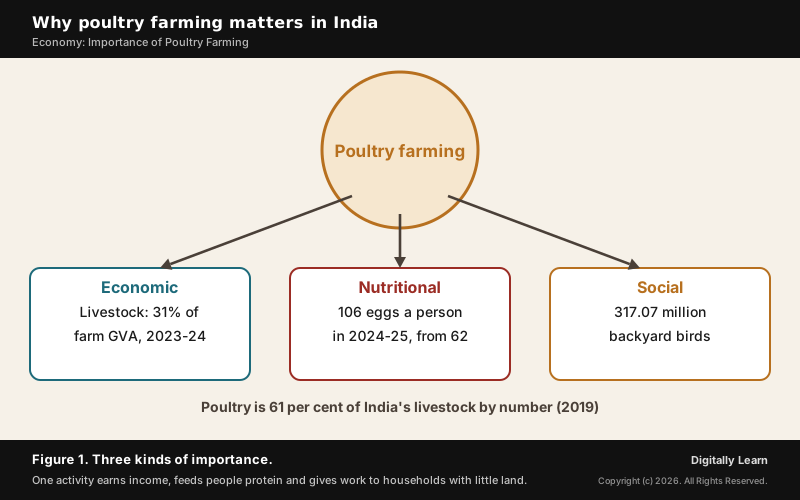
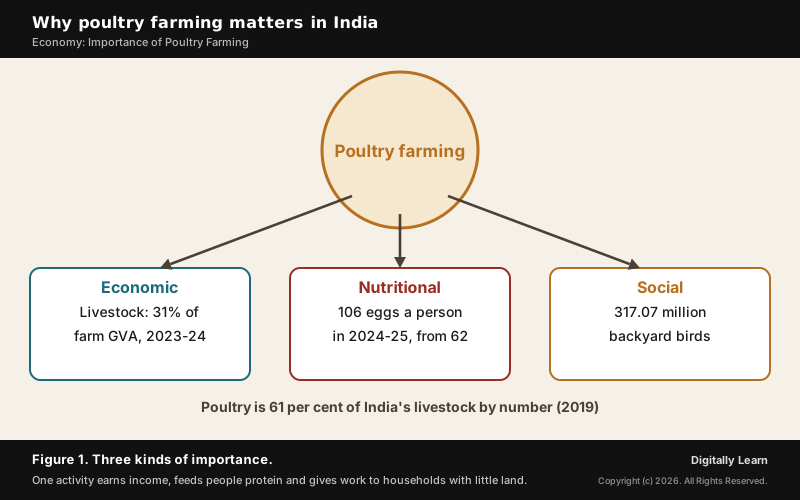
The importance of poultry farming in India lies in three things: it is the fastest-growing part of the livestock economy, it supplies eggs and chicken, sources of complete animal protein, and it gives income to small farmers, landless households and women through backyard poultry. India produced 149.11 billion eggs and 5.18 million tonnes of poultry meat in 2024-25, and livestock made up 31 per cent of the value added by agriculture and allied sectors in 2023-24.
Why Poultry Farming Matters: Economic, Nutritional and Social Importance
Three Reasons Poultry Farming Is Important in India
Poultry farming is important in India because it does three jobs at once. It earns income for farmers and the economy, it feeds people with good-quality protein, and it gives work to households that own little or no land. Figure 1 puts one fact from each side together.
How poultry grew into an industry is explained in meaning, history and features of Indian poultry growth, and its firms, markets and exports in the poultry industry in India.
Economic Importance of Poultry in India
Poultry in Livestock GVA and Agricultural Growth
The economic importance of the poultry sector in India comes through the livestock sector, which has become a main engine of farm growth. Its gross value added rose from Rs 5,10,411 crore in 2014-15 to Rs 15,05,615 crore in 2023-24 at current prices, a growth of 12.77 per cent a year that outpaced crops.
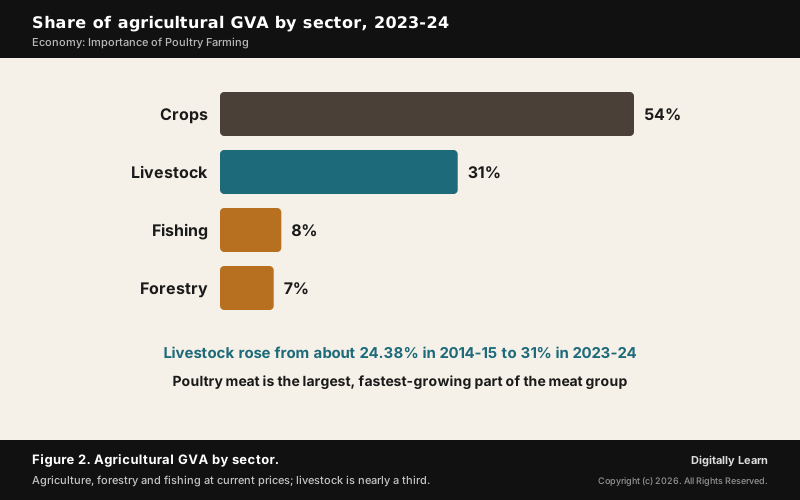
- Share of farm value: Livestock rose from about 24.38 per cent of agricultural GVA in 2014-15 to 31 per cent in 2023-24.
- Share of the economy: Livestock has held its share of national GVA at around 5.5 per cent.
- Growth in 2023-24: Livestock grew 10.32 per cent over the year, against 9.88 per cent for crops.
- Inside livestock: Milk gives about 64 per cent of livestock output; the meat group rose from 20.7 to 24.8 per cent of it between 2014-15 and 2023-24.
Poultry's place inside these numbers is clear. Within the meat group, poultry meat is the largest and fastest-growing segment, with almost 42 per cent of the value of meat output, and the meat group as a whole grew by 206 per cent over the decade. Eggs, wool and dung matter for rural livelihoods but are small in money terms. Yet livestock gets only about 2.19 per cent of the Union budget allocation for agriculture and allied sectors.
Growth of Egg and Poultry Meat Output Compared with Milk
Poultry output in India is now produced on a large scale. In 2024-25 it reached 149.11 billion eggs, 4.44 per cent more than the year before, and 5.18 million tonnes of poultry meat, about half of the 10.50 million tonnes of meat India produced. India ranks second in the world in eggs and fourth in meat.
| Period | Eggs | Milk | Meat |
|---|---|---|---|
| 2000-01 to 2010-11 | 5.58 | 4.22 | 10.15 |
| 2010-11 to 2020-21 | 6.83 | 5.60 | 6.09 |
| 2020-21 to 2024-25 | 5.13 | 4.24 | 4.53 |
Eggs have grown faster than milk in every period shown. Commercial farms produce 84.49 per cent of the eggs, and large companies such as Suguna, Venky's and the Amrit Group are increasing their sales to other parts of Asia and the Middle East. Demand at home keeps rising with middle-class incomes, urbanisation and changing diets.
Poultry Farming and Rural Employment
Poultry matters for jobs because Indian farms are crowded. A large share of the growing rural workforce must find work outside crop farming, and livestock is one of the most important ways to diversify. Diversifying reduces the risk of depending on crops alone and gives rural people steadier livelihoods.
- Small and marginal farmers: The livestock sector gives an alternative livelihood to over 70 million small and marginal farmers, including landless labourers.
- Steady income: Livestock provides stability in income, food security, transport, fuel and nutrition without disturbing the family’s other food production.
- Women: A significant number of women find employment in the livestock sector.
- Mixed farming: Indian farmers keep cattle, goats and fowl alongside crops, so poultry fits into an existing system.
- New entrepreneurs: The National Livestock Mission aims at employment through entrepreneurship in poultry and pays a 50 per cent capital subsidy, up to Rs 25 lakh, for rural poultry units.
The weakness is productivity. India's livestock numbers are impressive, but productivity is low compared with other countries, which calls for improved technology, better veterinary care and credit for small farmers and landless labourers. The schemes are covered in types of poultry farming and government schemes.
Nutritional Importance: Eggs and Chicken as Protein
Egg Protein: Quality, Quantity and Essential Amino Acids
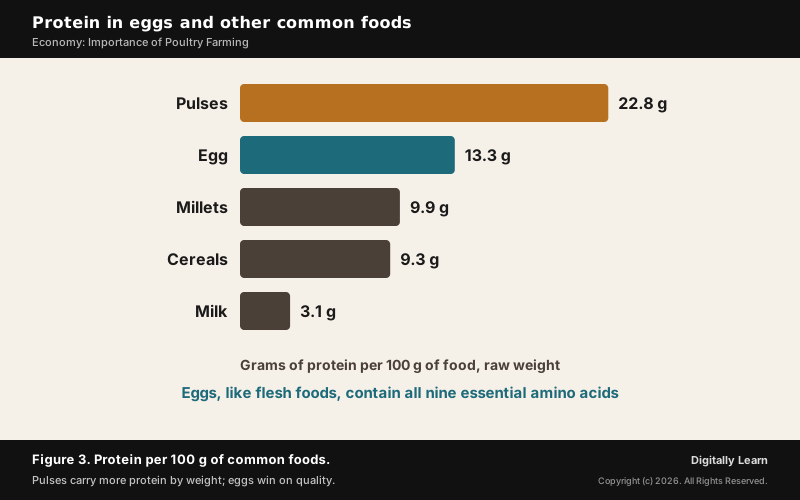
Eggs matter for nutrition because of the quality of their protein, not only its quantity. Of the twenty amino acids the body needs, nine are essential amino acids: the body cannot make them, so food must supply them. Animal foods such as milk, meat, fish and eggs give high-quality protein that is bioavailable and provides all the essential amino acids in the right proportions; flesh foods and eggs contain all nine.
| Food, per 100 g raw | Protein (g) | Energy (kcal) |
|---|---|---|
| Egg | 13.3 | 147 |
| Pulses | 22.8 | 323 |
| Cereals | 9.3 | 343 |
| Millets | 9.9 | 330 |
| Milk | 3.1 | 72 |
Pulses carry more protein by weight, but plant proteins are short of some essential amino acids, which is why vegetarian diets combine cereals and pulses in a ratio of 3 to 1. For non-vegetarians, a portion of dal can be replaced with fish, chicken, meat or egg, and eggs, fish and meat can be given in small quantities to children from eight months. Eggs are also a source of vitamin B12.
For most Indian adults the problem is quality rather than quantity. A typical adult diet already provides 60 to 70 g of protein a day, more than the body needs, but meeting the need for all the essential amino acids is the real challenge. Non-vegetarians can meet their quality protein needs with fish, poultry, meat or eggs; vegetarians with pulses, beans, peas and milk or curd.
Eggs, Iron and Anaemia in Mothers and Children
Eggs and flesh foods also help against anaemia. NFHS-5 found that more than half of the children and women, including pregnant women, were anaemic at the all-India level, despite a large increase in iron and folic acid tablets. Reducing anaemia by 3 per cent a year is one of the four targets of the National Nutrition Mission.
- Iron: Beans, dry fruits, eggs and flesh foods are good sources of iron; foods rich in vitamin C, such as guava and oranges, help the body absorb it.
- Pregnancy: A mother and the growing foetus need extra iron and folic acid for making red blood cells.
- Vitamin B12: It comes from curd or yoghurt, eggs and flesh foods, which is why strict vegetarian diets can fall short.
- Milk’s limit: Milk is the best source of usable calcium but a poor source of iron, so it cannot replace eggs or pulses for iron.
Poultry and Malnutrition: Breaking the Poverty Cycle
Malnutrition and poverty feed each other. A poor family eats a cheap, protein-poor diet; its children grow stunted and learn less; as adults they earn less, and the next generation starts poorer still. Cheap animal protein and extra household income can break this cycle at two points, which is where poultry comes in.
| Indicator, children under five | NFHS-4 (2015-16) | NFHS-5 (2019-21) | NFHS-6 |
|---|---|---|---|
| Stunting | 38.4% | 35.5% | 29.3% |
| Underweight | 35.8% | 32.1% | 31.8% |
| Wasting | 21.0% | 19.3% | Severe wasting 5.2% |
The National Nutrition Mission, POSHAN Abhiyaan, approved by the Union Cabinet in 2017 with a three-year budget of Rs 9,046.17 crore, set outcome targets: reduce stunting, under-nutrition and anaemia among young children, women and adolescent girls, and low birth weight, by 2, 2, 3 and 2 per cent a year. It aimed to bring stunting down from 38.4 per cent to 25 per cent by 2022. Its tools were convergence of schemes, real-time monitoring, measuring children's height at anganwadis and a Jan Andolan for awareness.
- Complete protein: Eggs supply all the essential amino acids, which growing children, pregnant women and lactating mothers need most.
- Household income: A backyard flock earns cash for a poor household without needing land.
- Programmes: Anganwadi hot meals and take-home rations reach children under six, pregnant women and lactating mothers; greater emphasis is now given to millets in them.
Micronutrient deficiencies and the anaemia programmes are covered in vitamins, minerals and malnutrition.
Social Importance of Poultry Farming
Backyard Poultry for Women, Landless and Tribal Households
The social importance of poultry lies mostly in backyard poultry, the small flocks kept by village households. Backyard poultry farming needs almost no land, little money and little bought feed, so it is open to families who cannot enter commercial farming. The 20th Livestock Census found 317.07 million backyard birds in 2019, about 46 per cent more than in 2012, while commercial poultry grew only 4.5 per cent.
- Low-input birds: Breeds such as Vanaraja, Gramapriya, CARI Gold and Kalinga Brown live on free range with little bought feed.
- Groups, not only individuals: Self-help groups, farmer producer organisations, cooperatives and joint liability groups can set up rural poultry units under the National Livestock Mission.
- Linkages: The mission aims to bring unorganised rural poultry into the organised sector with forward and backward linkages.
- Share of eggs: Backyard poultry still produces 15.51 per cent of India’s eggs, 23.13 billion in 2024-25.
Tribal breeds show the same pattern. The Kadaknath, a black-fleshed chicken from the Jhabua and Dhar districts of Madhya Pradesh, is mostly bred by rural and tribal people and received a geographical indication tag in 2018. When its numbers fell, the state started a breeding programme involving 500 families below the poverty line, with financial support.
How Government Support Reaches Rural Poultry Farmers
Government support for poultry reaches villages mainly through the National Livestock Mission (NLM). Its breed development sub-mission helps entrepreneurs set up rural poultry units, and it works through a chain that can be remembered as four steps:
- Parent farm: An entrepreneur keeps at least 1,000 parent layers of low-input birds suited to free range.
- Rural hatchery: The unit produces hatching eggs and hatches chicks.
- Mother unit: Chicks are reared for four weeks before they go out to village households.
- Hub and spoke: Preference goes to entrepreneurs who build forward and backward links, so one unit supplies many backyard keepers.
The Union government pays a one-time 50 per cent capital subsidy, up to Rs 25 lakh a unit, and the rest comes from a bank loan or the entrepreneur. The Small Industries Development Bank of India channels the subsidy to the lending bank in two instalments, the first after 25 per cent of the project cost has been spent and verified by the state. The wider set of schemes is covered in types of poultry farming and government schemes.
Pink Revolution: Poultry Meat and the Food Industry
The Pink Revolution refers to meat production in India, and poultry is now at its centre. Poultry gives about half of India's meat, and poultry meat is the fastest-growing segment of meat output. India is also the world's top exporter of buffalo meat, which earned US$2.3 billion from 11.08 lakh tonnes in 2012-13.
- Nutrition: Chicken is a flesh food with all the essential amino acids, which makes it valuable in a diet short of good-quality protein.
- Processing: Dressed, packaged and processed chicken adds value inside the country and needs cold chains, hygienic slaughter and testing.
- Health risks: Intensive rearing brings bird flu and antibiotic use, so food safety has to grow with the industry.
- Jobs: Processing, transport and retail employ people well beyond the farm.
For better nutrition and health, the food industry side of the Pink Revolution needs hygienic processing and disease control as much as more output. Disease and biosecurity are covered in poultry diseases in India.
Limits of Poultry's Impact: Where the Benefits Stop
Uneven Reach Across States and Households
The benefits of poultry are real but uneven. In 2024-25 an average Indian had access to 106 eggs a year, but that average hides very different diets: Andhra Pradesh had 514 eggs per person and Telangana 506, while Bihar had 29, Uttar Pradesh 26 and Assam 18. Only 8 states were above the national average.
- Where eggs are scarce: Large states such as Uttar Pradesh and Bihar have fewer than 30 eggs per person a year, so much of the population sees little of the gain.
- Commercial dominance: Commercial farms produce 84.49 per cent of the eggs, so most of the growth comes from large units rather than village flocks.
- Slowing growth: Egg output grew only 3.18 per cent in 2023-24, the lowest in recent years.
- Low public spending: Livestock gets about 2.19 per cent of the Union budget for agriculture and allied sectors despite giving 31 per cent of their value.
These gaps are where policy can add most: backyard units in the eastern and northern states, and eggs in nutrition programmes where diets are short of protein. The challenges are examined in problems of poultry farming in India.
Previous Year UPSC-CSE Questions
Previous Year UPSC-CSE Questions By the end you will be able to draft model answers for the following UPSC questions. Each question carries a collapsible framework showing how to approach it in the exam.
- UPSC Mains 2024 GS-IIPoverty and malnutrition create a vicious cycle, adversely affecting human capital formation. What steps can be taken to break the cycle?
Answer outline: how to structure the answer
What the question asks, the main arguments, relevant examples and the direction of the conclusion. This is not a full model answer.
Introduction: Poverty leads to protein-poor diets and stunting; stunted children learn and earn less, keeping the next generation poor.
Body (sub-themes to develop):
- Evidence: stunting 38.4 to 35.5 to 29.3 per cent (NFHS-4, 5, 6); underweight still 31.8 per cent.
- Nutrition steps: POSHAN Abhiyaan targets and convergence; anganwadi meals; complete protein such as eggs.
- Income steps: backyard poultry and livestock diversification for landless households and women (NLM subsidy, SHGs).
- Human capital: health, schooling and skills that compound over a lifetime.
Conclusion: Conclude that nutrition and income must be attacked together to break the cycle.
- UPSC Mains 2015 GS-IIILivestock rearing has a big potential for providing non-farm employment and income in rural areas. Discuss suggesting suitable measures to promote this sector in India.
Answer outline: how to structure the answer
What the question asks, the main arguments, relevant examples and the direction of the conclusion. This is not a full model answer.
Introduction: Livestock gave 31 per cent of agricultural gross value added in 2023-24 and an alternative livelihood to over 70 million small and marginal farmers.
Body (sub-themes to develop):
- Potential: crowded farms need non-crop work; livestock steadies income; women and landless households take part.
- Poultry as the clearest case: backyard birds up about 46 per cent between the 2012 and 2019 censuses; little land or money needed.
- Measures on inputs: low-input birds (Vanaraja, Gramapriya, CARI Gold), veterinary care, improved technology.
- Measures on finance and institutions: NLM 50 per cent capital subsidy up to Rs 25 lakh; SHGs, FPOs and JLGs; hub-and-spoke linkages.
Conclusion: Conclude that livestock can absorb rural labour if small producers get birds, credit, care and markets.
- UPSC Prelims 2017 Prelims-GSWhich of the following are the objectives of 'National Nutrition Mission'?
- 1. To create awareness relating to malnutrition among pregnant women and lactating mothers.
- 2. To reduce the incidence of anaemia among young children, adolescent girls and women.
- 3. To promote the consumption of millets, coarse cereals and unpolished rice.
- 4. To promote the consumption of poultry eggs.
Select the correct answer using the code given below:
How to approach this Prelims question
Approach: Step 1: The mission set outcome targets for stunting, under-nutrition, anaemia and low birth weight, so statement 2 (anaemia) is an objective. Step 2: its tools included a Jan Andolan for awareness, so statement 1 is one too. Step 3: promoting millets or poultry eggs was not among its stated objectives, so 3 and 4 are out. Answer (a).
Trap to watch: Millets and eggs are good foods and appear in nutrition programmes, but the 2017 mission's objectives were outcome targets and awareness, not the promotion of particular foods.
Key facts to recall:
- (a) 1 and 2 only: right. Awareness among pregnant women and lactating mothers, and lower anaemia, were objectives.
- (b) 1, 2 and 3 only: wrong. Promoting millets and unpolished rice was not a stated objective.
- (c) 1, 2 and 4 only: wrong. Promoting poultry eggs was not a stated objective.
- (d) 3 and 4 only: wrong. It leaves out both real objectives and keeps both foods.
Answer signal: Option (a): the mission targeted outcomes (anaemia among them) and awareness, not particular foods.
Sources and Further Reading
- Department of Animal Husbandry and Dairying: Basic Animal Husbandry Statistics 2025
- PIB: Release of Basic Animal Husbandry Statistics 2025 (26 November 2025)
- PIB: 20th Livestock Census released (16 October 2019)
- ICMR-National Institute of Nutrition: Dietary Guidelines for Indians, 2024
- PIB: Union Health Ministry releases National Family Health Survey-6 (29 May 2026)
- PIB: Steady improvement in indicators for malnutrition (20 December 2023)
- PIB: Union Health Ministry releases NFHS-5 Phase II findings (24 November 2021)
- Prime Minister's Office: Cabinet approves setting up of National Nutrition Mission (1 December 2017)
- NCERT: Indian Economic Development (Class XI), Chapter 5, Rural Development
- Department of Animal Husbandry and Dairying: National Livestock Mission operational guidelines (January 2025)
- Wikipedia: Animal husbandry in India
- Wikipedia: Pink Revolution in India
- Wikipedia: Kadaknath
- UPSC: Previous year question papers
Editorial Disclaimer
This article uses the Basic Animal Husbandry Statistics, the ICMR-NIN Dietary Guidelines for Indians, the National Family Health Survey releases and the other sources listed below. Figures are official estimates and change with each survey.