


Overview
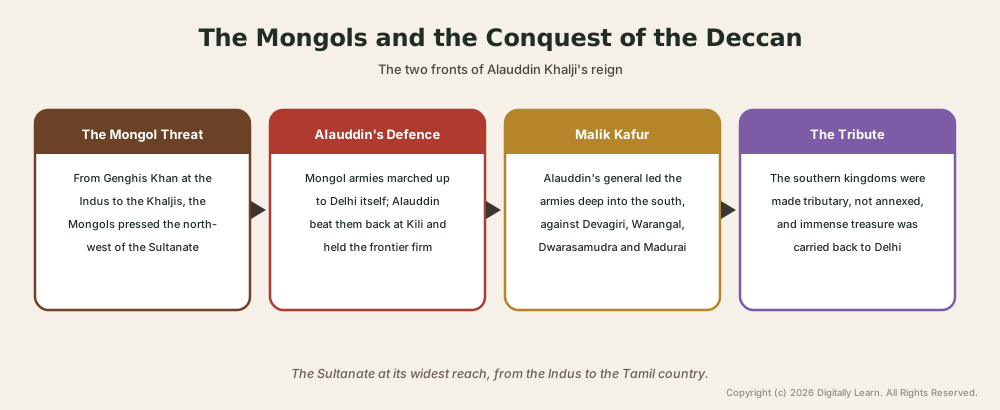
The reign of Alauddin Khalji was a war on two fronts. From the north-west the Mongols of the Chagatai Khanate invaded again and again, and once marched up to Delhi itself; Alauddin beat them back, above all at the battle of Kili in 1299, and held the frontier. At the same time his great general Malik Kafur led the armies of the Sultanate deep into the south, against the Yadavas of Devagiri, the Kakatiyas of Warangal, the Hoysalas of Dwarasamudra and the Pandyas of Madurai, who were made tributary. This part covers the Mongol threat and its defence, the conquest of the Deccan, and the exam focus.
The Mongol Threat to the Sultanate
From Genghis Khan to the Khaljis
What is the significance of the Mongol threat: for a century the Mongols pressed on the north-west of India, and the survival of the Sultanate turned on holding them back.
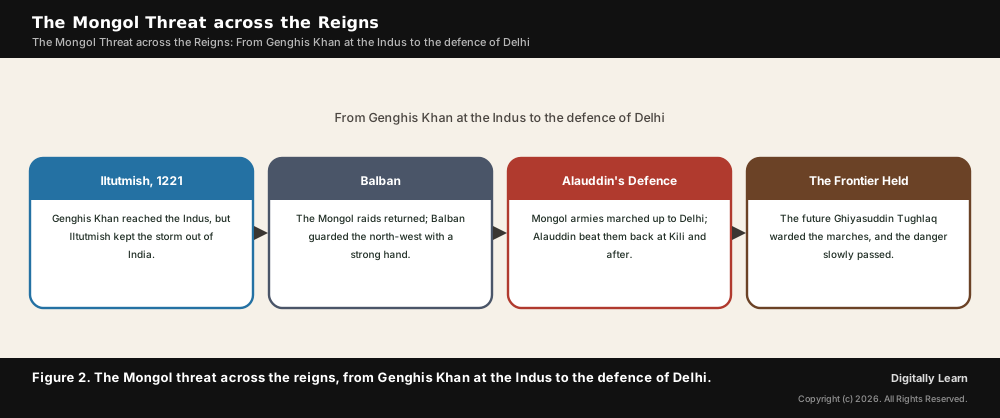
The Mongol storm had first reached India under Iltutmish, when Genghis Khan came to the Indus in 1221, as Part 1 told. Through the years that followed the Mongols of the Chagatai Khanate raided the north-west again and again; Balban had spent his strength in guarding that frontier, and the danger grew sharper still under the Khaljis.
The first Mongol invasion of India, it must be marked, came not under the Khaljis but earlier, under Iltutmish. The table below sets out the Mongol pressure across the reigns of the early Sultanate.
| Reign | The Mongol Pressure |
|---|---|
| Iltutmish | Genghis Khan reached the Indus in 1221; the storm was kept out. |
| Balban | Repeated raids on the north-west, held back with a strong hand. |
| Jalal-ud-din Khalji | Mongol incursions met and turned back early in the Khalji age. |
| Alauddin Khalji | The gravest assaults, one marching up to Delhi, all repelled. |
Alauddin's Defence of Delhi
Distinguishing the gravest danger: under Alauddin the Mongols struck hardest, and one of their armies marched up to the walls of Delhi before it was thrown back.
The Mongols came in force. Alauddin beat them at the battle of Kili, near Delhi, in 1299; a few years later a Mongol army under Targhi marched up to Delhi itself and besieged it, and was driven off; and at Amroha and elsewhere their hosts were broken. To meet them Alauddin kept the vast standing army that his market control, in Part 3, was built to pay for.
He also strengthened the frontier. He repaired the forts of the north-west and set able wardens over the marches, among them the soldier who would one day rule as Ghiyasuddin Tughlaq. By the end of his reign the Mongol tide had been turned, and the danger that had hung over the Sultanate for a century began at last to ebb. The figure below sets out the Mongol threat across the reigns.
The Conquest of the Deccan
Malik Kafur and the Four Kingdoms of the South
What is the significance of the Deccan conquest: it carried the arms of the Delhi Sultanate deeper into the south than any northern power had ever reached, as far as the Pandya country.
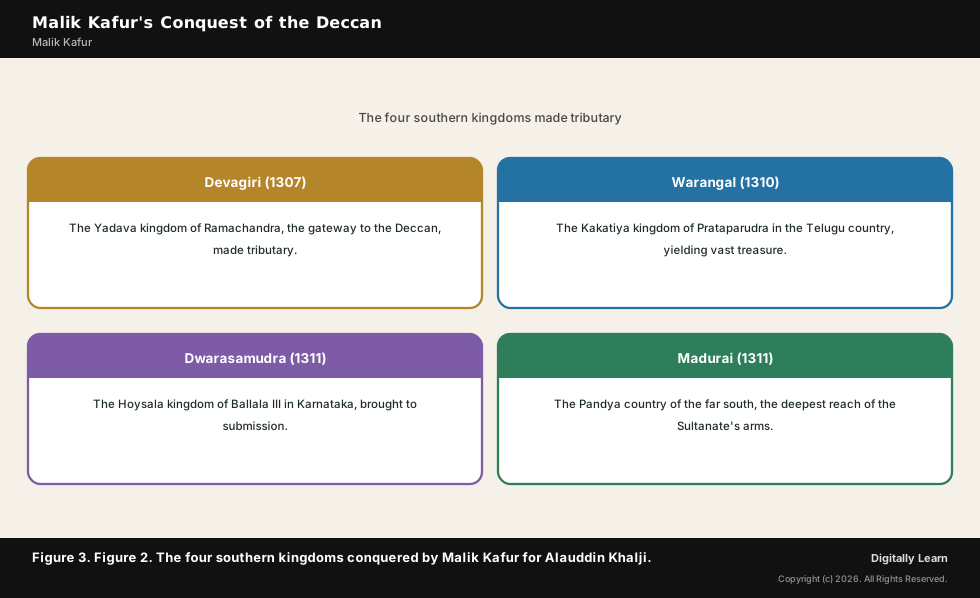
Alauddin's instrument in the south was his general Malik Kafur. Beginning in 1307 he led the armies of the Sultanate against the four great kingdoms of the Deccan and the far south: the Yadavas of Devagiri, the Kakatiyas of Warangal, the Hoysalas of Dwarasamudra, and the Pandyas of Madurai.
Each in turn was humbled. Devagiri, the gateway to the Deccan, was made tributary in 1307; Warangal yielded in 1310; Dwarasamudra in Karnataka and the Pandya country of Madurai both fell in 1311. The table below sets out the four campaigns, their kingdoms and their kings.
| Capital | Dynasty | Year |
|---|---|---|
| Devagiri | The Yadavas, under Ramachandra. | 1307 |
| Warangal | The Kakatiyas, under Prataparudra. | 1310 |
| Dwarasamudra | The Hoysalas of Karnataka, under Ballala III. | 1311 |
| Madurai | The Pandyas of the far south. | 1311 |
Tribute, Not Annexation
Distinguishing the nature of the conquest: Alauddin did not annex the south to his empire; he made its kings his tributaries and left them on their thrones.
The aim was wealth and submission, not rule. Alauddin let the conquered kings keep their lands, on the promise of a yearly tribute and a great first payment of treasure, so that Malik Kafur came back to Delhi laden with the gold of the south. The direct annexation of the Deccan would wait for the Tughlaqs, in Part 5.
Yet the reach was momentous. For the first time a power of the north had carried its arms to the Tamil country and made the whole peninsula bow to Delhi. It opened the Deccan to the north, and from the troubles that followed there would later rise the kingdoms of the Bahmanis and of Vijayanagara.
The Two Fronts of Alauddin's Reign
The Mongol Frontier and the Deccan Campaigns
What is the significance of the two fronts: at the very time Alauddin was holding the Mongols at Delhi, he was sending his armies a thousand miles south, and his treasury bore the weight of both.
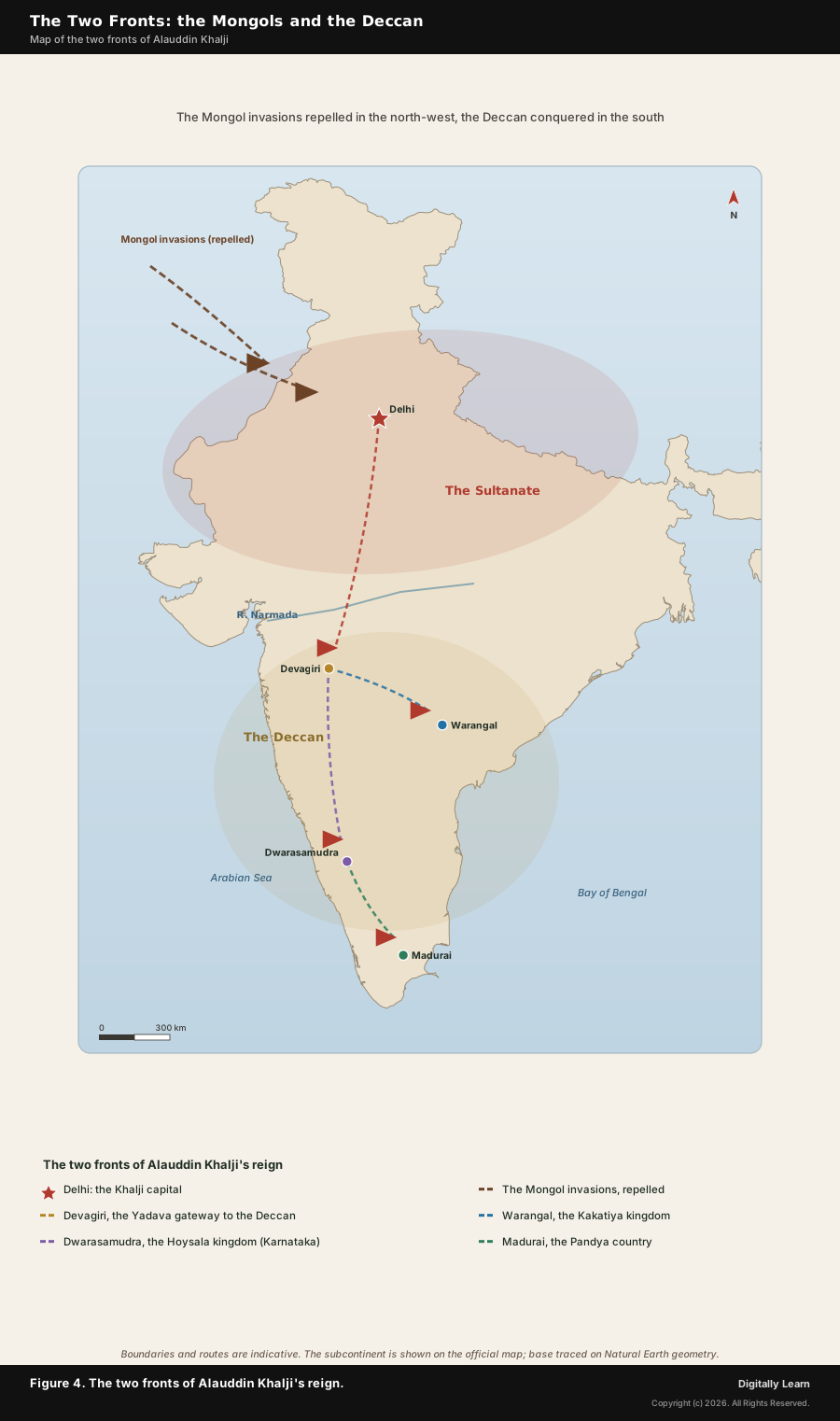
The map below joins the two stories. In the north-west the Mongol arrows beat against the frontier and are turned back near Delhi; from Delhi the Deccan arrows of Malik Kafur reach south to Devagiri and on to Warangal, Dwarasamudra and Madurai. The one war was defensive and the other a conquest, but both were paid for by the same disciplined revenue.
It was this double effort, the shield in the north-west and the sword in the south, that marked the height of the Sultanate's power. No sultan before Alauddin had held so much, and the cost of holding it, in armies and in gold, helps to explain the strains that broke upon his successors. The map sets out the whole of this two-front reign.
UPSC Relevance and Exam Focus
Where the Mongols and the Deccan Fit in the UPSC-CSE Syllabus
This topic belongs to General Studies Paper I: medieval Indian history, and the Mongol invasions and the conquest of the Deccan are both regular grounds for questions.
The questions most often test which sultan faced the Mongols, the reach of Malik Kafur into the south, and the kingdoms and capitals of the Deccan, such as Dwarasamudra of the Hoysalas.
Several linked points recur and are worth holding in working memory:
- The first Mongol invasion: Under Iltutmish (Genghis Khan, 1221), not under the Khaljis.
- Alauddin and the Mongols: A Mongol assault reached Delhi and was repelled, at Kili in 1299.
- Malik Kafur: The general who carried the war into the Deccan and the far south.
- The four kingdoms: Devagiri (Yadava), Warangal (Kakatiya), Dwarasamudra (Hoysala), Madurai (Pandya).
- Dwarasamudra: The Hoysala capital, in Karnataka, not in Maharashtra.
A 2022 question on the Mongol invasions held that only the statement about Alauddin was correct: the first invasion was not under Jalal-ud-din Khalji but under Iltutmish (Part 1), a Mongol assault did besiege Delhi under Alauddin, and the claim about Muhammad bin Tughlaq was not correct, so the answer was the second statement only.
A 2020 question on famous places and their states turned in part on Dwarasamudra, the Hoysala capital, which lies in Karnataka and not in Maharashtra; the trap was to misplace it. Holding the four Deccan capitals and their modern states is therefore worth the trouble.
Previous Year UPSC-CSE Questions
Previous Year UPSC-CSE Questions By the end you will be able to draft model answers for the following UPSC questions. Each question carries a collapsible framework showing how to approach it in the exam.
- UPSC Prelims 2022 GS-IWith reference to Indian history, consider the following statements about the Mongol invasions of India:
- The first Mongol invasion of India happened during the reign of Jalal-ud-din Khalji.
- During the reign of Ala-ud-din Khalji, one Mongol assault marched up to Delhi and besieged the city.
- Muhammad-bin-Tughlaq temporarily lost portions of north-west of his kingdom to Mongols.
Which of the statements given above is/are correct?
How to approach this Prelims question
Approach: Match each statement to the right reign: the first invasion was under Iltutmish (not Jalal-ud-din); the assault on Delhi was under Alauddin (correct); the Tughlaq claim is not correct.
Trap to watch: Do not assign the first Mongol invasion to Jalal-ud-din Khalji; Genghis Khan reached the Indus far earlier, under Iltutmish.
Key facts to recall:
- The first Mongol invasion was under Iltutmish (Genghis Khan, 1221).
- A Mongol assault besieged Delhi under Alauddin and was repelled.
- Only statement 2 is correct: the answer is 2 only.
Answer signal: 2 only.
- UPSC Prelims 2020 GS-IWith reference to the history of India, consider the following pairs of a famous place and its present state:
- Bhilsa – Madhya Pradesh
- Dwarasamudra – Maharashtra
- Girinagar – Gujarat
- Sthanesvara – Uttar Pradesh
Which of the pairs given above are correctly matched?
How to approach this Prelims question
Approach: Test each pair: Bhilsa (Madhya Pradesh) correct; Dwarasamudra (Karnataka, not Maharashtra) wrong; Girinagar (Gujarat) correct; Sthanesvara (Haryana, not Uttar Pradesh) wrong.
Trap to watch: Do not place Dwarasamudra in Maharashtra; the Hoysala capital is in Karnataka. Sthanesvara is in Haryana, not Uttar Pradesh.
Key facts to recall:
- Dwarasamudra, the Hoysala capital, is in Karnataka.
- Bhilsa is in Madhya Pradesh; Girinagar (Girnar) in Gujarat.
- Only pairs 1 and 3 are correctly matched.
Answer signal: 1 and 3 only.
Sources and Further Reading
Editorial Disclaimer
This article is for UPSC preparation. The Mongol wars and the Deccan campaigns rest on the Persian chronicles, and the account follows the standard scholarship on the period.