


Overview
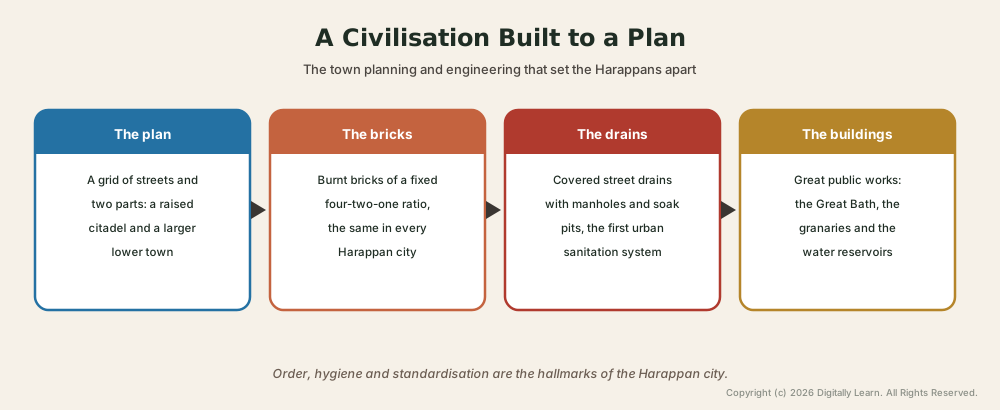
The town planning of the Harappans is their most celebrated achievement. Their cities were laid out on a careful grid, with the streets crossing at right angles, and were divided into a raised citadel in the west, which held the great public buildings, and a larger lower town in the east, where the people lived. The houses were built of burnt bricks of a fixed four-two-one proportion; a remarkable system of covered drains ran beneath the streets; and great works such as the Great Bath of Mohenjo-daro and the reservoirs of Dholavira show an engineering skill far ahead of its age.
The Grid Street Plan and the Citadel-Lower Town Division
The Chessboard Grid of Streets
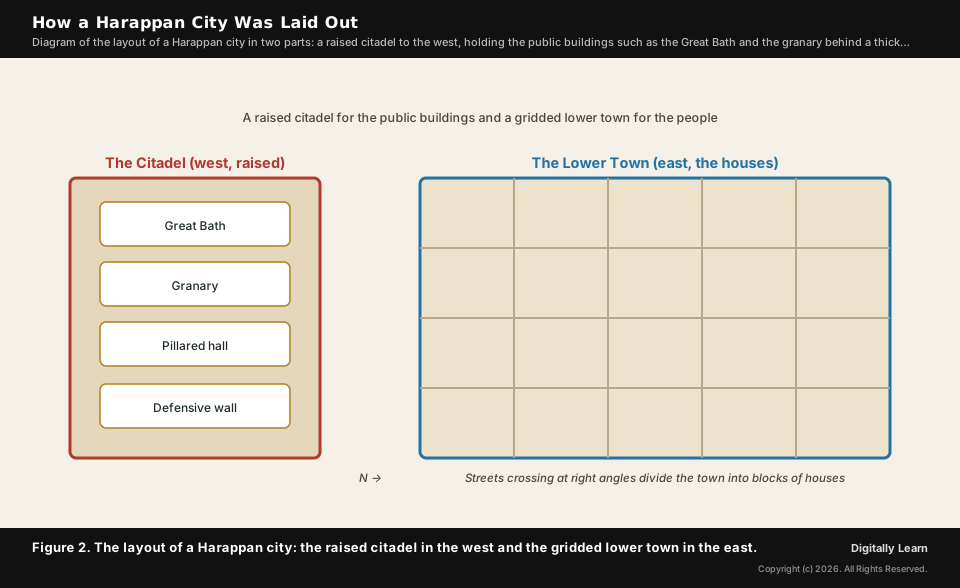
What is the significance of the grid plan: the most striking feature of a Harappan city is that it was planned before it was built. The streets were laid out on a grid, the main ones running north to south and east to west and crossing at right angles, dividing the town into neat rectangular blocks.
Distinguishing the order: this order was not an accident but a rule followed in cities hundreds of kilometres apart, from Harappa to Mohenjo-daro, showing a shared idea of how a city should be built. Few civilisations of the ancient world planned their towns so deliberately.
The Citadel and the Lower Town
What is the significance of the two parts: almost every Harappan city was divided into two distinct parts, each on its own mound, which tells us much about how the society was organised.
Distinguishing the two: to the west stood the citadel, a smaller mound raised on a platform and often walled, which held the great public buildings such as the Great Bath and the granary. To the east lay the larger lower town, where the ordinary people lived in their gridded blocks of houses. Dholavira, unusually, was divided into three parts rather than two.
Standardised Burnt Bricks and the 4:2:1 Indus Proportion
The Uniform Burnt Brick
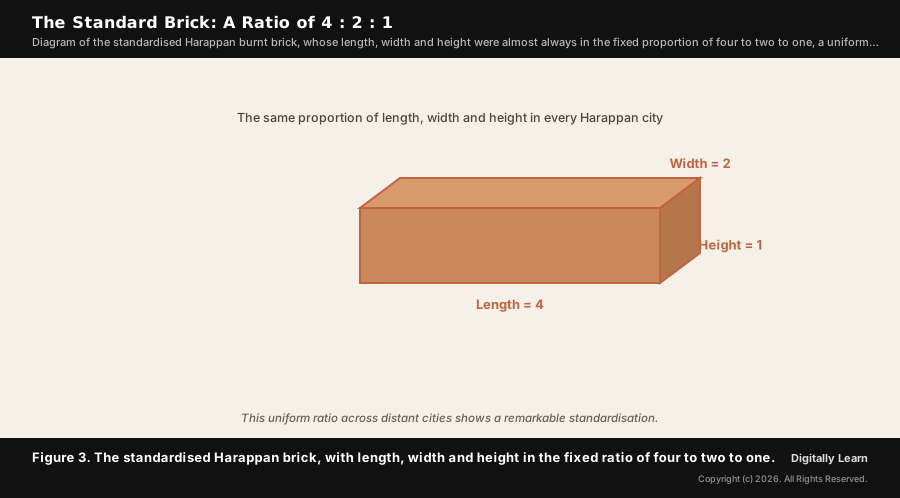
What is the significance of the bricks: the Harappans built in burnt brick on a scale no earlier people had attempted, and the uniformity of their bricks is one of the clearest signs of their planning.
Distinguishing the ratio: the bricks were almost always made in a fixed proportion, with the length, width and height in the ratio of four to two to one. This same ratio was used in cities far apart, a standardisation that points to common weights, measures and rules across the whole civilisation.
Drainage, Sewerage and the World's First Urban Sanitation System
The Covered Drains Beneath the Streets
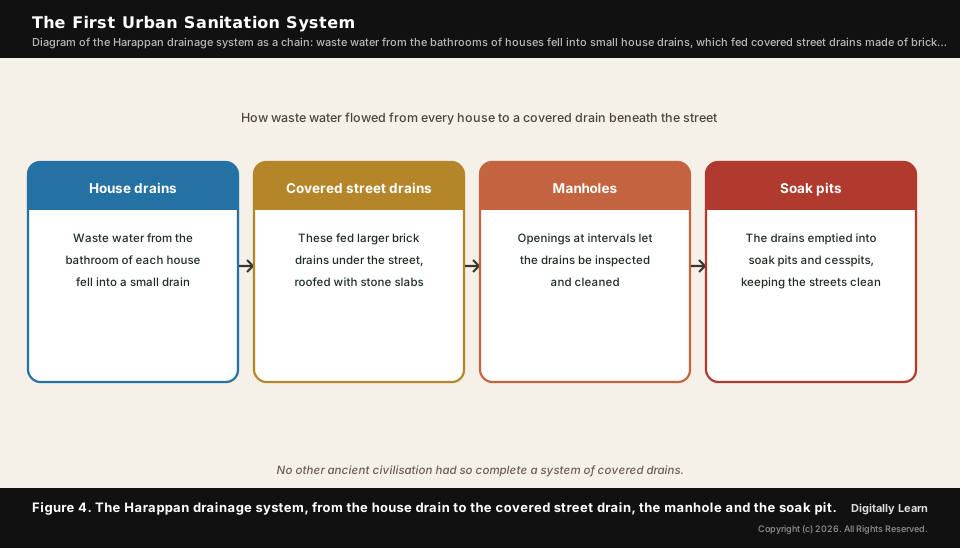
What is the significance of the drainage: the Harappan drainage system is perhaps the most remarkable feature of all, for no other ancient civilisation gave such care to the removal of waste water and the cleanliness of its towns.
Distinguishing the system: waste water from the bathrooms of the houses fell into small drains that fed larger covered drains running beneath the streets, built of brick and roofed with stone slabs. The drains were fitted with manholes for cleaning and emptied into soak pits, giving the Harappans what is often called the first urban sanitation system in the world.
Public Buildings: The Great Bath, the Granaries and the Warehouses
The Great Bath of Mohenjo-daro
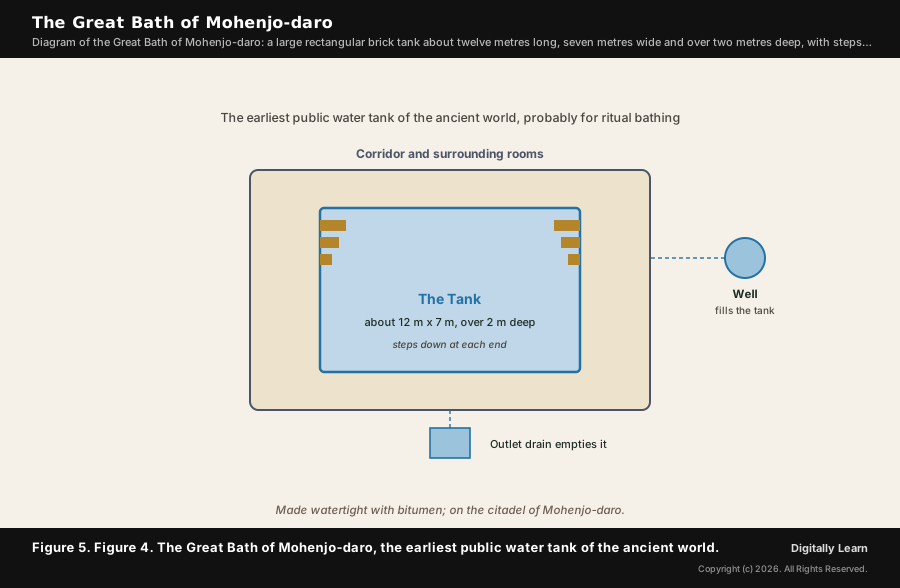
What is the significance of the Great Bath: the most famous Harappan building is the Great Bath on the citadel of Mohenjo-daro, the earliest public water tank known from the ancient world.
Distinguishing its build: the tank, about twelve metres long, seven wide and over two deep, had steps leading down at each end and was made watertight with a layer of bitumen. It was filled from a nearby well and emptied by a drain, and was surrounded by rooms and a corridor. Most scholars think it was used for ritual bathing, a hint of religious practice.
The Granaries and the Question of Their Use
What is the significance of the granaries: large brick structures at Harappa and Mohenjo-daro have long been called granaries, taken as the state's stores of grain, a sign of an organised collection of surplus.
Distinguishing the debate: their exact use is, however, debated. Some scholars doubt whether they really held grain at all, and the question remains open, a useful reminder that even the most familiar Harappan buildings are still being argued over. Alongside them stood warehouses and pillared halls whose purpose is also uncertain.
| Feature | What it was |
|---|---|
| Grid plan | Streets crossing at right angles in rectangular blocks |
| Citadel | The raised western mound holding the public buildings |
| Lower town | The larger eastern area where the people lived |
| Burnt bricks | Standardised bricks in the four-two-one ratio |
| Drainage | Covered street drains with manholes and soak pits |
| Great Bath | The watertight tank on the citadel of Mohenjo-daro |
| Granaries | Large brick structures whose use is debated |
Water-Harvesting and Reservoir Engineering at Dholavira
Catching Every Drop of Water at Dholavira
What is the significance of the water works: in the dry land of Kutch, the Harappans of Dholavira showed their engineering at its most advanced in the management of water, the most precious resource of all.
Distinguishing the system: across the seasonal streams they built bunds and check-dams to catch the rain, and led the water through channels into a series of great stone-built reservoirs that ringed the city. This careful harvesting of every drop, the earliest such system known, is why Dholavira is honoured as a UNESCO World Heritage Site.
UPSC Relevance and Exam Focus
Where This Fits in the UPSC-CSE Syllabus
This topic belongs to General Studies Paper I: ancient Indian history and culture, and Harappan town planning is one of the highest-yield themes of all, examined in both the Prelims and the Mains and often linked to present-day urban problems of water and sanitation.
For Prelims, hold the key facts: the grid plan and the citadel-lower town division; the four-two-one brick ratio; the covered drainage system; and the Great Bath at Mohenjo-daro.
For Mains, the planning of the Harappan cities is a ready point of comparison with modern Indian urbanisation, on water harvesting, drainage and the value of building to a plan.
Recurring linked concepts an aspirant should keep in working memory:
- The grid plan: streets crossing at right angles in blocks.
- The 4:2:1 brick: the standardised proportion of the burnt brick.
- The covered drains: the first urban sanitation system.
- The Great Bath: the great watertight tank at Mohenjo-daro.
A common Prelims trap is to forget that the Great Bath is at Mohenjo-daro, not Harappa, and that the bricks were burnt and standardised, not sun-dried and irregular.
A common Mains trap is to praise the planning without drawing the link the examiner wants: the Harappan care for drainage and water harvesting speaks directly to the needs of India's crowded modern cities.
Previous Year UPSC-CSE Questions
Previous Year UPSC-CSE Questions By the end you will be able to draft model answers for the following UPSC questions. Each question carries a collapsible framework showing how to approach it in the exam.
- UPSC Mains 2014 GS-ITo what extent has the urban planning and culture of the Indus Valley Civilization provided inputs to the present-day urbanization? Discuss.
How to structure the answer in the exam
Introduction: Open with the Harappans as the first town planners of the subcontinent and the relevance of their ideas to today's cities.
Body (sub-themes to develop):
- Grid layout and zoning: the citadel-lower town division as an early form of land-use planning.
- Drainage and sanitation: the covered drains as a model for the water-and-sanitation needs of modern cities.
- Water harvesting: Dholavira's reservoirs as a precedent for urban rainwater harvesting.
- Standardisation: uniform bricks and measures as an early building code.
Conclusion: Conclude that while the scale differs, the Harappan stress on planning, drainage and water harvesting still offers real inputs to present-day urbanisation.
Sources and Further Reading
Editorial Disclaimer
This article is for UPSC preparation. The function of some Harappan buildings, such as the so-called granaries, remains debated among archaeologists. Verify specific figures against standard histories before relying on them.