


Overview
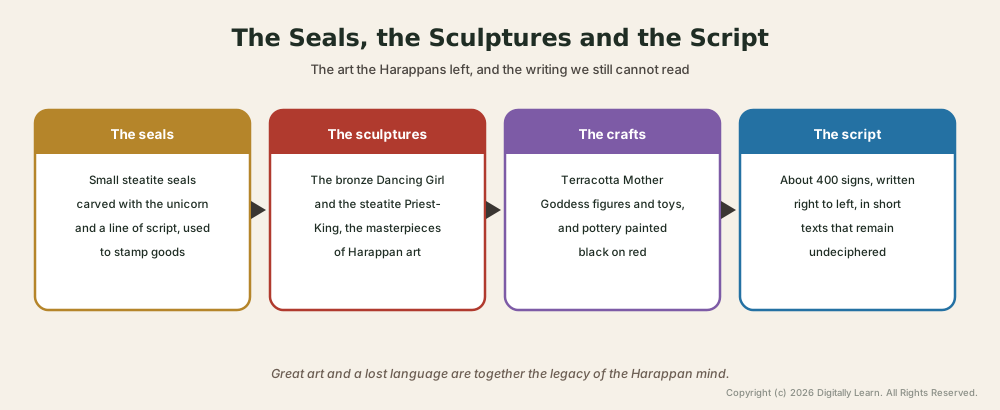
The Harappans left some of the finest art of the ancient world. Their signature objects are the small square seals of steatite, carved with the one-horned unicorn and a line of writing, used to stamp goods in trade. In sculpture they reached great heights in the bronze Dancing Girl and the steatite Priest-King of Mohenjo-daro, and they made countless terracotta figures and fine painted pottery. Above all hangs the riddle of the Indus script: about four hundred signs, written from right to left in short inscriptions, with no bilingual key, which remains undeciphered, so that the Harappans still cannot speak to us in their own words.
Steatite Seals, the Unicorn Motif and Their Function
The Square Seals and Their Animals
What is the significance of the seals: the seals are the most characteristic objects of the Harappan civilisation, found in their thousands, and they are at once its finest small art and the carriers of its writing.
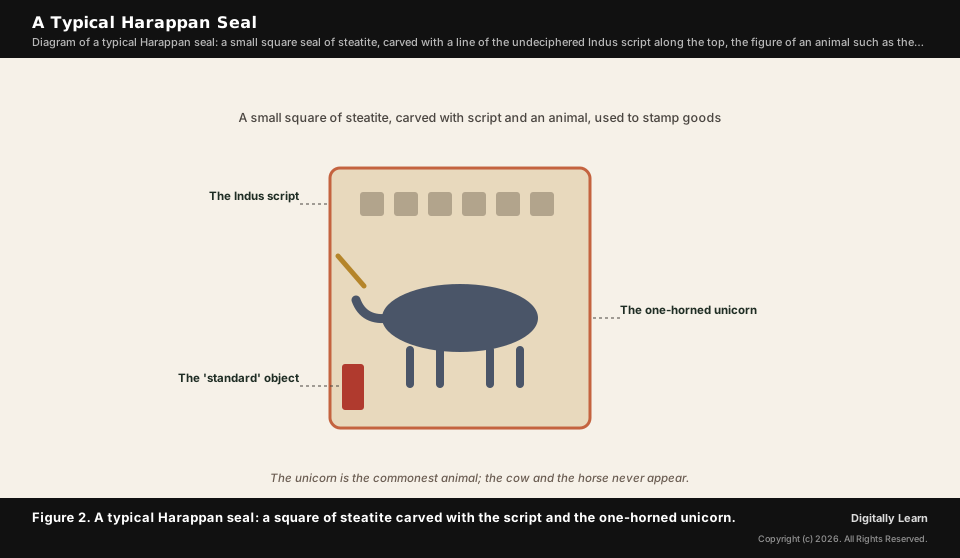
Distinguishing the seals: a typical seal is a small square of steatite, a soft stone, carved with a line of the Indus script across the top and the figure of an animal in the centre. The commonest animal by far is the one-horned unicorn; others are the humped bull, the elephant, the rhinoceros and the tiger. Strikingly, the cow and the horse never appear, a favourite point of the examiner.
What is the significance of their use: the seals were not ornaments but tools of trade. Pressed into wet clay, they left a sealing that marked a bundle of goods with its owner, so the seal was a sign of property and a help to the administration of commerce, which is why so many turn up at the trading sites.
Masterpieces in Bronze and Stone: The Dancing Girl and the Priest-King
The Great Sculptures of the Harappans
What is the significance of the sculptures: though small in number, the Harappan sculptures are of the highest quality, and two of them have become symbols of the civilisation itself.
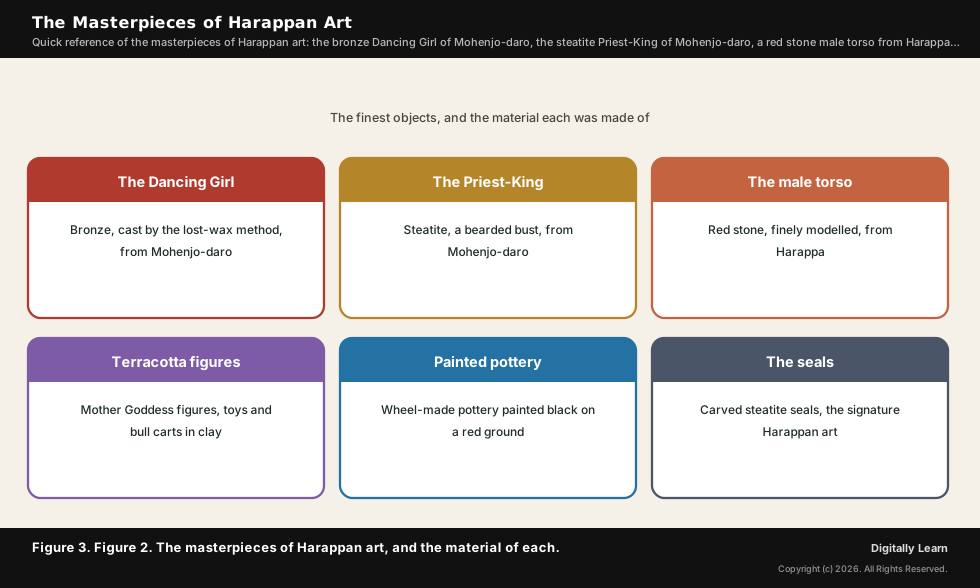
Distinguishing the masterpieces: the most famous is the Dancing Girl of Mohenjo-daro, a small bronze figure of a girl with one hand on her hip, cast by the difficult lost-wax method. The other is the so-called Priest-King, a bearded bust carved in steatite, also from Mohenjo-daro. A finely modelled male torso in red stone comes from Harappa, showing the same mastery of the human form.
| Object | Material | Site |
|---|---|---|
| The Dancing Girl | Bronze (lost-wax) | Mohenjo-daro |
| The Priest-King | Steatite | Mohenjo-daro |
| The male torso | Red stone | Harappa |
| Mother Goddess figures | Terracotta | Many sites |
| The seals | Steatite | Many sites |
Terracotta Figurines, Painted Pottery and the Decorative Arts
The Art of Clay and Pottery
What is the significance of the terracotta: while the great sculptures are rare, the Harappans made terracotta objects in vast numbers, and these tell us much about their daily life and beliefs.
Distinguishing the clay art: from clay they made the Mother Goddess figures, models of animals, and a delightful range of toys, including little carts with wheels, whistles and rattles, which show a tender care for children. Their pottery, made on the wheel, was often painted black on a red ground with designs of plants, animals and geometric patterns, and they also made fine beads and ornaments.
The Indus Script: Signs, Direction and the Decipherment Problem
The Writing We Cannot Read
What is the significance of the script: the Indus script is one of the great unsolved problems of the ancient world. Until it is read, the Harappans remain a people without a voice, known only through their things, and so much of what we say about them is guesswork.
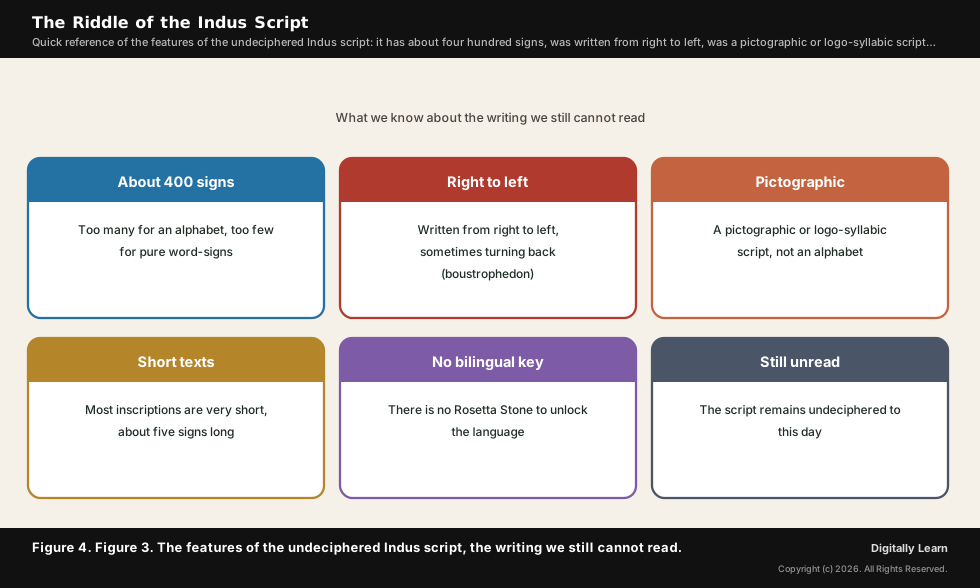
Distinguishing its features: the script has about four hundred signs, too many to be an alphabet and so most likely pictographic or logo-syllabic, where signs stand for words or syllables. It was usually written from right to left, sometimes turning back on the next line. Almost all the inscriptions are very short, about five signs long, and there is no long text and no bilingual key like the Rosetta Stone to unlock it.
Why It Remains Undeciphered, and the Rival Theories
Distinguishing the difficulty: the script defeats every attempt at decipherment because the texts are too short to give patterns, the underlying language is unknown, and there is no bilingual to compare. Many claims to have read it have been made, but none is accepted.
What is the significance of the rival theories: scholars are divided on what the language even was. One school, led by Asko Parpola and Iravatham Mahadevan, argues that it was an early Dravidian tongue. Others have suggested an Indo-Aryan language. A third group, the most provocative, argues that the symbols may not be true writing at all, but a system of non-linguistic signs. The question is open.
UPSC Relevance and Exam Focus
Where This Fits in the UPSC-CSE Syllabus
This topic belongs to General Studies Paper I: ancient Indian history and culture, and Harappan art, especially the seals, the Dancing Girl and the script, is one of the most frequently examined areas in the Prelims.
For Prelims, hold the key facts: the seals were of steatite and most often show the unicorn, but never the cow or the horse; the Dancing Girl is bronze and the Priest-King steatite; and the Indus script, of about 400 signs, was written right to left and is undeciphered.
For Mains, the Harappan seals and sculptures are good examples of the high art of the earliest Indian civilisation, and the undeciphered script is a striking example of the limits of our knowledge of the past.
Recurring linked concepts an aspirant should keep in working memory:
- The seals: steatite, the unicorn, used to stamp goods.
- The Dancing Girl: bronze; the Priest-King: steatite.
- The animals: bull, elephant, rhino and tiger, but not the cow.
- The script: about 400 signs, right to left, undeciphered.
A common Prelims trap is on the seal animals: the unicorn, bull, elephant, rhinoceros and tiger appear, but the cow does not, and neither does the horse.
A common Mains trap is to claim the Indus script has been read. It has not; despite many attempts, it remains undeciphered.
Previous Year UPSC-CSE Questions
Previous Year UPSC-CSE Questions By the end you will be able to draft model answers for the following UPSC questions. Each question carries a collapsible framework showing how to approach it in the exam.
- UPSC Prelims 2001 GS-IWhich one of the following animals was NOT represented on the seals and terracotta art of the Harappan culture?
How to approach this Prelims question
Approach: Recall which animals are shown on the Harappan seals and which is missing.
Trap to watch: The elephant, rhinoceros and tiger all appear on the seals; the cow does not (nor does the horse).
Key facts to recall:
- The unicorn, humped bull, elephant, rhinoceros and tiger appear on the Harappan seals.
- The cow and the horse are not represented on the seals.
Answer signal: Cow.
Sources and Further Reading
Editorial Disclaimer
This article is for UPSC preparation. The Indus script is undeciphered and the language behind it is unknown; all readings and identifications of the language remain debated. Verify specific details before relying on them.