


Overview
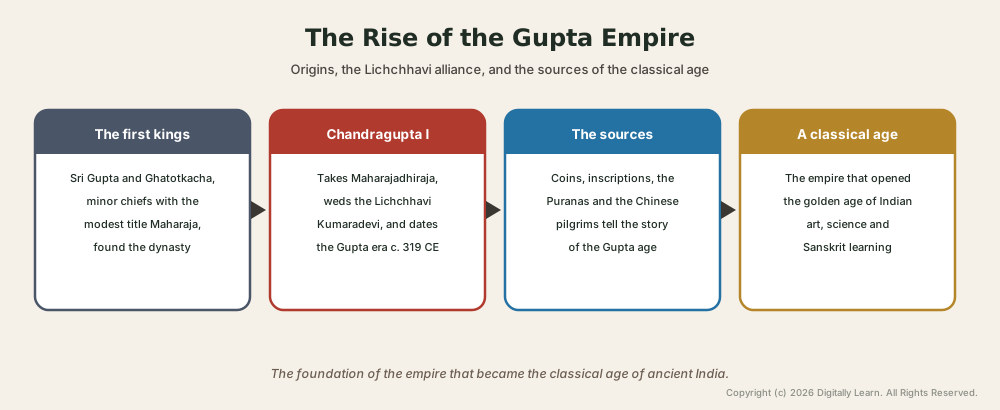
The Gupta Empire, which rose in the fourth century CE, opened what is often called the classical age of ancient India. It began with minor kings, Sri Gupta and Ghatotkacha, who bore only the modest title Maharaja; the real founder of its greatness was Chandragupta I, who took the imperial title Maharajadhiraja and married into the powerful Lichchhavi clan. From his accession the Gupta era is reckoned, from about 319 CE. The history of the Guptas is known from a wealth of sources, their fine gold coins, their inscriptions, the Puranic king-lists, and the accounts of the Chinese pilgrims. This first part covers the origins of the dynasty, the founding of the empire under Chandragupta I, and the sources from which its story is told.
The Origins and Setting of the Gupta Dynasty
Sri Gupta and Ghatotkacha: The First Gupta Kings
What is the significance of the Gupta origins: the dynasty that opened the classical age began, like many great houses, with obscure and minor kings.
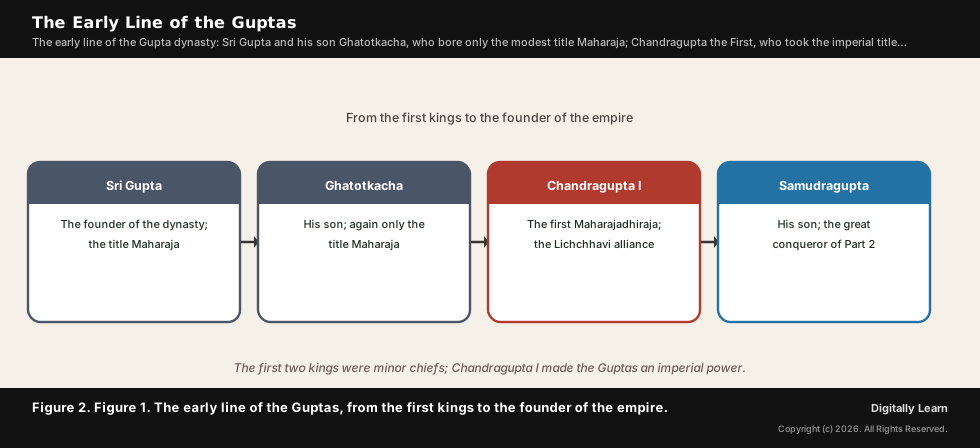
The founder of the dynasty was Sri Gupta, of whom almost nothing is known; the chief notice of him is by the later Chinese pilgrim Yijing, who records that he built a temple for Chinese travellers. He and his son Ghatotkacha bore only the modest title Maharaja, a title used by minor kings, and they are known chiefly from the genealogies of their greater successors. The Gupta heartland lay in the eastern Ganga plain, in Magadha and Prayaga.
India after the Kushanas and the Satavahanas
Distinguishing the setting: the Guptas rose into a political vacuum, in the centuries after the great empires of the post-Mauryan age had fallen.
By the early fourth century CE the Kushana power in the north and the Satavahana power in the Deccan had both broken up, and northern India had fallen into many small kingdoms. It was into this divided north that the Guptas rose, from their base in the rich and populous land of the eastern Ganga, to build the last of the great empires of ancient India.
Chandragupta I and the Founding of the Empire
The Title Maharajadhiraja and the Gupta Era
What is the significance of Chandragupta I: he was the true founder of Gupta greatness, the first of the line to rule as an emperor.
Chandragupta I was the first Gupta king to take the grand imperial title Maharajadhiraja, the great king of kings, a sign that the dynasty had risen from minor kingship to empire. From his accession is reckoned the Gupta era, which begins about 319 to 320 CE, one of the dated eras of Indian history. Most scholars take the era to mark his accession, though some have argued that it dates the coronation of his son Samudragupta.
| King | Title | Known chiefly from |
|---|---|---|
| Sri Gupta | Maharaja | A Chinese pilgrim's notice; later genealogies. |
| Ghatotkacha | Maharaja | The genealogies of his successors. |
| Chandragupta I | Maharajadhiraja | The king-and-queen coins; the Gupta era. |
| Samudragupta | Maharajadhiraja | The Allahabad prashasti (Part 2). |
The Lichchhavi Alliance and the King-and-Queen Coins
Distinguishing the alliance: the rise of Chandragupta I was sealed by a marriage that bound the Guptas to one of the oldest noble clans of the north.
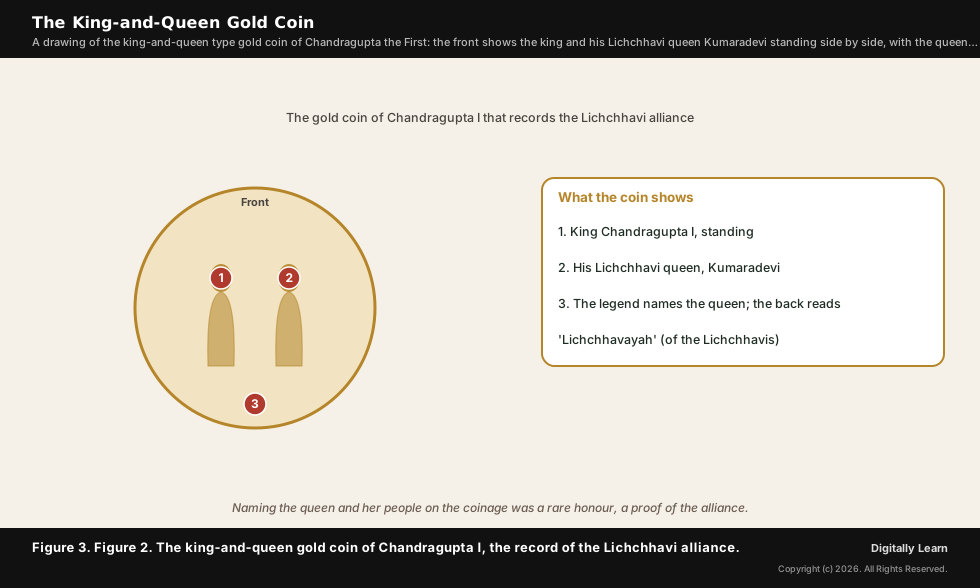
Chandragupta I married Kumaradevi, a princess of the ancient Lichchhavi clan of Vaishali, a union that brought the new dynasty prestige and perhaps territory. So proud were the Guptas of this connection that a special king-and-queen gold coin was struck showing the royal pair, with the queen named and the legend Lichchhavayah, of the Lichchhavis, on the reverse. Their son Samudragupta is honoured in the inscriptions as the Lichchhavi-dauhitra, the son of the Lichchhavi daughter.
The Sources for Gupta History
The Coins and Inscriptions of the Gupta Age
What is the significance of the sources: the Gupta age is known far better than the ages before it, from a rich body of coins and inscriptions.
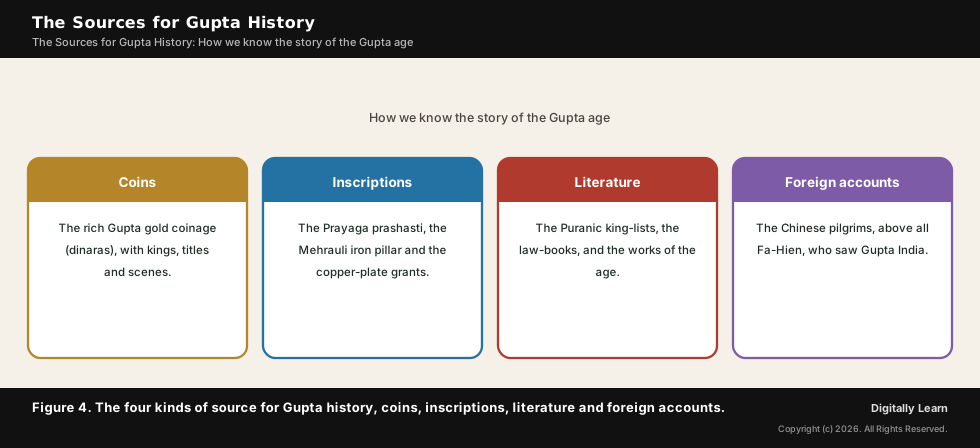
The Guptas struck the finest gold coinage of ancient India, and these coins, with their royal portraits, titles and scenes, are a first-rate source. Their inscriptions are richer still: the great Allahabad or Prayaga prashasti that records the conquests of Samudragupta, the Mehrauli iron pillar that names a king Chandra, the Junagadh inscription of the age of Skandagupta, and the copper-plate charters that record grants of land.
| Inscription | Connected with | What it tells |
|---|---|---|
| The Allahabad (Prayaga) prashasti | Samudragupta (by Harisena) | His conquests and the extent of the empire. |
| The Mehrauli iron pillar | A king 'Chandra' (Chandragupta II) | A king's fame; the skill of Gupta metallurgy. |
| The Junagadh inscription | The age of Skandagupta | The repair of the Sudarshana lake; the Hunas. |
| The copper-plate charters | Various reigns | Grants of land and the working of the state. |
Literature, the Puranas and the Chinese Pilgrims
Distinguishing the literary sources: to the coins and inscriptions are added the writings of the age and the eyes of foreign visitors.
The Puranas preserve king-lists that help to order the dynasties, and the law-books and literature of the age throw light on its society. Above all, the Chinese pilgrim Fa-Hien, who travelled in India in the reign of Chandragupta II, has left a vivid account of a prosperous and well-governed land; his story belongs to the third part of this series. A caution is in order: the prashastis are works of royal praise, and must be read with care.
A point of source-criticism often tested is the nature of these records. The Prayaga prashasti and the Mehrauli pillar are eulogies and commemorations; the earliest royal order to preserve grain against famine is not a Gupta record at all, but the much older Mauryan-age Sohagaura copper-plate.
The Gupta Age as the Classical Age of India
Why the Gupta Age is Called the Classical Age
What is the significance of the Gupta age as a whole: later ages looked back on it as a classical age, a high point of order, art and learning.
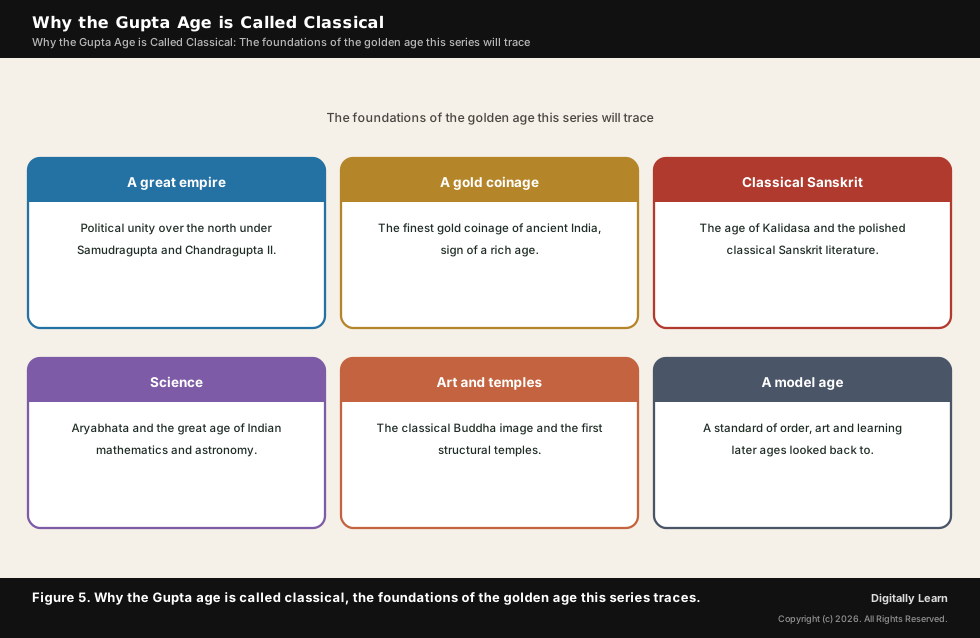
Under Samudragupta and Chandragupta II the empire would reach from sea to sea, and on its peace and wealth would rest a golden age: the finest gold coinage of ancient India, the classical Sanskrit of Kalidasa, the mathematics and astronomy of Aryabhata, the serene Buddha image, and the first great stone temples. This series will trace each of these in turn; this first part has set the stage, with the rise of the dynasty and the sources of its story.
UPSC Relevance and Exam Focus
Where the Gupta Origins and Sources Fit in the UPSC-CSE Syllabus
This topic belongs to General Studies Paper I: ancient Indian history and culture, and the rise of the Guptas, with the sources for their history, is a frequent theme in the examination.
For Prelims, hold the firm facts: the Guptas began with Sri Gupta and Ghatotkacha, who bore the title Maharaja; Chandragupta I was the first Maharajadhiraja and married the Lichchhavi princess Kumaradevi; the king-and-queen coins and the title Lichchhavi-dauhitra record that alliance; the Gupta era begins about 319 CE; and the sources are the gold coins, the inscriptions such as the Prayaga prashasti and the Mehrauli pillar, the Puranas, and the Chinese pilgrim Fa-Hien.
For Mains, the rise of the Guptas is valuable as the opening of the classical age, and the sources are a good case study in how ancient Indian history is reconstructed.
Recurring linked concepts an aspirant should keep in working memory:
- Maharaja vs Maharajadhiraja: The minor title of the first kings vs the imperial title of Chandragupta I.
- The Lichchhavi alliance: Kumaradevi; the king-and-queen coins; the Lichchhavi-dauhitra.
- The Gupta era: Reckoned from about 319 CE.
- The Prayaga prashasti: Harisena’s record of Samudragupta’s conquests.
- Fa-Hien: The Chinese pilgrim of Chandragupta II’s reign.
A common Prelims trap mixes up the records: the Prayaga prashasti and the Mehrauli pillar are Gupta eulogy and commemoration, but the earliest royal order to preserve grain in a famine is the older Mauryan-age Sohagaura copper-plate, not a Gupta record.
Previous Year UPSC-CSE Questions
Previous Year UPSC-CSE Questions By the end you will be able to draft model answers for the following UPSC questions. Each question carries a collapsible framework showing how to approach it in the exam.
- UPSC Prelims 1998 GS-IWhich one of the following ancient Indian records is the earliest royal order to preserve food grains to be utilised during the crises in the country?
How to approach this Prelims question
Approach: Recall what each record is: the Sohagaura copper-plate is a famine-relief grain-storage order; the others are eulogies, edicts or commemorations.
Trap to watch: The Gupta Prayaga prashasti (a conquest eulogy) and the Mehrauli pillar (a king's commemoration) are not grain orders; the Rummindei edict is Ashoka's tax record; the Sohagaura plate is the food-grain order.
Key facts to recall:
- The Sohagaura copper-plate is the earliest royal order to preserve grain against famine.
- The Prayaga prashasti and the Mehrauli pillar are Gupta-age eulogy and commemoration, not grain orders.
Answer signal: Sohagaura Copper-plate.
Sources and Further Reading
Editorial Disclaimer
This article is for UPSC preparation. The exact epoch of the Gupta era and the details of the dynasty's origins are debated among historians, and the conventional accounts are given here.