


Overview
Defence exports are the sales of military equipment, weapons and related goods and services by a country's defence industry to other nations. In early April 2026, as the 2025-26 financial year closed, the Ministry of Defence reported that India's defence exports had reached an all-time high of 38,424 crore rupees, a rise of about 62.66 per cent over the previous year. The record was shared almost equally between the public-sector undertakings and private industry, and forms part of the wider push for self-reliance in defence.
Why India's record defence exports are in focus
An all-time high in 2025-26
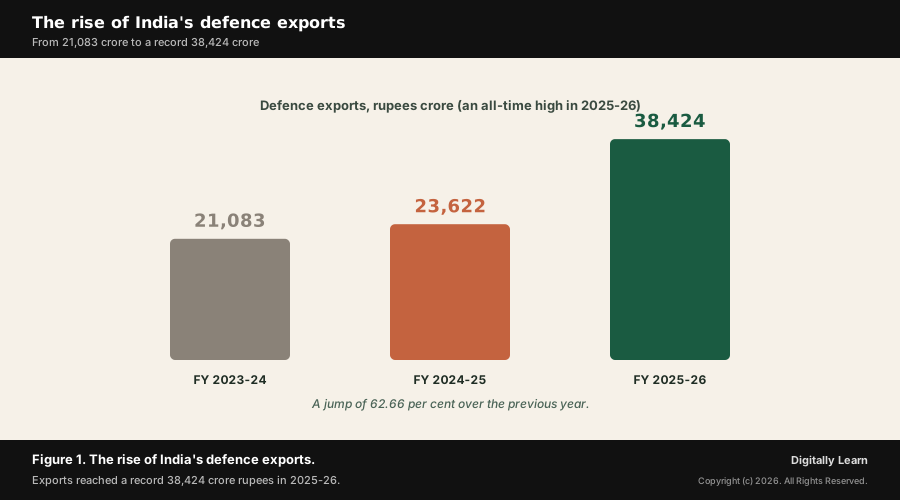
As the 2025-26 financial year drew to a close in early April 2026, the Ministry of Defence reported that India's defence exports had reached an all-time high of 38,424 crore rupees, the highest the country has ever recorded.
Defence exports are the sales of military hardware, weapons and related services by a country's defence industry to other nations. They are a telling measure of how competitive and self-reliant that industry has become.
The new figure was about 62.66 per cent higher than the previous year's 23,622 crore rupees, a rise of some 14,802 crore rupees in a single year.
The headline numbers were:
- Record exports: 38,424 crore rupees in 2025-26, an all-time high.
- Growth: a rise of about 62.66 per cent over the previous year.
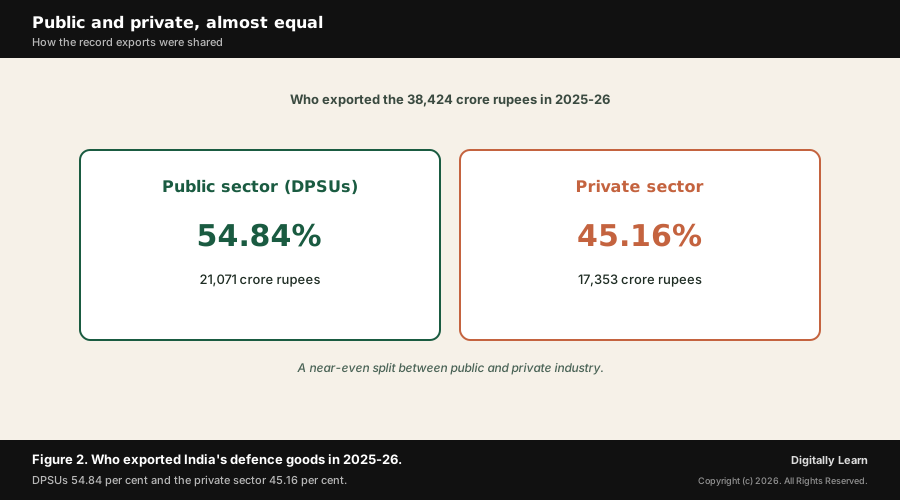
- Public sector: defence undertakings contributed 54.84 per cent.
- Private sector: private industry contributed 45.16 per cent.
From Arms Importer Towards a Rising Exporter
A shift in India's place in the arms trade
Why it matters is that India has long been among the world's largest arms importers. A sharp rise in exports signals a shift towards a defence industry that can design and build, not only for itself, but for others.
The growth has been both steady and steep. Defence exports set successive records, rising from 21,083 crore rupees in 2023-24 to 23,622 crore in 2024-25 and then jumping to the 38,424 crore rupees of 2025-26.
It also matters for the economy. A larger defence industry means jobs, technology and a flow of foreign earnings, and it deepens the manufacturing base that the wider economy draws on.
Self-Reliance, Strategy and a Rising Private Industry
Three threads behind the export record
What is the significance of this milestone lies in three threads: self-reliance, strategic standing, and the rise of a private defence industry alongside the state-owned firms.
First, self-reliance. The export record is the clearest sign of progress towards Atmanirbharta, the goal of meeting India's own defence needs from Indian industry rather than imports.
Second, strategic standing. A country that exports arms gains influence with the nations that buy them, so a growing export base is also a tool of foreign and security policy.
Third, the rise of private industry. The near-even split with the public sector shows that private firms have become major players in what was once a state-dominated field.
Distinguishing features of the record
The export record at a glance
The table sets out the key figures, so the scale of the rise and the public-private share are visible at a glance. The headline is the jump to 38,424 crore rupees, well above the 23,622 crore of the year before.
Read together, the rows show a record that is large in size, fast in growth, and broadly shared between the public and private parts of the defence industry.
| Feature | Detail |
|---|---|
| Defence exports, 2025-26 | 38,424 crore rupees (all-time high) |
| Growth over previous year | about 62.66 per cent |
| Previous year (2024-25) | 23,622 crore rupees |
| Public-sector share | 54.84 per cent (21,071 crore rupees) |
| Private-sector share | 45.16 per cent (17,353 crore rupees) |
| Export target by 2029 | 50,000 crore rupees |
The two engines of the record
Two engines drove the record, and the balance between them is what makes it notable. The state-owned undertakings remain the larger exporter, yet private industry is now close behind and growing the faster of the two.
- (i) Public-sector undertakings. The state-owned defence firms contributed 54.84 per cent, or 21,071 crore rupees.
- (ii) Private industry. Private firms contributed 45.16 per cent, or 17,353 crore rupees, a fast-rising share.
- (iii) A near-even split. The two together make a broad-based industry rather than a single state monopoly.
The near-even split matters for two reasons. It shows that the export record does not rest on a single firm or a single platform, and it signals that the policy push to bring private firms into defence manufacturing is now feeding the export figures, not just the domestic order book.
What to Watch as Exports Climb Towards 2029
Three developments to track
The record translates into three developments worth tracking in the years ahead, as the country works towards a far larger export figure by the end of the decade.
- (a) The 2029 target. The government aims to raise exports to 50,000 crore rupees by 2029, so the next milestone is whether the climb continues.
- (b) Wider markets. India now exports defence equipment to more than 80 countries, and the spread of buyers will show how durable the demand is.
- (c) Deeper indigenisation. The positive indigenisation lists steer more items towards Indian manufacture, feeding future exports.
A record year is encouraging, but the real test is whether high-technology platforms, and not only components and parts, come to make up a growing share of what India sells.
Atmanirbharta, the policy ecosystem and the economy
Corridors, indigenisation lists and iDEX
Contemporary linkages tie the export rise to a policy ecosystem built over several years to deepen self-reliance in defence, rather than to a single year's good fortune.
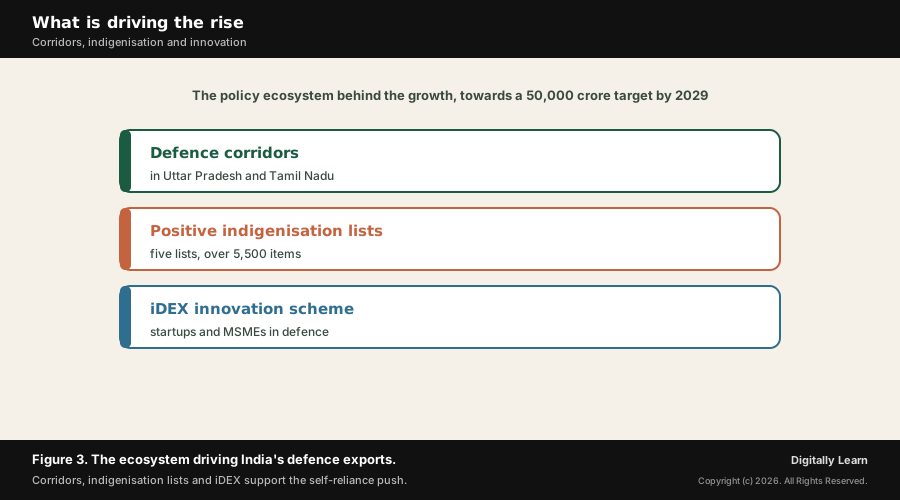
Two defence industrial corridors, in Uttar Pradesh and Tamil Nadu, anchor manufacturing, while five positive indigenisation lists covering over 5,500 items push the armed forces to buy Indian rather than import.
Innovation is encouraged through iDEX, the scheme that brings startups and small firms into defence, and the whole effort sits under the wider goals of Make in India and Atmanirbharta, with a target of 3 lakh crore rupees of defence production by 2029.
UPSC relevance and exam focus
Where this fits in the UPSC-CSE syllabus
This topic maps to General Studies Paper III: the Indian economy, the development of industry, and the role of self-reliance in defence and security, with links to science and technology.
For Prelims, hold the high-yield facts: the record export figure and growth rate, the public-private split, the two defence corridors, the positive indigenisation lists, and the iDEX scheme.
For Mains, two framings recur: defence indigenisation and Atmanirbharta as an economic and strategic goal, and the role of the private sector and FDI in building a defence industry.
Recurring linked concepts an aspirant should keep in working memory:
- Atmanirbharta in defence: the goal of self-reliance in arms.
- Defence industrial corridors: in Uttar Pradesh and Tamil Nadu.
- Positive indigenisation lists: items reserved for Indian manufacture.
- iDEX: innovations for defence excellence, for startups and MSMEs.
A common Prelims trap is to confuse the figures: this is a defence EXPORTS record, not the much larger defence production target or the defence budget. Mixing the three is a frequent error.
A common Mains trap is to treat exports as proof of full self-reliance. India remains a large arms importer as well, so the honest picture is one of rapid progress rather than arrival.
Previous Year UPSC-CSE Questions By the end you will be able to draft model answers for the following UPSC questions. Each question carries a collapsible framework showing how to approach it in the exam.
- UPSC Mains 2014 GS-IIIForeign Direct Investment (FDI) in the defence sector is now set to be liberalized: What influence is this expected to have on Indian defence and economy in the short and long-run?
How to structure the answer in the exam
Introduction: Open with the link between opening defence to private and foreign investment and building an indigenous industry.
Body (sub-themes to develop):
- Short run: capital, technology transfer and joint ventures speed up domestic production.
- Long run: a deeper industrial base, jobs and rising defence exports.
- Self-reliance: reduced import dependence and strategic autonomy.
- Risks: foreign control, security of supply, and the need for careful regulation.
Conclusion: Conclude that calibrated liberalisation can build a strong defence industry while safeguarding strategic interests.
Sources and Further Reading
- Press Information Bureau: Defence exports skyrocket to record Rs 38,424 crore in Financial Year 2025-26
- Press Information Bureau: Defence exports surge to a record high of Rs 23,622 crore in Financial Year 2024-25
- Ministry of Defence
- Department of Defence Production, Ministry of Defence
- Press Information Bureau: Make in India Powers Defence Growth
- Innovations for Defence Excellence (iDEX)
Editorial Disclaimer
This article summarises the Ministry of Defence's reported defence-export figures for 2025-26, drawing on the Press Information Bureau. Aspirants should consult the official PIB and Ministry communications for the detailed figures before exam use.


