


Overview
The Diagnosis Gap
Why most of an estimated 1.4 lakh cases stay undiagnosed
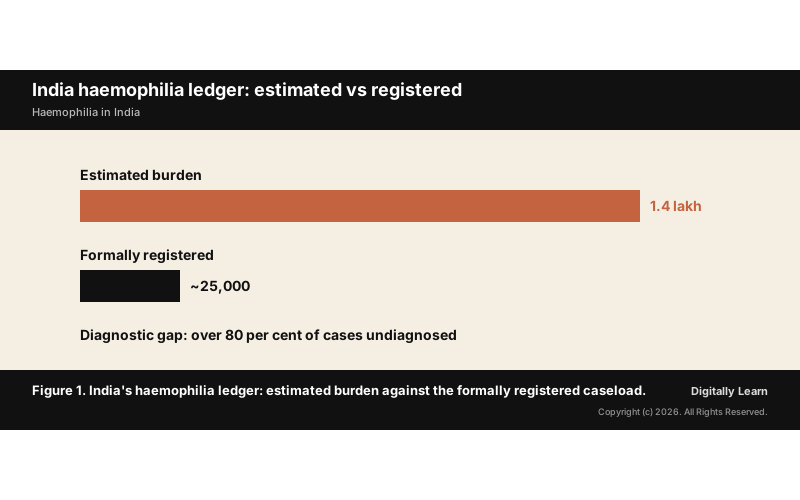
Haemophilia is a rare, inherited bleeding disorder in which blood does not clot properly because of low or absent levels of clotting factor VIII (Haemophilia A) or factor IX (Haemophilia B). World Haemophilia Day on 17 April 2026 and a fresh WHO equity resolution have refocused attention on India's second-largest global haemophilia burden, where over 80 per cent of cases remain undiagnosed.
World Haemophilia Day, the WHO resolution and India numbers
April 17 observance, WHO equity resolution and the under-diagnosis ledger
On 17 April 2026, World Haemophilia Day refocused attention on a disorder that remains both manageable and widely neglected. The World Health Organization has advanced a resolution aimed at improving equity in care for people living with haemophilia and other bleeding disorders, emphasising long-standing gaps in diagnosis and treatment access.
Haemophilia is a rare inherited bleeding disorder in which the blood does not clot properly. The disorder is typically classified into Haemophilia A (factor VIII deficiency) and Haemophilia B (factor IX deficiency). Inheritance follows an X-linked recessive pattern, so males are predominantly affected while females are usually carriers.
- Global prevalence: about 1 in 10,000 people, though the true burden is likely higher.
- India burden: estimated at 136,000 to 140,000 cases; only 20,000 to 30,000 are formally registered.
- Under-diagnosis: over 80 per cent of cases in India remain undiagnosed.
- Spontaneous mutations: about one-third of cases arise without any family history.
The diagnostic ledger has been growing slowly: A study published in The Lancet reports that a substantial proportion of haemophilia patients remain undiagnosed, particularly in low- and middle-income countries. The study highlights limited diagnostic infrastructure, underreporting and the lack of national registries as the principal drivers of the hidden burden.
Late detection has clinical consequences: Many patients are identified only after repeated bleeding episodes and after complications such as joint damage have already set in. The April 2026 cycle therefore folds the under-diagnosis question into the broader equity-in-care framing that the WHO resolution advances.
India burden, joint damage and the disability pathway
India second-largest burden, joint damage and the disability link
Why it matters: India's haemophilia burden is the second-largest in the world. The under-diagnosis rate above 80 per cent reflects gaps in diagnostic infrastructure, under-reporting and the absence of strong national registries. The hidden burden translates into delayed care and avoidable disability.
The joint-damage pathway is the principal disability driver: Recurrent joint bleeding, or haemarthrosis, is the leading cause of long-term disability in haemophilia patients. Repeated bleeds into joints lead to pain, swelling, stiffness and progressive joint damage that cumulates into chronic disability if not treated early and consistently.
Carrier females are not always asymptomatic. Research now indicates that carrier females may experience mild bleeding symptoms depending on their clotting-factor levels. This challenges the long-standing assumption that females are universally asymptomatic carriers and reshapes the genetic-counselling pathway.
The presentation spectrum runs from mild to severe: Individuals with severe haemophilia often experience frequent spontaneous bleeding episodes; those with milder forms may show symptoms only after injury, surgery or dental procedures. Common manifestations include prolonged bleeding, easy bruising and frequent nosebleeds.
Bleeding into critical sites is the worst outcome: In rare but serious cases bleeding can occur into the brain, which can be life-threatening without prompt treatment. The clinical priority therefore is early detection and rapid escalation, with clinical or hospital observation for severe bleeds.
What the resolution signals for global health equity
WHO equity framing, UHC integration and India Rare Diseases Policy
What is the significance of this resolution: The 2026 WHO resolution moves haemophilia from a niche disorder into the broader Universal Health Coverage conversation, calling on member states to strengthen health systems, improve clotting-factor supply chains, expand diagnostic services and integrate haemophilia care into UHC.
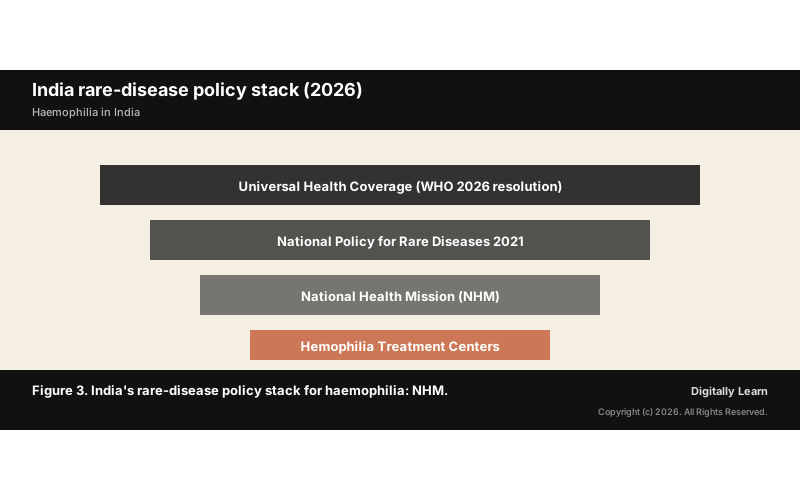
The resolution overlaps with India's National Policy for Rare Diseases 2021, which lists haemophilia under treatment-amenable rare disorders. The Policy provides for centre-of-excellence designation, financial assistance up to a specified ceiling for treatment, and crowd-funding portals for high-cost therapies.
- Universal Health Coverage: WHO frames haemophilia equity as a UHC integration question, not a niche-disease question.
- Supply-chain dimension: clotting-factor concentrates are imported in many low-resource settings and require stable financing.
- Diagnostic services: factor activity assays and aPTT testing require trained haematology laboratories.
- India Rare Diseases Policy 2021: framework for treatment financing and centre-of-excellence designation.
The Universal Health Coverage frame matters beyond haemophilia. UHC is a WHO-led framework for delivering essential health services without financial hardship; integrating rare-disease treatment into UHC is a sharper test of equity than headline coverage of common conditions, because rare-disease care often requires high-cost biologics.
The supply-chain dimension is concrete: Clotting-factor concentrates are imported in many low-resource settings and require stable financing across budget cycles. The 2026 WHO resolution explicitly calls for strengthening this supply chain alongside diagnostic services and workforce training.
What distinguishes haemophilia care from other rare-disease tracks
Three architectural features of haemophilia care
Distinguishing features: Three architectural features separate haemophilia care from other rare-disease tracks in India.
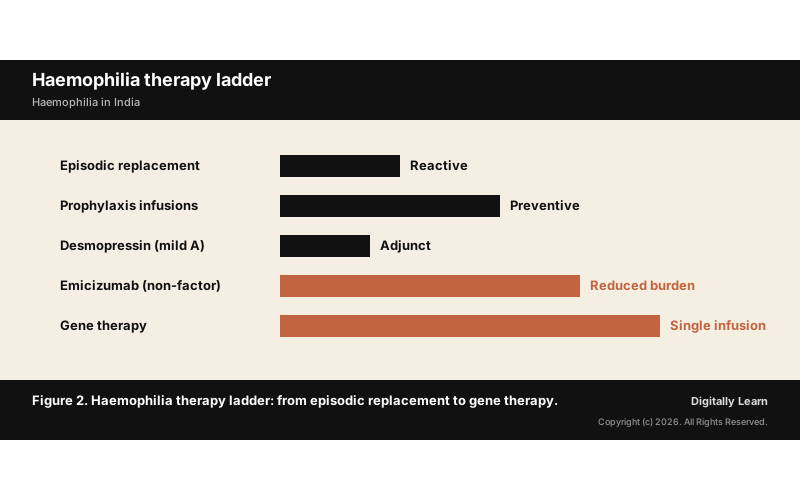
- (i) Replacement-therapy model. The mainstay of treatment is clotting-factor replacement therapy, administered episodically to control active bleeding or as prophylaxis to prevent bleeds; this differs from disorders managed primarily by surgery or transplantation.
- (ii) Specialised Hemophilia Treatment Centers. Care is delivered through dedicated HTCs offering multidisciplinary support including haematologists, physical therapists and nurses to manage joint health and overall quality of life.
- (iii) Gene-therapy frontier. Clinical trials have shown that a single gene-therapy infusion can enable sustained production of clotting factors in some patients, potentially reducing or eliminating regular treatment; long-term durability and safety remain under evaluation.
| Distinguishing attribute | Haemophilia A | Haemophilia B |
|---|---|---|
| Clotting factor deficient | Factor VIII | Factor IX |
| Relative prevalence | More common (about four-fifths of cases) | Less common (about one-fifth of cases) |
| Inheritance pattern | X-linked recessive | X-linked recessive |
| Replacement therapy | Factor VIII concentrate | Factor IX concentrate |
| Non-factor and emerging therapies | Emicizumab; desmopressin for mild forms | Gene therapy under evaluation |
Prophylaxis is the contemporary standard for severe cases: Studies published in clinical literature have demonstrated that regular preventive infusions significantly reduce bleeding episodes, prevent joint damage and improve quality of life. Early initiation in children preserves joint function over the long term and is the single most-cost-effective intervention.
Non-factor and gene therapies open new options: Emicizumab is a bispecific antibody that mimics factor VIII's role in the clotting cascade and is administered subcutaneously, lowering treatment burden compared with intravenous factor infusions. Gene therapy adds a one-time-infusion option that may produce sustained factor levels in some patients, although long-term durability remains under evaluation.
Outcomes the 2026 cycle is producing
Four trackable consequences across therapy, diagnostics and registries
Observable outcomes: The April 2026 cycle around World Haemophilia Day is producing four trackable consequences across therapy, diagnostics, registries and equity policy.
- (a) Prophylaxis uptake is rising: regular factor infusions are shown by clinical studies to reduce bleeding episodes, prevent joint damage and improve quality of life, particularly when initiated early in childhood.
- (b) Non-factor therapies enter the toolkit: emicizumab has demonstrated reduced bleeding rates with lower treatment burden compared with traditional factor infusion regimens.
- (c) Gene-therapy clinical evidence accumulates: single-infusion approaches have shown sustained clotting-factor production in some patients in clinical trials, with long-term durability under evaluation.
- (d) Equity gaps stay wide: many patients in low-resource settings still rely on episodic or emergency care rather than preventive treatment, increasing complications and long-term disability.
Access remains uneven across regions: Global health analyses highlight that a large proportion of haemophilia patients, particularly in low-resource settings, still lack reliable diagnosis and essential therapies. Many depend on episodic or emergency care rather than preventive prophylaxis, which increases complications and the cumulative disability burden.
Antifibrinolytic medications are an adjunctive class. Drugs such as tranexamic acid help stabilise clots once they have formed and are used in mucosal-bleeding situations such as dental extractions. Their availability through public-sector procurement is an important secondary lever in low-resource haemophilia care.
Patient registries are the missing operational layer: India lacks a single national haemophilia registry of the kind the World Federation of Hemophilia maintains globally; building one would compress the diagnostic gap and link patients to Hemophilia Treatment Centres more reliably. The 2026 WHO equity resolution explicitly highlights registry-strengthening as a priority.
Connections to public-health and rare-diseases policy
Connecting haemophilia care to NHM, UHC and the broader rare-disease ecosystem
Contemporary linkages: Haemophilia care sits inside a larger Indian public-health architecture that includes the National Health Mission, the Rare Diseases Policy and the Universal Health Coverage trajectory.
- National Health Mission: umbrella programme that delivers primary healthcare across rural and urban India.
- National Policy for Rare Diseases 2021: lists haemophilia under treatment-amenable rare disorders with financing pathways.
- Centres of Excellence: designated tertiary-care hospitals provide specialised haemophilia diagnostics and therapy.
- Universal Health Coverage: the WHO 2026 resolution explicitly integrates haemophilia equity into the UHC agenda.
The Lancet evidence base is the operative reference. Peer-reviewed publications continue to document the magnitude of the diagnostic gap in low- and middle-income countries; India figures prominently in such surveys given its second-largest absolute burden. The 2026 WHO resolution draws partly on this evidence base.
The Pradhan Mantri Bhartiya Janaushadhi Pariyojana intersects the affordability question. The Janaushadhi network supplies generic medicines at low cost across more than ten thousand outlets nationwide; for haemophilia patients, generic clotting-factor concentrates distributed through such channels remain a critical affordability lever alongside the Rare Diseases Policy financing pathway.
The genetic-counselling dimension sits behind the screening question. Awareness of the X-linked recessive inheritance pattern and the carrier-symptom finding can guide family-level prenatal-counselling pathways, particularly for families where a male relative has been diagnosed. Public-health communication tying haemophilia screening to broader genetic-counselling services would address a present gap.
UPSC Relevance
GS Paper II Health and GS Paper III Science relevance
Haemophilia and the rare-diseases architecture sit at the intersection of GS Paper II on Health and Social Sector and GS Paper III on Science and Technology, particularly biotechnology, gene therapy and the genetic-disease landscape.
For Prelims, the high-yield facts cluster around the X-linked recessive inheritance pattern, the factor VIII versus factor IX distinction, the diagnostic toolkit (CBC, aPTT, factor assays), the World Haemophilia Day date and the major treatment classes.
- World Haemophilia Day: 17 April annually.
- Inheritance: X-linked recessive; males predominantly affected; carrier females may have mild bleeding.
- Factor VIII deficiency: Haemophilia A; factor IX deficiency: Haemophilia B.
- Diagnostic tests: Complete Blood Count, activated partial thromboplastin time (aPTT), factor activity assays.
- Treatment classes: factor replacement, prophylaxis, emicizumab non-factor therapy, gene therapy.
For Mains, two framings recur. First, the State role in public-healthcare question (GS-II 2024 question): how should India's State capacity scale to deliver rare-disease care at the grassroots level. Second, the gene-therapy access question: how should regulatory and financing frameworks evolve to make next-generation therapies available to low-income haemophilia patients.
The State role in healthcare sits at the heart of the core GS-II Mains theme. India's National Health Mission covers primary care delivery, while the Rare Diseases Policy 2021 sets the financing model for treatment-amenable rare disorders such as haemophilia. The State must scale both layers together at the grassroots level.
The biotech and gene-therapy thread is the GS-III theme. Gene therapy raises questions of regulatory clearance pathways at the Central Drugs Standard Control Organisation, indigenous capability development through DBT-backed programmes, and pricing-and-access models for high-cost biologics. India's pharmaceutical industry provides the supply-side base for a meaningful response.
Past-year questions linked to this briefing
Prelims 1998 haemophilia and Mains 2024 public-healthcare questions
The April 2026 World Haemophilia Day cycle activates two linked items: a Prelims 1998 Q112 on haemophilia as a genetic non-clotting disorder, and a Mains 2024 GS-II Q17 on the State role in the public-healthcare system. Both fit the rare-disease care-architecture question.
The compound exam frame is potent. A candidate fluent in both the haemophilia genetics fact (1998 Prelims question) and the State public-healthcare argument (2024 Mains question) can deploy a Mains answer that treats haemophilia as a proof-of-concept for grassroots rare-disease delivery, combining biology with policy in the same response.
Previous Year UPSC-CSE Questions By the end you will be able to draft model answers for the following UPSC questions. Each question carries a collapsible framework showing how to approach it in the exam.
- UPSC Prelims 1998Haemophilia is a genetic disorder which leads to
How to approach this Prelims question
Approach: Recall the core haemophilia definition: a disorder of blood-clotting due to factor deficiency.
Trap to watch: Confusing haemophilia with other blood disorders such as anaemia (haemoglobin) or thalassaemia.
Key facts to recall:
- Haemophilia: deficiency of clotting factor VIII (A) or IX (B).
- Result: blood does not clot properly; prolonged bleeding from minor injuries.
- X-linked recessive inheritance pattern.
- Option (d) is the answer.
Answer signal: Non-clotting of blood; option (d) is the answer.
- UPSC Mains 2024 GS-IIIn a crucial domain like the public healthcare system the Indian State should play a vital role to contain the adverse impact of marketisation of the system. Suggest some measures through which the State can enhance the reach of public healthcare at the grassroots level.
How to structure the answer in the exam
Introduction: India's public-healthcare system carries the weight of universal access while operating under fiscal and human-resource constraints. The State role is essential to contain the adverse impact of marketisation that excludes low-income patients.
Body (sub-themes to develop):
- National Health Mission: rural and urban primary-care delivery; ASHA workforce.
- Rare Diseases Policy 2021: financing pathways, crowd-funding portals, centre-of-excellence model.
- Diagnostic infrastructure: factor assays, aPTT laboratories at district level.
- Workforce: haematologists, physical therapists, nurses at Hemophilia Treatment Centers.
- Supply chain: clotting-factor concentrates procurement under public-sector contracts; UHC integration.
Conclusion: Scaling the State role at the grassroots requires both institutional architecture (NHM, Rare Diseases Policy, HTCs) and operational instruments (diagnostics, workforce, supply chain). Haemophilia care is a useful proof-of-concept.
Sources and Further Reading
Editorial Disclaimer
This article is compiled from the reference materials listed in the Sources section. It is an explainer for UPSC preparation and is not a substitute for primary documents (NCERTs, GoI ministry releases, IMD bulletins, RBI / CEA / MoEFCC publications, and Standing-Committee reports).


