


Overview
India's rural broadband and optical-fibre programme for the Gram Panchayats
BharatNet, formerly the National Optical Fibre Network of 2011, is the Government of India's flagship effort to take optical fibre to about 2.5 lakh Gram Panchayats, run by the Department of Telecommunications and funded by the Digital Bharat Nidhi, now re-engineered by the 2023 Amended BharatNet Programme.
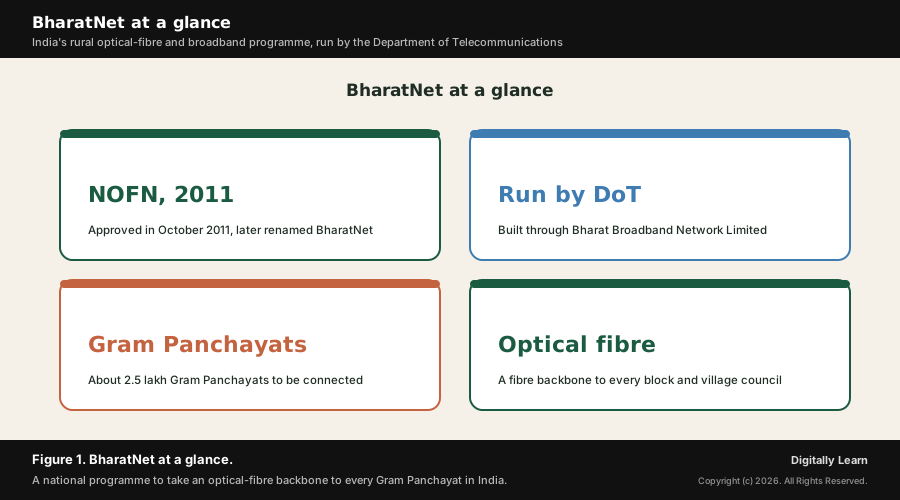
BharatNet is the Government of India's flagship programme to bring optical-fibre broadband to every Gram Panchayat and the villages around it, begun as the National Optical Fibre Network approved in 2011 and later renamed. It is run by the Department of Telecommunications, built through Bharat Broadband Network Limited with Bharat Sanchar Nigam Limited and State agencies, and funded by the Digital Bharat Nidhi, the successor to the Universal Service Obligation Fund under the Telecommunications Act, 2023. Conceived in three phases to reach about 2.5 lakh Gram Panchayats, it was re-engineered by the Amended BharatNet Programme of 2023 onto a resilient ring design with a sharp focus on the last mile. Because it serves rural areas that the market would skip, BharatNet is as much a story of bridging the digital divide as of laying cable.
What BharatNet Is: India's Flagship Rural Optical-Fibre and Broadband Programme
From the National Optical Fibre Network to BharatNet and why rural connectivity is in focus
BharatNet is the Government of India's flagship programme to take an optical-fibre broadband network to every Gram Panchayat, the elected council at the base of rural local government, and on to the villages around it. It began as the National Optical Fibre Network, known as NOFN, approved in October 2011, and was later renamed BharatNet under the Digital India effort. The programme is run by the Department of Telecommunications, and it is widely described as one of the largest rural broadband undertakings in the world.
Why it matters is that a fibre line decides what a village can do online. The aim is plain and citizen-facing: to give each Gram Panchayat a high-speed connection so that rural people can reach government services, learning, health advice, banking and markets without travelling to a town. By building a shared public backbone where private firms found it unprofitable to lay one, BharatNet treats internet access in the countryside as basic public infrastructure rather than a commercial luxury.
The programme is in focus because it has moved into a re-engineered stage. The early phases laid fibre to lakhs of village councils; the Amended BharatNet Programme, approved by the Union Cabinet in 2023, now rebuilds the network on a more resilient design and pushes hard on the last mile, the final stretch from the village council into homes and offices. The figure below sets out the headline facts before the phases are examined in turn.
The Phase Architecture: Phase I, Phase II, Phase III and the Amended Programme
Phase I and Phase II: the optical-fibre rollout to the Gram Panchayats
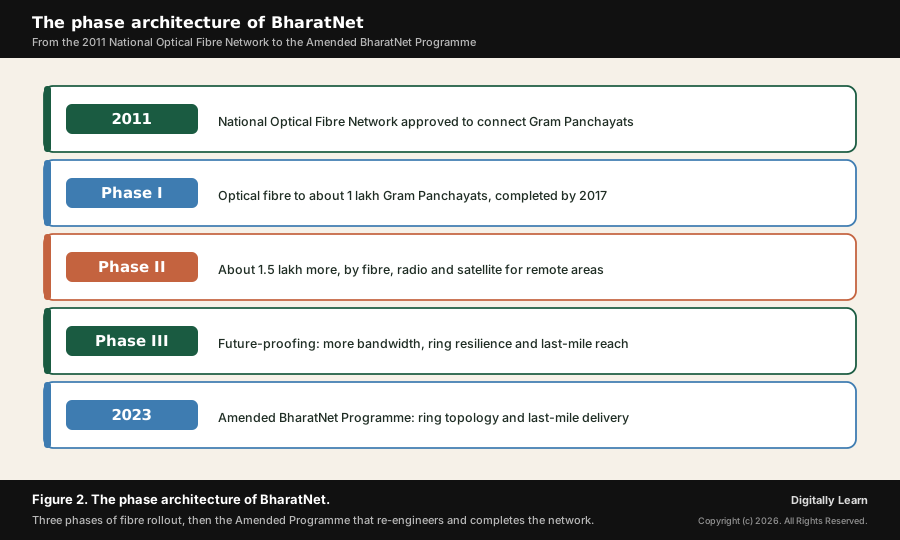
BharatNet was structured as a phased rollout so that the network could be built in manageable stages. Phase I, the first stage, set out to connect about one lakh Gram Panchayats by laying optical fibre along existing routes, and it was completed by the end of 2017. The design used the fibre and ducts that public undertakings already held wherever possible, so that the first lakh of village councils could be reached without building every kilometre from scratch.
Phase II widened the reach to roughly one and a half lakh more Gram Panchayats, taking the planned total toward the full set of about two and a half lakh. Because terrain and distance defeat fibre in some places, this stage blended technologies: optical fibre where it could be laid, radio links across difficult stretches, and satellite connectivity for the most remote councils. The mix reflected a practical truth, that a single technology cannot reach every village in a country as varied as India.
The two phases together were funded as a major central commitment and carried the bulk of the fibre rollout. They made a large share of the planned village councils service ready, a status meaning the fibre has reached the council and a connection can be switched on. Yet service-ready fibre is not the same as a working household line, a distinction that became the central concern of the later stages. The figure below traces the full phase sequence.
Phase III and the Amended BharatNet Programme: ring topology, last mile and future-proofing
Phase III was conceived to future-proof the network rather than simply to extend it. The early fibre was often a single line to a village council, so a cut anywhere could darken a whole stretch. The third stage moves toward greater bandwidth, sturdier equipment and a more resilient layout, so that the network can carry heavier traffic and keep working when one link fails. The intent is a backbone fit for years of growing rural demand, not only for present needs.
The decisive turn came with the Amended BharatNet Programme, which the Union Cabinet approved in 2023 and which is paid for through the Digital Bharat Nidhi. It re-engineers the existing network into a ring topology, in which fibre loops back on itself so that traffic can travel either way around the ring and survive a single break. It upgrades and maintains the older fibre, adds connectivity to villages beyond the Gram Panchayat on demand, and centres the programme on delivering the last mile into homes.
The amended design also rethinks who delivers the last mile. It promotes a model in which local operators, sometimes called village-level entrepreneurs, take fibre the final stretch and run the household connections, supported by Common Service Centres at the village. By combining a more robust ring backbone with a delivery-focused last mile, the amended programme aims to convert laid fibre into used broadband, the gap that the earlier phases had exposed. The table below contrasts the two stages.
| Aspect | Early phases (Phase I to III) | Amended BharatNet Programme (2023) |
|---|---|---|
| Network layout | Often a single fibre line to the village council | Ring topology so traffic survives a single break |
| Main goal | Lay fibre and make councils service ready | Deliver and maintain a working last-mile connection |
| Last mile | Limited and uneven into homes | Central focus, via local operators and Common Service Centres |
| Scope | Gram Panchayats | Gram Panchayats and other villages on demand |
| Funding route | Central commitment under the earlier fund | Digital Bharat Nidhi under the Telecommunications Act, 2023 |
Read together, the two stages show the shift in thinking: the early phases prized fibre reached and councils made service ready, while the amended programme prizes a functional household line that is delivered, used and kept in repair. The next section opens up the technology that makes this reach possible.
The Technology Stack: Optical-Fibre Backbone, Last-Mile FTTH, Wi-Fi and Satellite
From the fibre backbone to the Gram Panchayat: how the network reaches the village
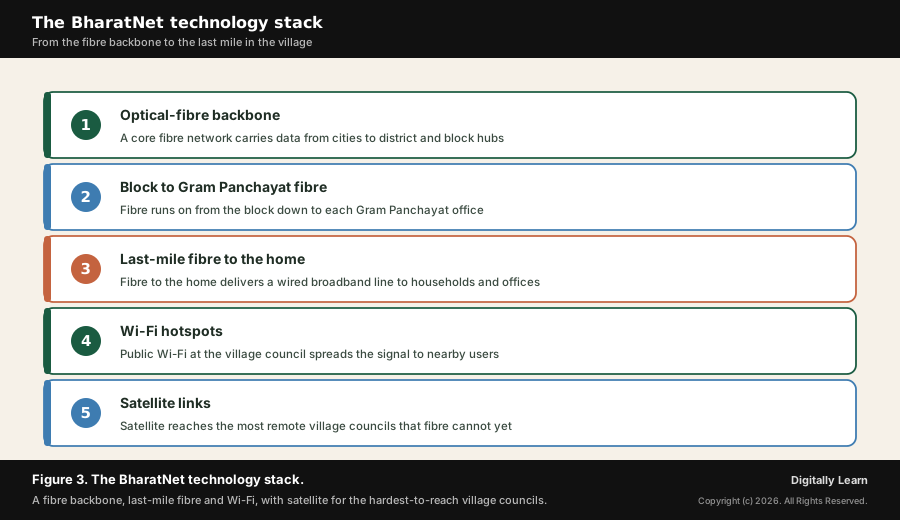
BharatNet is best understood as a stack of layers that hand a signal down from the national core to the village user. At the top sits the optical-fibre backbone, the high-capacity core that carries data from cities to district and block hubs. Optical fibre is chosen because it moves very large volumes of data over long distances with little loss, which makes it the natural medium for a national backbone meant to serve lakhs of village councils for decades.
From the block, fibre runs on to each Gram Panchayat, and from there the last mile begins. The flagship last-mile technology is fibre to the home, often shortened to FTTH, a wired line that brings broadband directly into a household, a school or a clinic. Alongside it, public Wi-Fi hotspots at the village council let nearby users share the connection over the air, which is cheaper to spread quickly than running a separate cable to every door.
Where fibre cannot yet reach, the network leans on other media. Satellite links serve the most remote and hilly councils, so that geography alone does not exclude a village. The asset created can also be put to many uses beyond a single household line: it can provide leased lines to institutions, dark fibre to other operators and backhaul that connects mobile towers, which spreads the value of the public investment. The figure below sets out the layers of the stack.
The Institutional and Financing Architecture: DoT, BBNL, BSNL and Digital Bharat Nidhi
Who builds and funds BharatNet, and the centrally led, state-led and public-private models
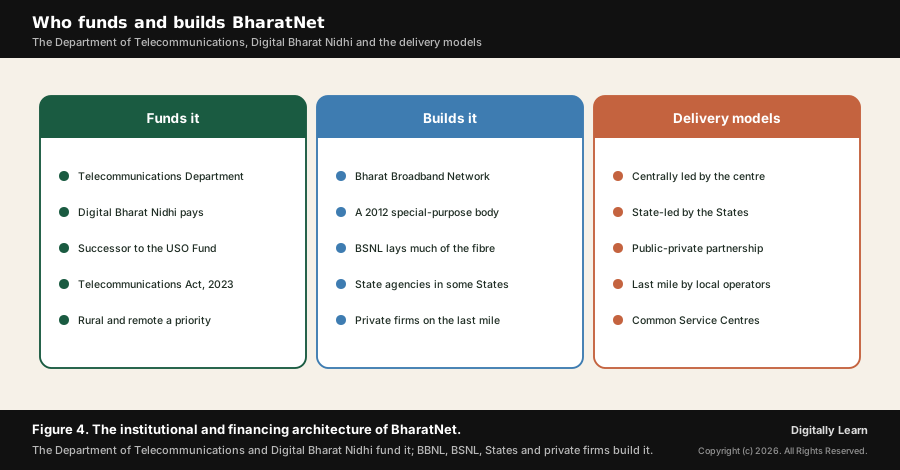
BharatNet runs on a layered institutional design. At the top, the Department of Telecommunications, within the Ministry of Communications, frames the programme, issues guidelines and releases funds. The building work was placed with Bharat Broadband Network Limited, a special-purpose vehicle the government set up in 2012 to plan and create the network, while the public carrier Bharat Sanchar Nigam Limited and State agencies lay much of the fibre on the ground. This separation keeps policy with the Department and execution with the dedicated bodies.
The money comes through the Digital Bharat Nidhi, the fund that pays for telecom service in commercially unviable rural and remote areas. It is the successor to the older Universal Service Obligation Fund, set up in 2002, which was renamed and widened under the Telecommunications Act, 2023 and the rules made under it. The fund is built from a levy on telecom operators, so that revenue earned in profitable markets helps pay for connectivity where private firms would not invest, a deliberate act of cross-subsidy for rural India.
Delivery follows more than one route, because a single model did not fit every State. Under the centrally led model, central agencies build and operate the network; under the state-led model, a State runs its own segment through a State fibre company; and a public-private partnership model brings private firms in to build and maintain the network in a group of States. At the village, Common Service Centres and local operators handle the last mile. The figure below sets out who funds and who builds.
What BharatNet Enables: E-Governance, Tele-Education, Telemedicine and Common Service Centres
The services rural broadband unlocks and the link to Digital India and PM-WANI
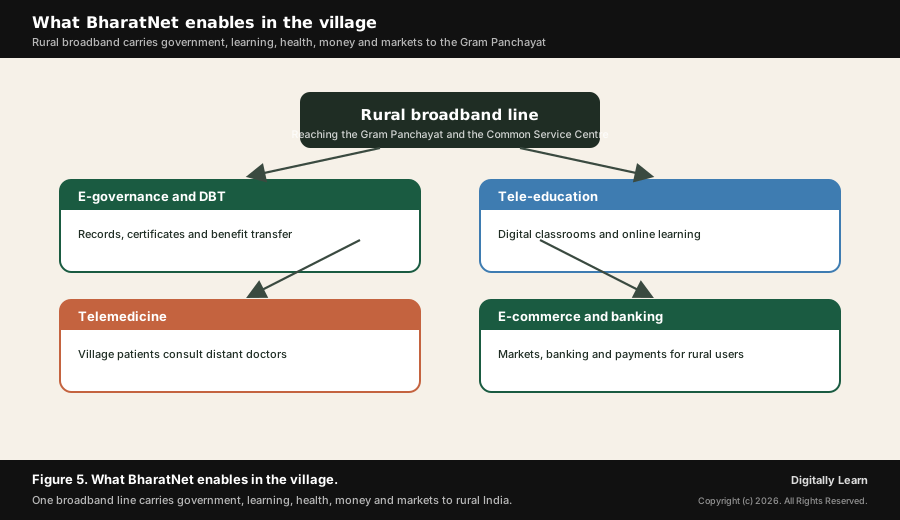
A fibre line matters for what it carries, and BharatNet is built to carry the services a village most needs. In e-governance, a connected Gram Panchayat can issue certificates, hold land records online and route a direct benefit transfer straight to a beneficiary, so that a citizen reaches the state without a long journey to a town office. The connection also brings banking and payments within the village, letting rural users open accounts, receive wages and make digital payments close to home.
The network is meant to lift two services that rural areas have long lacked. Tele-education brings digital classrooms and online learning to village schools, which helps counter the weaker reach of formal schooling and gives both children and adults a route to learn and acquire digital skills. Telemedicine links a village patient by video to a doctor or hospital far away, so that distance and a shortage of rural doctors no longer decide who gets advice. Both services turn a broadband line into a tool against rural disadvantage.
These services reach people through Common Service Centres, the assisted-access kiosks that act as digital front offices in villages, helping users who are not yet confident online to obtain government services, payments and basic digital literacy. BharatNet is a pillar of the wider Digital India vision, and it works alongside the PM-WANI framework, which lets local shops and operators run public Wi-Fi hotspots over the broadband line. The figure below maps what the connection enables in the village.
Understanding the Significance: Bridging the Rural Digital Divide and Inclusive Growth
Digital inclusion, socio-economic development and the rural-urban gap
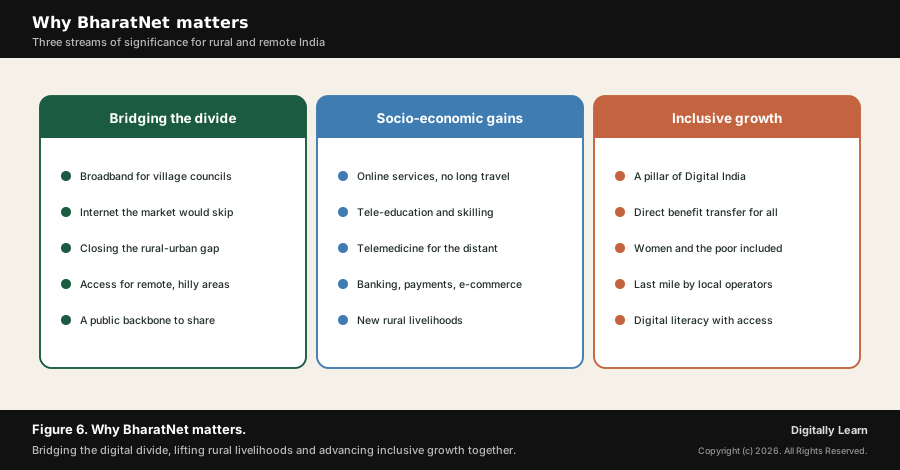
What is the significance of BharatNet lies first in bridging the digital divide. The divide is the gap between those who can use the internet and those who cannot, and in India it falls heavily on rural and remote areas, where private operators long found little profit in laying fibre. By building a shared public backbone to lakhs of village councils and offering it for others to use, BharatNet attacks the rural side of that divide at its root, the simple absence of a line to connect to.
Its second significance is for socio-economic development. The lack of ICT accessibility in villages has held back income, learning and health, because services that townspeople reach online were simply out of reach in the countryside. A working connection lets a farmer check prices and sell online, a student learn at a distance, a patient consult a doctor and a household receive a benefit without leakage. In this way poor connectivity, long a brake on rural development, can be turned into a lever for it.
Its third significance is for inclusive growth. Because the network reaches places the market would skip, it is designed to include the rural poor, women and the most remote settlements, and its digital literacy and assisted-access work helps users who would otherwise be left behind by digital illiteracy. As a pillar of Digital India, BharatNet ties physical connectivity to a digitally empowered society in which growth reaches the village as well as the city. The figure below sets out these streams.
Challenges and Debates: The Connectivity-Utilisation Gap, Last-Mile and Maintenance
Utilisation versus connectivity, last-mile delivery, maintenance and state-model variance
A balanced reading must weigh the debates around the programme, and the first is the utilisation gap. Observers note that making a village council service ready, with fibre laid up to it, is not the same as people actually using broadband there. Where households are not connected and the line carries little traffic, the public investment delivers less than its promise. Critics therefore argue that the true test is used connectivity, measured by working household links and active data, not the count of councils reached.
The second debate is the last mile and maintenance. Taking fibre the final stretch into homes, and keeping it working, has lagged behind the laying of the backbone, and a single cut can leave a remote village dark for want of quick repair. Weak operation and maintenance can leave laid fibre idle as so-called dark fibre, which is why the amended programme places local operators and Common Service Centres at the centre of running and repairing the network, rather than only building it.
A third cluster of concerns is delivery-model variance and equity. The centrally led, state-led and public-private models have progressed unevenly, so that some States advanced far faster than others, and the success of any model rests on the capacity of the agencies running it. There is also the deeper point that connectivity alone does not close the divide if digital illiteracy persists. On whether BharatNet can convert laid fibre into lasting, equitable use, a careful answer treats the question as open rather than settled.
The Way Forward: From Laid Fibre to Used, Maintained and Affordable Rural Broadband
Last-mile delivery, utilisation, upkeep and a working state-led model
The way forward follows directly from the programme's central tension. The first priority is to close the last mile, taking fibre and Wi-Fi into homes, schools and clinics through local operators and Common Service Centres, so that service-ready councils become councils where people are actually online. The second is to lift utilisation, by pairing the connection with affordable devices, digital-literacy support and the e-governance, tele-education and telemedicine services that give villagers a reason to use the line.
Two further priorities make the network last. The programme must fund steady operation and maintenance, with the resilient ring design and quick repair so that a single cut no longer darkens a village, and it must lower the cost of devices and data so that price does not become the new barrier once fibre arrives. Pursued together, these turn one-time construction into a reliable, affordable rural broadband service rather than idle dark fibre.
The third priority is to make the chosen delivery models work evenly. A successful state-led model, in which a State builds and runs its own segment with accountability for outcomes, and a credible public-private model can both spread good practice if their results are tracked and the lagging States are helped to catch up. Read together, stronger last-mile delivery, higher utilisation, funded upkeep and capable delivery models would let BharatNet realise its promise as the backbone of a digitally included countryside.
UPSC Relevance and Exam Focus
Where BharatNet fits in the UPSC-CSE syllabus
This topic maps most directly to General Studies Paper II: government policies and interventions for development in various sectors, and issues arising out of their design and implementation, since BharatNet is a flagship connectivity programme delivered through several models. It links to General Studies Paper III, infrastructure and the achievements of Indians in science and technology, through the optical-fibre backbone, and to General Studies Paper I, the salient features of Indian society, through the rural digital divide and inclusive growth.
For Prelims, hold the high-yield facts: BharatNet began as the National Optical Fibre Network approved in 2011 and was renamed BharatNet; it is run by the Department of Telecommunications through Bharat Broadband Network Limited; it aims to connect about 2.5 lakh Gram Panchayats by optical fibre across three phases; the Amended BharatNet Programme was approved in 2023; and it is funded by the Digital Bharat Nidhi, the successor to the Universal Service Obligation Fund under the Telecommunications Act, 2023.
For Mains, the recurring framing is to assess the programme's design and outcomes: how a public broadband backbone can bridge the rural digital divide, how lack of ICT accessibility and digital illiteracy hinder rural socio-economic development, and how far BharatNet has closed the gap between laid fibre and used broadband. A strong answer treats it as a case study in rural development through technology, balancing genuine gains in connectivity against unresolved questions of utilisation, the last mile, maintenance and equity.
Recurring linked concepts an aspirant should keep in working memory:
- Digital divide: The gap between those who can access and use the internet and those who cannot, which in India falls heavily on rural and remote areas and which BharatNet is built to narrow.
- Last mile: The final stretch of network from the Gram Panchayat into homes, schools and clinics, where fibre to the home and Wi-Fi turn a service-ready council into a connected village.
- Digital Bharat Nidhi: The fund that pays for telecom service in unviable rural areas, the successor to the Universal Service Obligation Fund under the Telecommunications Act, 2023.
- Common Service Centres: The assisted-access kiosks that deliver government services, payments and digital literacy in villages over the broadband line.
A common Prelims trap is to confuse BharatNet with PM-WANI or with the rural mobile-tower programme; hold that BharatNet is the optical-fibre backbone to Gram Panchayats under the Department of Telecommunications, while PM-WANI is the framework for public Wi-Fi hotspots and the 4G saturation effort is about mobile towers, distinct though complementary.
A common Mains trap is to recite the count of councils reached as proof of success. The exam value lies in a balanced judgment: the genuine gains in rural connectivity and in the idea of broadband as public infrastructure, set honestly against the open questions of utilisation, the last mile, maintenance, affordability and the persistence of digital illiteracy.
Previous Year UPSC-CSE Questions By the end you will be able to draft model answers for the following UPSC questions. Each question carries a collapsible framework showing how to approach it in the exam.
- UPSC Mains 2021 GS-IIExamine, with justification, whether digital illiteracy in rural areas, together with the lack of ICT accessibility, has hindered socio-economic development.
How to structure the answer in the exam
Body (sub-themes to develop):
- The problem: the lack of ICT accessibility in villages, where private operators would not lay fibre, kept rural India from the online income, learning and health services that towns reach, hindering socio-economic development.
- The access response: BharatNet's optical-fibre backbone, last-mile fibre to the home, Wi-Fi hotspots and satellite links, funded by Digital Bharat Nidhi, make ICT physically accessible where the market would skip it.
- From access to development: e-governance and direct benefit transfer, tele-education, telemedicine, banking and e-commerce through Common Service Centres turn a connection into real socio-economic gains.
- Digital illiteracy as the second barrier: connectivity alone does not close the divide; Common Service Centres, digital-literacy support and tele-education must accompany the line so that people can actually use it.
- Justification and the open questions: the utilisation gap, the last mile, maintenance, device and data affordability, and uneven delivery models show that access has only partly translated into development so far.
Sources and Further Reading
- Department of Telecommunications: report of the committee on the National Optical Fibre Network (NOFN)
- Bharat Broadband Network Limited (BBNL): official portal
- Bharat Broadband Network Limited: BharatNet frequently asked questions
- Press Information Bureau: BharatNet, the Amended BharatNet Programme and its rollout
- Press Information Bureau: BharatNet, Bridging the Digital Divide
- Press Information Bureau: Cabinet approves BharatNet implementation through the Public-Private Partnership model in 16 States
- Press Information Bureau: PM-WANI framework to set up public Wi-Fi hotspots
- Universal Service Obligation Fund / Digital Bharat Nidhi: history and home
- Universal Service Obligation Fund: USOF history, shaping telecommunications in rural India
- Press Information Bureau: DoT notifies the Telecommunications (Administration of Digital Bharat Nidhi) Rules, 2024
- Ministry of Electronics and Information Technology: Digital India
- Wikipedia: Bharat Broadband Network
- Wikipedia: Digital India
- Wikipedia: Internet in India
Editorial Disclaimer
This briefing is for UPSC preparation. Verify the facts and provisions against the official DoT, BBNL, Digital Bharat Nidhi and PIB sources before relying on them.


